

Featured
How Maldivian tourism can survive Covid-19


By Sonu Shivdasani
The Maldives appears to have dodged a bullet. With just 19 cases of the novel coronavirus at the time of writing (with 13 people having already made a full recovery), the country is in an enviable position. As the United States and Europe groan under the strain of major outbreaks, with tens of thousands of deaths, the Maldives looks forward to completely eradicating the virus within a few weeks.
In some respects, the Maldives is lucky. The archipelago straddles the equator, where temperatures rarely dip below the high 20s. We know the virus doesn’t like heat, and it’s notable that the only major contagions have occurred in cold countries, during winter. The Maldives’ unique geography also lends itself towards containment: The government can, and has, rapidly shut down islands and resorts when a suspected case has emerged. If people test negative, the island is immediately reopened. If someone tests positive, the entire island is placed under quarantine to prevent a spread across the country.
But luck has only been the half of it. When other world leaders wasted precious weeks dithering, questioning the science, or dismissing the coronavirus as a hoax, the Solih administration got to work to protect the country: suspending flight routes, conducting widespread testing (the highest per capita testing in South Asia), and eventually closing the border completely. In a country wholly dependent on foreign tourism, the Government’s willingness to act decisively, in spite of the huge economic cost, almost certainly saved lives.
During the pandemic, the government also found its voice. The daily televised briefings by Mabrook Azeez, an undersecretary at the President’s Office, have been clear, consistent and comforting. The contrast with President Trump’s erratic and misleading press conferences couldn’t be starker.
But the question remains: if the Maldives is soon to be virus free, and contemplating reopening its borders, how best to do it? The last thing the country needs is a flood of infected tourists descending upon Hulhulé, forcing another costly shut down.
A good place to start might be with the super-rich. Beginning the process of opening up by allowing private jets to land has a number of advantages: there are few passengers onboard, who can be immediately isolated in the airport’s VIP lounge and tested for the virus upon arrival. If they test negative, they can go on their way. If they test positive, they can proceed to one of the resorts that have been converted into (arguably the world’s nicest) quarantine and isolation centres. Key to this will be rapid testing kits, that can deliver a result in minutes rather than days.
High end clients spend large sums of money compared to other tourists, so even allowing in a few private jets generates considerable revenues. Soneva has received around 20 enquiries from people who would like to travel to the Maldives by private jet. They intend to stay in our resorts for upwards of a month, to escape lockdowns back home. Although they amount to less than a couple of hundred people, these guests will likely spend around $5 million in total, generating some $600,000 in GST for the government.
Looking further ahead, the Maldives will need to start reopening commercial air routes. But testing a handful of private jet passengers at the airport is one thing, testing hundreds of people descending an A350 is quite another. The Maldives will probably begin opening direct flights to other coronavirus-free countries. China looks like a good bet, having all but wiped out the virus. It also has the advantage of being the Maldives’ biggest tourism market, with a number of existing direct flight routes, operated by Maldivian or Chinese carriers, between the two countries. At the moment, however, all Chinese tourists returning from abroad have to spend 14 days in quarantine in China – not a particularly attractive prospect for would-be tourists. The Maldivian government will have to work with its Chinese counterpart on a bilateral agreement, that allows Chinese tourists returning home from the Maldives to avoid quarantine.
Similar arrangements will have to be made with other countries. It might help to categorise them: “A” group countries could be those, like the Maldives, that have completely eradicated the virus. There is no reason not to operate direct, commercial flights between such destinations. “B” group countries might be those with very few remaining active cases — the Maldives might allow flights to and from such countries, but with added precautions. Then there are the “C” group countries with high numbers of cases — where the Maldives should keep in place travel restrictions.
The Maldives has avoided a coronavirus outbreak, although the economic price has been severe. In order to avoid the collapse of its tourism industry, however, the country must now plan to re-open. If the government approaches this challenge with the maturity and competence with which it has handled the crisis thus far, the Maldives may be spared much of the economic, as well as the human, pain of this pandemic.
Editor’s Note: This op-ed was originally published on Linkedin by Sonu Shivdasani. Sonu is the founder and CEO of Soneva, which owns luxury resorts Soneva Fushi and Soneva Jani in the Maldives, and Soneva Kiri in Thailand.


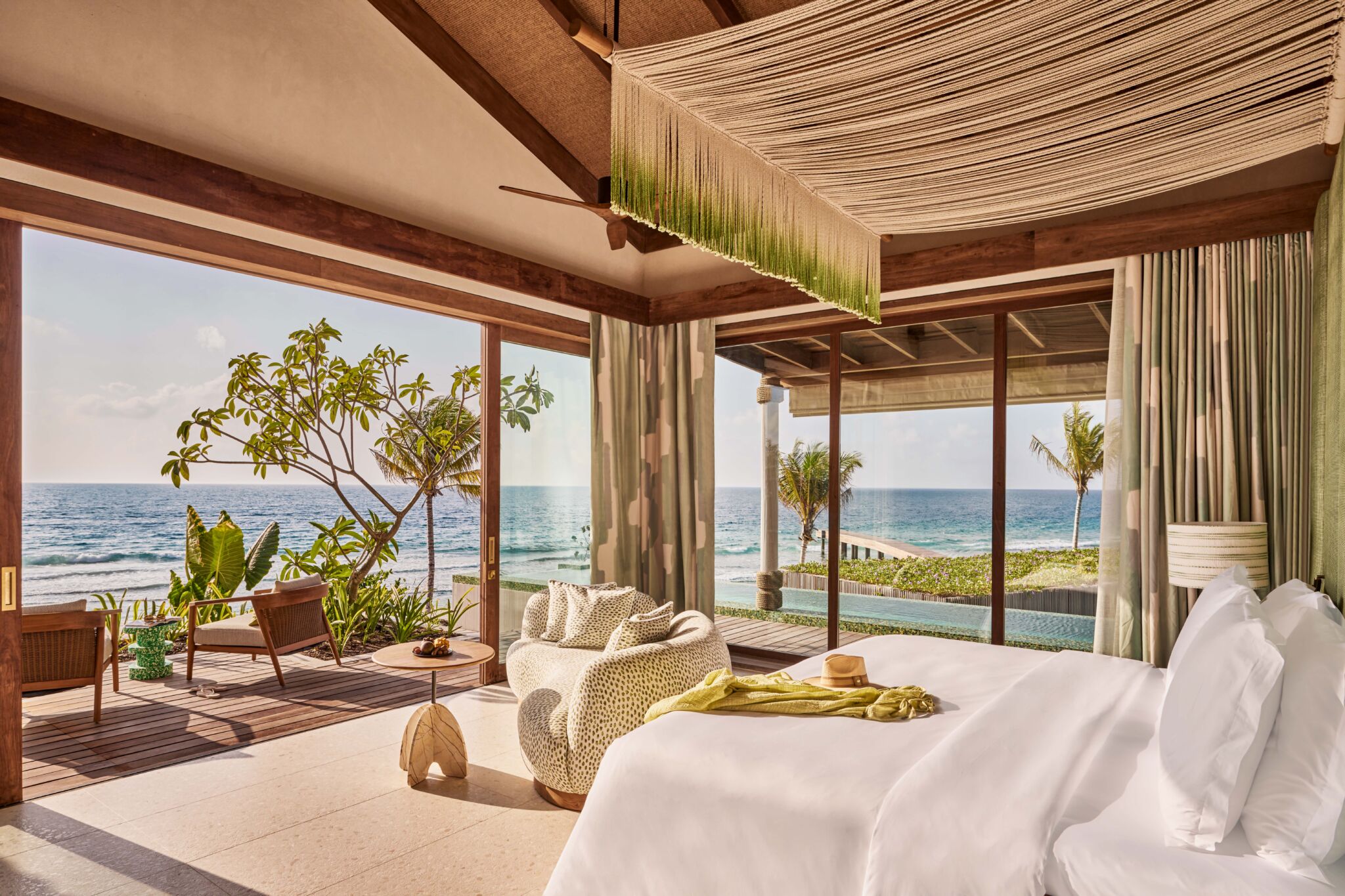
.Here Baa Atoll, a private island retreat in the Maldives, has been named the No. 6 Resort in the Indian Ocean in the Condé Nast Traveler Readers’ Choice Awards 2026.
The annual Readers’ Choice Awards recognise hotels, resorts, destinations, airlines and other travel experiences based on votes submitted by Condé Nast Traveler readers.
The recognition places .Here Baa Atoll among the highest-ranked resorts in the Indian Ocean and comes during a milestone year for the property.
Located within the UNESCO Biosphere Reserve of Baa Atoll, .Here Baa Atoll comprises nine residences spread across two natural islands, Somewhere and Nowhere.
Somewhere features seven three- and four-bedroom residences extending from the beach towards the lagoon and designed for families and groups travelling together. Each residence offers indoor and outdoor living spaces, multiple pools, private dining and personalised Roohu service. Guests are transferred directly to their residence by private speedboat, avoiding a conventional lobby and check-in process.
Condé Nast Traveler has previously highlighted the resort for its emphasis on privacy, its beach-to-lagoon residences and its discreet approach to luxury.
The resort experience also includes Nowhere Private Island, which is reserved exclusively for a single group at a time. The island features a five-bedroom Presidential Residence and a three-bedroom Lagoon Residence, providing eight bedrooms and 3,329 square metres of private living space, supported by dedicated service and individually curated experiences.
The Readers’ Choice Award follows several other recognitions received by .Here Baa Atoll during 2026. The resort was included in the Condé Nast Traveler Hot List 2026, with the publication highlighting its residences and design. It has also received international recognition for its architecture and design, alongside creative collaborators Kulör Group, Muza Lab and Topo Design Studio.
Elina Adiyan, Resident Manager of .Here Baa Atoll, said: “To be recognised by the readers of Condé Nast Traveler so early in our journey is incredibly meaningful. .Here was created around a simple idea: to give guests extraordinary space, genuine privacy and the freedom to experience the Maldives entirely on their own terms. This recognition belongs equally to our team, whose care and dedication bring that vision to life every day. We are deeply grateful to everyone who voted for us.”
The latest recognition adds to .Here Baa Atoll’s growing international profile within the luxury travel sector, with the resort positioning privacy, spacious accommodation, design and personalised service at the centre of its guest experience.
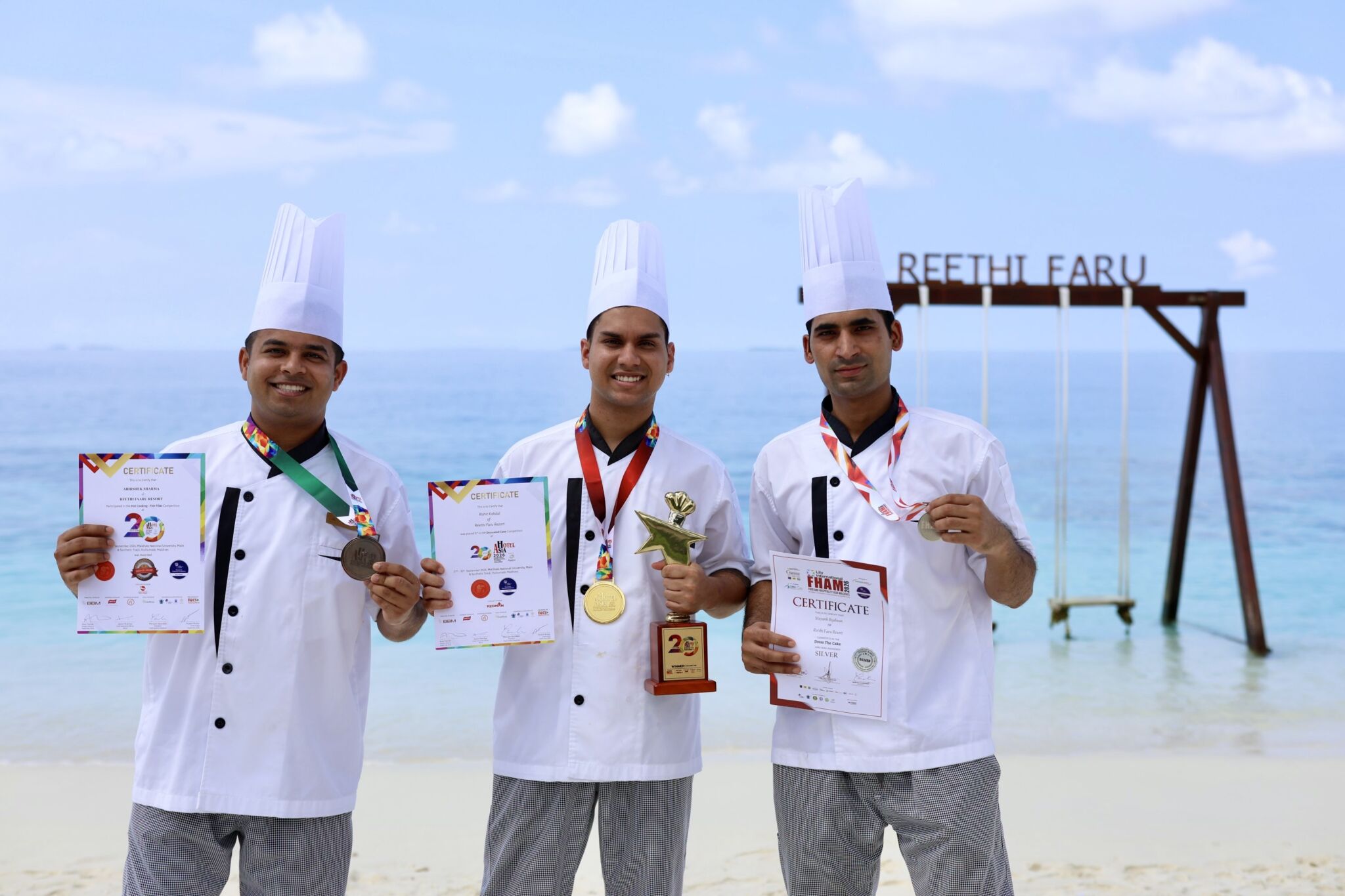
Reethi Faru Resort has announced three medal wins by members of its culinary team at the Hotel Asia Culinary Challenge and the FHAM Global Culinary Challenge.
At the Hotel Asia Culinary Challenge, Chef Rohit Kabdal received a Gold Medal in the Decorated Cake category, recognising his work in cake design, presentation and technical execution.
Chef Abhishek Sharma also represented Reethi Faru Resort at the competition, earning a Bronze Medal in the Hot Cooking Fish category.
At the FHAM Global Culinary Challenge, Chef Mayank Bijalwan secured a Silver Medal in the Dress the Cake category, adding a third medal to the resort’s recent culinary achievements.
The results highlight the range of skills within Reethi Faru Resort’s culinary team, spanning pastry, cake presentation and hot kitchen techniques.
According to the resort, participation in professional culinary competitions provides its chefs with opportunities to develop their skills, exchange knowledge and test their abilities alongside other industry professionals.
The achievements also form part of Reethi Faru Resort’s wider focus on dining and guest experience, with its culinary team involved across the resort’s restaurants and food and beverage offerings.
Reethi Faru Resort congratulated Kabdal, Bijalwan and Sharma on their respective achievements, describing the results as recognition of their commitment, technical ability and creativity.
The three medals add to the resort’s recent culinary accolades and reflect its continued emphasis on professional development within its kitchen team.
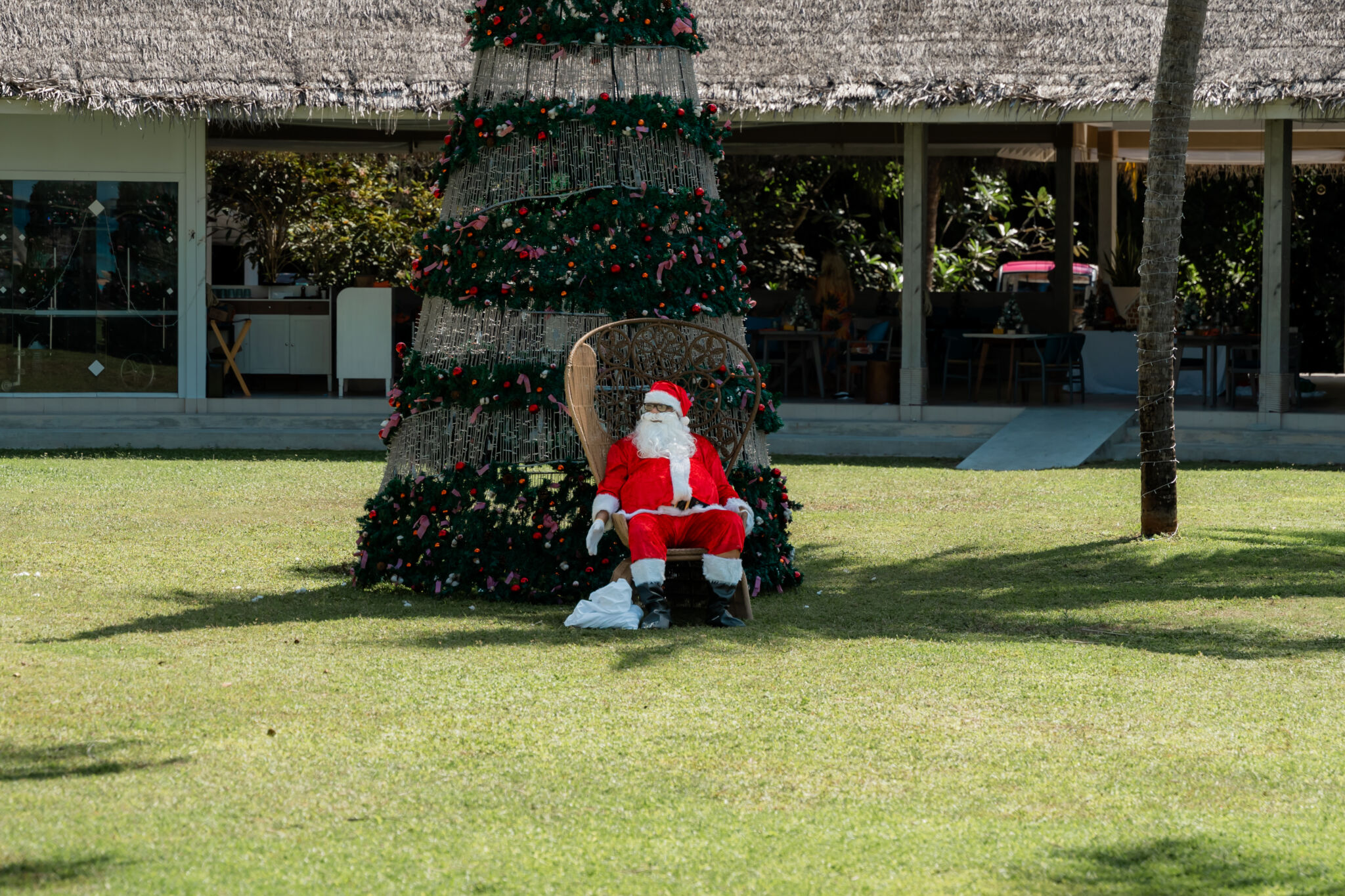
Ifuru Island Maldives will celebrate the 2026 festive season with “Echoes of the Ocean and Stars”, an immersive Christmas and New Year programme running from 21 December 2026 to 10 January 2027.
Inspired by the natural beauty of the Maldivian ocean, the night sky and the festive season, the theme will bring together marine and celestial elements across the resort’s décor, entertainment, dining, activities and guest experiences.
At the centre of the concept is the idea that the ocean carries memories, while the stars represent dreams and new beginnings. Rather than presenting the festive season as a series of standalone events, Ifuru Island plans to create a connected journey spanning Christmas, New Year and Orthodox Christmas.
The visual identity of “Echoes of the Ocean and Stars” will combine an underwater-inspired world with celestial elements. Bioluminescent-inspired colours, reef motifs and glowing details will be paired with stars, constellations and moonlit features throughout the resort.

The colour palette will include deep ocean blue and midnight navy alongside pearl white, silver, soft turquoise, pink and purple, with accents of celestial gold. Coral forms, waves, shells and reef-inspired features will be combined with stars and festive details, giving traditional Christmas elements an interpretation inspired by Ifuru Island’s natural surroundings.
The concept will extend beyond decorations to dining, entertainment, activities, uniforms, signage and festive communications.
The resort said the theme is also intended to reflect the emotions associated with the festive period. The ocean represents peace, connection and possibility, while the stars symbolise hope, dreams, guidance and new beginnings.
The festive journey will begin on 21 December and continue through 10 January, encompassing Christmas, New Year and Orthodox Christmas celebrations.
Christmas Eve on 24 December will feature festive dining and entertainment, while Christmas Day on 25 December will centre on family celebrations and relaxed island experiences.
On 31 December, Ifuru Island will mark New Year’s Eve with the main celebration of the festive period, before welcoming 2027 on New Year’s Day with activities centred around the island setting and surrounding ocean.

Celebrations will continue from 1 to 10 January during the Orthodox festive period, including Orthodox Christmas.
According to the resort, the broader concept is intended to connect the entire guest experience, with the island’s natural environment forming part of the festive setting. The ocean will provide inspiration during the day, while the night sky will shape the atmosphere after sunset.
Dining experiences, entertainment and activities will each form part of the wider “Echoes of the Ocean and Stars” narrative, giving guests different experiences throughout their stay while maintaining a consistent creative theme.
The programme is designed for guests travelling with family, friends or loved ones, with Ifuru Island aiming to combine its natural surroundings with festive celebrations and shared experiences.
The full festive programme, including entertainment, activities, culinary experiences and special events, will be announced separately.
“Echoes of the Ocean and Stars” will run at Ifuru Island Maldives from 21 December 2026 to 10 January 2027. Christmas Eve will be marked on 24 December, Christmas Day on 25 December, New Year’s Eve on 31 December, New Year’s Day on 1 January and the Orthodox festive period from 1 to 10 January 2027.

-

 News1 week ago
The Cocoon Collection highlights AI, sustainability and guest experience on World Tourism Day
-

 Action1 week ago
Sea turtle hatchlings make their way to the ocean at Cinnamon Velifushi Maldives
-

 Lifestyle1 week ago
Alexandre Benjamin Navet to transform The Ritz-Carlton Maldives in four-month art residency
-

 News1 week ago
Kandooma Maldives launches new brand with experience-led all-inclusive concept
-

 News1 week ago
Dusit brings ‘Ocean Carnival’ and ‘Reef & Rhythm’ festive celebrations to Maldives
-

 Family1 week ago
Niva Kuramathi brings Halloween magic with week of family fun
-

 News5 days ago
50 visits, hundreds of dives: Bandos Maldives honours loyal guests with coral garden
-

 Cooking1 week ago
MICHELIN-starred Cantonese master Ku Chi Fai makes Maldives debut at Park Hyatt Hadahaa