

Insiders
Focus on US Default Crisis


Maldives Promotion House – Tourism Professionals all over the world have begun to discuss the depth of the impact from the fallout of the US “Default” crisis and the potential credit rating decline. Experts in Maldives have also expressed concerns about the ongoing and worldwide crisis that will touch people throughout the tourism and travel industry.
While it is critical that experts do not get tangled up in rumours or widely spreading headlines, the crisis has less to do with raising an artificial debt ceiling and more to do with simple debt. According to Dr. Peter E. Tarlow, the President of Tourism and More, Special to ETN, many Western nations, including the US, simply spend more money than they take in.
“Though most Western nations have practiced some form of this economic policy for decades. The unfortunate results of overspending have created highly unstable societies in countries such as Greece, Italy, Spain, Portugal, and Ireland. In all of these nations, deficit spending has been instituted as a means of paying for what is often called “The Social Net,” and there is the assumption that it is the government’s job to “Smooth” out a society’s business and economic bumps,” Dr. Tarlow said.
Dr. Tarlow further explains his view. While in the US, this social net has always existed, the government participation has been much less, while traditionally, Americans have tended to rely on volunteerism and community-service providers, such as religious institutions, rather than government bureaucracies. Thus the social net has existed but at far less governmental cost. Some economists believe that due to the less reliance on government to provide the social net, the US, at least until now, has been able to avoid the economic tragedies that are now occurring across much of Southern Europe.
Despite whatever happens in Washington, there are a number of other factors that will impact tourism. Among these are:
1. Even if the most extreme budget bill is passed, the US is still spending more than USD1,000,000,000,000 (one trillion) dollars more than it receives.
2. US economic national product is down to less than 1.4 percent. That means that economic growth is at about zero.
3. In the US, unemployment is now increasing and housing prices are continuing to be down.
4. China is now facing a major economic slowdown.
5. Germany is now feeling the first signs of a looming recession and may no longer be able to bail out Europe’s so-called PIIGS countries (Portugal, Italy, Ireland, Greece and Spain). While the euro will not disappear tomorrow, its longevity may now be in doubt.
Here are some of the ways that tourism and travel professionals can expect the current economic crisis to impact their industry and some ideas for economic survival in highly turbulent times.
In this global economy, be prepared for continual currency readjustments. For years, the US dollar acted as the one stable currency. This fact is no longer true and unstable currencies in an interconnected world means that tourism officials must be prepared for price fluctuations. The impact of such unstable pricing means not only will many tourism providers be unable to set market prices but also that business plans will need to be updated on a continual basis.
Tourism, especially leisure tourism, is a discretionary expense and, therefore, vulnerable to mood swings. If the public is fearful of not having enough money to pay for basic necessities, then for many people, there is a tendency to pull back. This pulling back does not mean that people will cease to travel. It does mean that they may seek less expensive options, and for shorter time periods. Those tourism businesses that are in or close to major population centres have a great many new opportunities, while those destinations that are dependent on long-haul travel and more lengthy stays may have some challenges to overcome.
Expect this period of economic turbulence to be here for quite some time. Despite what politicians may say, the bottom line is that no one has a plan that is politically acceptable. In today’s world, there are more voters than workers and that means that politicians are afraid to make decisions that may cost them an election.
Foreign, non-business travel should decline as the cost of travel combined with lower salaries will impact the way citizens from major industrialized nations spend their money. This decline in foreign travel will be especially hurtful to those parts of the world, such as the Caribbean that have long depended on foreign visitors and have a reputation for being expensive, offering poor customer service and tending toward being unsafe.
Here are some ideas to prepare for what may be a difficult economic year.
Develop creative bundling packages. For example, create packages that allow business travel to be combined with family vacations. Encourage hotels to include breakfasts, Internet services, and other amenities within the cost of a room.
Keep prices as low as possible. No one likes to cut their profit margin, but some profit is better than no profit at all. Let people know that you care and that your prices reflect your concern for the public’s well-being.
Provide the best customer service possible. When money is tight, our tolerance for bad experiences is even less. These are the times not to make customer service mistakes, and if a mistake is made, make sure to apologize and correct the mistake. In economically-challenging times, no one wants to hear excuses for customer service errors.
In the US, the weak dollar means that many foreigners will find the US a highly-affordable vacation option. US tourism professionals need to internationalize their product and their outlook so as to attract both European and Asian visitors.
Many Latin American nations, due to the low cost of labour and short food supply distances, can also become new tourism destinations. However, issues of poor customer service, violence, and crime waves against tourists often plague this part of the world.
Seek markets that are closer to home. Smaller communities and communities that offer short-term tourism (2 or 3 days) can see increases in their potential market if they can solve problems such as: what to do on rainy days, lack of night time activities, and how to entertain children during inclement weather such as snow storms.
Unfortunately, the travel and tourism industry cannot change the world’s economic policies, but travel and tourism can teach political leaders around the world several important lessons. Among these are: during economically-challenging times, talk less and do more.
Dr. Tarlow has explained that this is not the time simply to market what you have, but rather it is the time to launch new products and become innovative. Creativity and out-of-the box thinking are essential skills for such a challenging economy and the travel and tourism industry are not going to go away.
According to Maleeh Jamal, the Secretary General of Maldives Association for Travel Agents and Tour Operators (MATATO), the Default Crisis will have a worldwide impact. However he also suggests that the direct impact to Maldives would be minor.
“The US market of tourists that visit Maldives is relatively small. Because of that, Maldives will experience only a minor direct effect from the crisis. But Europe will be highly affected by this and thus will create a major effect on tourism in Maldives, because the majority of the tourists to Maldives come from Europe,” Maleeh said.
“China also dominates the tourism market in Maldives and is a major credit partner to the US. So to some extend China’s economy will suffer, leading to a negative effect on the Maldivian Tourism. Moreover, the current statistics show that the world economy may not improve within the next two years. So if Maldives is to sustain its tourism, we have to device a strategic plan to focus on the upper class or the rich and wealthy market as well,” he added.
No matter what the credit rating may be, no matter what the cost of money, people are still going to travel. However, for tourism and travel to prosper rather than merely survive, the industry is going to have to be much more creative, innovative, and service oriented. Tourism centres that can choose to not to provide good service, offer poor security, and lack of new product innovation will not survive. Those, however who choose to offer excellent service and continually reinvent their product in a safe and secure environment are bound to not only survive, but in the end, will prosper.


Insider Reviews
Discovering The Machchafushi Universe through sight, sound, scent, touch and flavour

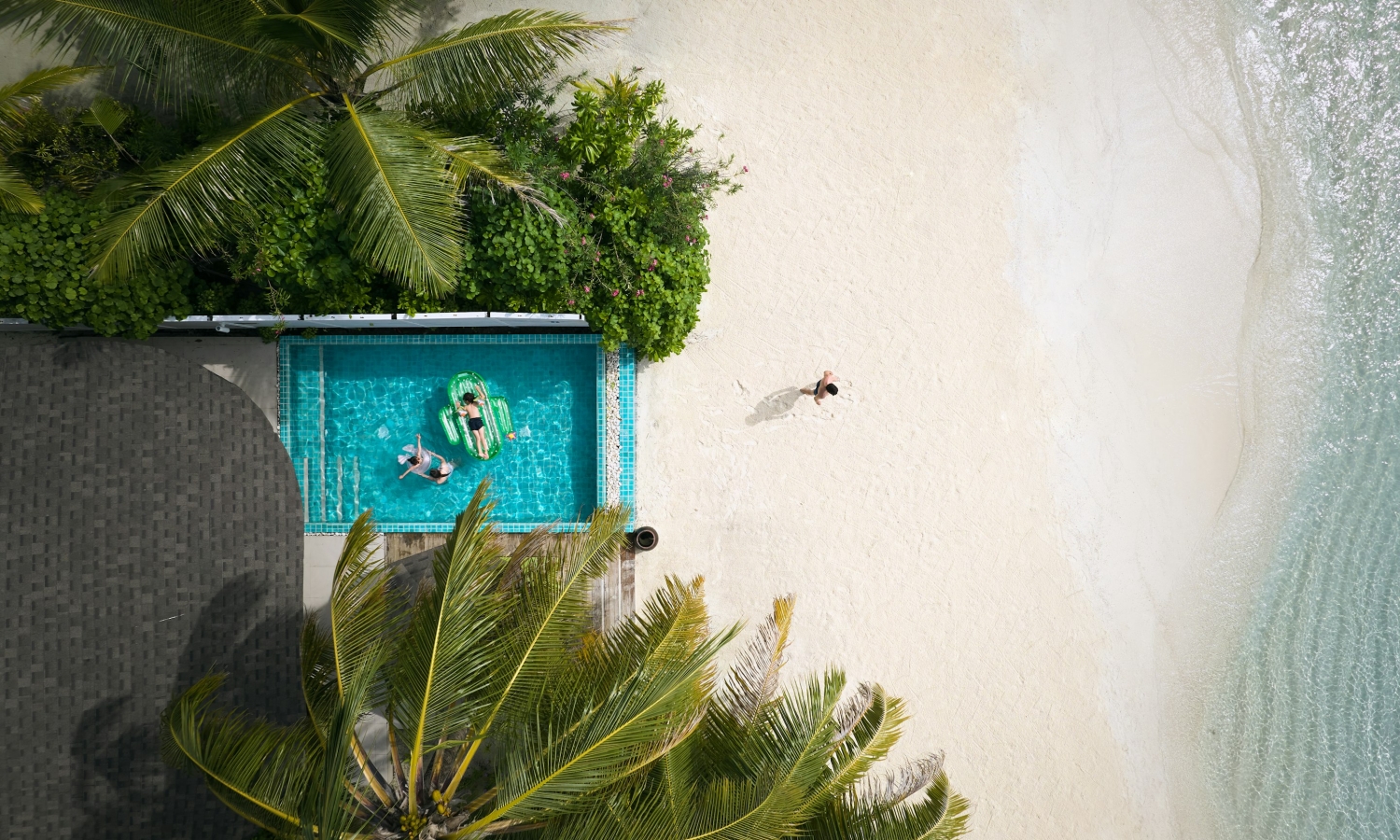
At Machchafushi Island Resort & Spa Maldives, The Centara Collection, the island is not simply the setting for the guest experience. It is the experience itself. Set within the South Ari Marine Protected Area (SAMPA), Machchafushi, meaning ‘Fish Island’ in Dhivehi, is defined by its relationship with the surrounding ocean, the life that inhabits it and the traditions that have shaped its identity.

Once a secluded, uninhabited island, Machchafushi has evolved while retaining its connection to the natural environment and cultural character of the Maldives. Today, its award-winning house reef, five times the size of the island, creates an underwater world inhabited by more than 1,000 species of reef fish and more than 200 varieties of coral. Beyond the reef, the waters of South Ari Atoll offer year-round opportunities to encounter whale sharks, manta rays and other marine life, while the 52 metre Kudhi Maa shipwreck has become a thriving underwater habitat of its own.

This sense of place forms the foundation of The Machchafushi Universe, a sensory expression of the island that invites guests to experience Machchafushi through sight, sound, fragrance, touch and flavour. Here, the senses are not experienced in isolation. The colour and movement of the reef are accompanied by the rhythm of the ocean, the feel of warm water against the skin and the salt carried by the breeze. Later, the flavours of the sea and the wider island find their way to the table. Together, these impressions create a deeper connection with the destination.

“Machchafushi has always had a character of its own. It comes from the environment around us, from the marine life and the reef, from the Banyan Tree and the traditions connected to it, and from the people who bring our experiences to life. The Machchafushi Universe gives us an opportunity to bring these elements together and allow guests to experience the island in a more meaningful way, through all of their senses,” said Francesco Pompilio, Cluster General Manager, Machchafushi Island Resort & Spa Maldives and Centara Ras Fushi Resort & Spa Maldives.

The experience begins with what can be seen. Beneath the surface, coral gardens come alive with reef fish, turtles, stingrays and reef sharks, while the Kudhi Maa shipwreck rests between 52 metres beneath the surface, its structure now covered in coral and inhabited by glassfish, trevally, snapper, lionfish, batfish and groupers. Around the atoll, encounters with whale sharks and manta rays offer a different perspective on the scale and diversity of the marine environment.

Above the water, the island reveals another landscape. The more than 200-year-old Banyan Tree, known as the Ummeedhu Tree in Dhivehi, meaning ‘Wish Fulfilment’, stands at the heart of the island, its roots reaching deep into the earth and its branches extending towards the sky. The changing light across the lagoon, the movement of birds through the vegetation and the shifting colours of the ocean create a visual landscape that changes naturally throughout the day.

Sound gives the island its rhythm. Along the shoreline, waves move across the reef, birds call from the vegetation, and the breeze moves through the palms. Beneath the surface, the soundscape becomes quieter, shaped by the movement of water, the rhythm of breathing and the subtle sounds of a living reef. A snorkel across the house reef or a dive to the Kudhi Maa becomes as much an auditory experience as a visual one, bringing guests into a world where the sounds of the island recede and the ocean takes over.

The human rhythm of Machchafushi adds another layer. The preparation of a Thai dish at Suan Bua, the movement of a traditional wellness treatment and the unhurried pace of service create their own sounds across the island. Together, they form an understated soundtrack to a place shaped as much by moments of stillness as by discovery.

Fragrance carries the character of the island on the breeze. Salt air and sea spray accompany the shoreline, while coconut, coastal vegetation and the earth beneath the island offer subtler notes further inland. The scent of freshly prepared ingredients emerges from the kitchens, while at SPA Cenvaree, natural aromas meet the traditions of Thai wellness through essential oils, botanical ingredients and traditional Thai treatments.

Touch offers perhaps the most immediate connection with Machchafushi. Bare feet meet warm sand, cool water moves across the skin and the gentle resistance of the sea changes with every stroke. Entering the water for a snorkel or dive creates a physical connection with the underwater world, from the sensation of descending through the water column to the changing currents around the reef. Kayaking and paddleboarding offer another way to experience the lagoon, allowing the surface of the water to become part of the journey.

On land, touch takes on a quieter character. Traditional Thai massage and wellness treatments at SPA Cenvaree centre on movement, pressure and balance, while beneath the Banyan Tree, the Sacred Thread Ceremony offers a more personal connection through a simple cultural ritual. In different ways, each experience brings guests closer to the island.
Flavour completes the sensory journey, reflecting the diverse influences that form part of Machchafushi’s identity. At Suan Bua, traditional Thai cuisine is presented through authentic flavours and techniques, while Mare Azzurro Italian Coastal Cuisine draws on the simplicity and character of Italian coastal cooking. The Reef presents an indulgent all day dining experience, with a variety of world cuisines served buffet style, from local Maldivian specialities to international favourites.

At Aqua and Coral Bars, classic cocktails meet island inspired signatures, adding another expression of the destination to the glass. Beyond the restaurants and bars, dining experiences bring cuisine into the island landscape, allowing the setting itself to become part of the occasion. From the waters surrounding Fish Island to the flavours served upon it, the connection between Machchafushi and the sea finds its way naturally to the table.
A first snorkel may reveal a turtle moving across the reef or a reef shark passing through the shallows. Further exploration brings coral formations, schools of tropical fish and the quiet presence of the Kudhi Maa. For experienced divers, sites such as Kudarah Thila, Broken Rock, Dhigurah Beyru and Maamigili Corner offer opportunities to encounter a wider range of marine life and underwater environments. Night snorkelling introduces yet another dimension, revealing a reef transformed after dark.

For those venturing further into the atoll, whale shark encounters offer a profound sense of scale. South Ari is renowned for year round whale shark sightings, allowing guests to experience these gentle giants in their natural environment. Manta rays, turtles, sharks and schools of tropical fish add to a marine landscape that is constantly moving and evolving.
Together, these experiences form a more complete expression of Machchafushi. The island is not defined by a single attraction, restaurant or wellness ritual, but by the relationship between its natural environment, cultural heritage, marine life and the people who bring the destination to life.
Machchafushi is, ultimately, an island that reveals itself gradually. Not through a single moment, but through the accumulation of sensory impressions that stay long after the experience itself has passed.
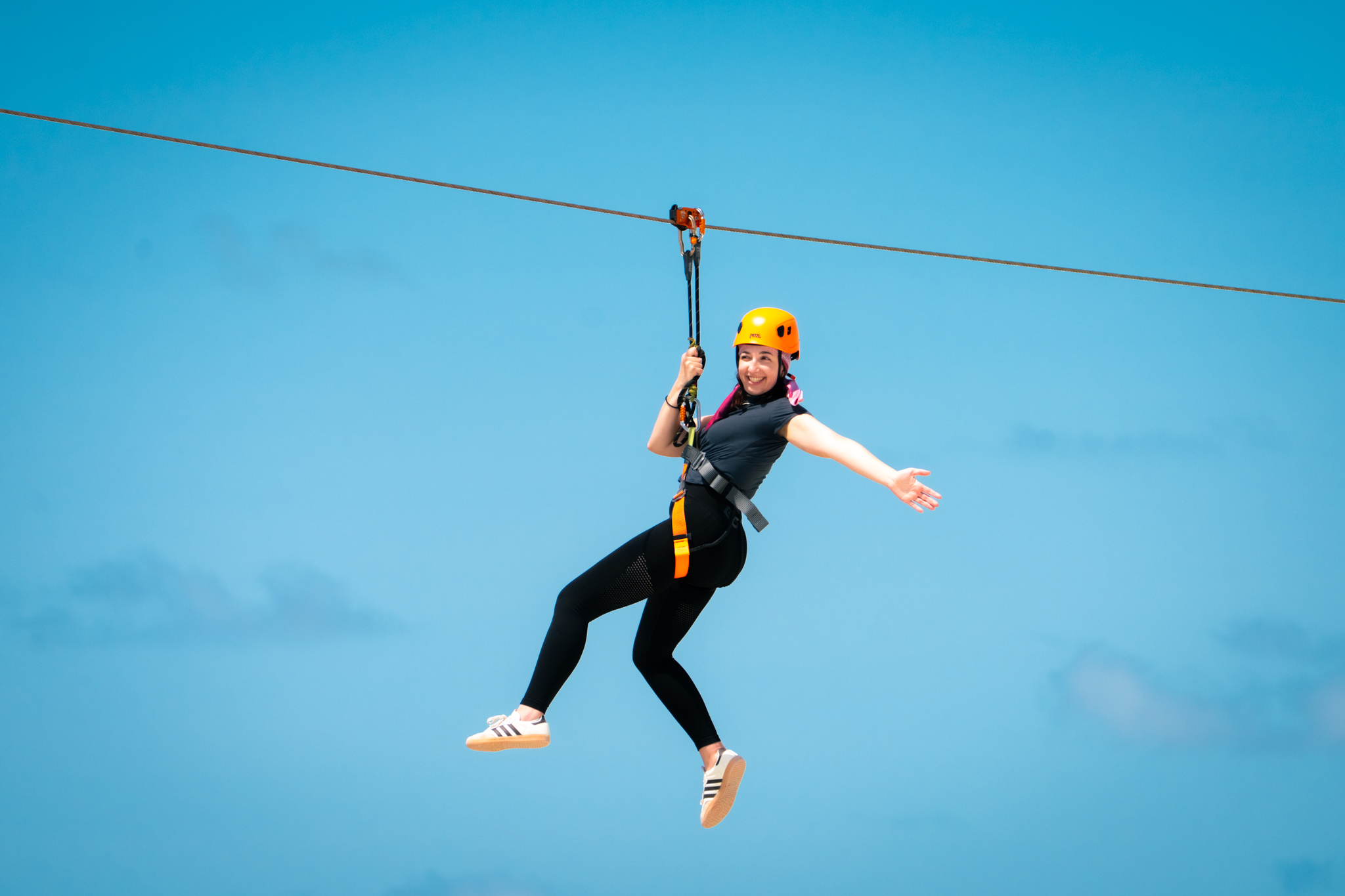
Zipline Maldives, the first island-to-island zipline in the Maldives, has received the Global Excellence Award for “World’s Most Beautiful Zipline – Maldives” at the Global Brand Awards 2026.
The recognition was presented as part of Season 2 of the Global Brand Awards, Sri Lanka Chapter. The certificate of achievement was presented to Ibrahim Asim of Vahmaafushi Picnic Island, recognising the project’s contribution and performance.

Located in South Malé Atoll, Zipline Maldives connects Maafushi with neighbouring Vahmaafushi, taking riders across 428 metres of open ocean between the two islands. The attraction, which opened earlier this year, introduced an island-to-island zipline experience to the Maldives and has added a new adventure tourism offering to the country’s local island sector.
The ride takes approximately 45 to 60 seconds and operates on two parallel lines, allowing two people to travel side by side. According to Zipline Maldives, more than 2,000 riders from over 50 countries have used the attraction since its launch.
The experience begins in Maafushi and crosses the lagoon to Vahmaafushi. A standard booking includes the 428-metre zipline ride, safety briefing and equipment, a return speedboat transfer, a welcome drink and access to Vahmaafushi Island. The attraction is open to riders aged six and above, subject to a weight range of 40 to 110 kilograms and operating conditions.

Vahmaafushi was developed as an experience-focused island close to Maafushi, combining the zipline with beach visits, dining, private celebrations and other island activities. Located around two minutes from Maafushi by boat, the island forms part of efforts to expand the range of experiences available to visitors staying in one of the Maldives’ largest local tourism destinations.
The zipline was introduced commercially in May 2026, with its operators positioning the over-ocean crossing as a new attraction for tourists and residents. Its location near Maafushi also allows visitors staying in the wider South Malé Atoll area to incorporate the activity into day excursions.
The Global Excellence Award marks an international recognition for the attraction within months of its opening, as local tourism operators continue to introduce experience-based activities alongside the Maldives’ established accommodation and marine tourism offerings.
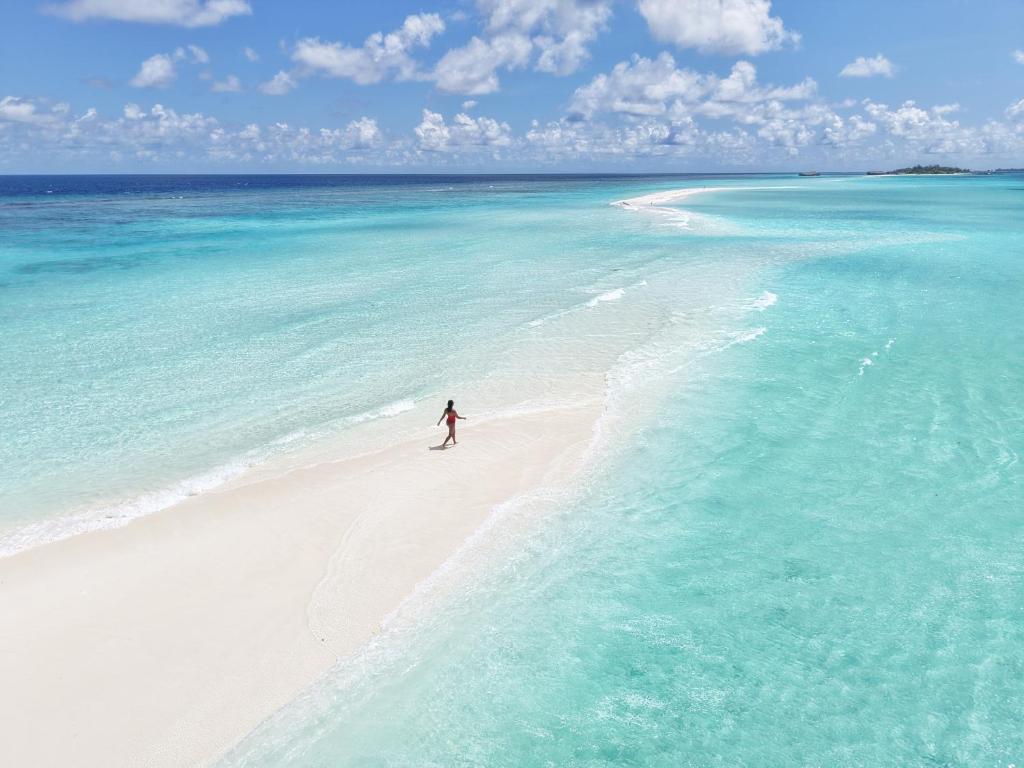
Dhigurah in Alifu Dhaalu Atoll has been ranked among the world’s 10 most valuable holiday beaches, with its stretch of sand assigned an estimated value of MVR 2.9 billion (€162.7 million) in a study by luxury villa holiday specialist CV Villas.
The island placed eighth in the global ranking, ahead of Seven Mile Beach in the Cayman Islands and Copacabana in Rio de Janeiro, Brazil.
The study calculated the hypothetical cost of owning some of the world’s best-known beaches by valuing the sand as coastal land. The figures do not represent sale prices or suggest that the beaches are available for private purchase.
Dhigurah was the only Maldivian beach included in the global top 15. Known for its long sandbank and proximity to whale shark habitats in South Ari Atoll, the inhabited island has become a destination for guesthouse tourism, diving and marine excursions.
Florida’s Siesta Beach topped the global ranking with an estimated value of €1.08 billion, followed by Pampelonne Beach in France at €843 million and Praia da Falésia in Portugal at €573.2 million.
Grace Bay in the Turks and Caicos Islands was ranked fourth at €376.4 million, while Bondi Beach in Sydney completed the top five with an estimated value of €365 million.
Hannah Marshall, luxury travel destination expert and marketing manager at CV Villas, said the research highlighted the role of location in determining coastal land values.
“Everyone has a beach that means something to them, so there’s something fun about seeing what those stretches of sand might be ‘worth’ if you valued them like the land behind them,” Marshall said.
“What comes through is how much location drives the figure: a beach in St-Tropez or on Siesta Key carries a value that a quieter shore — even just as beautiful — simply won’t.”
While Siesta Beach had the highest total estimated value, The Baths on Virgin Gorda in the British Virgin Islands recorded the highest value per square metre, at €8,846. Princess Diana Beach in Barbuda was the most affordable beach assessed, at approximately €199 per square metre.

-

 News1 week ago
50 visits, hundreds of dives: Bandos Maldives honours loyal guests with coral garden
-

 Cooking1 week ago
Park Hyatt Maldives Hadahaa announces six-chef Masters of Food & Wine series
-

 Awards1 week ago
RAAYA by Atmosphere wins Best Family Resort in Maldives at Travel Time Awards 2025
-

 Drink1 week ago
Château Palmer brings Bordeaux heritage to Finolhu Maldives
-

 Cooking1 week ago
V Villas Maldives at Mirihi brings Thai flavours from Phuket to the Maldives
-

 News1 week ago
Grand Park Kodhipparu unveils seasonal journey from quiet escapes to festive celebrations
-

 Action6 days ago
From zero experience to professional careers: Atmosphere Foundation celebrates Divemaster graduates
-

 Cooking1 week ago
Milaidhoo Maldives welcomes JAG Head Chef Laurence Tan for October culinary residency