

Insiders
Roaring success of the newly rebranded, OBLU by Atmosphere at Helengeli


Maldives.net.mv – OBLU by Atmosphere at Helengeli, Maldives opened its doors on November 2015 as the second resort by Atmosphere Hotels & Resorts. OBLU showcases contemporary Maldivian architectural design with a trendy, fresh & vibrant color palette. It is Rein W.M van Zandvoort who is at the helm of the resort as the general manager.
With his instrumental success in the launch the group’s first resort, at Atmosphere Kanifushi, it’s no surprise that the company tasked the experienced and talented, van Zandvoort as the general manager (GM) for the launch of the newly rebranded, OBLU by Atmosphere at Helengeli. Helengeli resort flaunts genuine value as the key essence by delivering top class service, cuisine and an overall unique but quality product.
van Zandvoort has worked for nine years in the Maldives with immense experience in pre-openings and management of successful resorts. There is no room for doubt about his ability and wealth of experience and capacity to deliver with the OBLU by Atmosphere at Helengeli island resort.
We were honored to interview, pick his brain and grasp a more than few pointers from the experienced and talented GM, on his unique set of management skills and style and his morals and ethics in a professional perspective.
Company Policy
One of the first things that Zandvoort is quick to point out is that, the management merely upholds and follows the philosophy and policy, of the parent company. Hence, whatever he is able to do is almost always is, because the company policy, allows for it. He believes that company’s joy of giving is what makes the difference to the guests.

Relationship with Staff
Zandvoort is definitely not your average general manager of a resort. His ability to relate and connect with the staff, allows for unique family like relationship between his colleagues, that in turn, enables them to work with him from their hearts rather than merely as a job. One such example of his care and concern for the staff, is shown, when he decided that third party contractors such as boat crew (not direct staff of the resort) who were not entitled to the Ramadan bonus, deserved it equally and held a dinner night and handed out Eid cards and gifts to all of them.
The Town Hall meetings that he holds with the staff are not held in a private area but somewhere that even guests can enter into and experience firsthand how the staff lives on the resorts are treated by the management. These meetings are so important to the GM, that he decided even though peak season is in November, they would still hold the meetings. It was at one of these meetings that he rolled out his new idea of a special award for persons with creative and passionate minds who strive for a difference. The award was named after the first Maldivian to sail around Maldives solo and aptly called, Gabbe Award.
It would also be impossible for guests to not notice how differently the staff of OBLU dress as well; with their unique identity and now trademark sun glasses and comfortable uniforms (and as the GM pointed out, competitors already are copying the sunglasses look). These are some reasons why the resort has an extremely low staff turnover, according to the GM.
Dealing with Guests
Guests arrive at the INIA airport and more often have to wait copious amounts of time until their boat transfer to the resort is ready. Once more moving away from the common standard, the GM decided to present food vouchers to the guests. Then, once they step on the boat, they are given cool towels and there is relaxing music playing onboard. The crew of the boat are the most significant facet of the whole experience. They are friendly and introduce themselves and explain the safety features before hand out water bottles and snacks. The crew continue to interact with the guests throughout the 50-minute ride across the ocean, to the resort. One small mark of the success of the model being utilized by the GM for the past 8 months, is that, there already is one family who will return for the 4th time in December 2016, simply because they loved the complete experience at OBLU by Atmosphere at Helengeli.
The experienced GM sees guests as individuals who had to be catered according to their individual needs. Though Helengeli offers an all-inclusive package, the package products, are ever evolving and adapting and meeting the needs of the guests. As pointed out by the GM, they offer far more individual products within the package than other resorts and the package is very transparent with no hidden markers or chargers as surprises for the guests when they check out. This is unlike the traditional model of all-inclusive that most resorts practice.

Traditions, Environment and Community
GM Zandvoort, has his own moral beliefs in protecting and preserving culture, traditions and the fragile environment of Maldives. In this light, he works with local communities to create traditional events such as Bodumas and music, for occasions such as Eid, that guests get to experience. This allows local communities to express their talents and skills as well as revive their culture. The GM believes that a lot of modern day resorts have very little Maldivian culture or tradition to show. He is also on the verge of establishing a charity program with the local communities in the very near future.
The veteran GM explained that preserving the environment was key to the Maldives and hence for the first time in a Maldivian resort, he created Reef Guards along with Life Guards. The Reef Guard uses a jet ski to keep a watchful eye on the status of the house reef of the island and ensure that guests are not endangering themselves or the reef. These guards educate and promote safe measures when exploring the beautiful pristine waters and house reef of the island. This creates awareness and allows guests to relate far more closely with the fragility of the island nation of Maldives.
The unorthodox GM had once suggested the Ministry of Tourism if they could consider implementing a regulation that pushes all resorts to have a water bottling facility on their island. He said that in a year approximately 400,000 bottles of water are created on his resort and if 120 resorts of Maldives decided to keep a plant to utilize glass bottle water and reusable bottles rather than plastic disposable ones, it would have a huge impact on the environment and waste management of the nation. He sees every human being as a caretaker of the environment with an obligation to preserve it for future generations by doing as much as they could.
He also believes that natural island habitation and trees should be left as natural as possible. He is weary of how some resorts introduce alien species of birds and plants onto to their islands; this he says is not Maldivian.
Zandvoort the Person
Rein W.M van Zandvoort stands out, in his ability to communicate and relate to almost anyone. Within the ten years he has spent in Maldives, he adamantly reads the news and updates himself on current affairs simply so that he could engage in conversation with his colleagues, even more. This allows him to understand the staff and keep an open door policy to his office for staff to interact in a far more family like relationship than the norm. As he frequently says, the happier the staff the better service they provide the guests.
With countless new ideas to change the status quo of how resorts are run in the Maldives, he is currently working with local artist to create tradition infused sculptures to be kept on the island. This creates a new platform for Maldivian artists other than musicians and painters. He is also working on a small coffee table book on fashion and hair style and Buruga (head covering of Muslim women) styles of Maldivians.
Zandvoort sees himself as an equal to all his colleagues with the only difference being the different jobs each person does, rather than a GM that manages from an office room. It is a great pleasure to see a Maldivian resort with a leader that has visions that will advertently help preserve and protect the Maldivian tradition and culture and environment. A manager that has shown his colleagues that they each are an individual person who have the opportunity to display their individual unique talents and ideas. It is of no surprise, that the past 8 months have already been massively successful for OBLU by Atmosphere at Helengeli; the future looks very bright and exciting with the vastly talented and creative, Rein W.M van Zandvoort, at the wheel.


Insider Reviews
Discovering The Machchafushi Universe through sight, sound, scent, touch and flavour
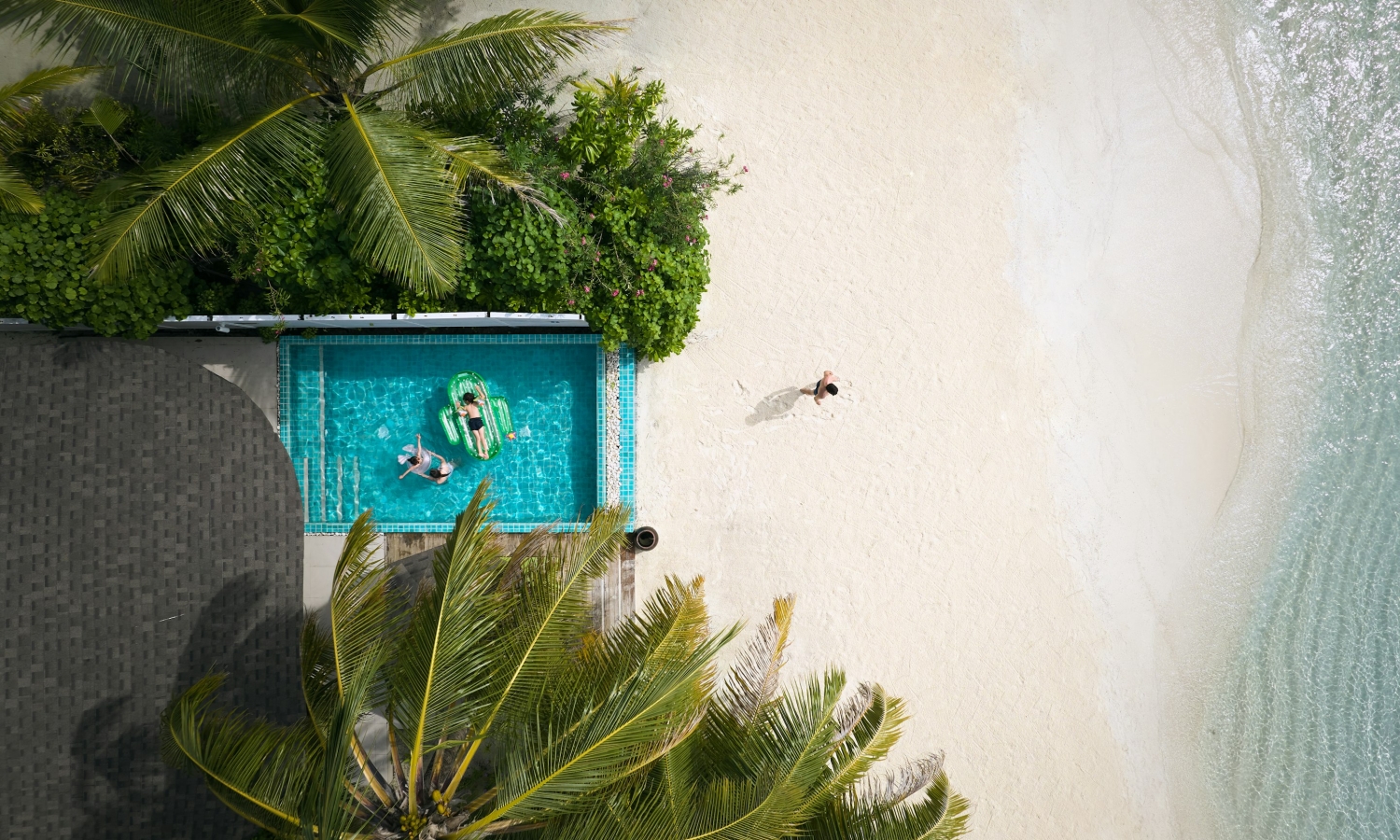
At Machchafushi Island Resort & Spa Maldives, The Centara Collection, the island is not simply the setting for the guest experience. It is the experience itself. Set within the South Ari Marine Protected Area (SAMPA), Machchafushi, meaning ‘Fish Island’ in Dhivehi, is defined by its relationship with the surrounding ocean, the life that inhabits it and the traditions that have shaped its identity.

Once a secluded, uninhabited island, Machchafushi has evolved while retaining its connection to the natural environment and cultural character of the Maldives. Today, its award-winning house reef, five times the size of the island, creates an underwater world inhabited by more than 1,000 species of reef fish and more than 200 varieties of coral. Beyond the reef, the waters of South Ari Atoll offer year-round opportunities to encounter whale sharks, manta rays and other marine life, while the 52 metre Kudhi Maa shipwreck has become a thriving underwater habitat of its own.

This sense of place forms the foundation of The Machchafushi Universe, a sensory expression of the island that invites guests to experience Machchafushi through sight, sound, fragrance, touch and flavour. Here, the senses are not experienced in isolation. The colour and movement of the reef are accompanied by the rhythm of the ocean, the feel of warm water against the skin and the salt carried by the breeze. Later, the flavours of the sea and the wider island find their way to the table. Together, these impressions create a deeper connection with the destination.

“Machchafushi has always had a character of its own. It comes from the environment around us, from the marine life and the reef, from the Banyan Tree and the traditions connected to it, and from the people who bring our experiences to life. The Machchafushi Universe gives us an opportunity to bring these elements together and allow guests to experience the island in a more meaningful way, through all of their senses,” said Francesco Pompilio, Cluster General Manager, Machchafushi Island Resort & Spa Maldives and Centara Ras Fushi Resort & Spa Maldives.

The experience begins with what can be seen. Beneath the surface, coral gardens come alive with reef fish, turtles, stingrays and reef sharks, while the Kudhi Maa shipwreck rests between 52 metres beneath the surface, its structure now covered in coral and inhabited by glassfish, trevally, snapper, lionfish, batfish and groupers. Around the atoll, encounters with whale sharks and manta rays offer a different perspective on the scale and diversity of the marine environment.

Above the water, the island reveals another landscape. The more than 200-year-old Banyan Tree, known as the Ummeedhu Tree in Dhivehi, meaning ‘Wish Fulfilment’, stands at the heart of the island, its roots reaching deep into the earth and its branches extending towards the sky. The changing light across the lagoon, the movement of birds through the vegetation and the shifting colours of the ocean create a visual landscape that changes naturally throughout the day.

Sound gives the island its rhythm. Along the shoreline, waves move across the reef, birds call from the vegetation, and the breeze moves through the palms. Beneath the surface, the soundscape becomes quieter, shaped by the movement of water, the rhythm of breathing and the subtle sounds of a living reef. A snorkel across the house reef or a dive to the Kudhi Maa becomes as much an auditory experience as a visual one, bringing guests into a world where the sounds of the island recede and the ocean takes over.

The human rhythm of Machchafushi adds another layer. The preparation of a Thai dish at Suan Bua, the movement of a traditional wellness treatment and the unhurried pace of service create their own sounds across the island. Together, they form an understated soundtrack to a place shaped as much by moments of stillness as by discovery.

Fragrance carries the character of the island on the breeze. Salt air and sea spray accompany the shoreline, while coconut, coastal vegetation and the earth beneath the island offer subtler notes further inland. The scent of freshly prepared ingredients emerges from the kitchens, while at SPA Cenvaree, natural aromas meet the traditions of Thai wellness through essential oils, botanical ingredients and traditional Thai treatments.

Touch offers perhaps the most immediate connection with Machchafushi. Bare feet meet warm sand, cool water moves across the skin and the gentle resistance of the sea changes with every stroke. Entering the water for a snorkel or dive creates a physical connection with the underwater world, from the sensation of descending through the water column to the changing currents around the reef. Kayaking and paddleboarding offer another way to experience the lagoon, allowing the surface of the water to become part of the journey.

On land, touch takes on a quieter character. Traditional Thai massage and wellness treatments at SPA Cenvaree centre on movement, pressure and balance, while beneath the Banyan Tree, the Sacred Thread Ceremony offers a more personal connection through a simple cultural ritual. In different ways, each experience brings guests closer to the island.
Flavour completes the sensory journey, reflecting the diverse influences that form part of Machchafushi’s identity. At Suan Bua, traditional Thai cuisine is presented through authentic flavours and techniques, while Mare Azzurro Italian Coastal Cuisine draws on the simplicity and character of Italian coastal cooking. The Reef presents an indulgent all day dining experience, with a variety of world cuisines served buffet style, from local Maldivian specialities to international favourites.

At Aqua and Coral Bars, classic cocktails meet island inspired signatures, adding another expression of the destination to the glass. Beyond the restaurants and bars, dining experiences bring cuisine into the island landscape, allowing the setting itself to become part of the occasion. From the waters surrounding Fish Island to the flavours served upon it, the connection between Machchafushi and the sea finds its way naturally to the table.
A first snorkel may reveal a turtle moving across the reef or a reef shark passing through the shallows. Further exploration brings coral formations, schools of tropical fish and the quiet presence of the Kudhi Maa. For experienced divers, sites such as Kudarah Thila, Broken Rock, Dhigurah Beyru and Maamigili Corner offer opportunities to encounter a wider range of marine life and underwater environments. Night snorkelling introduces yet another dimension, revealing a reef transformed after dark.

For those venturing further into the atoll, whale shark encounters offer a profound sense of scale. South Ari is renowned for year round whale shark sightings, allowing guests to experience these gentle giants in their natural environment. Manta rays, turtles, sharks and schools of tropical fish add to a marine landscape that is constantly moving and evolving.
Together, these experiences form a more complete expression of Machchafushi. The island is not defined by a single attraction, restaurant or wellness ritual, but by the relationship between its natural environment, cultural heritage, marine life and the people who bring the destination to life.
Machchafushi is, ultimately, an island that reveals itself gradually. Not through a single moment, but through the accumulation of sensory impressions that stay long after the experience itself has passed.
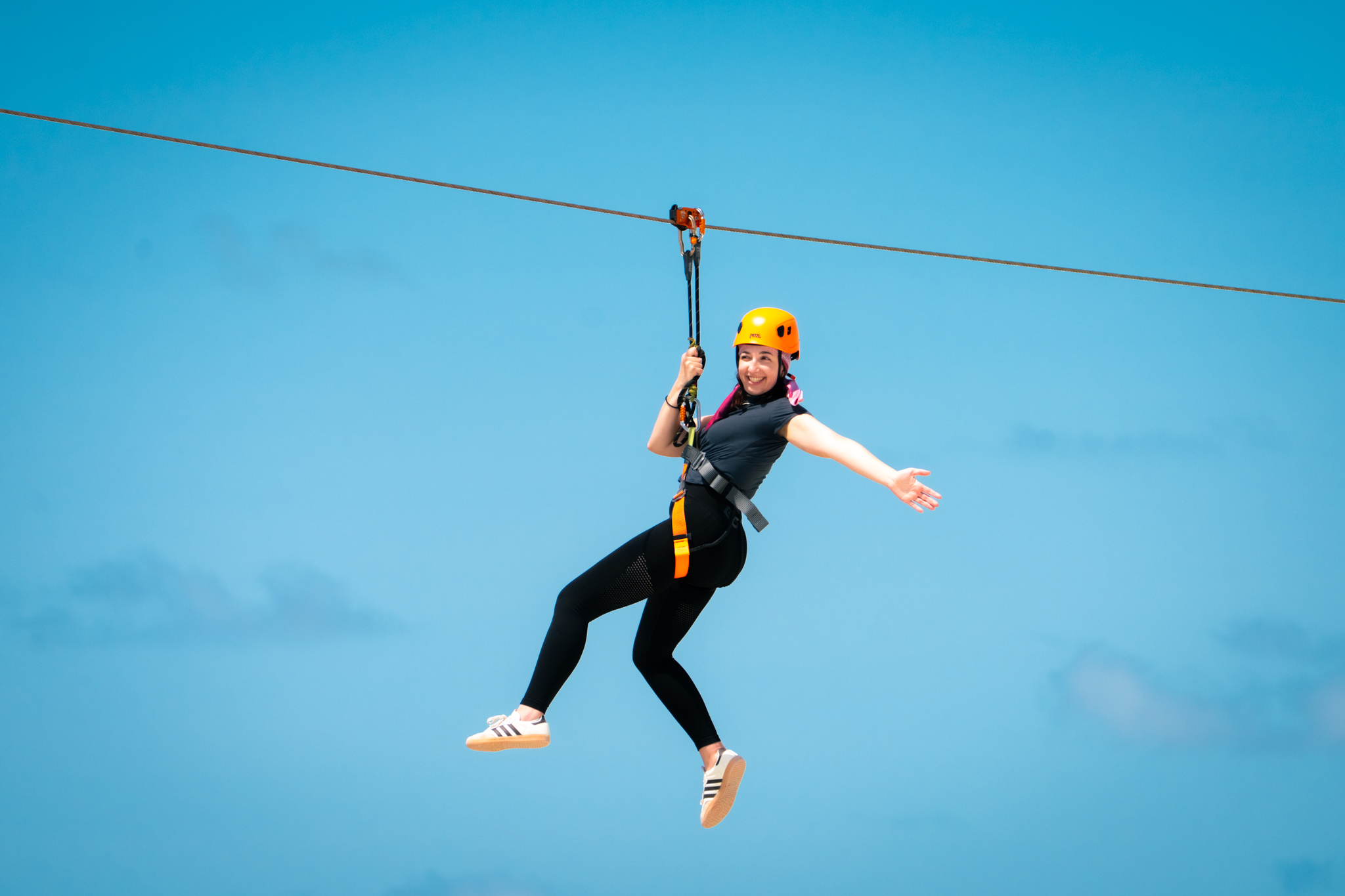
Zipline Maldives, the first island-to-island zipline in the Maldives, has received the Global Excellence Award for “World’s Most Beautiful Zipline – Maldives” at the Global Brand Awards 2026.
The recognition was presented as part of Season 2 of the Global Brand Awards, Sri Lanka Chapter. The certificate of achievement was presented to Ibrahim Asim of Vahmaafushi Picnic Island, recognising the project’s contribution and performance.

Located in South Malé Atoll, Zipline Maldives connects Maafushi with neighbouring Vahmaafushi, taking riders across 428 metres of open ocean between the two islands. The attraction, which opened earlier this year, introduced an island-to-island zipline experience to the Maldives and has added a new adventure tourism offering to the country’s local island sector.
The ride takes approximately 45 to 60 seconds and operates on two parallel lines, allowing two people to travel side by side. According to Zipline Maldives, more than 2,000 riders from over 50 countries have used the attraction since its launch.
The experience begins in Maafushi and crosses the lagoon to Vahmaafushi. A standard booking includes the 428-metre zipline ride, safety briefing and equipment, a return speedboat transfer, a welcome drink and access to Vahmaafushi Island. The attraction is open to riders aged six and above, subject to a weight range of 40 to 110 kilograms and operating conditions.

Vahmaafushi was developed as an experience-focused island close to Maafushi, combining the zipline with beach visits, dining, private celebrations and other island activities. Located around two minutes from Maafushi by boat, the island forms part of efforts to expand the range of experiences available to visitors staying in one of the Maldives’ largest local tourism destinations.
The zipline was introduced commercially in May 2026, with its operators positioning the over-ocean crossing as a new attraction for tourists and residents. Its location near Maafushi also allows visitors staying in the wider South Malé Atoll area to incorporate the activity into day excursions.
The Global Excellence Award marks an international recognition for the attraction within months of its opening, as local tourism operators continue to introduce experience-based activities alongside the Maldives’ established accommodation and marine tourism offerings.
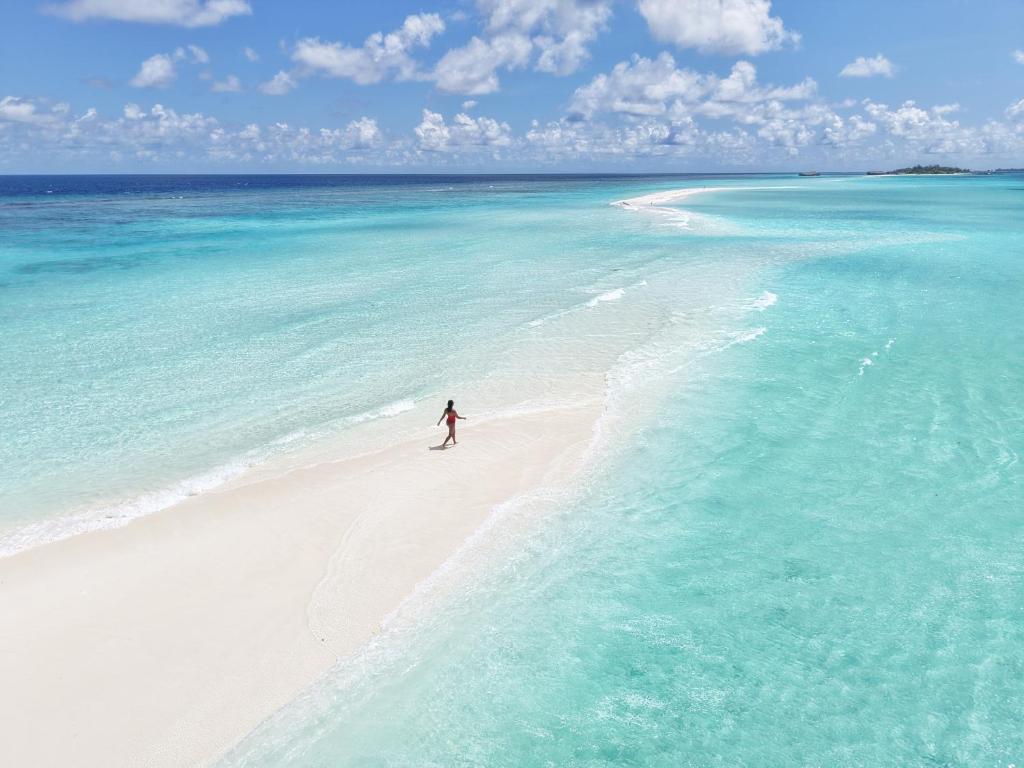
Dhigurah in Alifu Dhaalu Atoll has been ranked among the world’s 10 most valuable holiday beaches, with its stretch of sand assigned an estimated value of MVR 2.9 billion (€162.7 million) in a study by luxury villa holiday specialist CV Villas.
The island placed eighth in the global ranking, ahead of Seven Mile Beach in the Cayman Islands and Copacabana in Rio de Janeiro, Brazil.
The study calculated the hypothetical cost of owning some of the world’s best-known beaches by valuing the sand as coastal land. The figures do not represent sale prices or suggest that the beaches are available for private purchase.
Dhigurah was the only Maldivian beach included in the global top 15. Known for its long sandbank and proximity to whale shark habitats in South Ari Atoll, the inhabited island has become a destination for guesthouse tourism, diving and marine excursions.
Florida’s Siesta Beach topped the global ranking with an estimated value of €1.08 billion, followed by Pampelonne Beach in France at €843 million and Praia da Falésia in Portugal at €573.2 million.
Grace Bay in the Turks and Caicos Islands was ranked fourth at €376.4 million, while Bondi Beach in Sydney completed the top five with an estimated value of €365 million.
Hannah Marshall, luxury travel destination expert and marketing manager at CV Villas, said the research highlighted the role of location in determining coastal land values.
“Everyone has a beach that means something to them, so there’s something fun about seeing what those stretches of sand might be ‘worth’ if you valued them like the land behind them,” Marshall said.
“What comes through is how much location drives the figure: a beach in St-Tropez or on Siesta Key carries a value that a quieter shore — even just as beautiful — simply won’t.”
While Siesta Beach had the highest total estimated value, The Baths on Virgin Gorda in the British Virgin Islands recorded the highest value per square metre, at €8,846. Princess Diana Beach in Barbuda was the most affordable beach assessed, at approximately €199 per square metre.

-

 Cooking1 week ago
Belgian Chef Wout Bru to bring exclusive dining experiences to Meyyafushi, Fushifaru Maldives
-

 News1 week ago
.Here Baa Atoll completes two-island concept with opening of Nowhere Private Island
-

 Cooking1 week ago
Award-winning Pastry Chef Elena Nabiullina brings contemporary pâtisserie to The Nautilus Maldives
-

 News1 week ago
Patina Maldives announces Orthodox Christmas celebrations with Russian cuisine and live entertainment
-

 News1 week ago
Six Maldives spas operated by Mandara Spa recognised in global top 100 list
-

 Cooking1 week ago
Barceló Nasandhura Malé partners with Ministry of Crab for rooftop dining experience
-

 Action1 week ago
Adaaran Select Hudhuran Fushi brings together 40 women for surfing, wellness retreat
-

 News1 week ago
COLOURS OF OBLU reveals festive experiences for families and couples across four resorts