

Action
Great night life in Maldives with ‘Bodu Beru’


By Niuma Ugail
It so happens that Lisa from North Yorkshire, England was browsing through various holiday brochures. For her next holiday, she wants to visit an exotic place. The Maldives, of course is a place she has heard of, but never visited before. Stunning weather, pristine beaches and clear waters – that’s what comes to her mind when she thinks of the Maldives.
Then, a thought crossed her mind, “What about night life? Apart from watching the shimmering night sky and counting stars, what else can I do during evenings in a quite place like the Maldives?”
Well, your choices on pub crawling might be rather limited when you are holidaying in a remote island. However, nightlife in the Maldives is far from boring. There is a variety of options to choose from. As the saying goes, when in Rome do as Romans do, and so when you are in a remote island in the Maldives you must experience night life the Maldivian way.
In this respect, the traditional Maldivian music and dances are not to be missed. Bodu Beru, Thaara, Lagiri and Bandiya are some examples of how the locals combine traditional music with local dance moves. In particular, experiencing the famous Maldivian cultural dance of Bodu Beru is certainly a must.

Bodu Beru performers on a resort island in Maldives. PHOTO/ COCO COLLECTION
Bodu Beru in local Dhivehi language literally means the “Big Drums”. It has its origins and roots in East Africa, and therefore Bodu Beru invokes a certain type of inner feelings that one cannot explain. Historians believe that music came to the islands of the Maldives around the 11th or 12th Century AD – this is something the Africans and the Arabs passed to the islanders on their route to Asia. Like everything else, the traditional forms of this type of music and dance moves have evolved over the years and have neatly blended in with modern cultural norms.
When first seen, Bodu Beru would appear to be a mindless form of dance without any particular structure to it. However, this is far from it. In Bodu Beru, usually there are 10 to 15 people in a group. There is a lead singer who sings a traditional song and the rest sings the chorus. There are five to six drummers called Beruverin. The Beru or the drum is the main and most special instrument used in this traditional music. The drum itself is locally crafted with material readily available on the islands. For example, to craft a good drum one needs a piece of hollowed coconut wood with both ends of it covered either by manta ray or goat skin. A coir fibre wire can be tied to the wood piece which acts as a strap.
To play Bodu Beru, one would need to wear the traditional costume – usually a sarong and a white shirt. All the members in the band wear the same design of clothes. A typical Bodu Beru dance takes place on an open sandy beach where one half of the drummers will often face the other half, all standing in a row. The drum master will often sit at the centre, with a big drum giving the tempo and leading the rest of the musicians.

Tourists join in and dance during a performance of Bodu Beru. PHOTO/ KURUMBA MALDIVES
The most interesting and intriguing thing about Bodu Beru is that it gets people to stand and dance – perhaps because of its original connection to Africa! The music starts with a slow beat and in due course would lead to a hyperactive and almost to a frantic set of beats and moves. When the tempo of the music increases it naturally allows dancers to move all around in an improvised stage, in a very ample way, turning and twisting their bodies, moving their arms up and down, looking at each other or not, entering into some kind of phase that appears to be uncontrollable. The moves all come together in response to the beating of the drums. Along with the drums, dancers slowly start to sing a slow traditional Dhivehi song in a very languorous voice that progressively rise and speed up. As the song continues, the rhythm picks up and people come out of the chorus and dance to the music. As the rhythm of the drums takes on the night, the scene and the music can quickly become hypnotic. If you have the desire to invoke an inner state in you and increase the dopamine level in your brain without resorting to an illicit substance, then Bodu Beru certainly is the choice for you.
For a tourist, the traditional Bodu Beru dance is on the menu in almost all resort islands. Usually there are two to three evenings in which Bodu Beru is performed on resort islands. During those nights, guests can join the fun and are encouraged to join the chorus, singing and clapping along to the music. The Bodu Beru songs usually have rhyming words which makes it easy to follow and sing along, even if you do not understand Dhivehi. More importantly, the dance moves, surely, are easy to pick up. Besides, once you start moving to the rhythm of Bodu Beru, the “inner dancer” gets invoked, even if you have never danced before!
Note: Niuma Ugail is a Maldivian journalist currently reading for the BA in Public Relations with Journalism course at Leeds Beckett University in the UK.


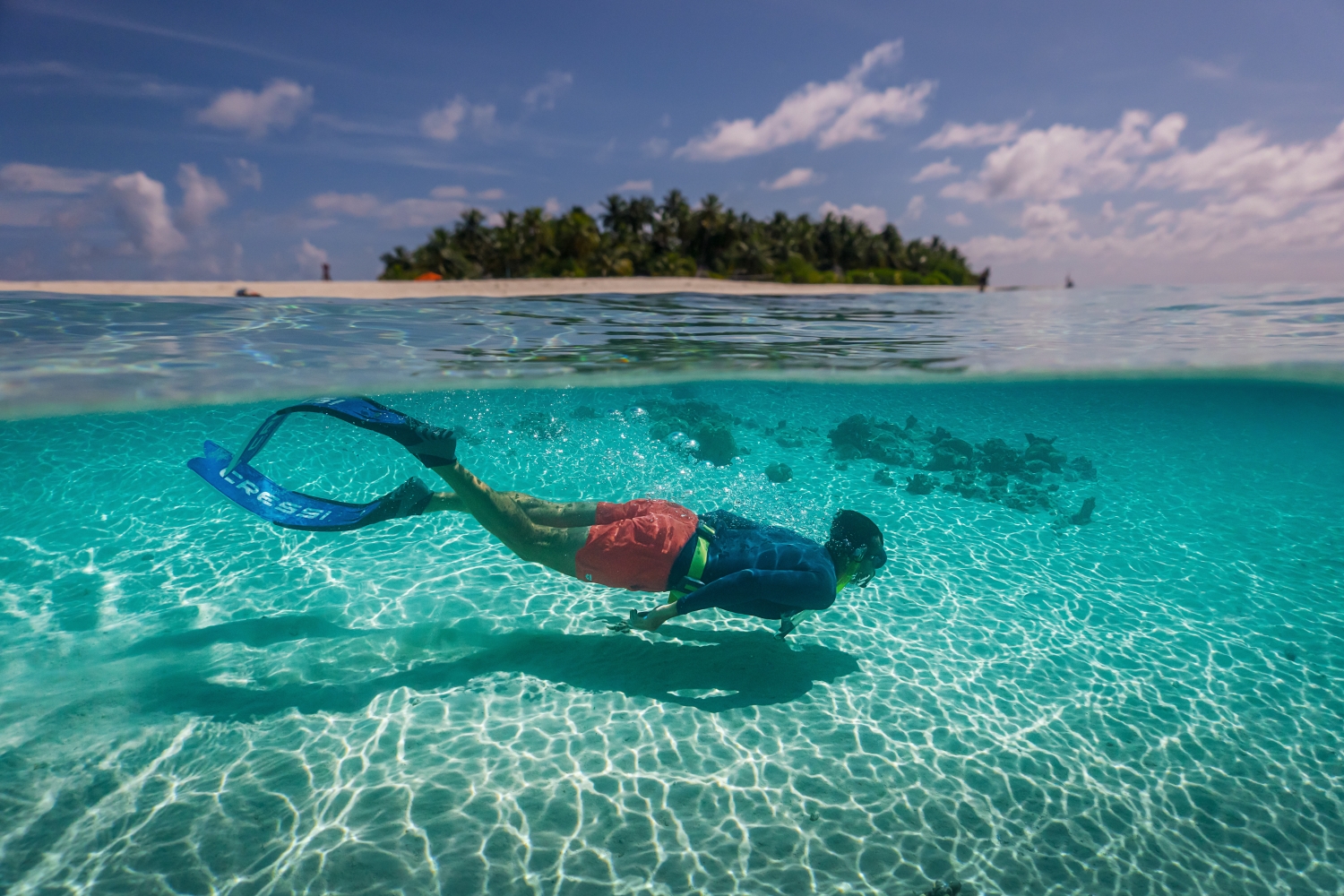
Marine experiences at Sun Siyam Iru Veli begin just beyond the island’s shoreline, from its house reef in Dhaalu Atoll to the waters of Faafu, Meemu and South Ari Atolls. For guests, this geographical reach means the underwater journey can take many forms, from a first guided snorkel close to the island to more advanced diving and encounters farther across the atolls.

The Big Encounters
Among the most notable journeys beyond the waters of Iru Veli is the Whale Shark Excursion to the South Ari Marine Protected Area. The guided snorkelling experience takes guests in search of the world’s largest fish, with the chance to snorkel alongside them when conditions allow. The same waters also offer manta encounters, another remarkable way to venture farther afield and see these graceful ocean giants in their natural environment.

Across the Atolls
The journey continues across Meemu and Faafu Atolls, where full-day explorations move between open-water encounters, quieter lagoons, coral reefs and uninhabited islands. Around Makunueri, guests can snorkel vibrant reefs with the chance to encounter turtles, sharks, rays and a variety of reef life. For those seeking a more exclusive experience, private journeys offer a way to discover coral gardens and lesser-visited stretches of ocean, with some also providing a first introduction to scuba in calm waters.

The House Reef, in Daylight and After Hours
Closer to Iru Veli, the house reef tells a different story. By day, guided snorkelling invites guests to coral formations and resident marine life directly around the island. After sunset, the same waters take on an entirely different character as nocturnal species emerge. The guided night snorkelling offers the chance to encounter nurse sharks and experience the reef from a whole new perspective with the help of fluorescent and blue lights.

A Different Side of the Water
For those looking for something less conventional, the SSI Mermaid programme brings a playful side to underwater exploration. Guests can swap fins for a mermaid tail and learn the techniques needed to move comfortably and confidently through the water. Combined with underwater photography and video, this experience offers a chance to explore a more imaginative side of underwater exploration at Iru Veli.

A Lasting Impact
The marine discovery at Iru Veli also extends beyond observation. Through the resort’s coral planting initiative, guests can contribute to the continued restoration of the house reef and leave a lasting connection beneath the surface. Back on land, the weekly Marine Night brings these stories together, sharing more about marine life, reef conservation and underwater environments surrounding the island.
Beyond the many ways to explore the ocean from the surface, the SSI-certified dive centre at Iru Veli offers adventures for seasoned divers and complete beginners alike. Certified divers can continue exploring the surrounding dive sites with the resort’s professional team, while first-timers can start with an introductory scuba experience. Guests looking to go further can also earn SSI certification during their stay, turning their holiday into the start of a new diving journey.
From the house reef to some of the Maldives’ most remarkable marine encounters, Sun Siyam Iru Veli reveals an island experience shaped as much by what lies beneath the surface as by what surrounds it.

Discover more marine activities, explore the latest Sun Siyam Iru Veli offers.
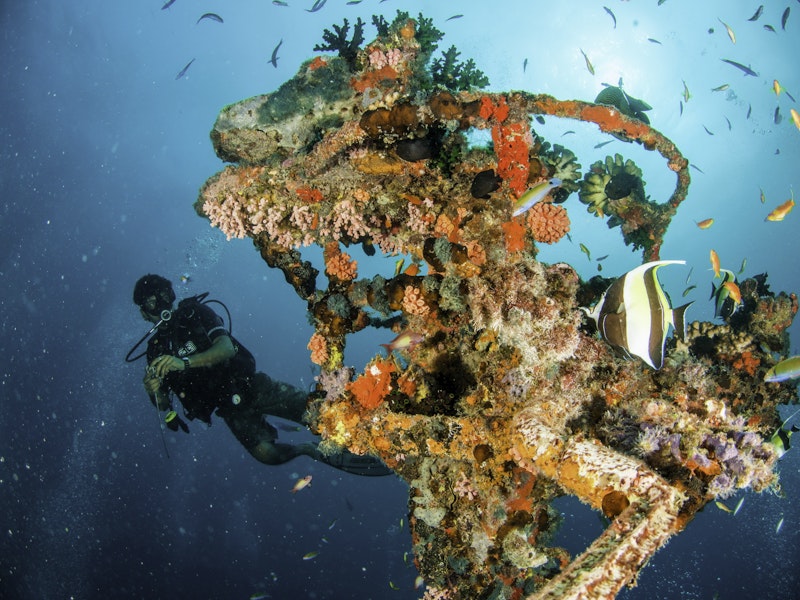
Machchafushi Island Resort & Spa Maldives, The Centara Collection, is set to host an exclusive underwater photography and media experience from 14 to 17 October 2026, in partnership with Youth Global Program in partnership with Nikon Middle East & Nikon India. The programme is supported by Lexar Middle East and Hollyland Middle East. Led by Nikon’s underwater photographers and welcoming select international media, the programme will offer an immersive exploration of Machchafushi’s exceptional marine environment and the underwater world of the South Ari Atoll.
Set within the South Ari Marine Protected Area (SAMPA), Machchafushi offers an exceptional setting for an exclusive underwater photography experience. The resort’s award-winning house reef, spanning more than five times the area of the island itself, creates an expansive underwater landscape shaped by vibrant coral gardens, diverse marine life, and a series of distinctive dive sites.

The experience will take Nikon underwater photographers and select media beneath the surface of Machchafushi, offering the opportunity to capture the island’s marine environment from a unique perspective. From coral formations and marine life to the deeper waters surrounding the island, the programme will showcase the diversity and character of the South Ari Atoll, including the renowned Kudhi Maa shipwreck, which rests between approximately 12 and 30 metres under the surface and has become an established artificial reef.
Together, Machchafushi’s award winning house reef, vibrant coral gardens, diverse marine life and Kudhi Maa create a compelling underwater canvas, offering visiting photographers and media an opportunity to experience and document a lesser seen perspective of the Maldives.

Beyond the reef, the programme will introduce participants to the wider Machchafushi experience, connecting the underwater environment with the island’s natural surroundings, dining, wellness and slower rhythm of island life. Together, these experiences offer a broader perspective of Machchafushi and its place within the South Ari Atoll.
The collaboration brings together Nikon’s expertise in photography and Machchafushi’s distinctive marine environment, creating an exclusive platform to showcase the underwater character of the South Ari Atoll through the lens of leading underwater photographers and international media, with support from Lexar Middle East and Hollyland Middle East.

Taking place from 14 to 17 October 2026, the experience will offer an opportunity to discover and document Machchafushi beyond the shoreline, from its award-winning house reef and vibrant marine life to the distinctive underwater landscapes surrounding the island. Through the photographers and media attending, the experience will bring a different perspective of the Maldives to audiences around the world.
Action
From zero experience to professional careers: Atmosphere Foundation celebrates Divemaster graduates
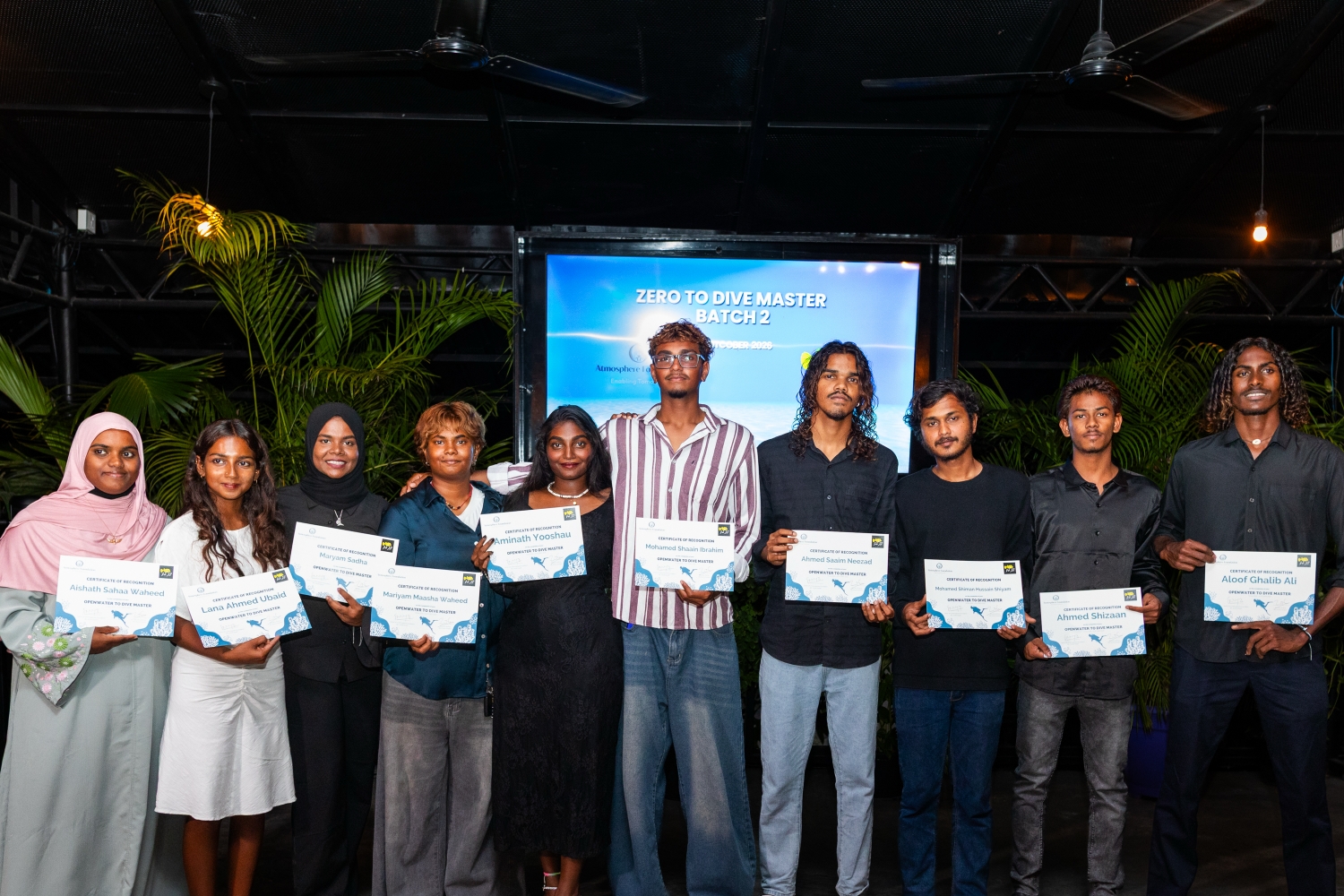
Atmosphere Foundation has celebrated the graduation of the second batch of its ‘Zero to Divemaster’ Scholarship Programme, bringing the total number of young Maldivians trained through the initiative to 20 as the Foundation continues to build pathways into professional careers in the country’s diving industry.
Ten participants completed the second batch of the three-month programme, which takes students through a structured training pathway from PADI Open Water Diver to Advanced Open Water Diver, Emergency First Response, Rescue Diver and, ultimately, professional Divemaster certification.

Delivered in partnership with Moodhu Bulhaa Dive Centre in Vilimalé, the programme is designed to enable Maldivians to enter the professional diving industry even without previous diving experience. The second batch, comprising five women and five men, began training in July following the completion of the inaugural cohort.
The latest graduation builds on strong outcomes from the first batch, which began in April 2026 with 10 participants. All 10 successfully obtained their professional Divemaster certifications, while nine have since secured employment across safari vessels, resorts and island-based dive centres.

The 90 per cent employment rate among the first batch highlights the programme’s success in translating professional training into direct employment opportunities within the Maldives’ tourism and marine sectors.
Beyond technical diving skills, the programme provides participants with training in safety, emergency response and the responsibilities associated with working as a professional Divemaster. The progressive training structure is intended to equip graduates with both the qualifications and practical competencies required to work in professional diving environments.
A key component of the initiative is the level of financial support provided to scholarship recipients. Atmosphere Foundation covers tuition, required certification and registration fees, while also providing accommodation and meals during the programme. The scholarship for the second batch additionally covered training materials and dive insurance, helping remove financial barriers that could otherwise prevent participants from pursuing professional diving qualifications.

By covering both the cost of training and participants’ day-to-day living requirements during the course, the programme allows scholarship recipients to focus on developing their diving skills and completing the demanding progression towards Divemaster certification.
The programme also links scholarship support with a longer-term commitment to the Maldives. Participants agree to work within the country’s diving and marine industry for at least two years after successfully completing their certification, helping ensure that the skills developed through the initiative contribute directly to the local workforce.
With diving forming an important part of the Maldives’ tourism industry, the initiative seeks to expand opportunities for Maldivians to develop specialised skills and pursue careers in an area where trained professionals are required across resorts, liveaboards and local dive centres.

The results of the first cohort provide an early indication of the programme’s potential. While only three graduates had secured jobs when the second batch was launched in July, that figure has since increased to nine, reflecting continued progression into employment following certification.
Following the completion of two batches, Atmosphere Foundation has confirmed that the Zero to Divemaster Scholarship Programme will continue, providing further opportunities for Maldivians seeking to enter the professional diving industry.

With 20 participants now having completed the programme across its first two cohorts, Zero to Divemaster is developing from a training initiative into an employment pathway, combining internationally recognised diving qualifications with practical skills, financial support and a direct connection to career opportunities within the Maldives.

-

 News7 days ago
50 visits, hundreds of dives: Bandos Maldives honours loyal guests with coral garden
-

 News1 week ago
Coco Bodu Hithi invites guests to make memories with ‘Island Glow’ festive season
-

 Cooking1 week ago
Park Hyatt Maldives Hadahaa announces six-chef Masters of Food & Wine series
-

 News1 week ago
Sun Siyam Iru Fushi builds more into the stay with expanded guest inclusions
-

 Cooking1 week ago
Park Hyatt Milan’s Chef Joshua Acquaviva heads to Alila Kothaifaru Maldives
-

 News1 week ago
Ifuru Island Maldives celebrates 3rd anniversary with fashion, dance and music
-

 News1 week ago
Adaaran Select Meedhupparu celebrates Maldivian heritage at festive cake mixing ceremony
-

 Awards1 week ago
RAAYA by Atmosphere wins Best Family Resort in Maldives at Travel Time Awards 2025