

Featured
Reaching zero: Soneva, Biogents lead way in sustainable pest management in Maldives


As regular guests to the Maldives might know, the islands can often be prone to large populations of mosquitoes, particularly during the monsoon season.
Mosquito-borne illness is a concern in the Maldives, although it varies by island and by time of year. The island nation has been malaria free since 1984; however, cases of dengue and chikungunya are still found on some local islands.
While many resorts use chemical fogging to manage the mosquito population, Soneva recently revealed that for more than a year they have been working with Biogents, a company on the forefront of international mosquito control research, in order to introduce a sustainable, insecticide-free mosquito management system.
The aim of this partnership between Soneva and Biogents is to bring the mosquito population on the island of Kunfunadhoo, the home of Soneva Fushi, down to zero, to show the international community that it is possible to use sustainable insecticide-free alternatives in mosquito control, and to be the first mosquito-free island in the Maldives.
“Improving the efficacy of mosquito traps has always been the core expertise of Biogents. So, we had the right tools to offer, but the approach also needs a solid understanding of mosquito ecology,” said Dr Andreas Rose, Co-Founder and Management Board Member at Biogents.
“Soneva really understands this, and thanks to the vision and expertise of all the involved partners, the project is indeed setting new standards.”

Starting July 2019, a month into the operation, a sharp decline in the number of mosquitoes trapped on the island was already observed, and today the mosquito population has been reduced by around 95-98 per cent.
Soneva’s target is to eliminate all mosquitoes on Kunfunadhoo island by the end of 2020.
Biogents has assured Soneva that eliminating mosquitoes from the island will have no impact on the local food chain and ecosystems, as Kunfunadhoo has low biodiversity and no freshwater aquatic ecosystems where mosquito larvae are a necessary part of the food chain.
“The adoption of this project by Soneva is exemplary and sets an example for the rest of the world on how sustainable and environmentally-friendly mosquito management can replace the indiscriminate use of chemical pesticides,” said medical entomologist Bart GJ Knols, who together with Soneva’s Integrated Pest Control Manager Akib Jahir leads the implementation of the project on Soneva Fushi alongside Biogents and Soneva.
The halting of chemical fogging has also resulted in the appearance of a greater diversity of flora and fauna on the island.
Before the partnership with Biogents, the mosquito population at Soneva Fushi was managed by a conventional pest control company with hot fogging and mist blowing.
However, the mosquito population built strong resistance to this treatment over time, rendering it ineffective. Fogging is also directed against adult mosquitoes only.
While mosquitoes turned resistant, the fogging reduced the number of other insects usually found on Kunfunadhoo Island, including species of butterflies, dragon flies, bumble bees, beetles and more.
Now, with the new mosquito management system, guests and hosts alike have seen an increase in the Maldives’ native insects. These natural pollinators are now back in abundance, which means there are more flowers, more fruits and Soneva Fushi’s organic gardens are thriving as a result with more produce to serve its restaurants.
With the increase in fruits and insects, there are also more birds visiting the shores of Kunfunadhoo and fire flies are once again spotted at night.
“At Soneva, we have always used nature as an inspiration for our innovation. In fact, our organisational structure is inspired by the relationship of the planets to each other. In the middle of last year at Soneva Fushi, we set a target to become the first island to be completely mosquito free,” said Sonu Shivdasani, Soneva’s CEO and Co-Founder.
“We installed more than 500 Biogents traps throughout the island. While some mimic mosquito breeding sites, others hold a sachet that mimics human sweat with the smell of lactic acid. We also add a mix of sugar water and yeast as a means to produce carbon dioxide, mimicking exhaled human breath. So, these traps smell and breathe like a human being. The mosquitoes are lured into a catch-bag where they dry out and die.”

Two types of mosquito traps, with a total of more than 500, have been deployed across the island: the BG-GAT, which is a passive trap for egg-laying tiger mosquitoes that have bitten someone and are searching for a place to lay eggs; and the BG-Mosquitaire CO2, which attracts mosquitoes in search of blood.
Carbon dioxide, produced through yeast and sugar fermentation helps attract the mosquitoes in combination with lactic acid that humans emanate from the skin.
In tandem to placing the traps, Knols and Jahir also educated Soneva Fushi’s hosts about mosquito breeding sites and how to reduce the amount of stagnant water found on the island. This included reducing the use of tarpaulins, island clean-up days to remove coconut shells and any other objects that could contain water, and daily inspections of island sectors for the presence of mosquito larvae.
Recently, Soneva gifted a number of mosquito traps to the parliament in Male, the capital of the Maldives, and is currently deploying traps at Soneva Jani in the Noonu atoll. There, in a time-frame of 48 hours, a single BG-Mosquitaire CO2 trap caught a record number of 2,972 mosquitoes.
“In the first weeks of implementing this, the traps caught up to 9,000 mosquitoes a day, on average 20 mosquitoes per trap. Since then, this number has reduced to single digits. We have two mosquito species on the island, the Aedes and the Culex. The Culex is nearly extinct and we hope that the Aedes will soon follow,” said Sonu.
“It is my hope that this will be a perfect example of how closely following and understanding the laws of nature, and innovating around it, one can find solutions that end up being more effective than solutions that are the result of bioengineering.”
In 1995, the award-winning luxury resort Soneva Fushi set the standard for all desert island barefoot luxury hideaways in the Maldives. Located in the Baa Atoll UNESCO Biosphere Reserve, Soneva Fushi pairs the castaway fantasy with intelligent luxury.
Stay in one of the 63 island villas, ranging in size from one to nine bedrooms, and eight one- and two-bedroom Water Retreats.
Each island villa comes with its own stretch of beach, most have their own pools, and are hidden among dense foliage within touching distance of a pristine coral reef. The Water Retreats all have water slides into the sea below, private pools, and Soneva’s iconic retractable roof above the master bed.
Intuitive service is provided by Mr./Ms. Friday butlers.
Highlights include the outdoor Cinema Paradiso, exploring the cosmos at the high-tech Observatory, indulging in the complimentary chocolate, ice cream and cheese rooms, five hundred wines to choose from, and 11 restaurants and bars.
Soneva’s floating villa concept, Soneva in Aqua, is a luxury two-cabin yacht that sets sail from Soneva Fushi and Soneva Jani.
Explore the treasure trove that is the children’s Den, that comes with a Lego room, dress up room, two pools, a water slide and more.
There is a multi-purpose facility that encompasses the Maldives’ only hot glass studio, the glass gallery, and boutique where guests can learn the art of glassblowing.
If the experiences are magical, the philosophy is simple: No news, no shoes. No pretensions either.


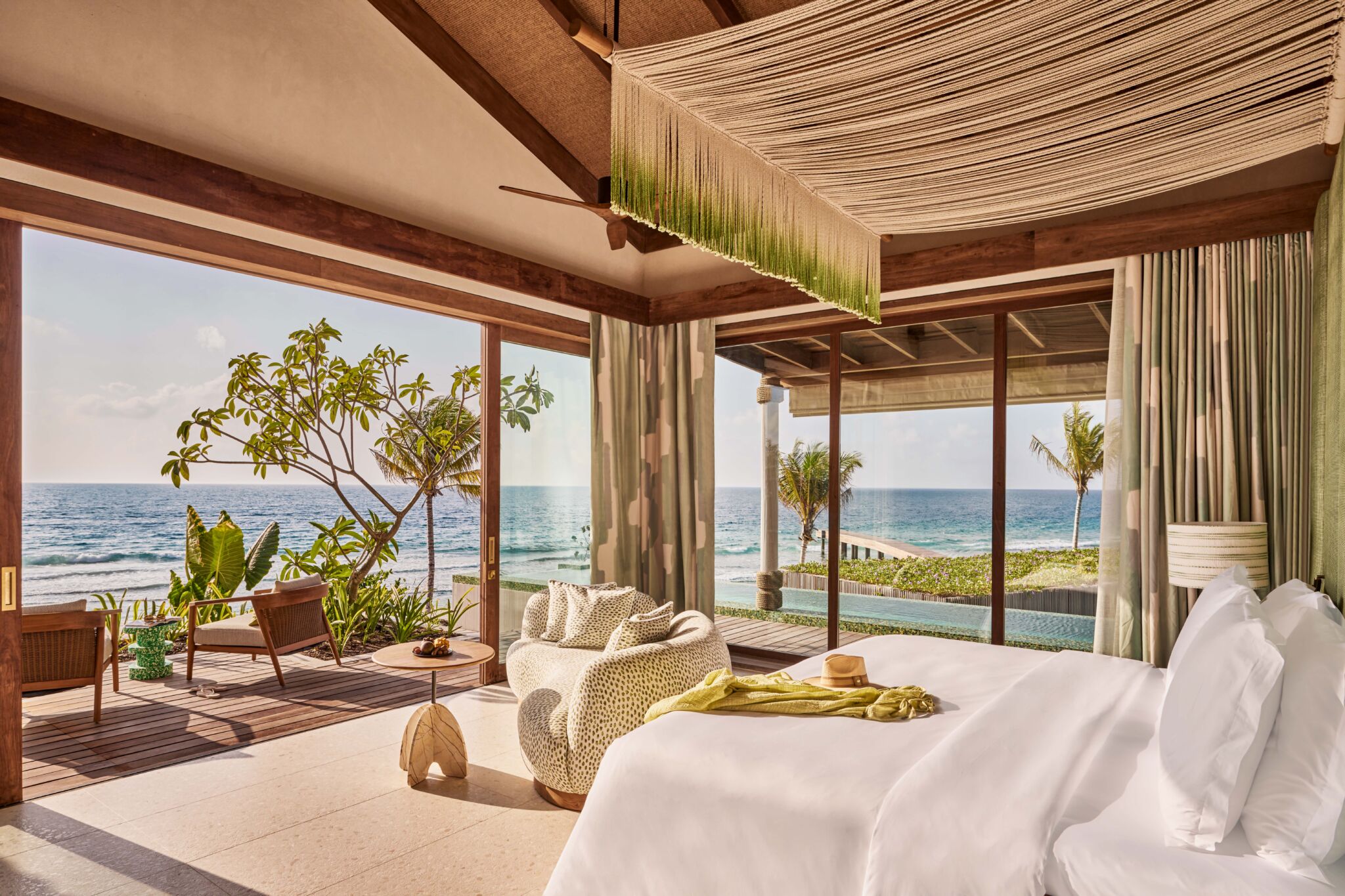
.Here Baa Atoll, a private island retreat in the Maldives, has been named the No. 6 Resort in the Indian Ocean in the Condé Nast Traveler Readers’ Choice Awards 2026.
The annual Readers’ Choice Awards recognise hotels, resorts, destinations, airlines and other travel experiences based on votes submitted by Condé Nast Traveler readers.
The recognition places .Here Baa Atoll among the highest-ranked resorts in the Indian Ocean and comes during a milestone year for the property.
Located within the UNESCO Biosphere Reserve of Baa Atoll, .Here Baa Atoll comprises nine residences spread across two natural islands, Somewhere and Nowhere.
Somewhere features seven three- and four-bedroom residences extending from the beach towards the lagoon and designed for families and groups travelling together. Each residence offers indoor and outdoor living spaces, multiple pools, private dining and personalised Roohu service. Guests are transferred directly to their residence by private speedboat, avoiding a conventional lobby and check-in process.
Condé Nast Traveler has previously highlighted the resort for its emphasis on privacy, its beach-to-lagoon residences and its discreet approach to luxury.
The resort experience also includes Nowhere Private Island, which is reserved exclusively for a single group at a time. The island features a five-bedroom Presidential Residence and a three-bedroom Lagoon Residence, providing eight bedrooms and 3,329 square metres of private living space, supported by dedicated service and individually curated experiences.
The Readers’ Choice Award follows several other recognitions received by .Here Baa Atoll during 2026. The resort was included in the Condé Nast Traveler Hot List 2026, with the publication highlighting its residences and design. It has also received international recognition for its architecture and design, alongside creative collaborators Kulör Group, Muza Lab and Topo Design Studio.
Elina Adiyan, Resident Manager of .Here Baa Atoll, said: “To be recognised by the readers of Condé Nast Traveler so early in our journey is incredibly meaningful. .Here was created around a simple idea: to give guests extraordinary space, genuine privacy and the freedom to experience the Maldives entirely on their own terms. This recognition belongs equally to our team, whose care and dedication bring that vision to life every day. We are deeply grateful to everyone who voted for us.”
The latest recognition adds to .Here Baa Atoll’s growing international profile within the luxury travel sector, with the resort positioning privacy, spacious accommodation, design and personalised service at the centre of its guest experience.
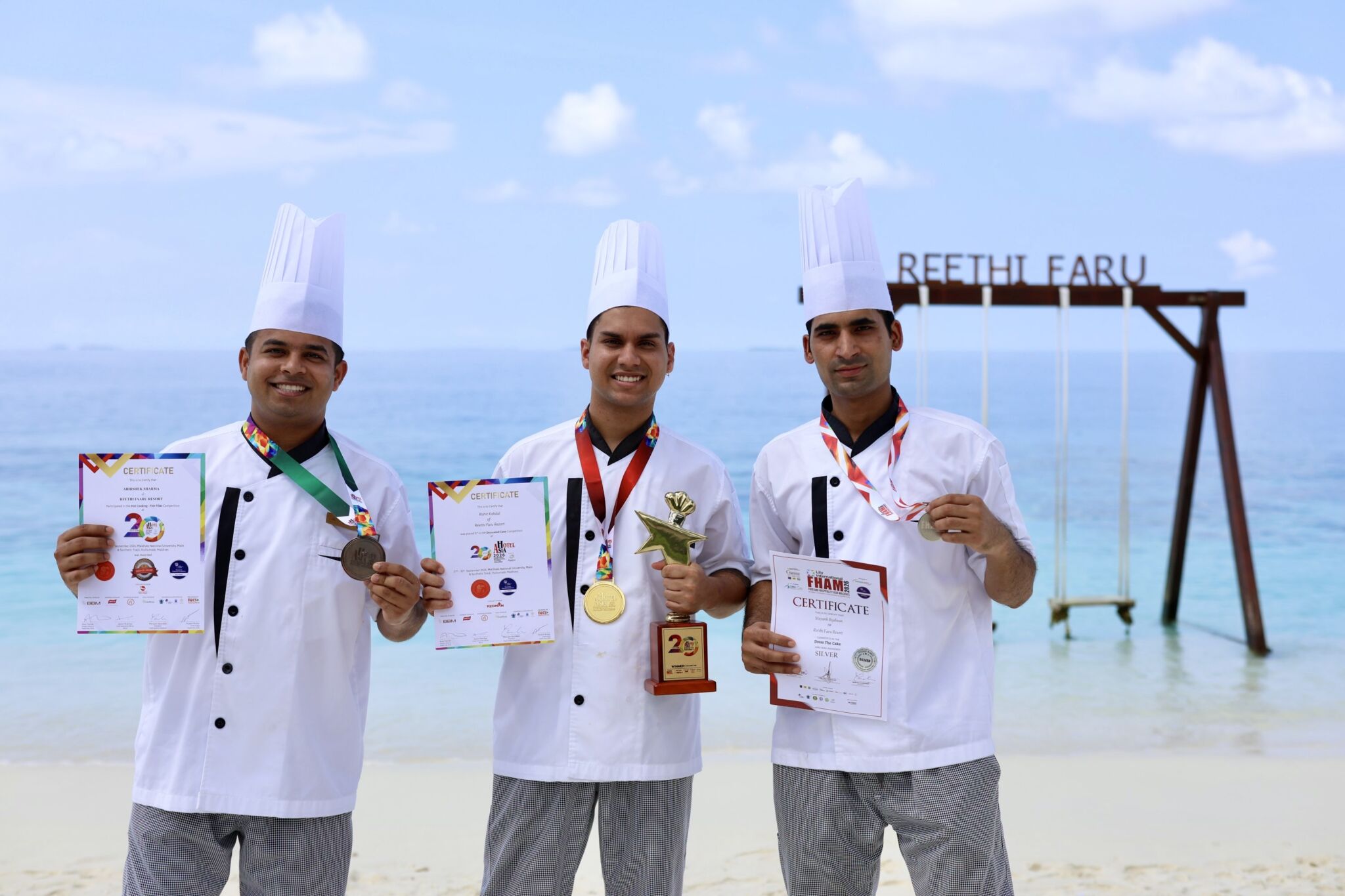
Reethi Faru Resort has announced three medal wins by members of its culinary team at the Hotel Asia Culinary Challenge and the FHAM Global Culinary Challenge.
At the Hotel Asia Culinary Challenge, Chef Rohit Kabdal received a Gold Medal in the Decorated Cake category, recognising his work in cake design, presentation and technical execution.
Chef Abhishek Sharma also represented Reethi Faru Resort at the competition, earning a Bronze Medal in the Hot Cooking Fish category.
At the FHAM Global Culinary Challenge, Chef Mayank Bijalwan secured a Silver Medal in the Dress the Cake category, adding a third medal to the resort’s recent culinary achievements.
The results highlight the range of skills within Reethi Faru Resort’s culinary team, spanning pastry, cake presentation and hot kitchen techniques.
According to the resort, participation in professional culinary competitions provides its chefs with opportunities to develop their skills, exchange knowledge and test their abilities alongside other industry professionals.
The achievements also form part of Reethi Faru Resort’s wider focus on dining and guest experience, with its culinary team involved across the resort’s restaurants and food and beverage offerings.
Reethi Faru Resort congratulated Kabdal, Bijalwan and Sharma on their respective achievements, describing the results as recognition of their commitment, technical ability and creativity.
The three medals add to the resort’s recent culinary accolades and reflect its continued emphasis on professional development within its kitchen team.
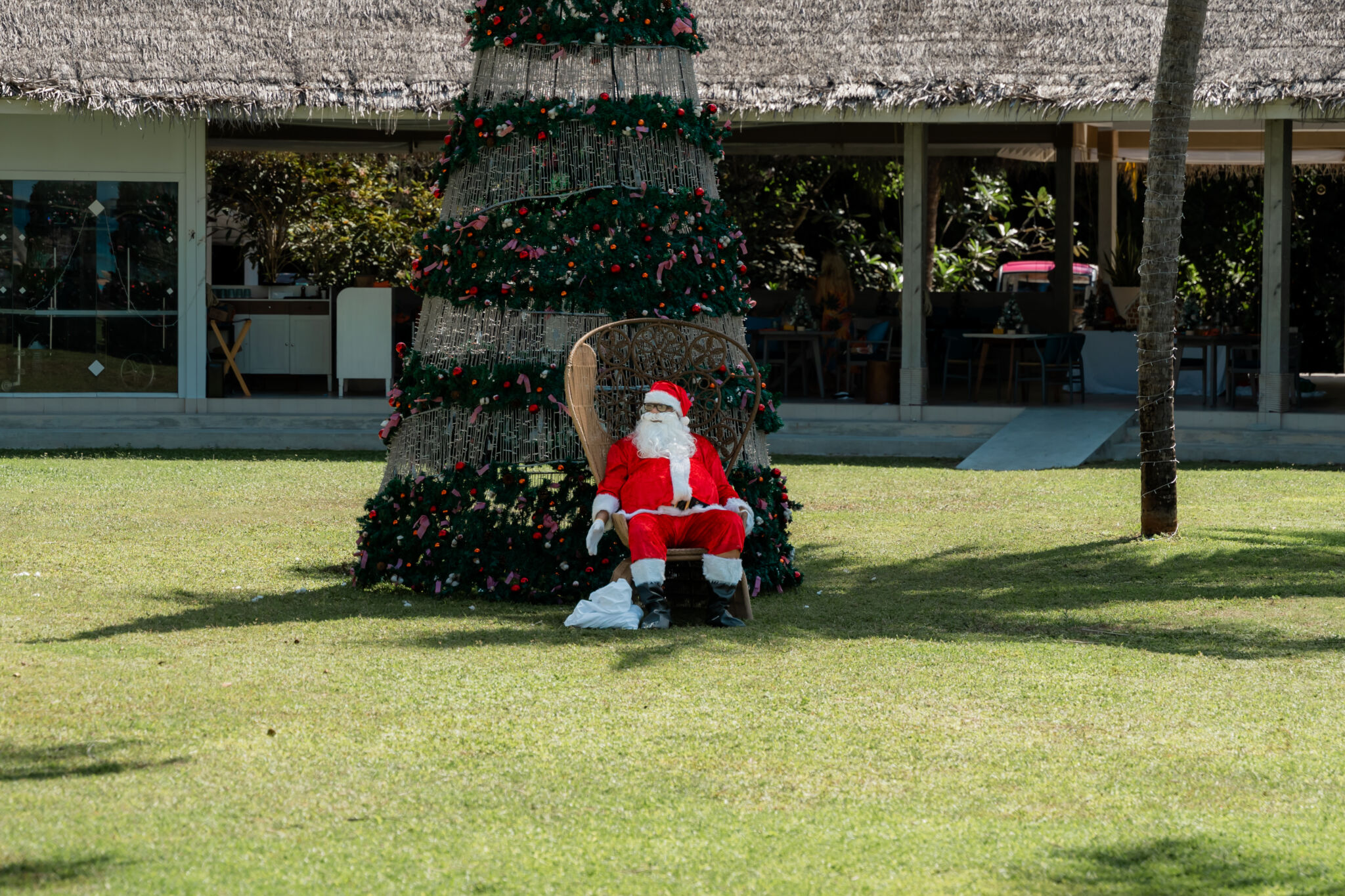
Ifuru Island Maldives will celebrate the 2026 festive season with “Echoes of the Ocean and Stars”, an immersive Christmas and New Year programme running from 21 December 2026 to 10 January 2027.
Inspired by the natural beauty of the Maldivian ocean, the night sky and the festive season, the theme will bring together marine and celestial elements across the resort’s décor, entertainment, dining, activities and guest experiences.
At the centre of the concept is the idea that the ocean carries memories, while the stars represent dreams and new beginnings. Rather than presenting the festive season as a series of standalone events, Ifuru Island plans to create a connected journey spanning Christmas, New Year and Orthodox Christmas.
The visual identity of “Echoes of the Ocean and Stars” will combine an underwater-inspired world with celestial elements. Bioluminescent-inspired colours, reef motifs and glowing details will be paired with stars, constellations and moonlit features throughout the resort.

The colour palette will include deep ocean blue and midnight navy alongside pearl white, silver, soft turquoise, pink and purple, with accents of celestial gold. Coral forms, waves, shells and reef-inspired features will be combined with stars and festive details, giving traditional Christmas elements an interpretation inspired by Ifuru Island’s natural surroundings.
The concept will extend beyond decorations to dining, entertainment, activities, uniforms, signage and festive communications.
The resort said the theme is also intended to reflect the emotions associated with the festive period. The ocean represents peace, connection and possibility, while the stars symbolise hope, dreams, guidance and new beginnings.
The festive journey will begin on 21 December and continue through 10 January, encompassing Christmas, New Year and Orthodox Christmas celebrations.
Christmas Eve on 24 December will feature festive dining and entertainment, while Christmas Day on 25 December will centre on family celebrations and relaxed island experiences.
On 31 December, Ifuru Island will mark New Year’s Eve with the main celebration of the festive period, before welcoming 2027 on New Year’s Day with activities centred around the island setting and surrounding ocean.

Celebrations will continue from 1 to 10 January during the Orthodox festive period, including Orthodox Christmas.
According to the resort, the broader concept is intended to connect the entire guest experience, with the island’s natural environment forming part of the festive setting. The ocean will provide inspiration during the day, while the night sky will shape the atmosphere after sunset.
Dining experiences, entertainment and activities will each form part of the wider “Echoes of the Ocean and Stars” narrative, giving guests different experiences throughout their stay while maintaining a consistent creative theme.
The programme is designed for guests travelling with family, friends or loved ones, with Ifuru Island aiming to combine its natural surroundings with festive celebrations and shared experiences.
The full festive programme, including entertainment, activities, culinary experiences and special events, will be announced separately.
“Echoes of the Ocean and Stars” will run at Ifuru Island Maldives from 21 December 2026 to 10 January 2027. Christmas Eve will be marked on 24 December, Christmas Day on 25 December, New Year’s Eve on 31 December, New Year’s Day on 1 January and the Orthodox festive period from 1 to 10 January 2027.

-

 News1 week ago
‘The Curse of the Vigani’ takes over Oaga Art Resort this Halloween
-

 News1 week ago
InterContinental Maldives marks brand’s 80th anniversary with Michelin-starred culinary collaboration
-

 News1 week ago
Soneva’s Maldives waterslide reimagined as contemporary art in Stockholm
-

 News1 week ago
Cora Cora Maldives welcomes guests back after planned island enhancements
-

 Awards1 week ago
Kuda Villingili Resort earns highly commended honour at Family Traveller Awards
-

 Awards1 week ago
Baros Maldives wins Indian Ocean’s Leading Water Villa Resort at World Travel Awards
-

 News1 week ago
Fushifaru Maldives unveils five-day celebration for ninth anniversary
-

 Love1 week ago
25 years later, Frank and Heike say ‘I Do’ underwater at Villa Nautica