

Featured
Soneva celebrates another exceptional year of sustainability achievements, sets new goals for 2022


Soneva has set its key sustainability goals for 2022 and is celebrating another year of milestone achievements. In the coming year, the brand aims to: establish one of the world’s largest coral nurseries that will produce 50,000 coral fragments a year; plant a million trees; remain carbon neutral; and continue to build on impactful projects managed by Soneva Namoona, The Soneva Foundation and SCI:ENCE at Soneva.
The award-winning luxury resorts operator, which has properties in the Maldives and Thailand, pioneers a raft of local and international projects that support environmental sustainability, the protection and conservation of biodiversity and habitats, and far-reaching social and community initiatives.
Key milestones in 2021
Soneva Namoona
Namoona means ‘exemplary’ in Dhivehi, the language of the Maldives, and this flagship project brings a radical reduction of single-use plastic, recycling, ocean stewardship and environmental education under one umbrella.
In partnership with local island communities in the Maldives, the initiative provides funding, expertise and coordination for a waste management system that cleans up local islands and demonstrates how single-use plastics can be eventually phased out.
At the heart of this project is Soneva Water, which has been rolled out to the neighbouring islands of Maalhos, Dharavandhoo and Kihaadhoo, swapping unreliable rainwater and plastic water bottles for pure, filtered water in reusable glass bottles. Looking towards the future, Soneva Namoona is also nurturing the next generation of ocean stewards through watersports, education and festivities.
- Soneva Namoona expanded from its initial three island partnerships to eleven.
- Over 101,680 single-use plastic bottles were avoided through Soneva Water operations and provision of alternative packaging.
- The Fehi Madharusa (Green School) pilot programme was launched with the Ministry of Education in seven schools across the Maldives, training 158 students and educators.
- 100,191 kilograms of recyclables were diverted from landfill or toxic open burning and delivered to recycling partners.
- 250 young people improved their swimming skills through the Inspire Swimming Programme, and 14 new swimming instructors received training.
- 320 community members participated in Fresh Start waste management activities and took part in segregation training.
- 84,000 nappies were removed from five Namoona islands – Maalhos, Dharavandhoo, Kihaadhoo, Dhonfanu and Kamadhoo.
Soneva Foundation
The Soneva Foundation was founded to address the direct and indirect environmental impacts of Soneva’s resorts. A 2% environmental levy is added to every guests’ stay, which the Soneva Foundation invests in global projects that have a positive environmental, social and economic impact, and offset carbon emissions from resort activities and guest flights.
- Launched in 2021, the Soneva Coral Propagation Project is the largest conservation initiative ever supported by the Soneva Foundation. In partnership with the Swiss environmental organisation Coralive and the global ecosystem restoration organisation Ark2030, it aims to create the world’s largest Mineral Accretion Technology (MAT) coral nursery in the world, propagating 50,000 coral fragments each year.
- The first phase of the Coral Propagation Project was completed in December 2021, with 432 table structures ready for coral planting in 2022.
- At the end of 2021, the Coral Restoration Project also launched a campaign to salvage as many as 400,000 coral fragments from dredging and construction works in the Gulhifalhu lagoon near Malé.
- The Myanmar Stoves Campaign, in partnership with Mercy Corps Myanmar, distributes fuel-efficient cookstoves to households across the country. Each stove saves 2.5 tonnes of wood each year, reducing deforestation, lowering carbon emissions, and improving the health and safety of the community. In 2021, the Myanmar Stoves Campaign successfully completed eight years in operation and 37,000 stoves distributed in total, benefitting 170,000 people. USD 28 million in social value was generated, and more than 240,000 Gold Standard carbon credits issued.
- The Restaurants Against Hunger project is a partnership between the Soneva Foundation and Action Against Hunger UK. The three-year programme aims to reduce child hunger and malnutrition in Bangladesh. During 2021, families received grants and were trained to set up resilient home gardens to produce fruit and vegetables to feed their families and to sell any surplus to generate additional income.
- The Soneva Hornbill Project is working with the Hornbill Research Foundation, the Department of National Parks and the Zoological Parks Organisation to reintroduce the Oriental Pied Hornbill to Koh Kood. The species had been wiped out on the island due to over-hunting and loss of habitat. Permissions for the reintroduction project were acquired in 2021, and the first pair of hornbills arrived on the island in December.
- Initiated in 2021, Soneva Forest Restoration Mozambique is a partnership between the Soneva Foundation and Eden Reforestation Project to plant 4 million trees in Mozambique over the next four years. With planting commencing in 2022, the project will restore 3,378 hectares of forest using native species in central Mozambique.
Art and Regeneration Programme
Every Soneva resort features a comprehensive regeneration programme, which focuses on the three Rs: Re-use, Reduce, Recycle.
Around 90 percent of resort waste is recycled or reused through Soneva’s Eco Centro Waste-to-Wealth facilities. Organic gardens at the heart of each resort operate through permaculture principles, irrigated by greywater, and nourished by compost from Soneva’s kitchens, they supply fresh fruit, vegetables and herbs to the resorts’ dining destinations.
One-of-a-kind experiences invite guests to immerse themselves in Soneva’s regeneration initiatives – from glassblowing at Soneva Art & Glass, the Maldives’ only hot glass studio, which transforms discarded bottles into works of art, to the new Makers’ Place recycling studio.
- The Art and Regeneration Programme generated USD 427,000 in value in 2021, underpinning Soneva’s waste-to-wealth concept. This brings the total value generated over the last decade to USD 2.6 million
- The Makers’ Place opened at Soneva Fushi in August 2021. Built in partnership with British artist Alexander James Hamilton, founder of Distil Ennui Studio™, this carbon-neutral island studio recycles waste plastic and aluminium from the soft drinks industry into practical pieces and works of art
- 50-60 kg of aluminium (approximately 130,000 cans) upcycled into art pieces within four months of operation
- Ongoing procurement initiatives in partnership with Soneva Namoona communities for processing and upcycling at the studio
- 52 tonnes of cardboard were collected from Soneva Namoona islands and Waste to Wealth Centres at Soneva Fushi and Soneva Jani, working directly with a recycling facility in India.
- 45 tonnes of vegetables, worth over USD 178,000, were grown at Soneva’s resorts
- More than 40 different varieties of plants were added to the organic gardens at both Soneva Fushi and Soneva Jani
- A new Mushroom Hut was installed at Soneva Fushi, growing eight varieties of organic mushrooms for the resort’s restaurants
- Stingless bees arrived at Soneva Fushi and Soneva Jani from Southern India. The bee colonies will play an essential role in pollinating the resorts’ organic gardens.
- Two individual hives were installed at each resort, with four in total
SCIE:NCE at Soneva
SCIE:NCE stands for Sustainability and Conservation of Island Ecosystems through Nurturing Collaborative Endeavours. It covers areas including marine biology, integrated pest control, astronomy, and the Soneva Academy, with a focus on life below water, life on land, the stars in the sky, plastic pollution and life-long learning programmes.
- Initiated in 2019, the Mosquito Project pioneered a pesticide-free solution to combat mosquitos at Soneva Fushi, developing a sustainable system of traps that mimic mosquito breeding sites and the scent of human sweat. The project has since been fully rolled out at Soneva Jani and has been expanded to other island resorts in the Maldives
- The mosquito population has dropped by 98% in 2021
- The project reached a milestone 2.5 years without pesticide fogging at Soneva Fushi, and 1.5 years at Soneva Jani
- The project team also developed a hand sanitizer from a waste stream of the mosquito traps, which was validated by three independent labs in 2021
- A bird-spotting compendium was launched for the Soneva Fushi digital app, inviting guests to discover more about the bird life on the island
- Construction of the SCIE:NCE centre at Soneva Fushi is set to commence in Spring 2022. The new centre will be the focus for guest experiences and learning opportunities around terrestrial and marine biology and astronomy and will also become a knowledge hub for visiting scientists and researchers
Founded in 1995, Soneva is an award-winning sustainable luxury resorts operator. At Soneva Fushi, Soneva Jani and Soneva in Aqua in the Maldives, and Soneva Kiri in Thailand, true ‘luxury’ is defined by peace, time and space. Each day, guests are encouraged to discover the SLOW LIFE, reconnecting with themselves and the natural world through rare, unforgettable experiences that inspire and enthral.
Soneva is a pioneer for responsible tourism, combining a conscientious, proactive approach to sustainability with exquisite luxury and intuitive personalised service. Carbon neutral since 2012, Soneva launched its Total Impact Assessment in 2016, a first for the hospitality industry, measuring its social and environmental impacts. A mandatory 2% environmental levy is added to every Soneva stay, with proceeds going towards the not-for-profit Soneva Foundation to offset both direct and indirect carbon emissions from resort activities and guest flights. The Foundation funds a range of global projects that have a positive environmental, social and economic impact.


Angsana Velavaru, part of the esteemed Banyan Group, has secured prestigious placements in the Travel + Leisure Luxury Awards Asia Pacific 2025, ranking #8 for Best Resort Pool and #3 for Best General Manager in the Maldives. These accolades underscore the resort’s dedication to outstanding service, thoughtfully crafted accommodations, and guest-centric innovation.
Located in the unspoiled South Nilandhe Atoll, Angsana Velavaru features 113 villas—79 of which are equipped with private infinity pools. Among them are the celebrated Beach Villas and the signature InOcean Pool Villas, which extend elegantly over the lagoon’s turquoise expanse. Each villa is designed to offer a harmonious blend of sophistication and comfort, enabling guests to immerse themselves in nature with both privacy and style.
Central to the resort’s social ambiance is the Kuredhi Pool Bar, a lively and inviting venue that offers more than just refreshments. It serves as a communal hub where guests can enjoy curated experiences such as DJ nights, aqua aerobics, and wellness sessions. This programming reflects the resort’s vision of merging serenity with social vibrancy.
Spearheading this success is General Manager Ahmed Zahir, who was recognised as the #3 Best General Manager in the Maldives. Zahir’s inspiring career began three decades ago as a Laundry Supervisor and has since evolved into a historic milestone—becoming the first Maldivian General Manager within the Banyan Group. His leadership is characterised by a deep understanding of local culture, empathy, and hands-on experience across resort operations.
“This recognition is not only an honour—it’s a reflection of how far we’ve come as a team and as an industry,” Zahir shared. “I’m proud to lead with values shaped by the Maldives itself: resilience, hospitality, and heart. At Angsana Velavaru, we aim to deliver something genuine and lasting—for our guests, our people, and our community.”
Under Zahir’s stewardship, Angsana Velavaru has fostered a culture rooted in authenticity, local empowerment, and purposeful guest engagement. The resort remains committed to evolving as a destination that honours tradition while embracing forward-thinking experiences.

Under the desert sky of Dubai, Oaga Art Resort made its international debut with a striking performance by Raai Badeeu at the closing night of renowned light calligrapher Karim Jabbari’s exhibition, Vertical Horizon / 361 Degrees, held at Inloco Gallery. The performance introduced audiences to Samaasaa, the resort’s original theatrical dining concept where storytelling intertwines with seasonal cuisine, and folklore comes alive through immersive performance.
Samaasaa represents a distinctive fusion of art and gastronomy, with each course unfolding as an edible chapter of a story. The concept invites guests into a world where tradition meets innovation, rooted deeply in Maldivian heritage.
The venue for the performance, Inloco Gallery, is an emerging boutique art space in Dubai known for pushing creative boundaries. Its third season was dedicated to ‘vanishing urban landscapes’—a reflection on the echoes of fading cityscapes. Central to this season was the work of Karim Jabbari, whose intricate light calligraphy transforms traditional Arabic script into contemporary expressions of cultural memory. His Vertical Horizon / 361 Degrees exhibition explored the theme of ‘Lost Tradition,’ featuring a collaborative project with artist Khalil Abdulwahid that documented Al Satwa’s disappearing historic fabric and reclaimed calligraphy’s original role as a vehicle for communication and preservation.
In collaboration with Inloco Gallery and Karim Jabbari, Oaga Art Resort presented Raai Badeeu as part of the finissage—a moving farewell performance that seamlessly blended calligraphy, choreography, and storytelling. The immersive show transformed the gallery into a space of ancestral memory, myth, and poetic expression, embodying the artistic ethos of Oaga.
The performance also offered audiences an exclusive preview of Samaasaa Presents: The First Coconuts, Oaga’s upcoming theatrical dining experience. A specially curated segment from the show was performed, offering a glimpse into the mythical origins of island life through expressive movement and narrative.
As Oaga Art Resort expands its creative reach beyond the Maldives, this performance in Dubai marks the beginning of a broader journey. Guided by a spirit that is playful, poetic, and deeply rooted in island culture, Oaga is poised to share its unique stories with the world.

Dubai-based artisanal brand FIX Dessert Chocolatier, renowned for its viral chocolate creations, has partnered with JOALI Maldives – the Indian Ocean’s first art-immersive luxury island resort. Starting 2 July 2025, guests at JOALI Maldives will have the exclusive opportunity to indulge in FIX’s signature creation, The Original Dubai Chocolate, marking the first time the coveted dessert will be available outside the UAE.
Famed for its bold creativity, intricate layering, and unforgettable textures, FIX has redefined the modern dessert experience. This collaboration brings together two worlds of sensory delight – the imaginative world of FIX and the refined, story-driven luxury of JOALI Maldives.
As part of this partnership, FIX introduces Time To Mango, a brand-new chocolate bar inspired by tropical fruits, warm breezes, and the playful spirit of summer. Blending mango-forward flavours with nostalgic childhood treats and a whimsical touch of popping candy, the creation delivers a multi-sensory experience wrapped in rich chocolate.
FIX Dessert Chocolatier’s signature artistry and innovative flavour combinations align seamlessly with the philosophy of JOALI Maldives, a resort celebrated for its immersive art, sublime design, and curated experiences. According to FIX co-founder Sarah Hamouda, “This collaboration is about more than flavour – it’s about sparking wonder and delivering delight in unexpected ways. Seeing our creation featured at JOALI Maldives feels like the perfect match of storytelling and indulgence.”
Guests at JOALI Maldives will encounter FIX’s chocolates across various curated settings – from the private airport lounge and the resort’s artisanal ice cream shop to bespoke in-villa amenities and select evening turndown rituals. Every piece is hand-crafted in Dubai, carefully transported, and presented under the Maldivian sun as a true edible work of art.
Commenting on the partnership, Semiha Askin, Global Director of Sales and Marketing at JOALI, stated, “At JOALI, we embrace art in all its forms – from visual and spatial to culinary. Partnering with FIX Dessert Chocolatier allows us to extend that ethos into the realm of artisanal sweets. Their chocolate is more than a dessert – it’s an immersive experience our guests will remember, one bite at a time.”
This marks FIX’s first international placement, making JOALI Maldives the only destination outside of the UAE to offer the brand’s signature chocolate. The collaboration exemplifies a shared dedication to luxury, creativity, and culinary innovation.
Located in one of the largest and deepest atolls in the world, JOALI Maldives offers 73 elegantly appointed beach and over-water villas, each accompanied by a personal Jadugar (meaning “skilled magician” in Dhivehi). The resort is a sanctuary of sustainability, immersive programming, and next-level wellbeing offerings, including the JOALI BEING Cure – the first outpost of sister retreat JOALI BEING, the Maldives’ pioneering wellness island.

-
 Action20 hours ago
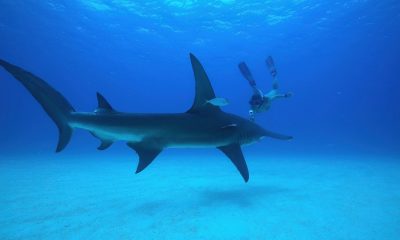
Netflix’s ‘All the Sharks’ puts global spotlight on tiger shark paradise in Maldives’ Fuvahmulah
-

 Action1 week ago
Consistently awarded, beyond compare: Machchafushi Island Resort’s house reef
-

 Cooking1 week ago
Jumeirah Olhahali Island welcomes Shimmers’ Chef Emanuele for exclusive culinary residency this July
-

 Drink1 week ago
Cellar of quiet distinction: Vakkaru Reserve wins fifth Wine Spectator Award
-

 Action1 week ago
Siyam World kicks off August with star-studded football camps
-

 Awards7 days ago
Atmosphere Kanifushi marks 6 years as Maldives’ leading family resort
-

 Drink1 week ago
Dare to taste with W Maldives at Island Alchemy Ft. Beckaly Franks
-

 Action1 week ago
Making waves all summer long: Manta rays, mini explorers take over The Standard, Huruvalhi Maldives