

Featured
Maldives begins phased easing of lockdown, most measures to remain for two weeks


Maldives will begin easing lockdown measures Thursday, with people allowed to go out for more hours and general businesses permitted to open, health officials in the island nation announced Wednesday.
Outlining the roadmap to ease Maldives out of lockdown, health minister Abdulla Ameen told reporters that the lockdown has had a major effect on slowing the spread of the novel coronavirus.
The reproduction number, or simply the R value, has been cut to 1.4 from 3.8, he said.
The lockdown and stay-at-home orders in the capital region were initially ordered on April 15 for two weeks. It has been extended thrice, the latest being on May 14 for another fortnight.
The lockdown bans all public activity and travel in one of the world’s most densely populated cities and its suburbs of Hulhumale and Villimale. Any movement in and out Male and its suburbs, as well as the neighbouring industrial islands of Thilafushi and Gulhifalhu are also banned.
Meanwhile, separate lockdown measures specifically for outside the greater Male region are in effect indefinitely.
The measures include a ban on inter-island transport across the archipelago of 1,192 coral islands.
Public gatherings, including ceremonies and parties of all kinds, sporting events, and picnics in the islands, are also covered under the ban.
What can you do?
Minister Ameen said the restrictions in Male region will only be eased in phases, with the first phase starting Thursday and lasting at least two weeks.
“More measures will be eased after the initial period but only after assessing the impact,” he said.
Since authorities placed capital Male and its suburbs on lockdown on April 15, police had been issuing permits for essential needs. The permit allows one person from each household to go out for one hour every three days.
From Thursday, a maximum of three people from each household will be allowed to go out for up to three hours twice a week but they will still have to get a police permit beforehand.
Businesses that can open from Thursday include:
- Retail shops
- Bakery
- Supermarkets
- Bookshops
- Pharmacies
- Hardware shops
- Shops specialising in childcare items
Speciality shops such as those selling cosmetics and textiles can also take orders online and provide delivery service.
Banks will be allowed to provide essential services for three days a week in the first two weeks. In the second phase, banks can increase their service days to five a week.
Restaurants and cafes will only be allowed to provide takeaway and delivery service in the first two weeks. Dine-in will not be allowed until a later phase.
Government offices will also remain closed, but essential staff can go to office under special permits. Private offices can open for essential needs under a special permission from the economic ministry.
Colleges and universities can also resume online classes.
Parks, beaches and recreation centres, as well as schools and mosques in capital Male and its suburbs will remain shut for the first two weeks. Inter-island transport will also remain banned.
‘Second lockdown possible’
Health officials warned that the easing of restrictive measures does not mean we can go back to normal.
“There is risk of a potential rise in infections once the lockdown measures are eased,” Ameen said.
Dr Ali Latheef from the Health Protection Agency (HPA) said the lockdown measures might have to be reimposed if a surge is detected. Further easing will also depend on how well people comply with the measures, he added.
Authorities managed to mitigate the spread of the virus and the Covid-19 respiratory disease it causes amongst the Maldives’ citizens and residents early on by closing the Indian Ocean tourist paradise’s borders, earning praise from the World Health Organisation.
But the disease later spread rapidly within the large migrant worker community in capital Male. Authorities have ramped up relocating workers from the cramped up dormitories in one of the world’s most densely populated cities to temporary accommodation units.
An estimated 63,000 foreign nationals work in the Maldives illegally out of a migrant worker population close to 145,000.
Foreign workers in the Maldives, predominantly Bangladeshi and Indian men, are subjected to practices indicative of forced labour, including fraudulent recruitment, confiscation of identity and travel documents, withholding or non-payment of wages, and debt bondage.
As most migrant workers live in extremely poor conditions, a widespread outbreak amongst them could lead to large virus clusters, overwhelming the country’s already under staffed and strained healthcare system and making it harder for authorities to contain the spread of the virus.
On March 8, Maldives reported its first cases of the novel coronavirus, as two hotel employees tested positive for Covid-19 at a luxury resort in the archipelago.
Eighteen more cases — all foreigners working or staying resorts and liveaboard vessels except five Maldivians who had returned from abroad — were later identified.
A six-case cluster of locals, detected in capital Male on April 15, confirmed community transmission of the coronavirus. Several more clusters have since been identified, bringing the total number of confirmed case in the Maldives to 1,457.
Five deaths have been reported and 232 have made full recoveries. Five remain in intensive care.
The Maldives announced a state of public health emergency on March 12, the first such declaration under a recent public health protection law.
The public health emergency declaration allowed the government to introduce a series of unprecedented restrictive and social distancing measures, including stay-at-home orders in capital Male and its suburbs, a ban on inter-island transport and public gatherings across the country, and a nationwide closing of government offices, schools, colleges and universities.
Non-essential services and public places in the capital such as gyms, cinemas and parks were also shut.
Restaurants and cafes in the capital were asked to stop dine-in service and switch to takeaway and delivery.
A nationwide shutdown of all guesthouses, city hotels and spa facilities located on inhabited islands is also in effect.
The coronavirus outbreak has hit the Maldivian economy hard, as travel restrictions and other preventive measures affect the country’s lucrative tourism industry, which contributes the bulk of the island nation’s state revenue and foreign reserves.
Before the pandemic, the government had been bullish about tourism prospects, targeting two million, high-spending holidaymakers this year after last year’s record 1.7 million.
However, tourist arrivals saw a year-over-year decline of 22.8 per cent in the first 10 days of March. Officials say the number of tourist arrivals to the Maldives could drop by half in 2020.
All international airlines have suspended scheduled operations to the Maldives, as the island nation enforced a blanket suspension of on-arrival visa in late March in a bid to combat the spread of the novel coronavirus.
Even before the visa suspension, the Maldives had closed its borders to arrivals from some of the worst-hit countries, including mainland China, Italy, Bangladesh, Iran, Spain, the United Kingdom, Malaysia and Sri Lanka. Visitors from three regions of Germany (Bavaria, North Rhine-Westphalia and Baden-Württemberg), two regions of France (Île-de-France and Grand Est) and two regions of South Korea were also banned from entering the country.
All direct flights to and from China, Italy, South Korea and Iran were also cancelled.
Cruise ships and foreign yachts were also banned from docking at any of the country’s ports.
With arrival numbers falling and the visa suspension in effect, several resorts across the Maldives had been closed.
Tourism has been the bedrock of the Maldives’ economic success. The $5 billion-dollar economy grew by 6.7 per cent in 2018 with tourism generating 60 per cent of foreign income.
However, the government is at present projecting a possible 13 per cent economic contraction this year — an estimated $778 million hit.


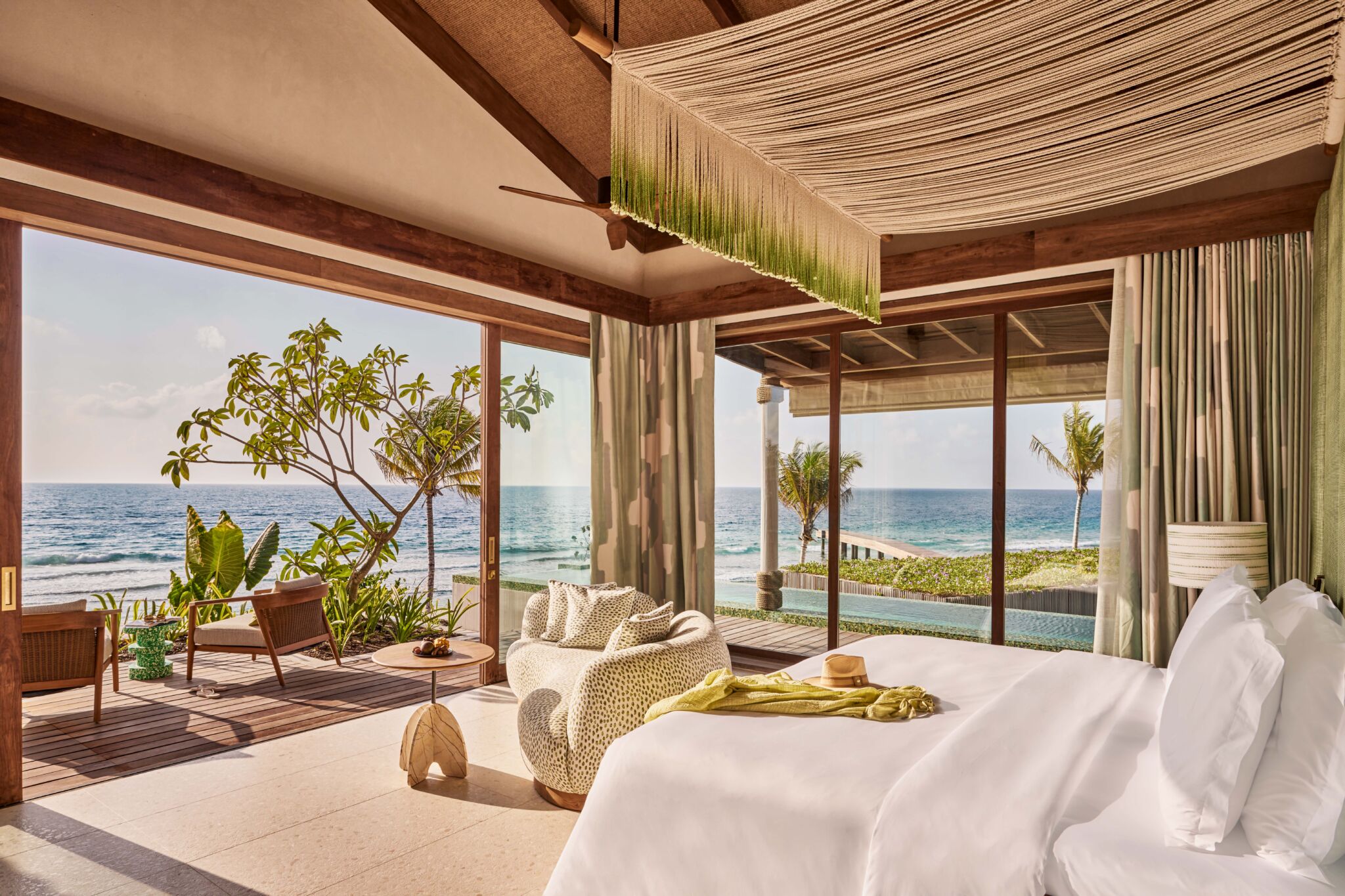
.Here Baa Atoll, a private island retreat in the Maldives, has been named the No. 6 Resort in the Indian Ocean in the Condé Nast Traveler Readers’ Choice Awards 2026.
The annual Readers’ Choice Awards recognise hotels, resorts, destinations, airlines and other travel experiences based on votes submitted by Condé Nast Traveler readers.
The recognition places .Here Baa Atoll among the highest-ranked resorts in the Indian Ocean and comes during a milestone year for the property.
Located within the UNESCO Biosphere Reserve of Baa Atoll, .Here Baa Atoll comprises nine residences spread across two natural islands, Somewhere and Nowhere.
Somewhere features seven three- and four-bedroom residences extending from the beach towards the lagoon and designed for families and groups travelling together. Each residence offers indoor and outdoor living spaces, multiple pools, private dining and personalised Roohu service. Guests are transferred directly to their residence by private speedboat, avoiding a conventional lobby and check-in process.
Condé Nast Traveler has previously highlighted the resort for its emphasis on privacy, its beach-to-lagoon residences and its discreet approach to luxury.
The resort experience also includes Nowhere Private Island, which is reserved exclusively for a single group at a time. The island features a five-bedroom Presidential Residence and a three-bedroom Lagoon Residence, providing eight bedrooms and 3,329 square metres of private living space, supported by dedicated service and individually curated experiences.
The Readers’ Choice Award follows several other recognitions received by .Here Baa Atoll during 2026. The resort was included in the Condé Nast Traveler Hot List 2026, with the publication highlighting its residences and design. It has also received international recognition for its architecture and design, alongside creative collaborators Kulör Group, Muza Lab and Topo Design Studio.
Elina Adiyan, Resident Manager of .Here Baa Atoll, said: “To be recognised by the readers of Condé Nast Traveler so early in our journey is incredibly meaningful. .Here was created around a simple idea: to give guests extraordinary space, genuine privacy and the freedom to experience the Maldives entirely on their own terms. This recognition belongs equally to our team, whose care and dedication bring that vision to life every day. We are deeply grateful to everyone who voted for us.”
The latest recognition adds to .Here Baa Atoll’s growing international profile within the luxury travel sector, with the resort positioning privacy, spacious accommodation, design and personalised service at the centre of its guest experience.
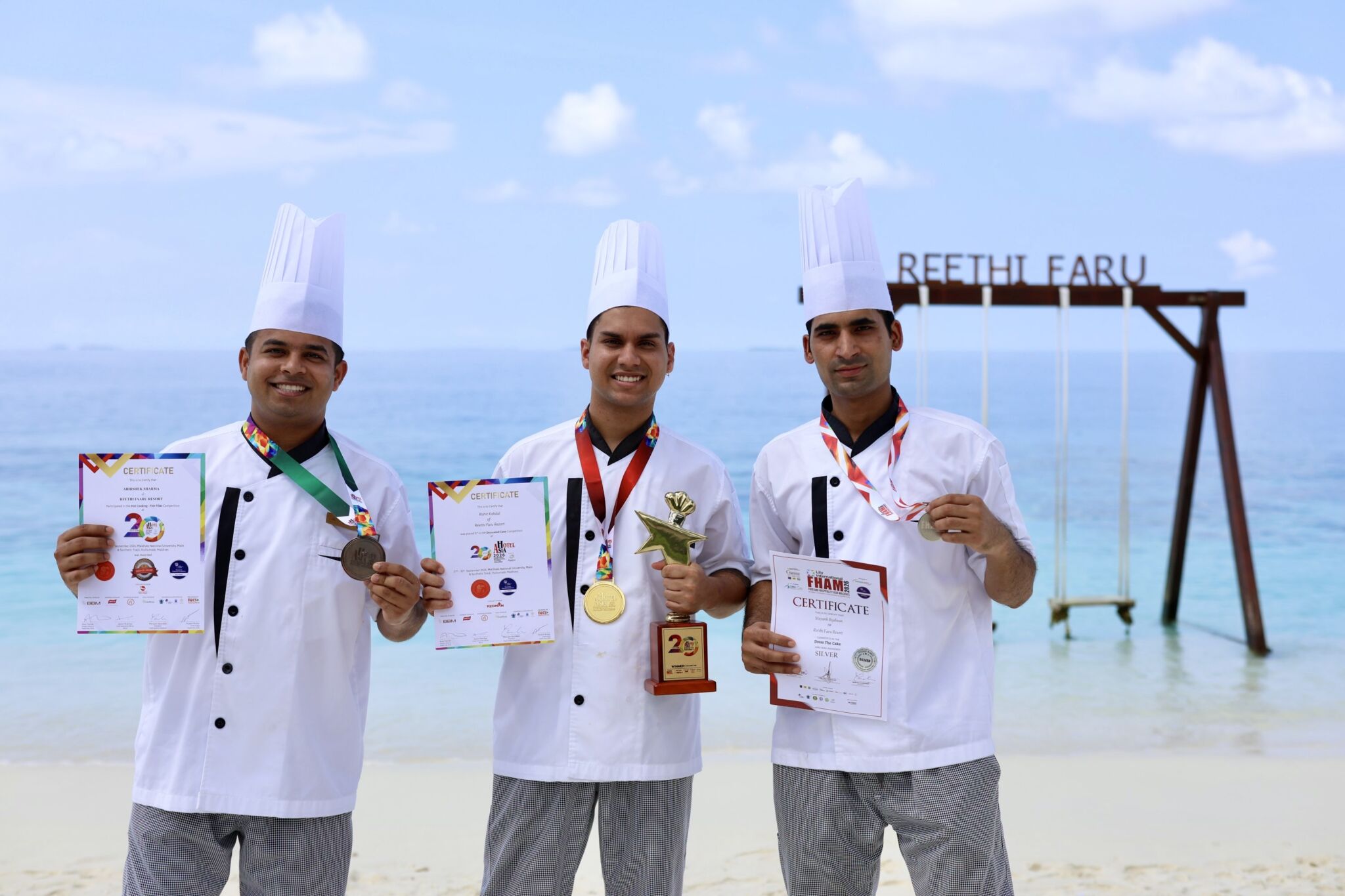
Reethi Faru Resort has announced three medal wins by members of its culinary team at the Hotel Asia Culinary Challenge and the FHAM Global Culinary Challenge.
At the Hotel Asia Culinary Challenge, Chef Rohit Kabdal received a Gold Medal in the Decorated Cake category, recognising his work in cake design, presentation and technical execution.
Chef Abhishek Sharma also represented Reethi Faru Resort at the competition, earning a Bronze Medal in the Hot Cooking Fish category.
At the FHAM Global Culinary Challenge, Chef Mayank Bijalwan secured a Silver Medal in the Dress the Cake category, adding a third medal to the resort’s recent culinary achievements.
The results highlight the range of skills within Reethi Faru Resort’s culinary team, spanning pastry, cake presentation and hot kitchen techniques.
According to the resort, participation in professional culinary competitions provides its chefs with opportunities to develop their skills, exchange knowledge and test their abilities alongside other industry professionals.
The achievements also form part of Reethi Faru Resort’s wider focus on dining and guest experience, with its culinary team involved across the resort’s restaurants and food and beverage offerings.
Reethi Faru Resort congratulated Kabdal, Bijalwan and Sharma on their respective achievements, describing the results as recognition of their commitment, technical ability and creativity.
The three medals add to the resort’s recent culinary accolades and reflect its continued emphasis on professional development within its kitchen team.
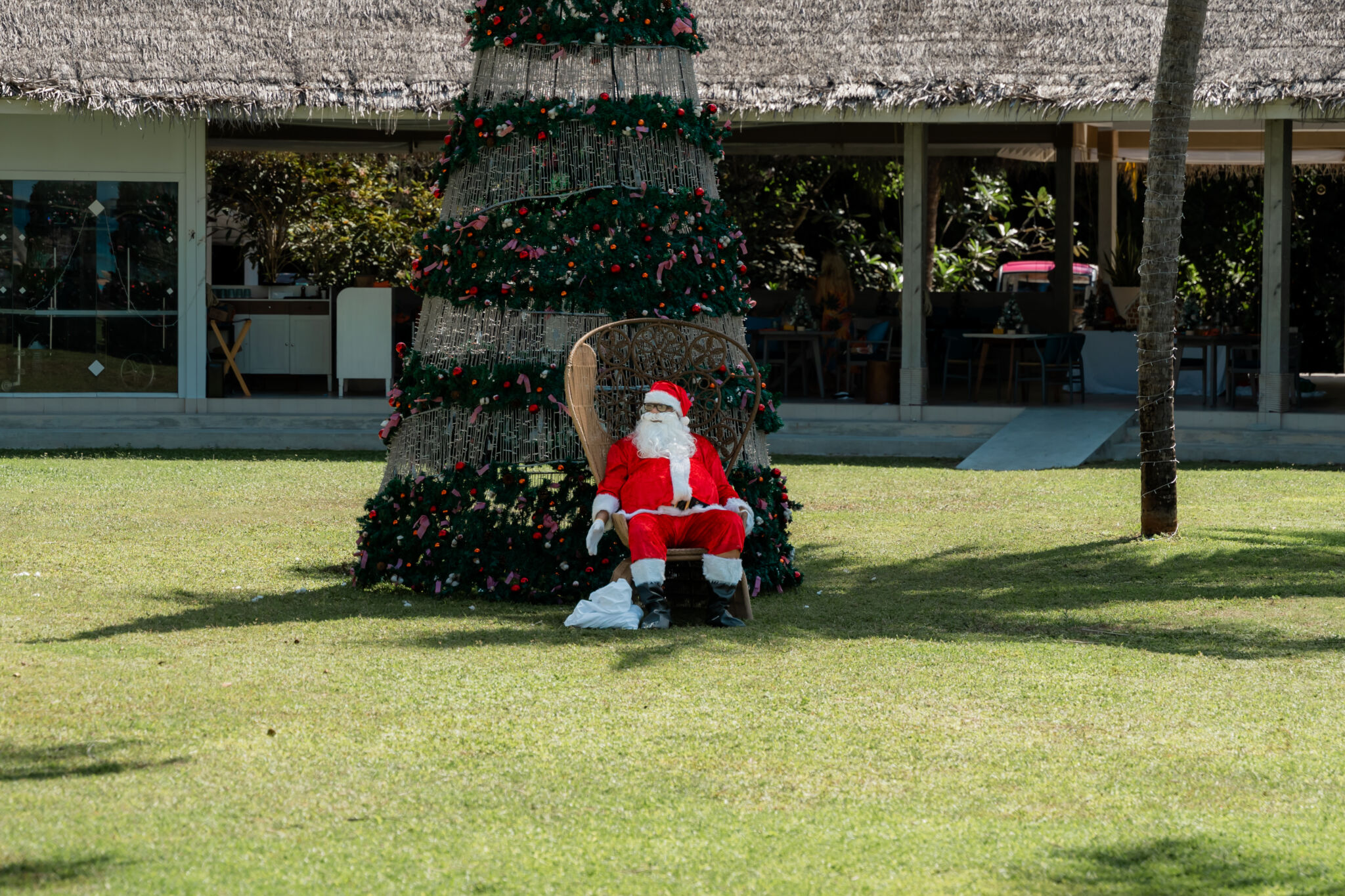
Ifuru Island Maldives will celebrate the 2026 festive season with “Echoes of the Ocean and Stars”, an immersive Christmas and New Year programme running from 21 December 2026 to 10 January 2027.
Inspired by the natural beauty of the Maldivian ocean, the night sky and the festive season, the theme will bring together marine and celestial elements across the resort’s décor, entertainment, dining, activities and guest experiences.
At the centre of the concept is the idea that the ocean carries memories, while the stars represent dreams and new beginnings. Rather than presenting the festive season as a series of standalone events, Ifuru Island plans to create a connected journey spanning Christmas, New Year and Orthodox Christmas.
The visual identity of “Echoes of the Ocean and Stars” will combine an underwater-inspired world with celestial elements. Bioluminescent-inspired colours, reef motifs and glowing details will be paired with stars, constellations and moonlit features throughout the resort.

The colour palette will include deep ocean blue and midnight navy alongside pearl white, silver, soft turquoise, pink and purple, with accents of celestial gold. Coral forms, waves, shells and reef-inspired features will be combined with stars and festive details, giving traditional Christmas elements an interpretation inspired by Ifuru Island’s natural surroundings.
The concept will extend beyond decorations to dining, entertainment, activities, uniforms, signage and festive communications.
The resort said the theme is also intended to reflect the emotions associated with the festive period. The ocean represents peace, connection and possibility, while the stars symbolise hope, dreams, guidance and new beginnings.
The festive journey will begin on 21 December and continue through 10 January, encompassing Christmas, New Year and Orthodox Christmas celebrations.
Christmas Eve on 24 December will feature festive dining and entertainment, while Christmas Day on 25 December will centre on family celebrations and relaxed island experiences.
On 31 December, Ifuru Island will mark New Year’s Eve with the main celebration of the festive period, before welcoming 2027 on New Year’s Day with activities centred around the island setting and surrounding ocean.

Celebrations will continue from 1 to 10 January during the Orthodox festive period, including Orthodox Christmas.
According to the resort, the broader concept is intended to connect the entire guest experience, with the island’s natural environment forming part of the festive setting. The ocean will provide inspiration during the day, while the night sky will shape the atmosphere after sunset.
Dining experiences, entertainment and activities will each form part of the wider “Echoes of the Ocean and Stars” narrative, giving guests different experiences throughout their stay while maintaining a consistent creative theme.
The programme is designed for guests travelling with family, friends or loved ones, with Ifuru Island aiming to combine its natural surroundings with festive celebrations and shared experiences.
The full festive programme, including entertainment, activities, culinary experiences and special events, will be announced separately.
“Echoes of the Ocean and Stars” will run at Ifuru Island Maldives from 21 December 2026 to 10 January 2027. Christmas Eve will be marked on 24 December, Christmas Day on 25 December, New Year’s Eve on 31 December, New Year’s Day on 1 January and the Orthodox festive period from 1 to 10 January 2027.

-

 News1 week ago
Soneva’s Maldives waterslide reimagined as contemporary art in Stockholm
-

 News1 week ago
Cora Cora Maldives welcomes guests back after planned island enhancements
-

 Awards1 week ago
Kuda Villingili Resort earns highly commended honour at Family Traveller Awards
-

 Love1 week ago
25 years later, Frank and Heike say ‘I Do’ underwater at Villa Nautica
-

 News1 week ago
The Cocoon Collection highlights AI, sustainability and guest experience on World Tourism Day
-

 Action1 week ago
Sea turtle hatchlings make their way to the ocean at Cinnamon Velifushi Maldives
-

 Lifestyle1 week ago
Alexandre Benjamin Navet to transform The Ritz-Carlton Maldives in four-month art residency
-

 News1 week ago
Kandooma Maldives launches new brand with experience-led all-inclusive concept