

Business
Maldives saw fifth biggest GDP drop over virus-related tourism loss, new study says

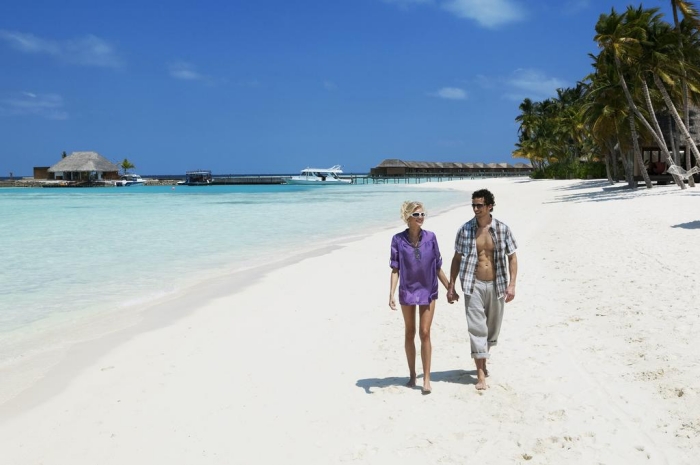
Maldives has seen the fifth highest percentage drop in GDP globally due to tourism loss from the coronavirus pandemic, according to a new study.
Travel and tourism has been one of the main industries to be gravely affected by Covid-19, leaving many countries with no choice but to close its borders to tourists for months due to the global pandemic outbreak. As a result of these travel bans, a number of airlines and tour operators have had to cancel long-awaited holidays, leaving world tourism at an all time low.
Visa Waiver processing firm Official-esta.com looked into the biggest revenue losses and highest percentage of GDP lost per country to reveal which countries have seen the greatest financial impact as a result of the loss of tourism caused by the pandemic.
In 2019, global travel and tourism contributed $8.9 trillion to the world’s GDP, yet due to the current pandemic the financial impact of Covid-19 on world tourism has resulted in a total revenue loss of $195 billion worldwide in the first four months of 2020.
According to the study, the Maldives has dropped 6.9 per cent in GDP due to tourism loss from Covid-19, ranking it fifth as the country with the biggest percentage loss in GDP caused by the global pandemic.
Caribbean worst affected in GDP terms
The Caribbean makes up half of the top 10 countries with the highest percentage of GDP loss.
Last year, more than 31 million people visited the Caribbean, and more than half of them were tourists from the US. But with Covid-19 causing travel bans all over the world, the number of tourists that once accounted for 50-90 per cent of the GDP for most of the Caribbean countries has significantly decreased.
Countries within the Caribbean make up 50 per cent of those which have suffered the highest percentage loss in GDP, with Turks and Caicos Islands, Aruba, Antigua and Barbuda, St. Lucia and Grenada all ranking in the list of the top 10 worst affected.
Countries which have lost the highest percentage of GDP due to loss of tourism:
- Turks and Caicos Islands: 9.2 per cent
- Aruba: nine per cent
- Macao: 8.8 per cent
- Antigua and Barbuda: 7.2 per cent
- Maldives: 6.9 per cent
- St. Lucia: 6.2 per cent
- Northern Mariana Islands: 5.9 per cent
- Grenada: 5.5 per cent
- Palau: 5.2 per cent
- Seychelles: 4.6 per cent
Major financial impact on Europe
Countries within Europe make up 50 per cent of those which have suffered the biggest losses in tourism revenue, with Spain, France, Germany, Italy and the UK all ranking in the list of the top 10 worst affected.
With a reported drop of 98 per cent in international tourist arrivals in June, Spain is the European country with the largest revenue loss of $9.7 billion.
Just as tourists began returning to the popular holiday destination, a rise in Covid-19 cases meant the UK imposed a quarantine warning against anyone arriving back from Spain as of the end of July. This new rule indicates that Spain’s loss in revenue will continue increasing as tourism slows once again.
France is the world’s most visited country with over 89 million tourists each year, but the impact of Covid-19 has resulted in a total revenue loss of $8.8 billion. This significant loss makes it the third country in the world with the most revenue loss caused by the global pandemic and the second in Europe.
Countries with the biggest tourism revenue loss due to Covid-19:
- United States: $30.7 billion
- Spain: $9.7 billion
- France: $8.8 billion
- Thailand: $7.8 billion
- Germany: $7.2 billion
- Italy: $6.2 billion
- United Kingdom: $5.8 billion
- Australia: $5.7 billion
- Japan: $5.4 billion
- Hong Kong: $5.02 billion
“The last few months have undoubtedly been extremely difficult for the travel and tourism industry. In the midst of the global pandemic, many popular holiday destinations have had to close their borders to tourists and the financial impact this has brought on world tourism has not only impacted all countries around the world but also airlines and travel operators,” Jayne Forrester, Director of International Development at Official ESTA, said.
“As travel bans have started to ease off from July, we only hope that we see no more significant losses to one of the largest growing sectors in the world.”
The Maldives reopened its borders on July 15.
With the border reopening, 30-day free on-arrival visa is issued to all tourists who has a confirmed booking for a stay at any registered tourist facility in the country. The entire holiday has to be booked at a single facility except for transit arrangements.
There is no mandatory quarantine or testing on arrival. Tourists have to complete a health declaration form only.
But visitors with symptoms of the Covid-19 respiratory disease caused by the novel coronavirus or those travelling with someone who has similar symptoms are tested at their own expense.
The coronavirus outbreak has hit the Maldivian economy hard, as travel restrictions and other preventive measures affect the country’s lucrative tourism industry, which contributes the bulk of the island nation’s state revenue and foreign reserves.
Before the pandemic, the government had been bullish about tourism prospects, targeting two million, high-spending holidaymakers this year after last year’s record 1.7 million.
However, only 382,760 tourists visited the Maldives before the country closed its borders on March 27. It was a 40.8 per cent decline over the 646,092 that visited the Maldives from January to March last year.
Meanwhile, the government’s best case scenario now puts total tourist arrivals for 2020 just above 800,000.
Tourism has been the bedrock of the Maldives’ economic success. The $5 billion-dollar economy grew by 6.7 per cent in 2018 with tourism generating 60 per cent of foreign income.
However, the government is at present projecting a possible 13 per cent economic contraction this year — an estimated $778 million hit.
On March 8, Maldives reported its first cases of the novel coronavirus, as two hotel employees tested positive for Covid-19 at a luxury resort in the archipelago.
Eighteen more cases — all foreigners working or staying resorts and liveaboard vessels except five Maldivians who had returned from abroad — were later identified.
A six-case cluster of locals, detected in capital Male on April 15, confirmed community transmission of the coronavirus. Several more clusters have since been identified, bringing the total number of confirmed case in the Maldives to 6,660.
Twenty-six deaths have been reported, while 4,113 have made full recoveries.
The Maldives announced a state of public health emergency on March 12, the first such declaration under a recent public health protection law.
The public health emergency declaration allowed the government to introduce a series of unprecedented restrictive and social distancing measures, including stay-at-home orders in capital Male and its suburbs, a ban on inter-island transport and public gatherings across the country, and a nationwide closing of government offices, schools, colleges and universities.
Non-essential services and public places in the capital such as gyms, cinemas and parks were also shut.
Restaurants and cafes in the capital were asked to stop dine-in service and switch to takeaway and delivery.
A nationwide shutdown of all guesthouses, city hotels and spa facilities located on inhabited islands was also ordered.
The restrictions are now being eased in phases, with the third phase measures now active.
Photo: Veligandu Island Resort & Spa/ Crown & Champa Resorts


The best way to secure the future is to create it.
Creating that future through specific, purposeful initiatives is what drives people of purpose—and, in turn, moves us all closer to the future we desire.
The Maldives is a compelling case study of a tourism-driven economy. Look around and ask why an event is being staged, what someone is working on, or where a new initiative is leading, and the answer will often point to the hospitality sector. Securing the future, therefore, is inextricably linked to strengthening and advancing that sector.

Here, “strengthening” means making the sector’s contribution more sustainable; ensuring that a greater share of its growth benefits the community; continuing to offer a compelling value proposition to the discerning global traveller; and ensuring that visitor experiences continue to generate an unparalleled reputation and valuable referrals.
To achieve these outcomes in the future, it is essential that current and future generations of the local community engage actively with the industry. Making hospitality appealing and aspirational, enhancing the quality of delivery and service, and building a pipeline of skills and talent into the sector are areas in which initiatives, inspiration, infrastructure and investment should be concentrated.

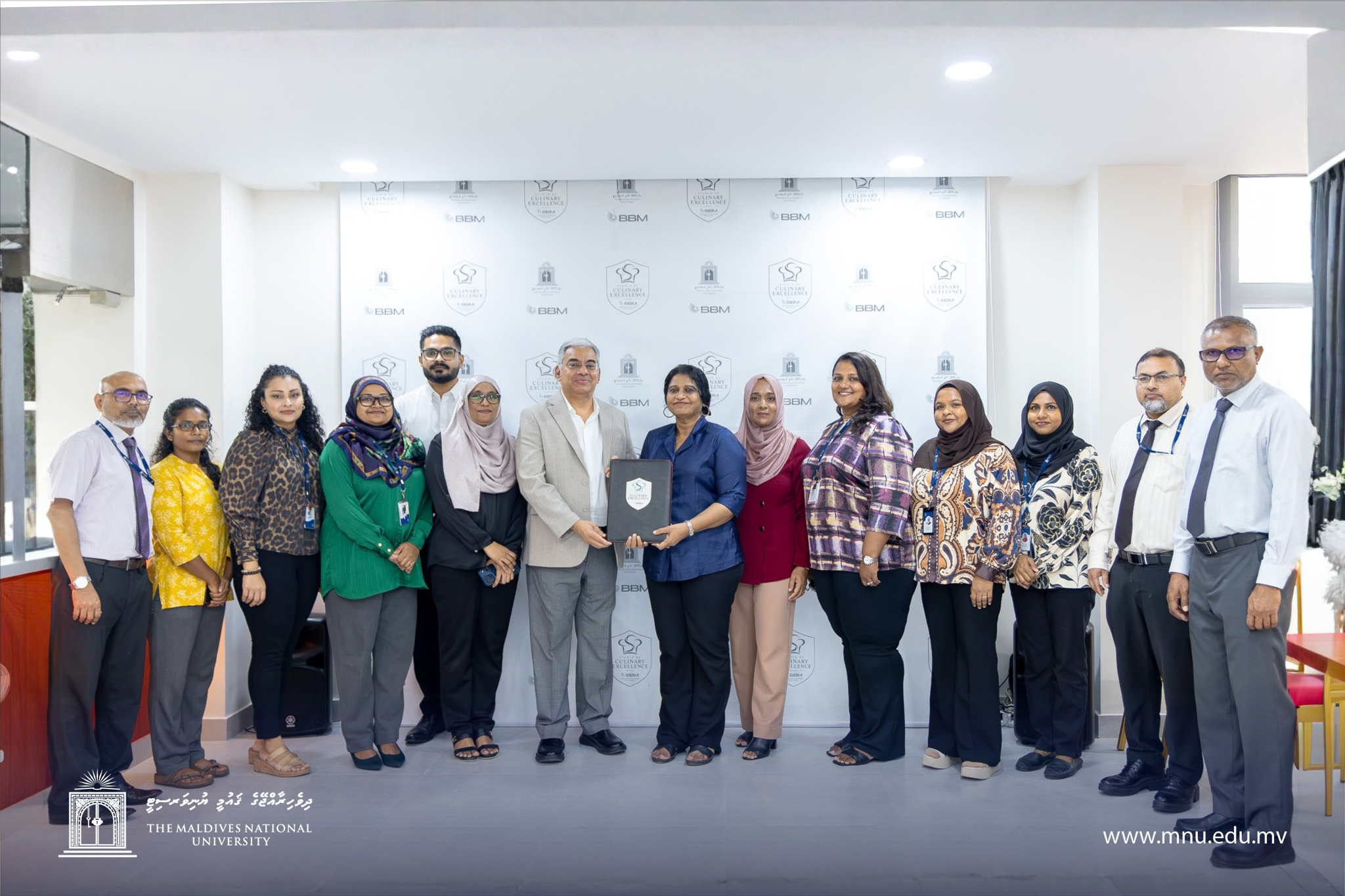
It is firmly in this context that Mr Ismail Hilmy, Chairman and Managing Director of BBM, initiated the establishment of a modern, exceptionally well-equipped and thoughtfully designed model kitchen, aptly named the Studio of Culinary Excellence. By donating the Studio to MNU, under whose auspices it will serve the Maldivian culinary community, Mr Hilmy is responding directly to the need for deeper community engagement. At the heart of BBM’s framework for industry-outreach initiatives— “Because tomorrows start today”—is Mr Hilmy’s ethos of fostering engagement and vibrancy in the industry.
“For our students, the gap between the classroom and a working resort kitchen has always been the hardest one to close,” said Dr Shehenaaz Adam, Vice Chancellor of the Maldives National University. “The Studio of Culinary Excellence closes that gap. Students can now train on the same equipment and to the same standards they will encounter on their first day in the industry. We are grateful to BBM for a partnership that goes well beyond a donation, and we look forward to the Studio becoming a place where the university and the industry learn from one another.”

The Studio therefore creates an opportunity to develop a pipeline of skills and talent in service of the industry.
“Embedding purpose in our work has been an ongoing endeavour at BBM. It keeps us connected to our stakeholders and builds insight, understanding and trust. Being a meaningful partner to academia as we move into the future gives us a great sense of fulfilment and guides our initiatives under the banner, ‘Because tomorrows start today,’” said AVS Subrahmanyam, Chief Operating Officer of BBM.
But what is the value of physical infrastructure without the corresponding spark of aspiration and ambition?

As Ali Afrah Hassan, Executive Representative at Chairman’s Office – BBM, aptly observed: “The Studio offers students and members of the community hands-on experience with world-class equipment, together with knowledge-sharing masterclasses. Who knows—in the not-too-distant future, a Michelin-starred Maldivian chef may fondly credit some of their inspiration to time spent at the Studio!”
Now that is the mind and heart in sync—working towards a future that is aspirational, ambitious and entirely attainable.
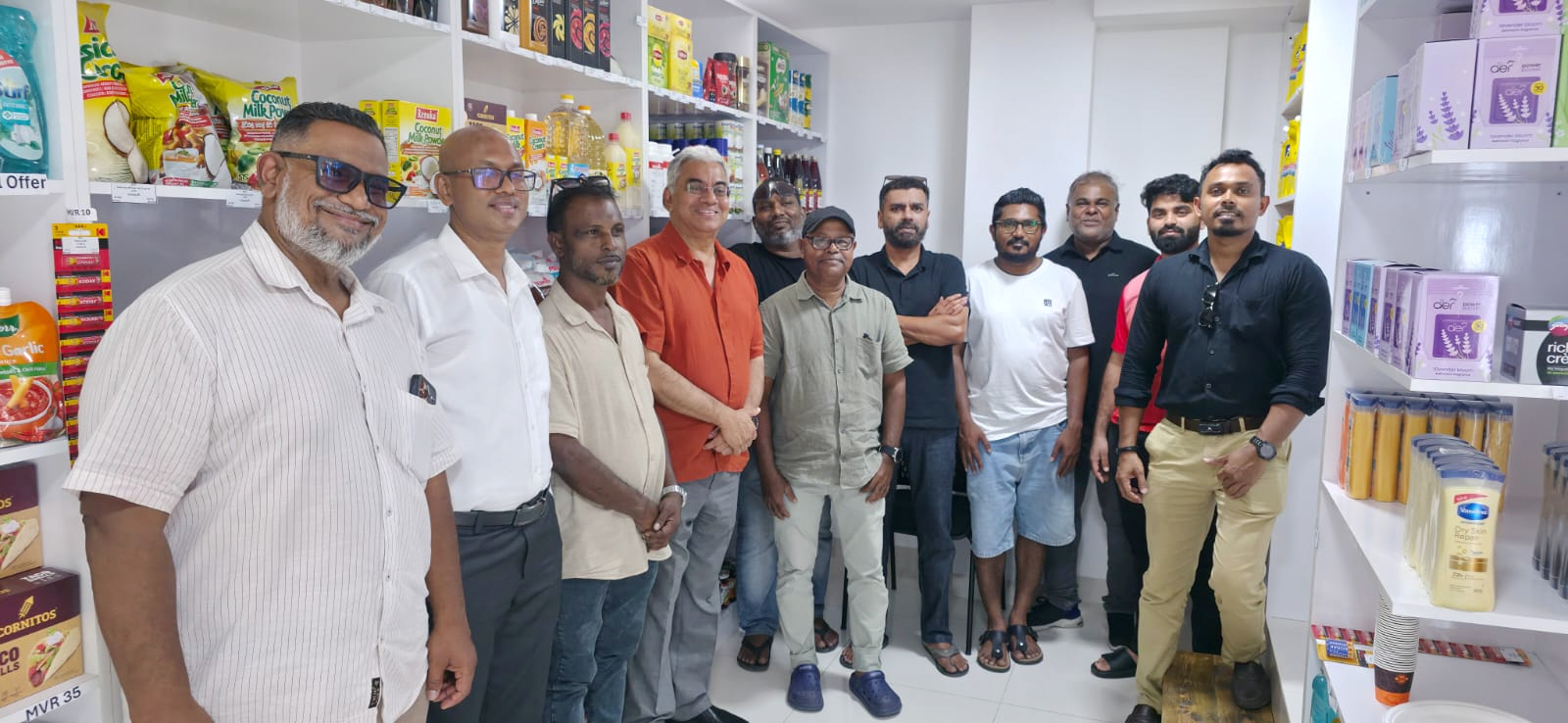
Bestbuy Maldives (BBM) has presented a brand-new Honda Airblade motorbike to the winner of a lucky draw held to mark the opening of its newest wholesale outlet in Hulhumalé Phase 2.
The outlet, located at Lot 20286 on Nirolhu Magu, opened on 16 February 2026 as part of BBM’s expansion of its wholesale operations.
To celebrate the opening and thank customers for their continued support, BBM introduced a special lucky draw exclusively for customers who made purchases from the new outlet on its opening day.

Customers who purchased products during the opening were eligible to enter the draw, with a Honda Airblade motorbike offered as the grand prize.
The lucky draw was conducted on 13 August 2026, with Ibrahim Shifaz of Vagthun Vaguthah outlet selected as the winner.
Shifaz was recently presented with the ceremonial key to the Honda Airblade by AVS Subrahmanyam, Chief Operating Officer of Bestbuy Maldives.

The promotion formed part of BBM’s activities surrounding the opening of its Hulhumalé Phase 2 outlet, which provides customers with access to the company’s range of wholesale products from the growing residential and commercial area.
Bestbuy Maldives is a supplier and distributor serving businesses across the Maldives, including customers in the hospitality, food service and retail sectors.
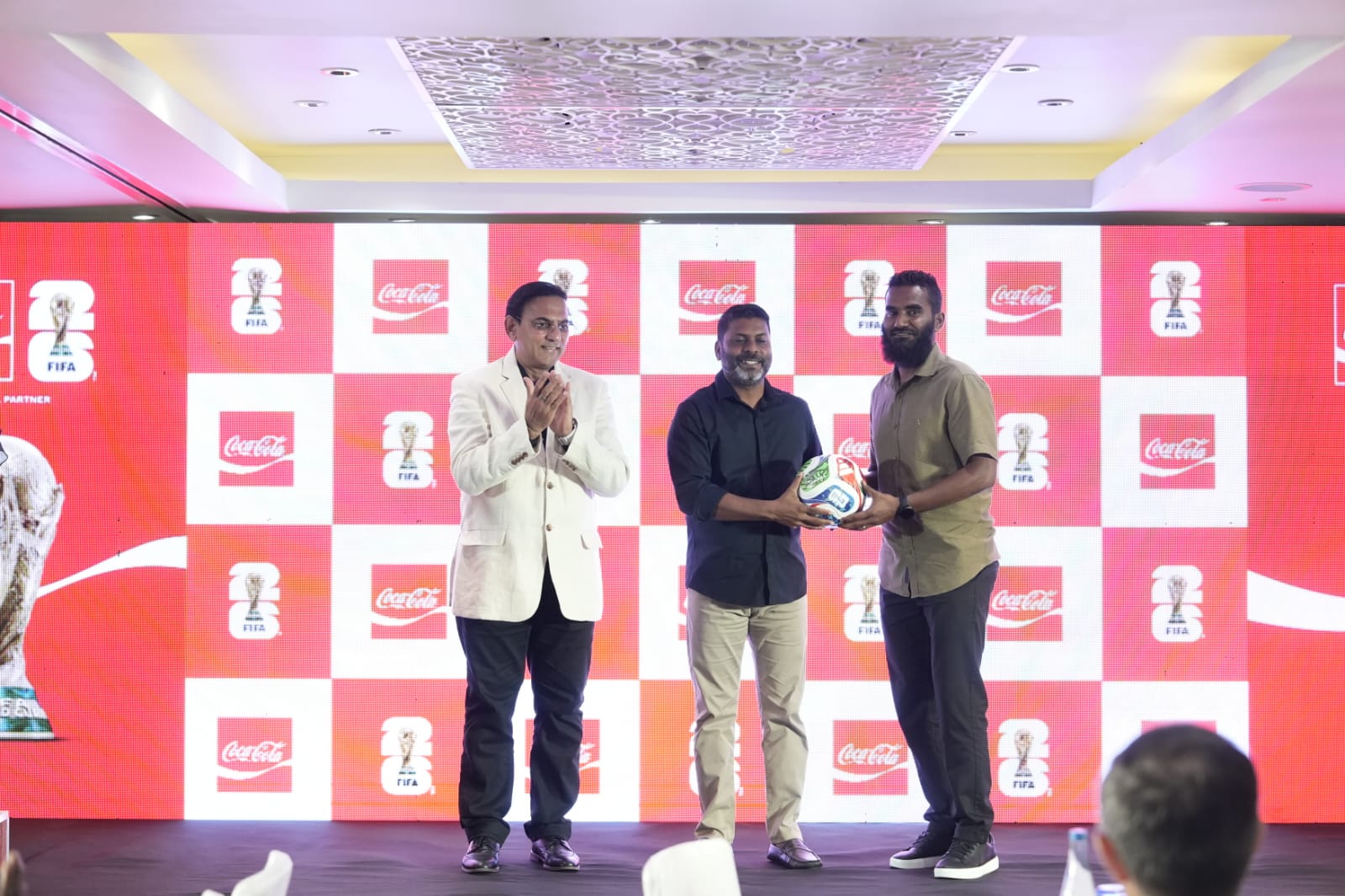
Male’ Aerated Water Company (MAWC), the authorised bottler of The Coca-Cola Company in the Maldives, on Thursday hosted the Official FIFA World Cup 2026™ Match Ball Handover Ceremony, presenting Football Legends of Maldives with official FIFA World Cup 2026™ match balls signed personally by Dr Mohamed Muizzu, President of Maldives.
Held in partnership with the Ministry of Youth Empowerment, Sports and Fitness, the ceremony recognised former national footballers whose achievements, service and influence have helped shape football in the Maldives and inspired generations of players and supporters.
The Coca-Cola Company has been an official partner of FIFA since 1974, making it one of the longest-standing partnerships in the global sport. For MAWC, the handover brought that global partnership to life locally by connecting the FIFA World Cup with people who have contributed to Maldivian football history.
As the sole authorised Coca-Cola bottler in the Maldives for over 35 years, MAWC has supported local sport through partnerships, campaigns and community initiatives. The ceremony continued that commitment by recognising the legacy of players who represented the Maldives and contributed to the growth of football in the country.
“Maldives’ football legends have given generations of supporters moments of pride and have played an important role in shaping the country’s sporting history. At MAWC, we believe recognising their contribution is as important as supporting the next generation. Through our partnership with Coca-Cola and FIFA, and in collaboration with the Ministry of Youth Empowerment, Sports and Fitness, we are honoured to celebrate their legacy. These match balls are a token of our appreciation for what they have given to Maldivian football,” said Milind Derasari, Chief Operating Officer, MAWC.
Adding to the excitement of the football season, MAWC ran a nationwide FIFA World Cup 2026™ consumer promotion from 21 March to 24 May 2026. Eight winners received an all-expenses-paid experience for two to attend a FIFA World Cup 2026™ match. Hundreds more won Coca-Cola branded merchandise and other prizes during the campaign, bringing the excitement of the world’s largest football tournament to consumers across the Maldives.
MAWC remains committed to building partnerships that support the development of sports across the Maldives, working with the Government of Maldives and other partners.

-

 Awards1 week ago
JOALI Maldives named Indian Ocean’s best resort as Maldives claims 20 of top 25
-

 News1 week ago
Vietjet to connect Maldives and Vietnam with new service via Sri Lanka
-

 Awards1 week ago
Kandooma Maldives wins Leading Family Resort award at SATA 2026
-

 Action1 week ago
Machchafushi Maldives brings Nikon photographers to South Ari Marine Protected Area
-

 News1 week ago
Milaidhoo Maldives named among Indian Ocean’s top resorts in 2026 Readers’ Choice Awards
-

 Awards1 week ago
JA Manafaru earns place in 2026 MICHELIN Guide hotel selection
-

 Action1 week ago
Sun Siyam Iru Veli invites guests to explore Maldives’ underwater world
-

 News1 week ago
Kuda Villingili Resort Maldives plans Christmas and New Year celebrations under ‘Season of Light’