

Action
The billionaire, Bollywood and the future of Indian football


MUMBAI (Reuters) – A storm could be brewing in India’s top-flight football, a glamorous and acrimonious world that encompasses Asia’s richest man, the cream of Bollywood and a self-styled former gangster.
Mukesh Ambani, the billionaire tycoon who commands the Reliance Industries corporate empire that owns the Indian Super League, is facing pushback to his family’s dominance from some executives in the country’s football association and clubs.
At stake is the financial future of football in a country devoted to cricket. The outcome of the power struggle could also help shape whether India can ever become a world force in the game, realising ex-FIFA president Sepp Blatter’s description of being a “sleeping giant” – and, of course, the big dream: whether it can one day play in or even host a World Cup.
Ambani’s holding group launched the Indian Super League, an elite competition of newly created teams, in 2014 with the aim of attracting investment and big global names, much like the Indian Premier League has in cricket.
However tensions have been building over who ultimately calls the shots: the Indian football association, which technically governs football at all levels, or Ambani’s group which owns the top league of 10 teams.
It’s a rare power split in global football, and a recent dispute between Ambani’s camp and the association illustrated differing visions over the direction of the Indian game, whose national team is ranked 108th globally.
This year, before the COVID-19 pandemic, a top executive at India’s football association, Kushal Das, wrote to Martin Bain, the Ambani lieutenant who heads Football Sports Development Limited (FSDL), a Reliance holding company that owns the league.
The national coach, employed by the association, has complained that the enlisting of so many foreign recruits in Indian football could hold back the development of home-grown players. Das, in a March email exchange seen by Reuters, said the governing body had the right to limit the number of foreign players allowed to compete in the Super League.
The dismissal was swift.
“Contrary to the position in your email, all competition regulations rather need approval from FSDL,” Bain responded, according to a copy of the email exchange seen by Reuters.
The football association backed down for this season.
Representatives for Reliance and FSDL did not respond to repeated requests for comment for this article. The football association’s media director, Nilanjan Datta, declined to comment, but said questions about tensions with FSDL were “baseless”.
Requests for comment from Bain and Das, via FSDL and the association, were not responded to.
Indian game of two halves
The player issue is disputed globally; some argue imported veterans stand in the way of domestic talent, while others say they haul up standards and share skills and experience.
But the exchange also reflects a conflict within the Indian game.
FSDL and the Ambani family’s supporters says the Super League has raised awareness and money for a disorderly and underinvested sector, and brought in marquee players such as Italy’s Alessandro Del Piero and France’s Robert Pires.
Ambani’s wife Nita, FSDL’s chair and the public face of the league, has expressed hope India will qualify for the 2026 World Cup, and one day host the event. And some Super League club owners are committed to what they consider a football revolution.
“Indian players are benefiting from the arrival of quality foreigners and coaches,” said Mandar Tamhane, CEO of JSW Bengaluru FC. “Football has become a lot more tactical and technical,” he added. “The exposure has helped Indian football develop.”
But the Ambanis’ influence is resented by some club owners in India’s traditional football league, the I-League, who say the Super League is sucking attention and investment from the rest of the game and stunting its long-term development.
ADVERTISEMENT
“This is a hostile takeover if there ever was one. They basically own football,” said Ranjit Bajaj, a self-described former gangster who found redemption in football, and a prominent figure in the game who took Punjab’s I-League side to a national championship in 2018 as its owner. “It’s really sad.”
The Ambanis did not respond to requests for comment made via Reliance.
The family is accustomed to domestic business dominance.
The Reliance empire, with a market value of about $153 billion, includes India’s leading telecom firm, a major retailer, its largest refining complex, a news outlet and a Bollywood studio. The group’s revenue last fiscal year accounted for around 3% of India’s $2.9 trillion economy.
‘Such a difficult situation’
Reliance and partner IMG Worldwide bailed out the cash-strapped football association a decade ago, pledging around $140 million over 15 years in return for sponsorship, licensing rights and running the Super League.
The association remains dependent on the deal money. It sent six emails to Reliance executives between May and October last year, reviewed by Reuters, saying payments of $6 million had not been received. One warned of a “severe cash flow crunch” and said the association had to put payments to suppliers on hold.
A Reliance executive answered twice, once saying it would take more time to release the payment and then saying the payment was in process.
Reliance did not respond to requests for comment on this email exchange.
The football association has considered whether it would be possible to renegotiate parts of the contract, according to an audio recording reviewed by Reuters of its president speaking to I-League executives at a meeting last year, although it is not clear which parts.
“When you’re dealing with a giant like FSDL, whose parent is Reliance, legally you will land up in such a difficult situation,” association President Praful Patel said in the July meeting.
He said FSDL had saved the association from falling into debt, adding “They have invested so much money.”
Patel did not respond to requests for comment made via the football association.
Business meets Bollywood
Thus far, however, the Super League itself is proving neither hugely popular nor lucrative – a rarity for an Ambani venture. Stadium attendances have halved over the past six years, and the pandemic is likely to worsen the situation.
Of course, creating a profitable league in cricket-mad India was always going to be a tough task. But industry veterans say Ambani erred by excluding India’s original clubs and creating a standalone tournament without promotion or relegation.
“It was 100% a wasted opportunity. The money coming in is welcome, but it should be spent in a proper manner – not just creating a hype,” said leading sports commentator Novy Kapadia.
The Super League’s original eight clubs were owned by Bollywood heavyweights like Ranbir Kapoor, cricket champions including Sachin Tendulkar and prominent businessmen, though several have since exited. Two new teams joined in 2017.
Ambani’s group initially projected, in 2014, that clubs would be profitable within about five years, according to an industry source with direct knowledge of the matter.
However none of original eight clubs, whose latest financial statements were reviewed by Reuters, had broken even by March 2019, save for Bengaluru, with about $234,000 in profit.
FSDL, of which Reliance owns 65% and Walt Disney-owned broadcaster Star India 35%, has significant control over clubs, according to a draft 2014 contract seen by Reuters.
Clubs must select coaches from a league-approved list, cannot sell shares without approval and must spend at least $500,000 per season on marketing.
Star India referred questions to FSDL.
Sports commentator Kapadia said the league’s future depended on billionaires continuing to bankroll their clubs, especially as the next season could be delayed and played without foreign players or spectators due to the coronavirus.
“The hit will be very severe,” he said, but added the league would continue “as long as there are enough rich people in India to burn money”.
Reporting and photo: Reuters


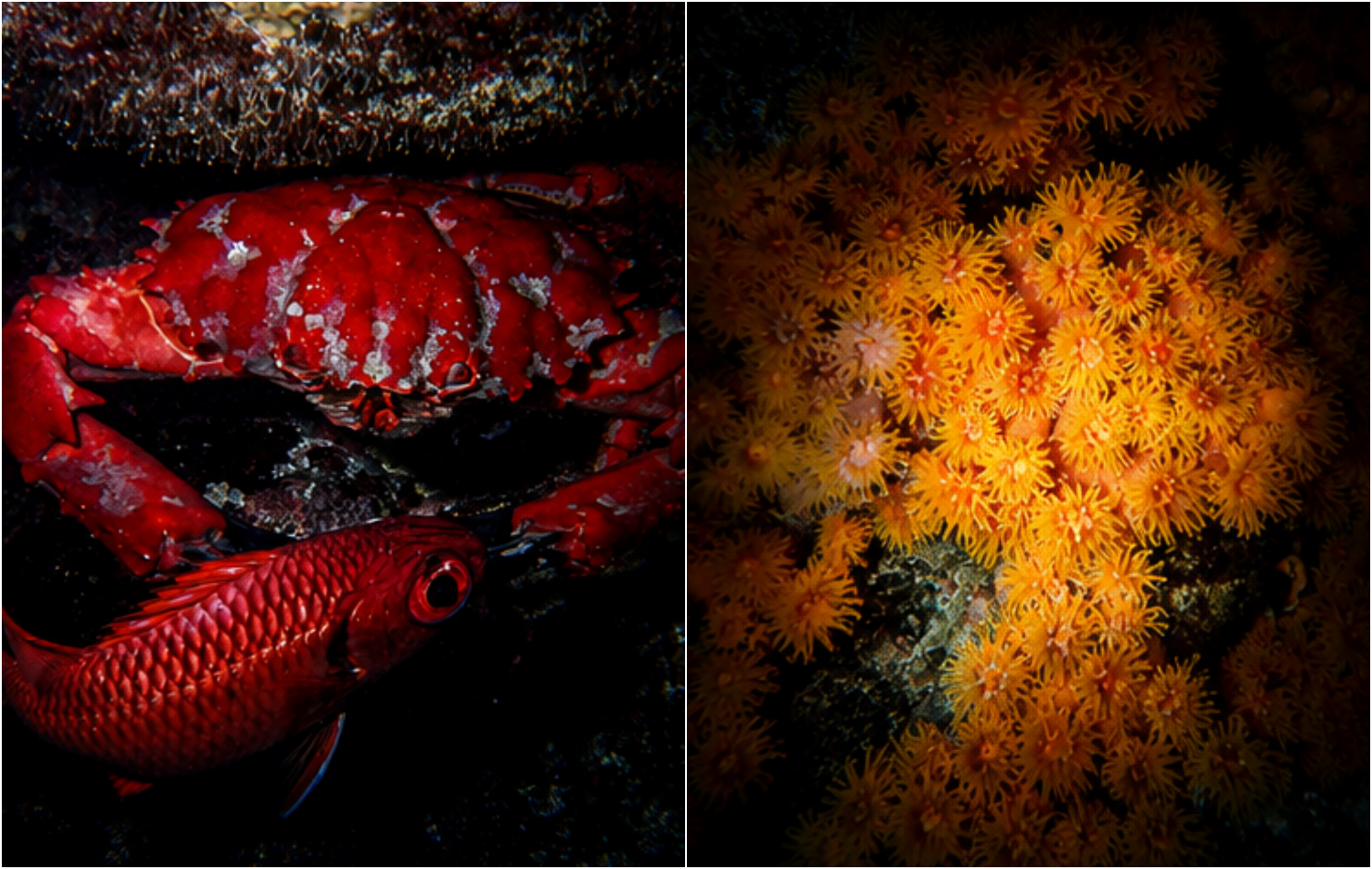
There’s something quietly thrilling about stepping into the ocean after sunset. At Ellaidhoo Maldives by Cinnamon, when daylight fade and the reef slips into darkness, a completely different world begins to stir. What feels familiar by day transforms into something far more mysterious and far more alive.
Night snorkelling at Ellaidhoo Maldives by Cinnamon begins at around 6:30pm, when guests gather with the experienced team from Dive & Sail Maldives. Equipped with underwater torches, snorkellers ease into the slighly cooler waters surrounding the island, where every beam of light reveals a new discovery hidden within the reef.
What makes night snorkelling so fascinating is the dramatic shift in marine behaviour after sunset. Species that remain tucked away during the day begin to emerge from coral crevices and sandy seabeds. Moray eels weave through the reef in search of prey, octopuses glide silently across the ocean floor, and crustaceans slowly crawl out from their hiding places.
One guest described one of the most unforgettable moments of the experience as watching a group of reef sharks glide past in near-perfect formation. According to the guest, the sudden appearance of six to eight sharks emerging from the darkness was initially startling, but the feeling quickly shifted to awe as they moved calmly and effortlessly through the water, illuminated only by torchlight. The encounter, they shared, felt both thrilling and surreal in the stillness of the night reef.
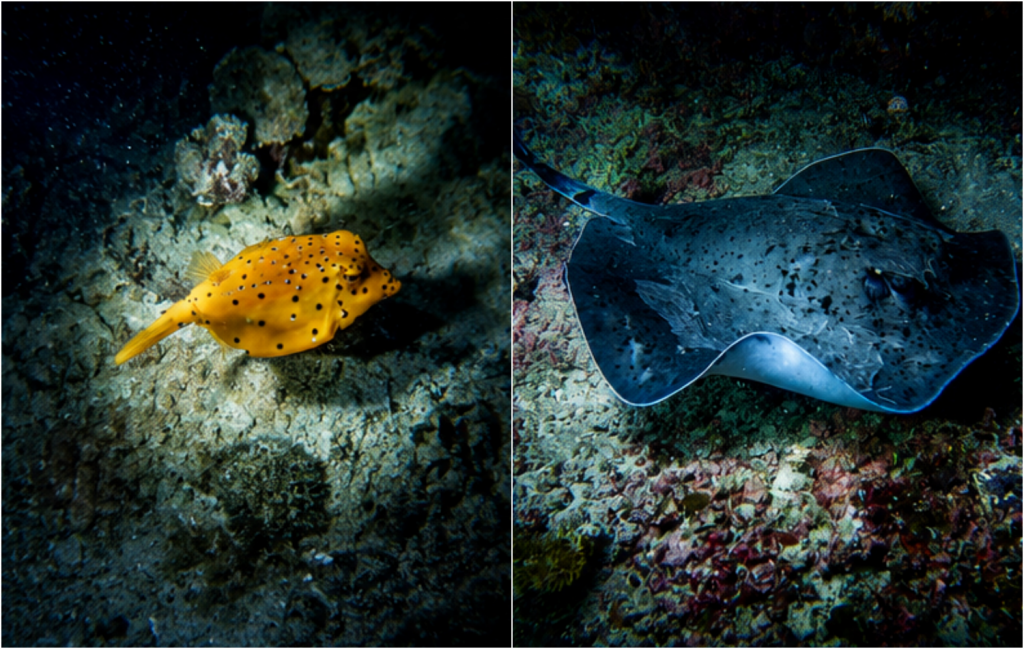
Beyond the larger marine life, the reef reveals countless smaller details at night that are often missed during daytime snorkelling. Brightly coloured reef crabs, lobster-like crustaceans believed to be spiny lobsters, sleeping parrotfish hidden within the coral, and lionfish hovering near the reef edge all become part of the experience.
The corals themselves also appear remarkably different after dark. Under torchlight, sections of the reef glow with deeper shades of orange, gold, and crimson, while certain soft corals and coral polyps extend outward to feed in the currents.
The house reef at Ellaidhoo Maldives by Cinnamon is widely regarded as one of the Maldives’ most vibrant reefs, celebrated for its rich biodiversity and easy accessibility from the shoreline. Guests planning their next island escape can also take advantage of the resort’s ongoing summer offer, which includes complimentary roundtrip speedboat transfers for stays of seven nights or more along with added benefits through Cinnamon DISCOVERY, the loyalty programme by Cinnamon Hotels & Resorts.
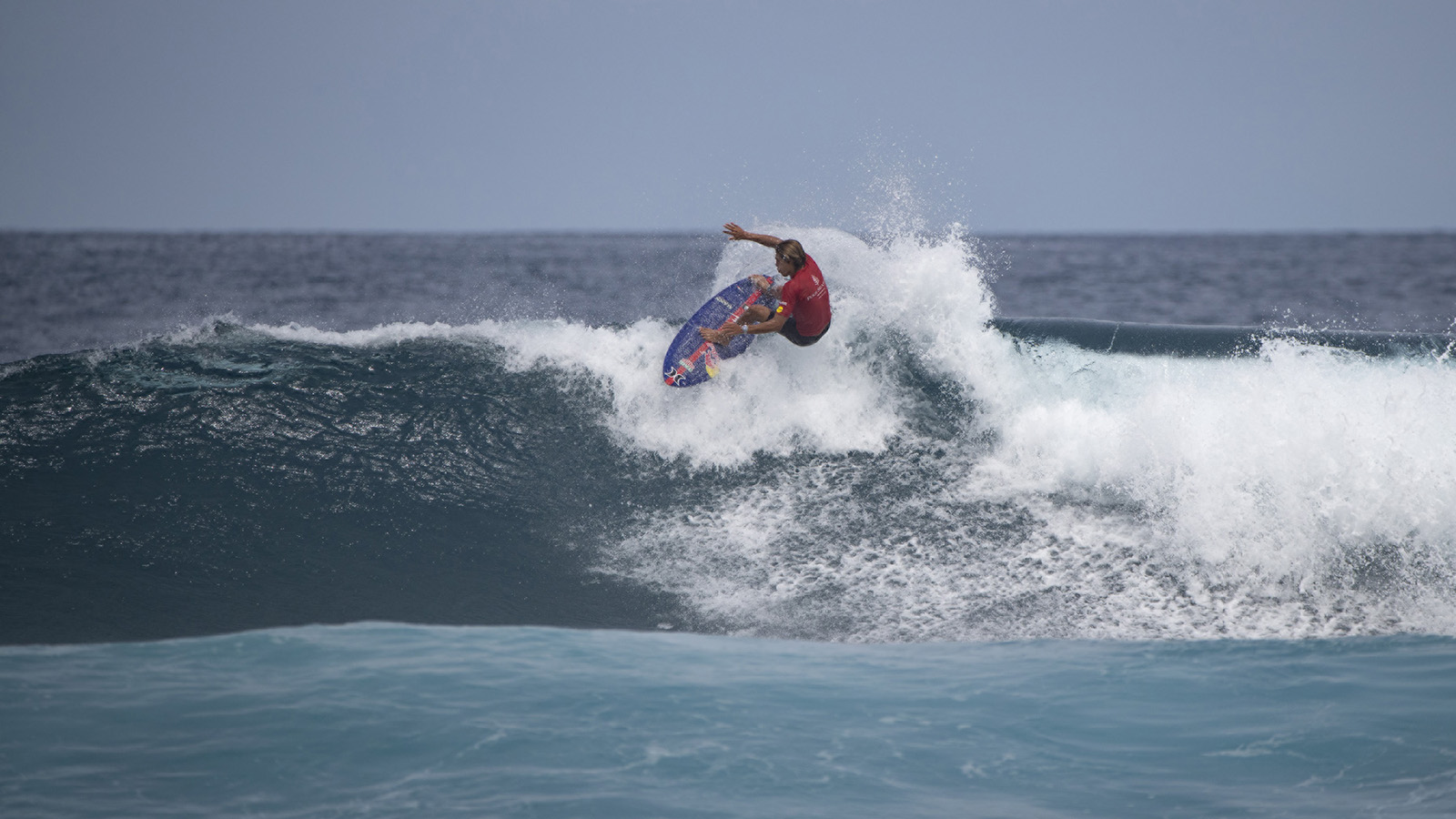
The Indian Ocean does not need much convincing to put on a show. But for one week each September, it outdoes itself. From September 4 to 11, 2026, Four Seasons Maldives Surfing Champions Trophy returns to the Sultans break for its 14th edition, with multi‑discipline world champion Kai Lenny confirmed as the first athlete in the 2026 line‑up.
Most surfers build careers in one lane. Lenny has built his across all of them. From Jaws to playful walls, thrusters to twins, singles and foils, he has forged a career defined by versatility across disciplines, reflecting the ethos the Surfing Champions Trophy was created to celebrate.
Hosted by Four Seasons Resort Maldives at Kuda Huraa, the invitation‑only event brings together six of surfing’s most celebrated athletes to compete across three board divisions: single fin, twin fin and thruster. Set against the high‑performance walls of Sultans, the format rewards adaptability as much as power, style as much as strategy, and timing as much as talent.
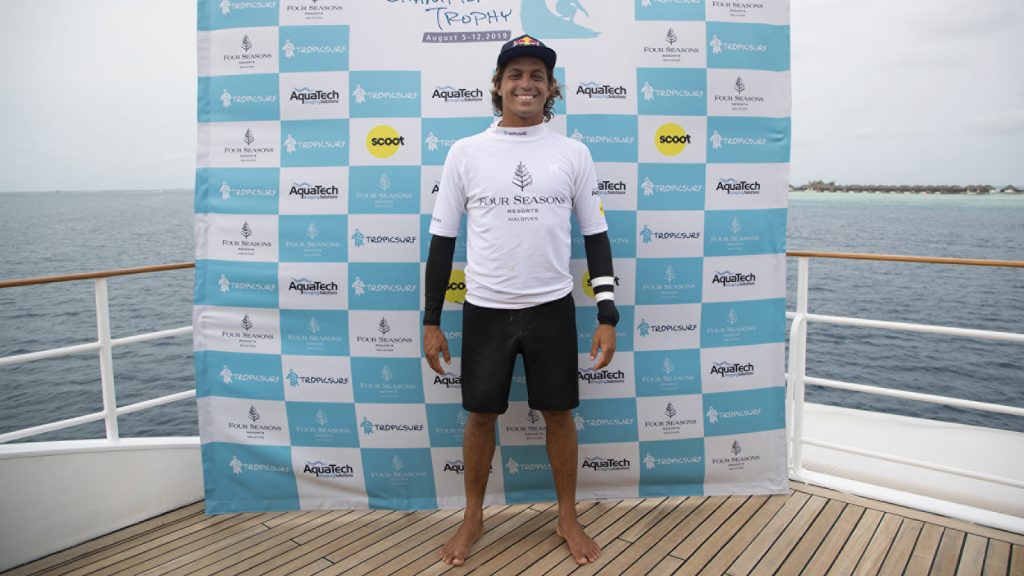
For Lenny, that challenge feels less like unfamiliar territory and more like home. A multi‑time world champion with a reputation forged in big waves and emerging disciplines such as foiling, he is among the athletes well suited to a format that requires competitors to shift craft, rhythm and approach throughout the week.
When Lenny first competed in the Surfing Champions Trophy in 2019, it was not only his performance that stood out, including a win in the thruster division. It was the way he appeared suited to the event itself: a week of changing boards, shifting conditions and high‑performance surf, shaped around a format that values exploration alongside competition.
“Every heat is a final,” says Lenny. “You’re surfing epic waves in paradise against some of the best in the world, but it’s still rooted in having fun. Being able to ride different types of boards is something I love doing every day, so to compete across all of them is epic.”
For 2026, Lenny takes that connection one step further by shaping the boards he will ride throughout the event, adding an additional layer of intent to a competition defined by craft, adaptability and feel.
At a wave like Sultans, defined by consistent conditions and open to interpretation, the ability to adapt across boards and conditions becomes a clear advantage. It also positions Lenny as a fitting first announcement for an event known for attracting athletes recognised for both approach and performance.
Where Champs Come to Surf
First staged in 2011, the Four Seasons Maldives Surfing Champions Trophy has become one of surfing’s most distinctive invitation-only events, bringing six celebrated athletes to Sultans to compete across single fin, twin fin and thruster divisions. Past participants include Mark Occhilupo, Taj Burrow, Josh Kerr, Kelly Slater, Joel Parkinson, Michel Bourez, Carissa Moore, Maya Gabeira and more. Following Bourez’s 2025 win, marked by a return from injury and the event’s only perfect 10, the 2026 edition carries strong momentum. With Kai Lenny now confirmed, the event is already shaping an anticipated return.
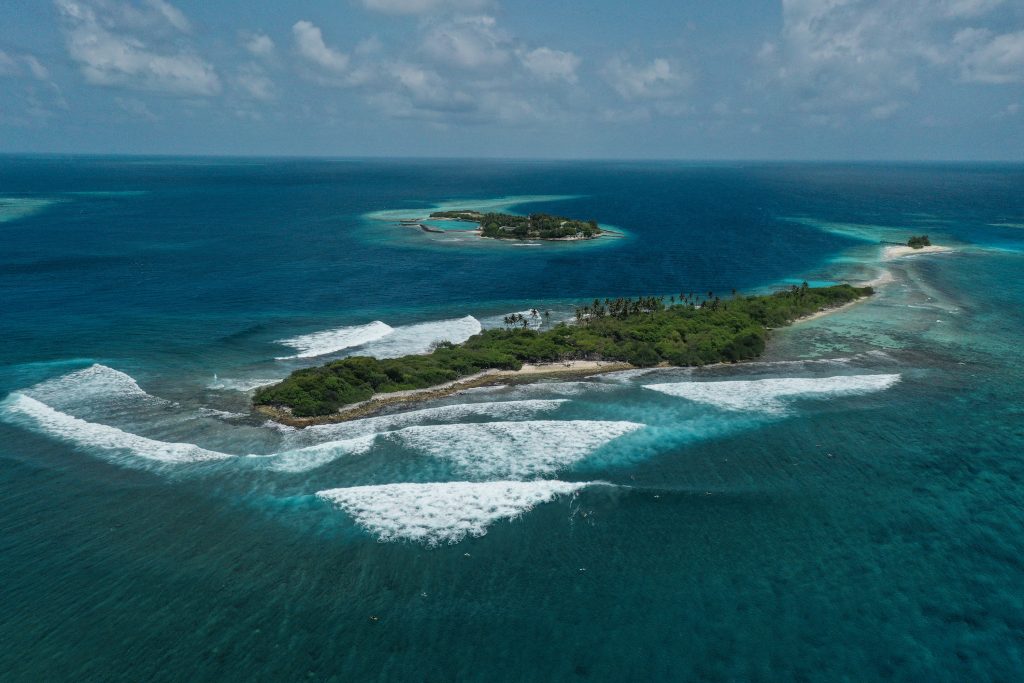
The Garden-Island Base at Kuda Huraa
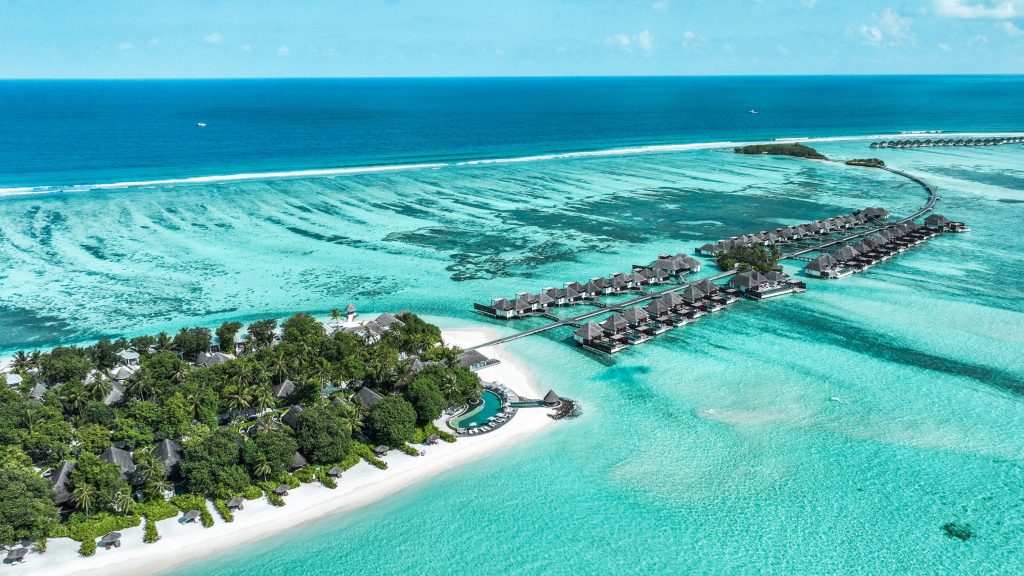
Located 25 minutes by speedboat from Malé, Four Seasons Resort Maldives at Kuda Huraa gives the event its warm, garden-island base, with easy access to North Malé Atoll’s best breaks and a longstanding collaboration with Tropicsurf. Between heats at Sultans, guests can expect post-surf stories, recovery rituals, sunset gatherings and the rare chance to swap board talk with world champions in boardshorts.
The Surf’s Up Package: For Those Who Want In
For guests interested in participating in the week’s program, the Surf’s Up package includes round-trip shared speedboat transfers for two, daily breakfast, four days of Tropicsurf coaching, guided boat transfers to local breaks, use of surf equipment and stand-up paddleboard, daily group yoga, and a 90-minute Myofascial Renewal treatment for two at ŪRJĀ Naturopathy Island.
The remaining 2026 competitor line-up will be revealed in the coming weeks, with updates shared across surfingchampionstrophy.com and Four Seasons Resort Maldives at Kuda Huraa channels.
To reserve a stay during the 2026 Four Seasons Maldives Surfing Champions Trophy or enquire about the Surf’s Up package, contact reservations.mal@fourseasons.com or call +960 66 00 888.
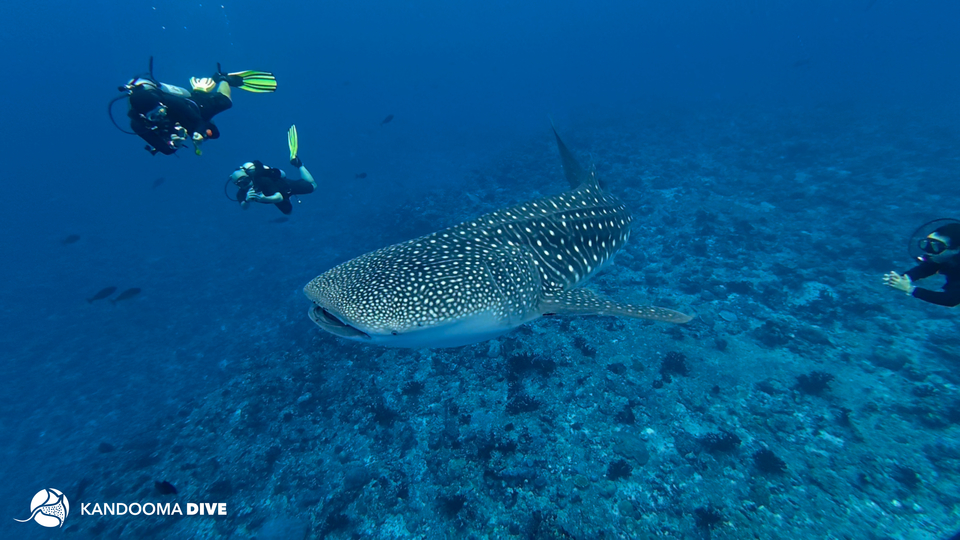
Divers from Holiday Inn Resort Kandooma Maldives recorded a whale shark sighting last month during a dive at Kandooma Thila in South Malé Atoll.
The encounter took place on 13 April during a guided dive led by Dive Centre Manager Ibrahim Shaan. The whale shark, estimated to be approximately six metres in length, is believed to be a juvenile aged between eight and 15 years. The animal remained in the vicinity of the divers for more than 30 minutes before leaving the area.
Shaan said the whale shark entered the dive site calmly, circled alongside the group and remained present for an extended period. He described the encounter as one of the most notable experiences observed at the site.
Whale shark sightings are considered uncommon in South Malé Atoll, where the species is not typically resident. They are more frequently associated with the South Ari Atoll Marine Protected Area, one of the primary aggregation areas for whale sharks in the country.
The Maldives is regarded as a key destination for whale shark encounters due to environmental conditions including warm waters, nutrient-rich currents and seasonal plankton blooms. Whale sharks are filter feeders and migrate across large distances, often following food sources.
The sighting at Kandooma Thila is understood to be linked to broader migratory movement through the atoll system, with the animal potentially following plankton concentrations or feeding opportunities created by ocean currents.
Kandooma Thila is known for its coral-covered structure, current-driven conditions and marine biodiversity, factors which may attract larger pelagic species on a temporary basis.
Following the sighting, the resort has submitted photographs and video footage to the Maldives Whale Shark Research Programme (MWSRP) for potential identification through its national database. Whale sharks can be identified through unique spot patterns located behind the gills and along their flanks.
The MWSRP’s Big Fish Network database has recorded more than 800 individual whale sharks in the Maldives, contributing to long-term research on migration patterns, population dynamics and species health.
Sharon Garrett, Director of Marketing and Sustainability at the resort, said the data collected would support ongoing research and conservation efforts. She noted that such information contributes to understanding seasonal movement patterns, assessing environmental conditions and informing marine protection measures.
The resort has also reiterated the importance of responsible interaction with marine wildlife. Recommended practices include maintaining distance, avoiding physical contact, refraining from flash photography and ensuring appropriate buoyancy control.
Boat strike incidents remain a recognised threat to whale sharks in Maldivian waters, highlighting the need for careful vessel operation in areas where marine life is present.
Holiday Inn Resort Kandooma Maldives is located approximately 45 minutes by speedboat from Velana International Airport and provides access to multiple dive sites in South Malé Atoll. The resort also operates a Dive Free programme, offering up to two complimentary dives per day for certified divers staying a minimum of three nights.

-
 Action1 week ago
Sun Siyam Olhuveli unveils immersive night snorkelling experience with mantas
-
 Featured1 week ago
Sheraton Maldives Full Moon Resort & Spa unveils family-focused Family Fun Summer package
-

 Featured1 week ago
ELE|NA marks World Asthma Day with guided wellness experiences
-
 Drink1 week ago
W Maldives unveils The Wavemaker Edit with global talent collaborations
-
 Cooking1 week ago
Patina Maldives announces opening of KANDU in June 2026
-
 Cooking1 week ago
Michelin-starred chef Jérôme Banctel to headline Escapade Gourmande Maldives 2026
-
 Cooking5 days ago
Machchafushi Island Resort’s Suan Bua introduces menu inspired by Thai traditions and Maldivian waters
-
 Entertainment5 days ago
DJ Lara Fraser and Giorgio Chiarello headline music and mixology week at Niva Dhigali Maldives