

Action
A year to go but postponed Euro leaves UEFA with plenty to ponder


In different circumstances, the eyes of the football world would have been on Rome for the opening game of Euro 2020 this Friday, but instead the tournament was postponed by a year and UEFA are considering changes to the unprecedented format in a Europe shaken by the coronavirus pandemic.
The competition will still officially be called Euro 2020 when it finally kicks off on June 11, 2021, presumably at the Stadio Olimpico which was supposed to host the first match between Italy and Turkey.
That was before the health crisis forced European football’s governing body to take action in mid-March and delay the tournament by 12 months as the continent became the epicentre of the pandemic.
Fast forward almost three months from then and Europe has been traumatised by the impact of Covid-19, with more than 180,000 confirmed deaths and well over two million cases in total.
Italy, supposed to be the first port of call for a European Championship staged for the first time in 12 different nations, has suffered 34,000 deaths.
Only the UK among European countries, with over 40,000 deaths, has been harder hit. The semi-finals and final of the Euro are due to be played at Wembley in London.
Many European countries are gradually coming out of lockdowns but their economies are reeling and there remain fears of a second wave of infections.
It will take time for international travel restrictions to be lifted and possibly longer before governments consider it safe to allow gatherings large enough to fill the large stadiums set aside to host matches during the Euro.
- Changes to venues? –
These are two major unknowns that UEFA must deal with. The body was already facing criticism, including from climate change activists, for its decision to spread the 24-team tournament across the entire continent, with games being played in venues as far apart as Dublin and Baku.
However, UEFA president Aleksander Ceferin recently hinted that the number of host cities could be reduced. In an interview with beIN Sports, he admitted to having “some issues” with three cities.
“So we will discuss further, and in principle, we will do it in 12 cities. But if not, we are ready to do it in 10, nine or eight,” Ceferin said.
A key UEFA Executive Committee meeting set for next Wednesday, June 17, could see an announcement made regarding that as well as regarding a likely change of venue for this year’s postponed Champions League final.
It is not clear which host cities are being called into question, although organisers in Glasgow have insisted that the Scottish city is not affected.
UEFA have plenty more to consider, including the issue of reimbursing supporters who had bought tickets for matches before the postponement.
It must still work out when to reschedule the play-offs to decide the final four qualified nations for the Euro, but it says that the 2020/21 Nations League competition will still go ahead as planned.
Meanwhile, the postponement was not necessarily bad news for competing sides.
England manager Gareth Southgate might have been without injured captain Harry Kane and his fellow striker Marcus Rashford, of Manchester United, had the tournament gone ahead this year. Now he can look ahead in the hope that all his key men will be raring to go in 2021.
“At one point we were possibly looking at being without Marcus Rashford and Harry Kane, or at the very best both of those not having a lot of football,” Southgate told Sky Sports.
“The age of the team you would hope would be better in a year’s time but we have to go and prove that on the pitch.”
Currently the top ranked team in the world, Belgium recently moved to tie down coach Roberto Martinez, extending his contract through to 2022.
The Netherlands, another of the co-hosts, should have Memphis Depay, one of their standout players, fully fit again after a knee injury, and coach Ronald Koeman will hope to be back on form after being hospitalised with a heart problem in May.
However, the delay may not be great news for holders Portugal, whose talisman Cristiano Ronaldo will be 36 by the time the finals eventually come around. All going to plan.
Reporting and photos: AFP


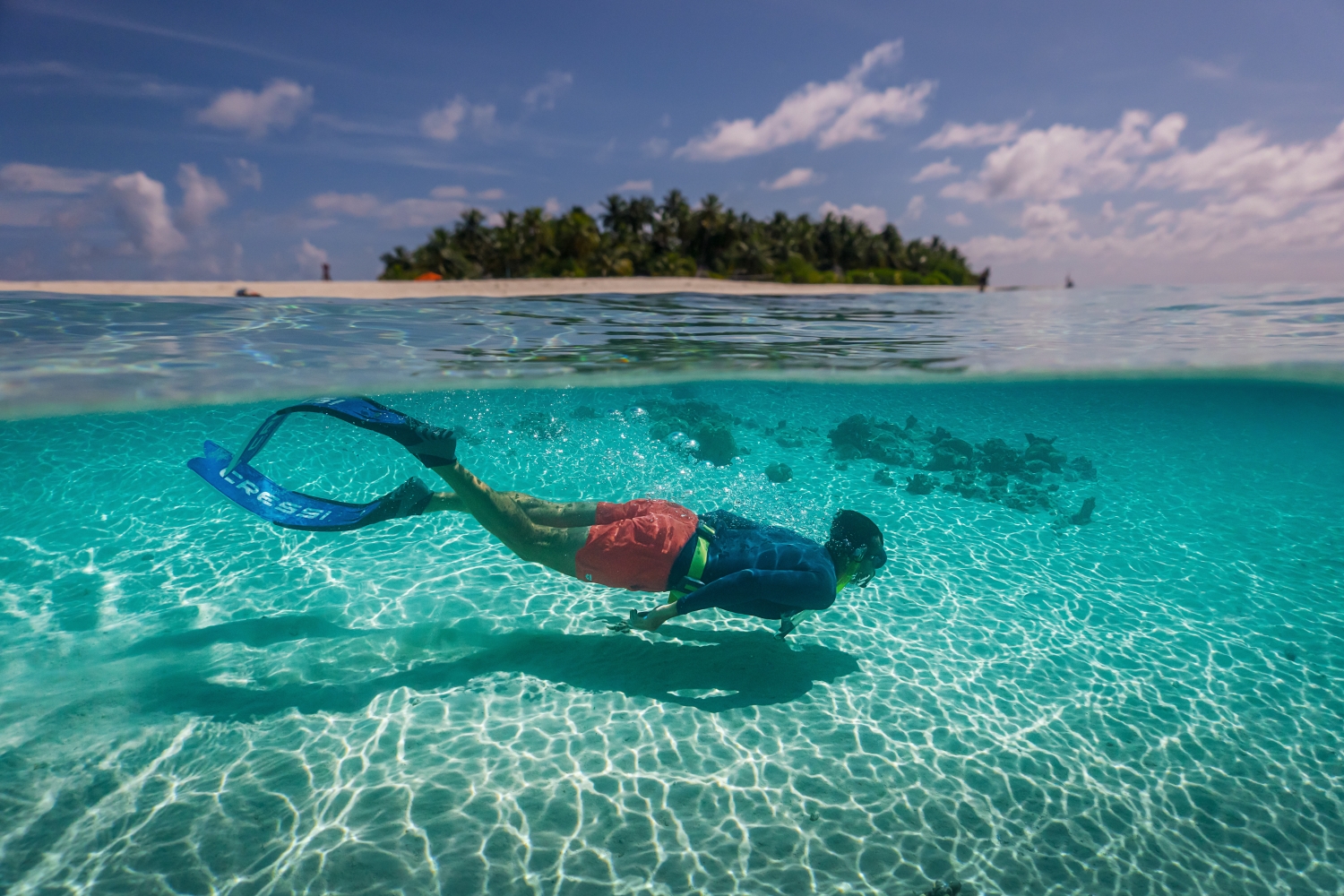
Marine experiences at Sun Siyam Iru Veli begin just beyond the island’s shoreline, from its house reef in Dhaalu Atoll to the waters of Faafu, Meemu and South Ari Atolls. For guests, this geographical reach means the underwater journey can take many forms, from a first guided snorkel close to the island to more advanced diving and encounters farther across the atolls.

The Big Encounters
Among the most notable journeys beyond the waters of Iru Veli is the Whale Shark Excursion to the South Ari Marine Protected Area. The guided snorkelling experience takes guests in search of the world’s largest fish, with the chance to snorkel alongside them when conditions allow. The same waters also offer manta encounters, another remarkable way to venture farther afield and see these graceful ocean giants in their natural environment.

Across the Atolls
The journey continues across Meemu and Faafu Atolls, where full-day explorations move between open-water encounters, quieter lagoons, coral reefs and uninhabited islands. Around Makunueri, guests can snorkel vibrant reefs with the chance to encounter turtles, sharks, rays and a variety of reef life. For those seeking a more exclusive experience, private journeys offer a way to discover coral gardens and lesser-visited stretches of ocean, with some also providing a first introduction to scuba in calm waters.

The House Reef, in Daylight and After Hours
Closer to Iru Veli, the house reef tells a different story. By day, guided snorkelling invites guests to coral formations and resident marine life directly around the island. After sunset, the same waters take on an entirely different character as nocturnal species emerge. The guided night snorkelling offers the chance to encounter nurse sharks and experience the reef from a whole new perspective with the help of fluorescent and blue lights.

A Different Side of the Water
For those looking for something less conventional, the SSI Mermaid programme brings a playful side to underwater exploration. Guests can swap fins for a mermaid tail and learn the techniques needed to move comfortably and confidently through the water. Combined with underwater photography and video, this experience offers a chance to explore a more imaginative side of underwater exploration at Iru Veli.

A Lasting Impact
The marine discovery at Iru Veli also extends beyond observation. Through the resort’s coral planting initiative, guests can contribute to the continued restoration of the house reef and leave a lasting connection beneath the surface. Back on land, the weekly Marine Night brings these stories together, sharing more about marine life, reef conservation and underwater environments surrounding the island.
Beyond the many ways to explore the ocean from the surface, the SSI-certified dive centre at Iru Veli offers adventures for seasoned divers and complete beginners alike. Certified divers can continue exploring the surrounding dive sites with the resort’s professional team, while first-timers can start with an introductory scuba experience. Guests looking to go further can also earn SSI certification during their stay, turning their holiday into the start of a new diving journey.
From the house reef to some of the Maldives’ most remarkable marine encounters, Sun Siyam Iru Veli reveals an island experience shaped as much by what lies beneath the surface as by what surrounds it.

Discover more marine activities, explore the latest Sun Siyam Iru Veli offers.
Machchafushi Island Resort & Spa Maldives, The Centara Collection, is set to host an exclusive underwater photography and media experience from 14 to 17 October 2026, in partnership with Youth Global Program in partnership with Nikon Middle East & Nikon India. The programme is supported by Lexar Middle East and Hollyland Middle East. Led by Nikon’s underwater photographers and welcoming select international media, the programme will offer an immersive exploration of Machchafushi’s exceptional marine environment and the underwater world of the South Ari Atoll.
Set within the South Ari Marine Protected Area (SAMPA), Machchafushi offers an exceptional setting for an exclusive underwater photography experience. The resort’s award-winning house reef, spanning more than five times the area of the island itself, creates an expansive underwater landscape shaped by vibrant coral gardens, diverse marine life, and a series of distinctive dive sites.

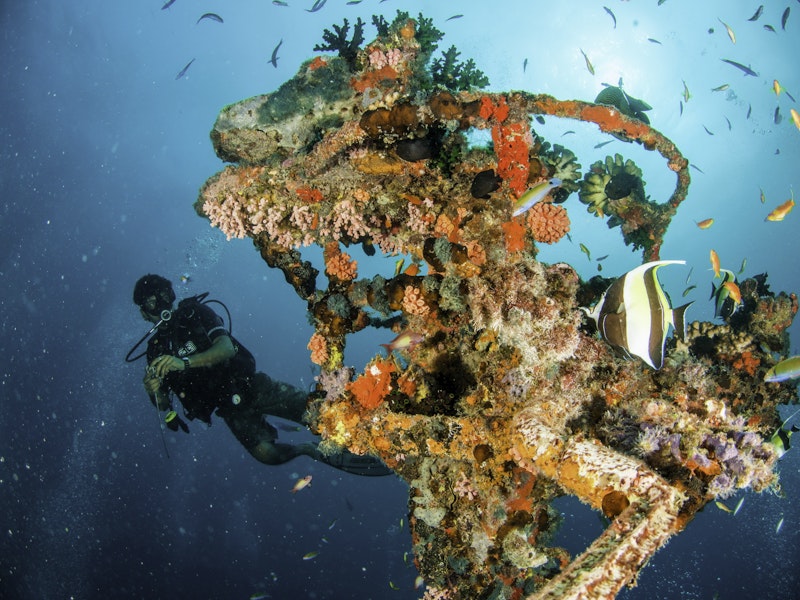
The experience will take Nikon underwater photographers and select media beneath the surface of Machchafushi, offering the opportunity to capture the island’s marine environment from a unique perspective. From coral formations and marine life to the deeper waters surrounding the island, the programme will showcase the diversity and character of the South Ari Atoll, including the renowned Kudhi Maa shipwreck, which rests between approximately 12 and 30 metres under the surface and has become an established artificial reef.
Together, Machchafushi’s award winning house reef, vibrant coral gardens, diverse marine life and Kudhi Maa create a compelling underwater canvas, offering visiting photographers and media an opportunity to experience and document a lesser seen perspective of the Maldives.

Beyond the reef, the programme will introduce participants to the wider Machchafushi experience, connecting the underwater environment with the island’s natural surroundings, dining, wellness and slower rhythm of island life. Together, these experiences offer a broader perspective of Machchafushi and its place within the South Ari Atoll.
The collaboration brings together Nikon’s expertise in photography and Machchafushi’s distinctive marine environment, creating an exclusive platform to showcase the underwater character of the South Ari Atoll through the lens of leading underwater photographers and international media, with support from Lexar Middle East and Hollyland Middle East.

Taking place from 14 to 17 October 2026, the experience will offer an opportunity to discover and document Machchafushi beyond the shoreline, from its award-winning house reef and vibrant marine life to the distinctive underwater landscapes surrounding the island. Through the photographers and media attending, the experience will bring a different perspective of the Maldives to audiences around the world.
Action
From zero experience to professional careers: Atmosphere Foundation celebrates Divemaster graduates
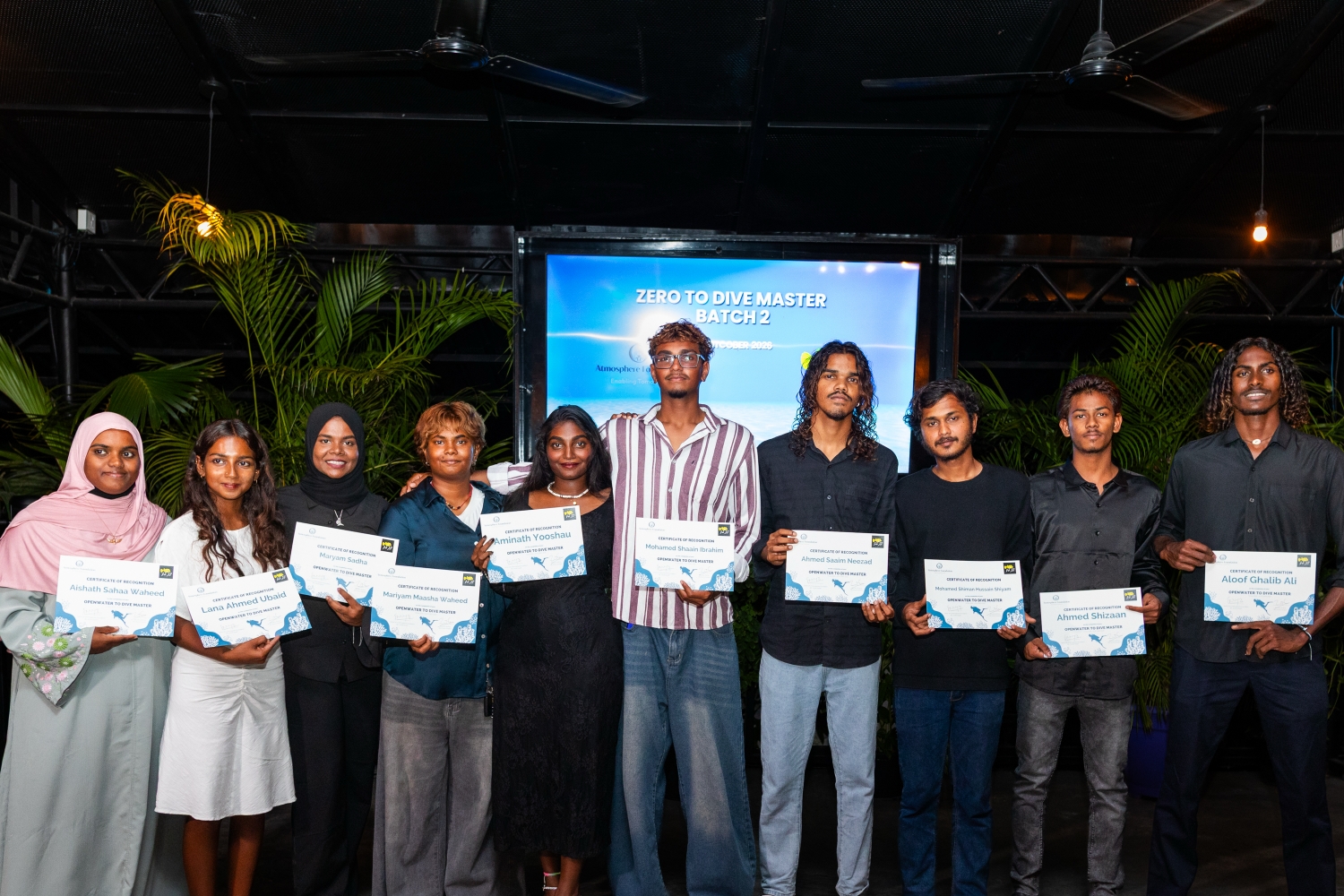
Atmosphere Foundation has celebrated the graduation of the second batch of its ‘Zero to Divemaster’ Scholarship Programme, bringing the total number of young Maldivians trained through the initiative to 20 as the Foundation continues to build pathways into professional careers in the country’s diving industry.
Ten participants completed the second batch of the three-month programme, which takes students through a structured training pathway from PADI Open Water Diver to Advanced Open Water Diver, Emergency First Response, Rescue Diver and, ultimately, professional Divemaster certification.

Delivered in partnership with Moodhu Bulhaa Dive Centre in Vilimalé, the programme is designed to enable Maldivians to enter the professional diving industry even without previous diving experience. The second batch, comprising five women and five men, began training in July following the completion of the inaugural cohort.
The latest graduation builds on strong outcomes from the first batch, which began in April 2026 with 10 participants. All 10 successfully obtained their professional Divemaster certifications, while nine have since secured employment across safari vessels, resorts and island-based dive centres.

The 90 per cent employment rate among the first batch highlights the programme’s success in translating professional training into direct employment opportunities within the Maldives’ tourism and marine sectors.
Beyond technical diving skills, the programme provides participants with training in safety, emergency response and the responsibilities associated with working as a professional Divemaster. The progressive training structure is intended to equip graduates with both the qualifications and practical competencies required to work in professional diving environments.
A key component of the initiative is the level of financial support provided to scholarship recipients. Atmosphere Foundation covers tuition, required certification and registration fees, while also providing accommodation and meals during the programme. The scholarship for the second batch additionally covered training materials and dive insurance, helping remove financial barriers that could otherwise prevent participants from pursuing professional diving qualifications.

By covering both the cost of training and participants’ day-to-day living requirements during the course, the programme allows scholarship recipients to focus on developing their diving skills and completing the demanding progression towards Divemaster certification.
The programme also links scholarship support with a longer-term commitment to the Maldives. Participants agree to work within the country’s diving and marine industry for at least two years after successfully completing their certification, helping ensure that the skills developed through the initiative contribute directly to the local workforce.
With diving forming an important part of the Maldives’ tourism industry, the initiative seeks to expand opportunities for Maldivians to develop specialised skills and pursue careers in an area where trained professionals are required across resorts, liveaboards and local dive centres.

The results of the first cohort provide an early indication of the programme’s potential. While only three graduates had secured jobs when the second batch was launched in July, that figure has since increased to nine, reflecting continued progression into employment following certification.
Following the completion of two batches, Atmosphere Foundation has confirmed that the Zero to Divemaster Scholarship Programme will continue, providing further opportunities for Maldivians seeking to enter the professional diving industry.

With 20 participants now having completed the programme across its first two cohorts, Zero to Divemaster is developing from a training initiative into an employment pathway, combining internationally recognised diving qualifications with practical skills, financial support and a direct connection to career opportunities within the Maldives.

-

 News1 week ago
50 visits, hundreds of dives: Bandos Maldives honours loyal guests with coral garden
-

 Cooking1 week ago
Park Hyatt Maldives Hadahaa announces six-chef Masters of Food & Wine series
-

 Awards1 week ago
RAAYA by Atmosphere wins Best Family Resort in Maldives at Travel Time Awards 2025
-

 Drink1 week ago
Château Palmer brings Bordeaux heritage to Finolhu Maldives
-

 Cooking1 week ago
V Villas Maldives at Mirihi brings Thai flavours from Phuket to the Maldives
-

 News1 week ago
Grand Park Kodhipparu unveils seasonal journey from quiet escapes to festive celebrations
-

 Action7 days ago
From zero experience to professional careers: Atmosphere Foundation celebrates Divemaster graduates
-

 Cooking1 week ago
Milaidhoo Maldives welcomes JAG Head Chef Laurence Tan for October culinary residency