

Underwater
Outrigger Resorts and Best Dives Maldives Announce Great Marine Activities for Holidaymakers


Maldives.net.mv – The Outrigger Konotta Maldives Resort, which opened on August 1, and Best Dives Maldives, have announced a partnership to provide an innovative and wide range of marine holiday activities, with an emphasis on marine knowledge and conservation. Outrigger chose to partner with Best Dives Maldives due to the company’s commitment to marine life education and conservation, which fits in with Outrigger Resorts’ global coral health and conservation program, OZONE (Outrigger’s zone).
Best Dives Maldives will function as the resort’s full-time activities and tour provider. It will be responsible for conducting an extensive range of island discoveries, cultural excursions, private island trips for couples and a full range of water sports from snorkeling and kayaking to catamaran rides, wind and kite surfing, fishing, seabob trips round the island and a full range of PADI scuba courses.
The marine environment adjacent to the Outrigger Konotta Maldives Resorts is second to none.A fully qualified marine biologist, Caterina Fattori from Polytechnic University Ancona in Italy, joined the Best Dives team on Konotta Island on September 6. She will participate in Outrigger guests’ snorkel and scuba dive excursions on request. She will give talks and presentations to groups. Her additional role will be to train all Best Dive Maldives tour leaders on marine ecology so that understanding and conservation is part of every sea-going excursion.
 “Konotta Island and the surrounding area in the Gaafu Dhaalu Atoll in the south of the country offers the biggest and best hard coral fields in the world,” says Eric van Melis, the General Manager of Best Dives Maldives, who has been conducting marine trips in the Maldives since 2003.
Van Melis says that Outrigger and Best Dives Maldives will work closely on coral conservation and education. For example, guests can earn PADI Project AWARE specialist certification, for which they don’t need to be a diver.
Project AWARE fits in with OZONE and Outrigger’s mission to protect coral reef systems in tropical destinations around the world.
Outrigger’s collaboration with Best Dives Maldives complements its existing OZONE partnerships with the National Oceanic and Atmospheric Administration in the US, the Polynesian Voyaging Society, the Pacific Islands Ocean Observing System, the Waikiki Aquarium in Hawaii, Underwater World in Guam, the Mamanuca Environment Society in Fiji, and Reef Conservation in Mauritius.
“I’m extremely proud that Outrigger Konotta Maldives Resort is embarking on a joint venture that will ensure both holiday enjoyment and coral reef knowledge for Outrigger guests,” says Bitsy Kelley, a member of the Outrigger owning family and vice president of corporate communications for Outrigger Enterprises Group. “As a lifelong surfer, swimmer and snorkeler, ocean health is near and dear to my heart.”
Trevor Bowden, Operations Manager for Best Dives Maldives at the Outrigger Konotta Maldives Resort, says of the local house reef adjacent to the resort: “The marine life around our small island reef is fantastic. We are amazed at the amount of species that we find: white tip and zebra sharks, guitarfish and schools of eagle rays and much more. The corals are in pristine condition and extremely colorful in this part of the archipelago. The house reef has a slight current due to it position within the atoll and is excellent for new diver courses. The water temperature is around 30 Celsius.”


Action
Four Seasons Resorts Maldives honoured for 25 years of marine conservation efforts at HICAP 2026

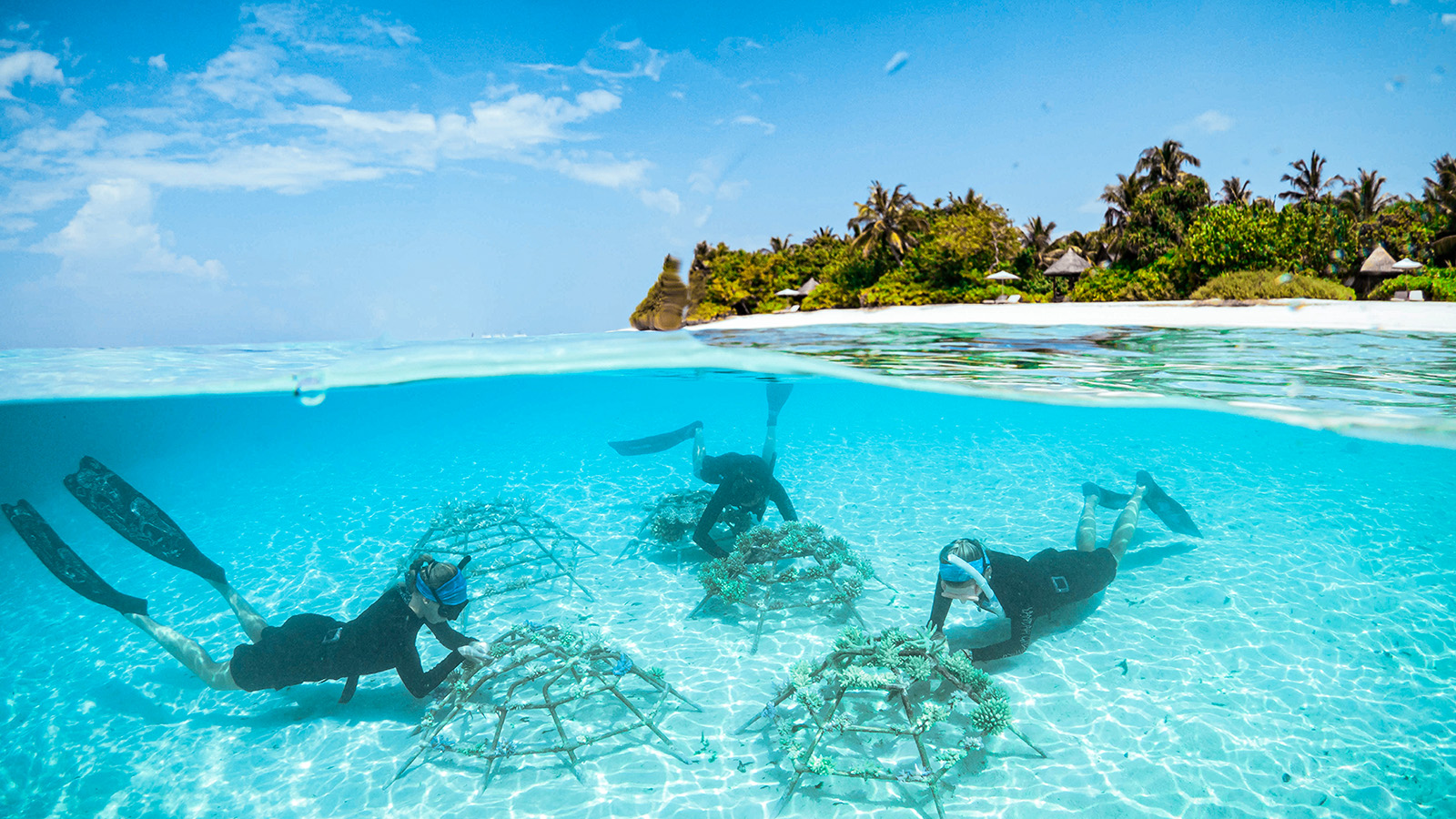
Four Seasons Resorts Maldives has won the 2026 Sustainable Hotel Award for Biodiversity Action & Education from Hotel Investment Conference Asia Pacific (HICAP). The award recognises 25 years of conservation, research and training at Four Seasons Resort Maldives at Kuda Huraa (since May 1998) and Four Seasons Resort Maldives at Landaa Giraavaru (since November 2006).
Winners are selected by an expert judging panel for innovative sustainability practices that can be replicated across Asia Pacific. The Biodiversity Action & Education category emphasises measurable conservation and practical learning. Four Seasons Resorts Maldives was recognised for connecting sustained conservation and scientific advances with hands-on learning for guests, local schoolchildren and young Maldivians.
The resorts’ Reefscapers partnership, launched at Kuda Huraa in 2001, encompasses more than 9,000 coral frames across one of the Indian Ocean’s largest artificial reef restoration projects. Decades of monitoring have supported peer-reviewed, AI-assisted research into coral survival, informing restoration methods as environmental pressures increase. Corals on mature frames now reproduce naturally, while spawning and larval-settlement research advances methods to repopulate damaged reefs and increase diversity.

That research also supports practical conservation education. Since 2023, Landaa has hosted the Baa Atoll Marine Biology Internship Programme, a three-stage, three-year initiative introducing students across the atoll to marine science.
Furthermore, the resorts’ government-accredited Apprenticeship Programme has produced 1,058 Maldivian graduates since 2001 and currently offers 14 career pathways, including Marine Conservation. A new, fully funded four-year Marine and Environmental Science apprenticeship with Maldives National University combines academic study with fieldwork at both Kuda Huraa and Landaa Giraavaru. The pathway progresses towards a bachelor’s degree.
“This award belongs to the people who keep doing the work,” says Armando Kraenzlin, Regional Vice President and General Manager. “Our marine biologists, conservation partners, gardeners and trainers turn years of experience into knowledge others can use. Guests and young Maldivians contribute too, learning alongside our teams and helping carry that work forward.”

Science that informs action
Marine Savers, the resorts’ conservation programme, operates from Marine Discovery Centres at Kuda Huraa and Landaa Giraavaru, working with long-term partners including Reefscapers and The Manta Trust.
Reefscapers achieved a Maldives first by collecting coral reproductive cells in the wild, then fertilising them and settling larvae under controlled conditions. During severe bleaching in 2024, teams relocated 28,000 corals to deeper, cooler waters.

The Turtle Rehabilitation Centres at Kuda Huraa and Landaa Giraavaru have cared for over 500 sea turtles. To date, of the many injured by ghost fishing nets carried into Maldivian waters by wider Indian Ocean currents, more than 280 have been released.
Both resorts also support manta research, with studies by Landaa’s onsite Manta Trust scientists identifying the world’s largest-known reef manta population. Their research contributed to Baa Atoll’s designation as the Maldives’ first UNESCO World Biosphere Reserve in 2011.

Learning through participation
Guest coral sponsorship funds restoration, with guests transplanting fragments alongside marine biologists and following their development on MarineSavers.com.
Marine Discovery Centres connect guests and local schoolchildren with this conservation work. At Kuda Huraa, the Junior Marine Savers introduces younger children to ocean conservation through hands-on marine discovery activities. Landaa’s one-to-one Trainee Marine Biologist Programme gives teenagers practical experience across six specialist modules, while garden tours connect cultivation with food, wellness and composting.

All of the resorts’ research, field reports and findings are shared with the Maldives wider resort community, students, researchers and a global audience via MarineSavers.com. The Reefscapers programme’s selection as a World Sustainable Hospitality Alliance case study further extends its relevance to the hospitality industry.

For more information and ways to participate in award-winning biodiversity conservation and education at Four Seasons Resorts Maldives, visit MarineSavers.com or contact the Resorts at reservations.mal@fourseasons.com or call +960 66 00 888.
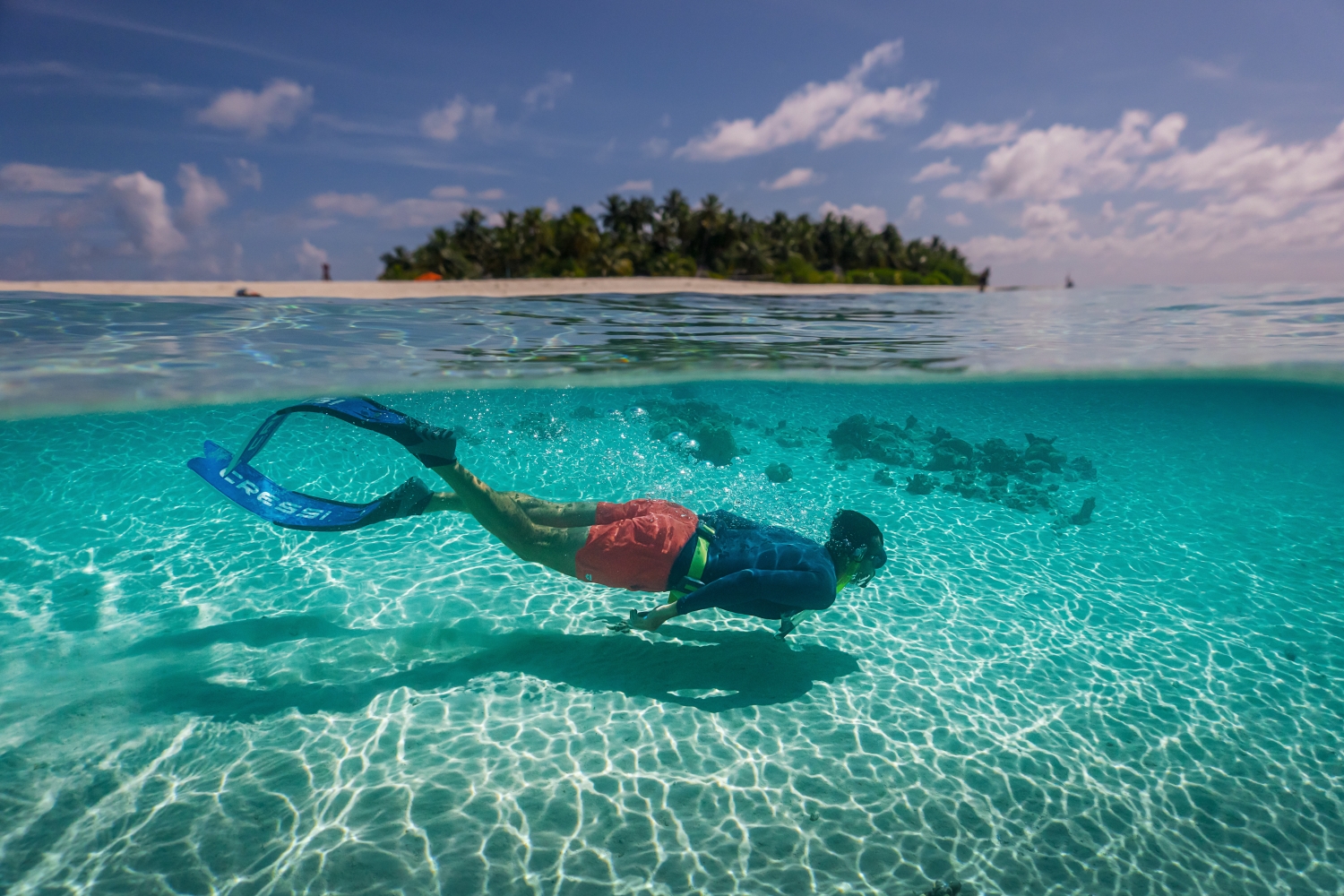
Marine experiences at Sun Siyam Iru Veli begin just beyond the island’s shoreline, from its house reef in Dhaalu Atoll to the waters of Faafu, Meemu and South Ari Atolls. For guests, this geographical reach means the underwater journey can take many forms, from a first guided snorkel close to the island to more advanced diving and encounters farther across the atolls.

The Big Encounters
Among the most notable journeys beyond the waters of Iru Veli is the Whale Shark Excursion to the South Ari Marine Protected Area. The guided snorkelling experience takes guests in search of the world’s largest fish, with the chance to snorkel alongside them when conditions allow. The same waters also offer manta encounters, another remarkable way to venture farther afield and see these graceful ocean giants in their natural environment.

Across the Atolls
The journey continues across Meemu and Faafu Atolls, where full-day explorations move between open-water encounters, quieter lagoons, coral reefs and uninhabited islands. Around Makunueri, guests can snorkel vibrant reefs with the chance to encounter turtles, sharks, rays and a variety of reef life. For those seeking a more exclusive experience, private journeys offer a way to discover coral gardens and lesser-visited stretches of ocean, with some also providing a first introduction to scuba in calm waters.

The House Reef, in Daylight and After Hours
Closer to Iru Veli, the house reef tells a different story. By day, guided snorkelling invites guests to coral formations and resident marine life directly around the island. After sunset, the same waters take on an entirely different character as nocturnal species emerge. The guided night snorkelling offers the chance to encounter nurse sharks and experience the reef from a whole new perspective with the help of fluorescent and blue lights.

A Different Side of the Water
For those looking for something less conventional, the SSI Mermaid programme brings a playful side to underwater exploration. Guests can swap fins for a mermaid tail and learn the techniques needed to move comfortably and confidently through the water. Combined with underwater photography and video, this experience offers a chance to explore a more imaginative side of underwater exploration at Iru Veli.

A Lasting Impact
The marine discovery at Iru Veli also extends beyond observation. Through the resort’s coral planting initiative, guests can contribute to the continued restoration of the house reef and leave a lasting connection beneath the surface. Back on land, the weekly Marine Night brings these stories together, sharing more about marine life, reef conservation and underwater environments surrounding the island.
Beyond the many ways to explore the ocean from the surface, the SSI-certified dive centre at Iru Veli offers adventures for seasoned divers and complete beginners alike. Certified divers can continue exploring the surrounding dive sites with the resort’s professional team, while first-timers can start with an introductory scuba experience. Guests looking to go further can also earn SSI certification during their stay, turning their holiday into the start of a new diving journey.
From the house reef to some of the Maldives’ most remarkable marine encounters, Sun Siyam Iru Veli reveals an island experience shaped as much by what lies beneath the surface as by what surrounds it.

Discover more marine activities, explore the latest Sun Siyam Iru Veli offers.
Machchafushi Island Resort & Spa Maldives, The Centara Collection, is set to host an exclusive underwater photography and media experience from 14 to 17 October 2026, in partnership with Youth Global Program in partnership with Nikon Middle East & Nikon India. The programme is supported by Lexar Middle East and Hollyland Middle East. Led by Nikon’s underwater photographers and welcoming select international media, the programme will offer an immersive exploration of Machchafushi’s exceptional marine environment and the underwater world of the South Ari Atoll.
Set within the South Ari Marine Protected Area (SAMPA), Machchafushi offers an exceptional setting for an exclusive underwater photography experience. The resort’s award-winning house reef, spanning more than five times the area of the island itself, creates an expansive underwater landscape shaped by vibrant coral gardens, diverse marine life, and a series of distinctive dive sites.

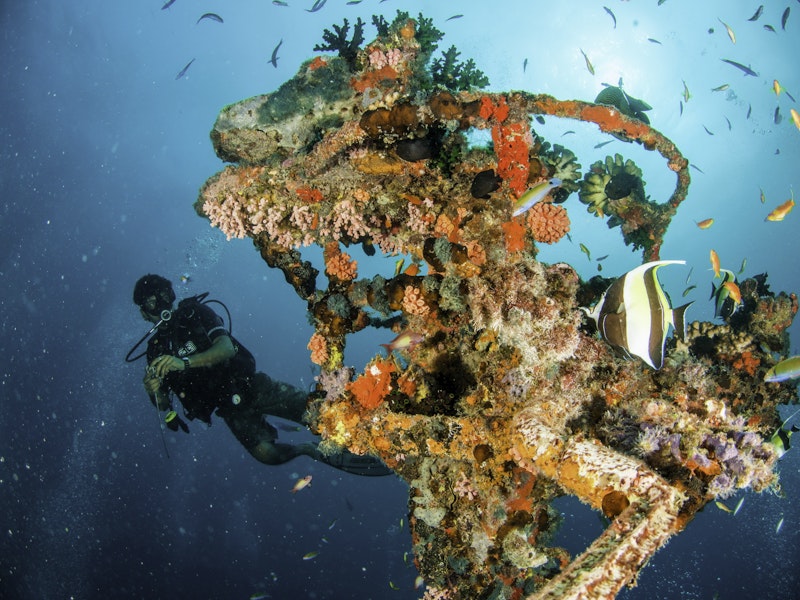
The experience will take Nikon underwater photographers and select media beneath the surface of Machchafushi, offering the opportunity to capture the island’s marine environment from a unique perspective. From coral formations and marine life to the deeper waters surrounding the island, the programme will showcase the diversity and character of the South Ari Atoll, including the renowned Kudhi Maa shipwreck, which rests between approximately 12 and 30 metres under the surface and has become an established artificial reef.
Together, Machchafushi’s award winning house reef, vibrant coral gardens, diverse marine life and Kudhi Maa create a compelling underwater canvas, offering visiting photographers and media an opportunity to experience and document a lesser seen perspective of the Maldives.

Beyond the reef, the programme will introduce participants to the wider Machchafushi experience, connecting the underwater environment with the island’s natural surroundings, dining, wellness and slower rhythm of island life. Together, these experiences offer a broader perspective of Machchafushi and its place within the South Ari Atoll.
The collaboration brings together Nikon’s expertise in photography and Machchafushi’s distinctive marine environment, creating an exclusive platform to showcase the underwater character of the South Ari Atoll through the lens of leading underwater photographers and international media, with support from Lexar Middle East and Hollyland Middle East.

Taking place from 14 to 17 October 2026, the experience will offer an opportunity to discover and document Machchafushi beyond the shoreline, from its award-winning house reef and vibrant marine life to the distinctive underwater landscapes surrounding the island. Through the photographers and media attending, the experience will bring a different perspective of the Maldives to audiences around the world.

-

 Cooking1 week ago
Belgian Chef Wout Bru to bring exclusive dining experiences to Meyyafushi, Fushifaru Maldives
-

 News7 days ago
.Here Baa Atoll completes two-island concept with opening of Nowhere Private Island
-

 News1 week ago
Patina Maldives announces Orthodox Christmas celebrations with Russian cuisine and live entertainment
-

 Cooking1 week ago
Award-winning Pastry Chef Elena Nabiullina brings contemporary pâtisserie to The Nautilus Maldives
-

 Action6 days ago
Adaaran Select Hudhuran Fushi brings together 40 women for surfing, wellness retreat
-

 News6 days ago
Six Maldives spas operated by Mandara Spa recognised in global top 100 list
-

 Cooking1 week ago
Barceló Nasandhura Malé partners with Ministry of Crab for rooftop dining experience
-

 News1 week ago
Atmosphere Hotels & Resorts introduces three distinct festive experiences in Maldives