

Featured
Plastic pollution flowing into oceans to triple by 2040: study


SINGAPORE (Reuters) – The amount of plastic waste flowing into the ocean and killing marine life could triple in the next 20 years, unless companies and governments can drastically reduce plastic production, a new study published on Thursday said.
Single-use plastic consumption has increased during the coronavirus pandemic, according to the International Solid Waste Association, an NGO. Face masks and latex gloves are washing up daily on Asia’s remote beaches. Landfills worldwide are piled high with record amounts of takeaway food containers and online delivery packaging.
The new research, produced by scientists and industry experts for The Pew Charitable Trusts and SYSTEMIQ, offers solutions that could cut the projected volume of plastic entering the ocean by more than 80%.
The roadmap for stemming the runaway ocean plastic waste crisis is among the most detailed ever offered in a study.
If no action is taken, however, the amount of plastic going into the sea every year will rise from 11 million tonnes to 29 million tonnes, leaving a cumulative 600 million tonnes swilling in the ocean by 2040, the equivalent weight of 3 million blue whales, according to the study published in the journal Science.
“Plastic pollution is something that affects everyone. It isn’t a ‘your problem and not my problem’. It’s not one country’s problem. It’s everyone’s problem,” said Winnie Lau, senior manager at Pew and co-author of the study.
“It’s going to get worse if we don’t do anything.”
The strategy laid out in the report includes redirecting hundreds of billions of dollars in plastic production investment into alternative materials, recycling facilities and waste collection expansion in developing countries.
This would require a U-turn by the energy industry, which is rapidly building new chemical plants around the world to boost plastic output as its traditional fuel business is eroded by a rise in cleaner energy sources.
Oil and soda
The amount of plastic produced annually has been climbing fast since 1950, when global production totalled 2 million tonnes. In 2017, that number was 348 million tonnes, and is expected to double again by 2040, the study estimates.
Big plastic makers, including ExxonMobil, Dow and Chevron Phillips Chemical, have said they are committed to tackling plastic pollution, despite increasing production. The projects they fund focus on cleaning up waste.
The paper recommends, however, governments implement laws to discourage new plastic production and provide subsidies for reusable alternatives.
The plastic industry has lobbied against government bans on single-use plastic.
Some of the biggest buyers of plastic are consumer goods companies like Coca-Cola, PepsiCo, Nestle and Unilever. They have all made commitments to use a greater amount of recycled content in products in the future.
But current government and corporate commitments will only reduce the amount of plastic flowing into the ocean by 7 percent by 2040, the Pew and SYSTEMIQ study finds.
To cut the flow of ocean plastic by 80%, paper or compostable alternatives to single-use plastic would be needed and packaging should be redesigned to more than double the share of recyclable material, the study says.
Some criticised the study’s inclusion of incineration, chemical recycling and plastic-to-fuel plants as ways to dispose of waste, saying these methods involve the release of climate-warming carbon emissions while also helping to sustain plastic production.
Instead, “we would be putting more emphasis on the need for reduction and stemming production of plastics,” said Von Hernandez, global coordinator at Break Free From Plastic, an NGO.
“If industry were allowed to continue with their projections of growth up to 2050, which quadruples production during this time, most of the recommendations from this report will be meaningless.”
Reporting and photo: Reuters


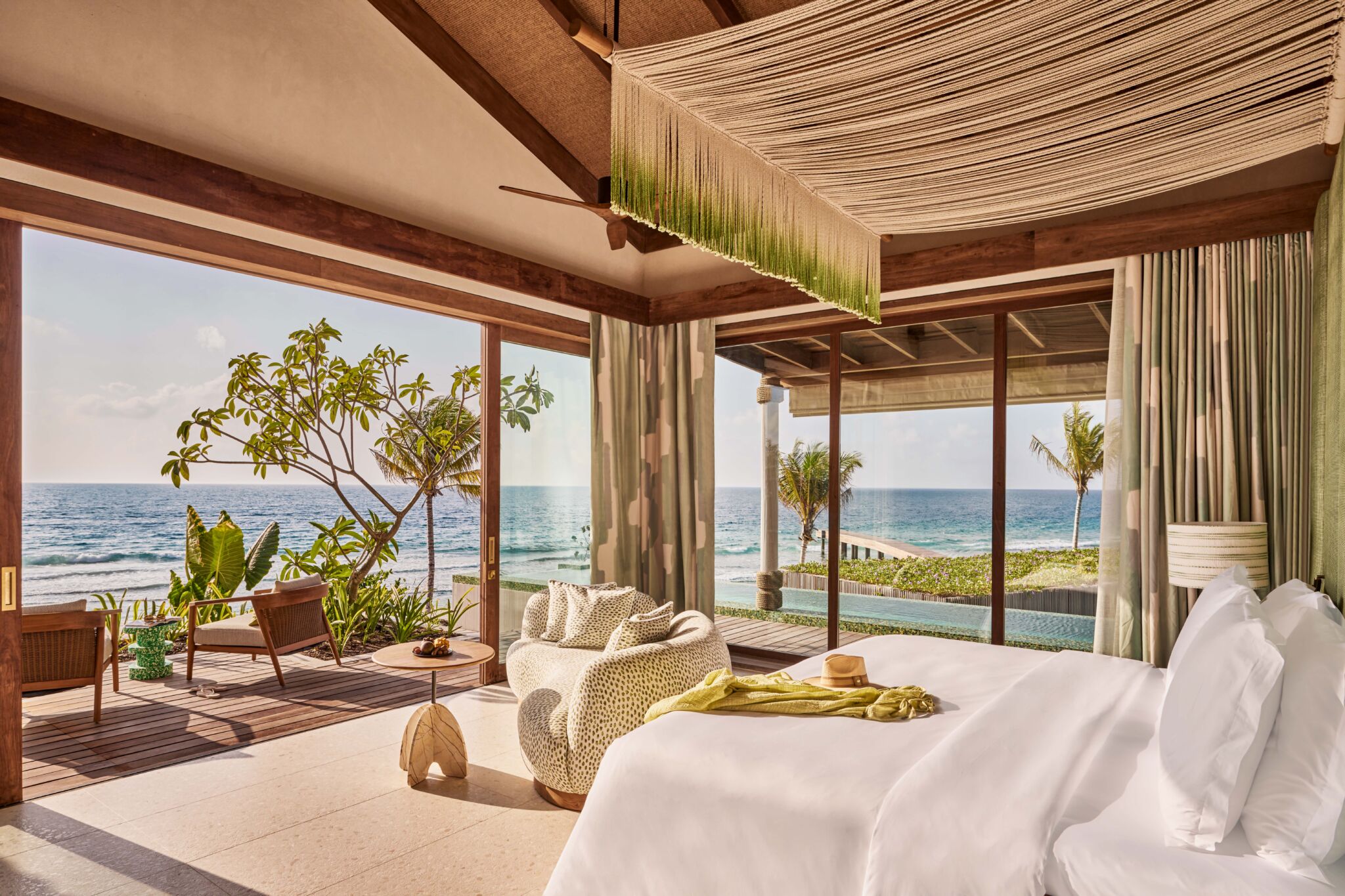
.Here Baa Atoll, a private island retreat in the Maldives, has been named the No. 6 Resort in the Indian Ocean in the Condé Nast Traveler Readers’ Choice Awards 2026.
The annual Readers’ Choice Awards recognise hotels, resorts, destinations, airlines and other travel experiences based on votes submitted by Condé Nast Traveler readers.
The recognition places .Here Baa Atoll among the highest-ranked resorts in the Indian Ocean and comes during a milestone year for the property.
Located within the UNESCO Biosphere Reserve of Baa Atoll, .Here Baa Atoll comprises nine residences spread across two natural islands, Somewhere and Nowhere.
Somewhere features seven three- and four-bedroom residences extending from the beach towards the lagoon and designed for families and groups travelling together. Each residence offers indoor and outdoor living spaces, multiple pools, private dining and personalised Roohu service. Guests are transferred directly to their residence by private speedboat, avoiding a conventional lobby and check-in process.
Condé Nast Traveler has previously highlighted the resort for its emphasis on privacy, its beach-to-lagoon residences and its discreet approach to luxury.
The resort experience also includes Nowhere Private Island, which is reserved exclusively for a single group at a time. The island features a five-bedroom Presidential Residence and a three-bedroom Lagoon Residence, providing eight bedrooms and 3,329 square metres of private living space, supported by dedicated service and individually curated experiences.
The Readers’ Choice Award follows several other recognitions received by .Here Baa Atoll during 2026. The resort was included in the Condé Nast Traveler Hot List 2026, with the publication highlighting its residences and design. It has also received international recognition for its architecture and design, alongside creative collaborators Kulör Group, Muza Lab and Topo Design Studio.
Elina Adiyan, Resident Manager of .Here Baa Atoll, said: “To be recognised by the readers of Condé Nast Traveler so early in our journey is incredibly meaningful. .Here was created around a simple idea: to give guests extraordinary space, genuine privacy and the freedom to experience the Maldives entirely on their own terms. This recognition belongs equally to our team, whose care and dedication bring that vision to life every day. We are deeply grateful to everyone who voted for us.”
The latest recognition adds to .Here Baa Atoll’s growing international profile within the luxury travel sector, with the resort positioning privacy, spacious accommodation, design and personalised service at the centre of its guest experience.
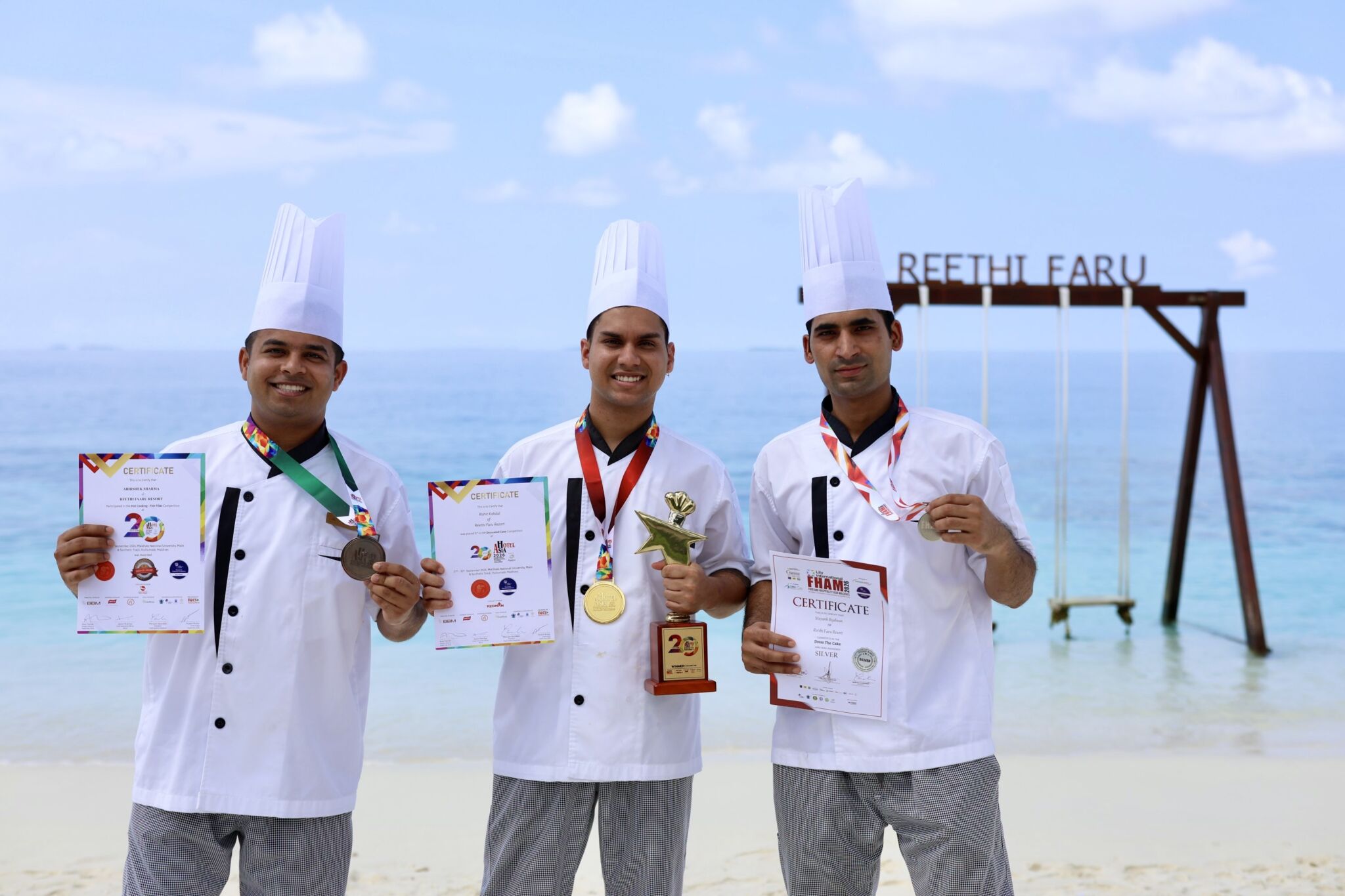
Reethi Faru Resort has announced three medal wins by members of its culinary team at the Hotel Asia Culinary Challenge and the FHAM Global Culinary Challenge.
At the Hotel Asia Culinary Challenge, Chef Rohit Kabdal received a Gold Medal in the Decorated Cake category, recognising his work in cake design, presentation and technical execution.
Chef Abhishek Sharma also represented Reethi Faru Resort at the competition, earning a Bronze Medal in the Hot Cooking Fish category.
At the FHAM Global Culinary Challenge, Chef Mayank Bijalwan secured a Silver Medal in the Dress the Cake category, adding a third medal to the resort’s recent culinary achievements.
The results highlight the range of skills within Reethi Faru Resort’s culinary team, spanning pastry, cake presentation and hot kitchen techniques.
According to the resort, participation in professional culinary competitions provides its chefs with opportunities to develop their skills, exchange knowledge and test their abilities alongside other industry professionals.
The achievements also form part of Reethi Faru Resort’s wider focus on dining and guest experience, with its culinary team involved across the resort’s restaurants and food and beverage offerings.
Reethi Faru Resort congratulated Kabdal, Bijalwan and Sharma on their respective achievements, describing the results as recognition of their commitment, technical ability and creativity.
The three medals add to the resort’s recent culinary accolades and reflect its continued emphasis on professional development within its kitchen team.
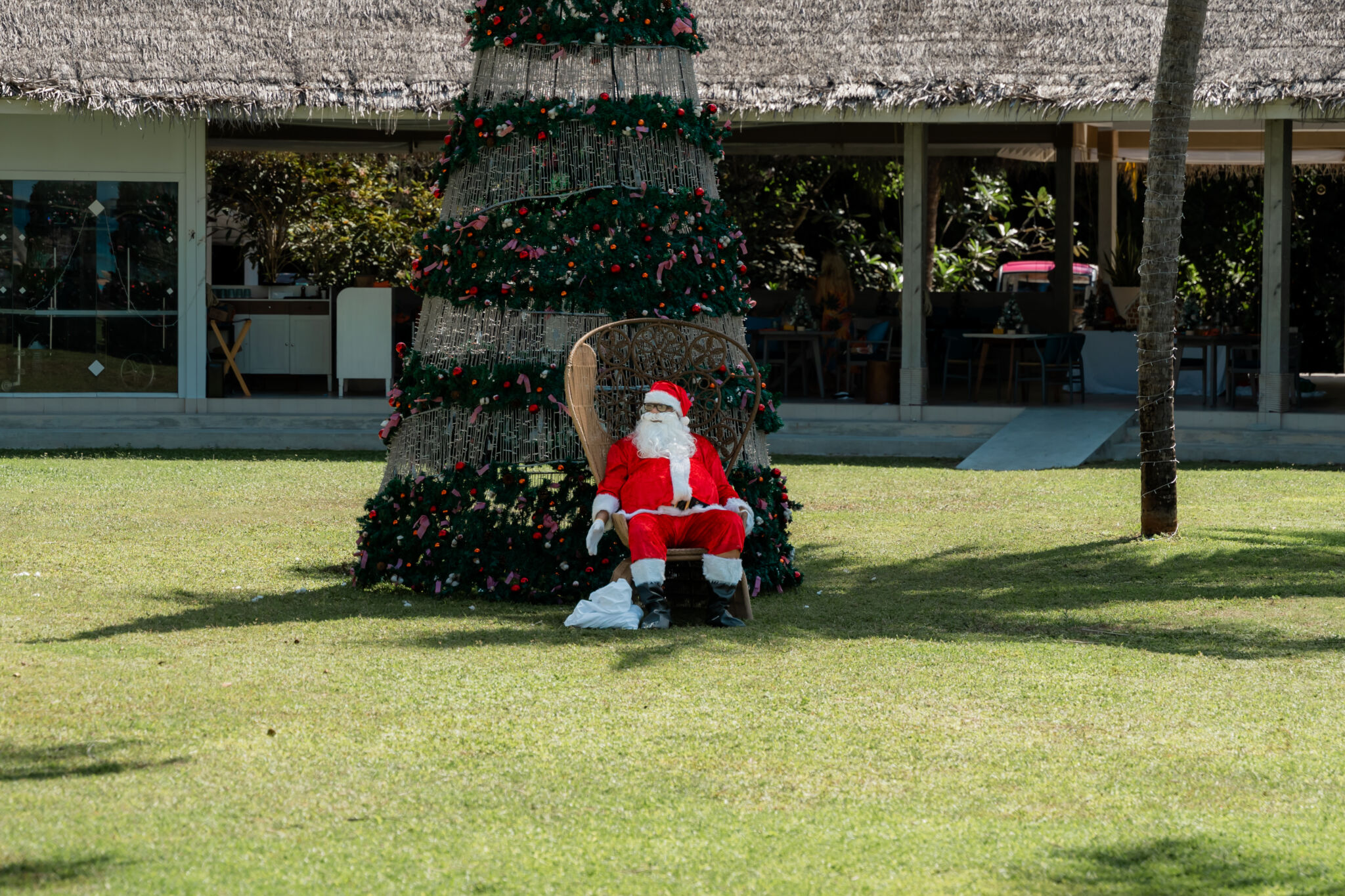
Ifuru Island Maldives will celebrate the 2026 festive season with “Echoes of the Ocean and Stars”, an immersive Christmas and New Year programme running from 21 December 2026 to 10 January 2027.
Inspired by the natural beauty of the Maldivian ocean, the night sky and the festive season, the theme will bring together marine and celestial elements across the resort’s décor, entertainment, dining, activities and guest experiences.
At the centre of the concept is the idea that the ocean carries memories, while the stars represent dreams and new beginnings. Rather than presenting the festive season as a series of standalone events, Ifuru Island plans to create a connected journey spanning Christmas, New Year and Orthodox Christmas.
The visual identity of “Echoes of the Ocean and Stars” will combine an underwater-inspired world with celestial elements. Bioluminescent-inspired colours, reef motifs and glowing details will be paired with stars, constellations and moonlit features throughout the resort.

The colour palette will include deep ocean blue and midnight navy alongside pearl white, silver, soft turquoise, pink and purple, with accents of celestial gold. Coral forms, waves, shells and reef-inspired features will be combined with stars and festive details, giving traditional Christmas elements an interpretation inspired by Ifuru Island’s natural surroundings.
The concept will extend beyond decorations to dining, entertainment, activities, uniforms, signage and festive communications.
The resort said the theme is also intended to reflect the emotions associated with the festive period. The ocean represents peace, connection and possibility, while the stars symbolise hope, dreams, guidance and new beginnings.
The festive journey will begin on 21 December and continue through 10 January, encompassing Christmas, New Year and Orthodox Christmas celebrations.
Christmas Eve on 24 December will feature festive dining and entertainment, while Christmas Day on 25 December will centre on family celebrations and relaxed island experiences.
On 31 December, Ifuru Island will mark New Year’s Eve with the main celebration of the festive period, before welcoming 2027 on New Year’s Day with activities centred around the island setting and surrounding ocean.

Celebrations will continue from 1 to 10 January during the Orthodox festive period, including Orthodox Christmas.
According to the resort, the broader concept is intended to connect the entire guest experience, with the island’s natural environment forming part of the festive setting. The ocean will provide inspiration during the day, while the night sky will shape the atmosphere after sunset.
Dining experiences, entertainment and activities will each form part of the wider “Echoes of the Ocean and Stars” narrative, giving guests different experiences throughout their stay while maintaining a consistent creative theme.
The programme is designed for guests travelling with family, friends or loved ones, with Ifuru Island aiming to combine its natural surroundings with festive celebrations and shared experiences.
The full festive programme, including entertainment, activities, culinary experiences and special events, will be announced separately.
“Echoes of the Ocean and Stars” will run at Ifuru Island Maldives from 21 December 2026 to 10 January 2027. Christmas Eve will be marked on 24 December, Christmas Day on 25 December, New Year’s Eve on 31 December, New Year’s Day on 1 January and the Orthodox festive period from 1 to 10 January 2027.

-

 News1 week ago
Soneva’s Maldives waterslide reimagined as contemporary art in Stockholm
-

 News1 week ago
Cora Cora Maldives welcomes guests back after planned island enhancements
-

 Awards1 week ago
Kuda Villingili Resort earns highly commended honour at Family Traveller Awards
-

 Love1 week ago
25 years later, Frank and Heike say ‘I Do’ underwater at Villa Nautica
-

 News1 week ago
The Cocoon Collection highlights AI, sustainability and guest experience on World Tourism Day
-

 Action1 week ago
Sea turtle hatchlings make their way to the ocean at Cinnamon Velifushi Maldives
-

 Lifestyle1 week ago
Alexandre Benjamin Navet to transform The Ritz-Carlton Maldives in four-month art residency
-

 News1 week ago
Kandooma Maldives launches new brand with experience-led all-inclusive concept