

Underwater
Meet W Maldives Marine Insider who protects the house reef by killing the starfish


Maldives.net.mv – With its central location in the Maldives’ North Ari atoll, W Retreat & Spa – Maldives is surrounded by some of the best dive sites in the world. All the big fish such as mantas, whale and hammerhead sharks are to be found in the immediate vicinity plus those smaller marine animals such as frogfish or ghost pipefish.
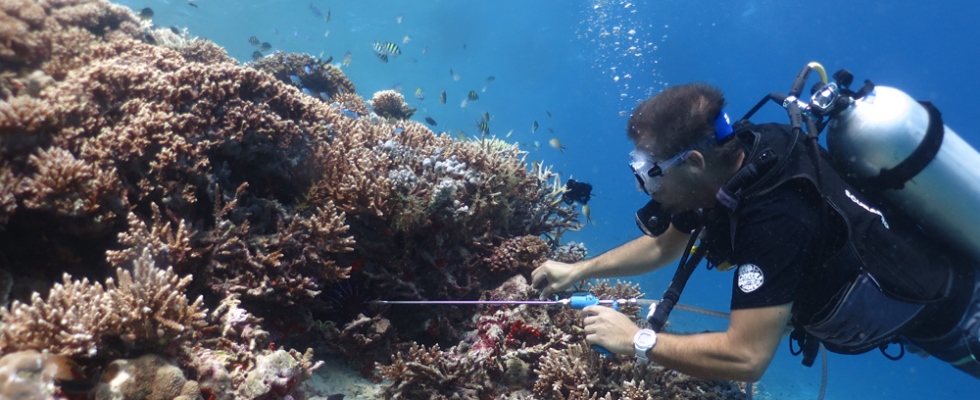
In the retreat’s commitment to craft unique and authentic experiences, W Retreat & Spa – Maldives offers a myriad of specially designed water activities through DOWN UNDER & WAVE, its diving and watersports centre. These activities immerse guests in the vibrancy of experiences of the natural environment and cultural heritage of the Maldives. One of the key people playing a vital role in this is Morgan Dobson, the retreat’s W MARINE INSIDER who has been based on the Fesdu island for 18 months. Growing up in Cyprus and with a diploma in Marine Biology and a degree in Environmental Studies, Morgan leads all conservation initiatives such as coral rehabilitation and educational outreach programs to preserve a healthy ecological environment at W Retreat & Spa – Maldives. He is also a certified diving instructor and takes care of the diving and snorkelling trips to local reefs and around the Ari Atoll, where the best dive sites are located. Maaya Thila, Fishhead, Malhoss Thila, Himendhoo Thila – to name just a few. A tilla is a smaller sand formation that rises up like a small hill in the water and never reaches its surface. Tillas are often as deep as 8 meters to the top of the reef.

W Retreat & Spa – Maldives is renowned for its underwater offerings – dive sites enhanced by tillas and farus – coral walls in large circles, which rise up from anywhere between 40-20 meters to just below the surface of the ocean. A unique diving spot in Fesdu is Hoholla Faru. This faru has a number of shallow caves big enough to swim into. The ceiling and walls are very honeycombed, allowing fish to swim in and out at their leisure. The ceiling, a living mural, is covered by coral encrusted clam shells. Just a stone’s throw from Fesdu is Gaathafushi desert island. It is totally intact and wild – a tropical fantasy in the middle of the Indian Ocean.
Following a recent invasion of crown-of-thorns starfish on the retreat’s house reef, which started in September 2015, W MARINE INSIDER and his team have been dedicated to stopping it ever since. The starfish consume the corals by climbing onto them, thrusting out their stomachs, and bathing the coral in digestive enzymes, which liquefy it for ingestion. Adult crown-of-thorns starfish, ranging in size from 9 to 18 inches (3-6 cm) in diameter and with up to 21 arms, can eat nearly a square foot of coral each in a day.
“We currently have teams entering the water and injecting the starfish with vinegar to kill them. We have also extended this procedure to other nearby reefs as this seems to be the area where they arrive from. So far more than 25,000 starfish have been killed. Also, the starfish behavior has changed as they are now hiding on the house reef during the day and come out to feed at night, which is why we have to dive in the dark to kill them.
If the current trends continue, the Fesdu’s spectacular reef may be severely damaged within a few years from now. Stopping the starfish infestation is a priority for us at the moment as this can save the stunning reef’s flora and fauna”, Morgan concluded.
For bookings and more information on W Retreat & Spa – Maldives, please explore http://www.wretreatmaldives.com/.


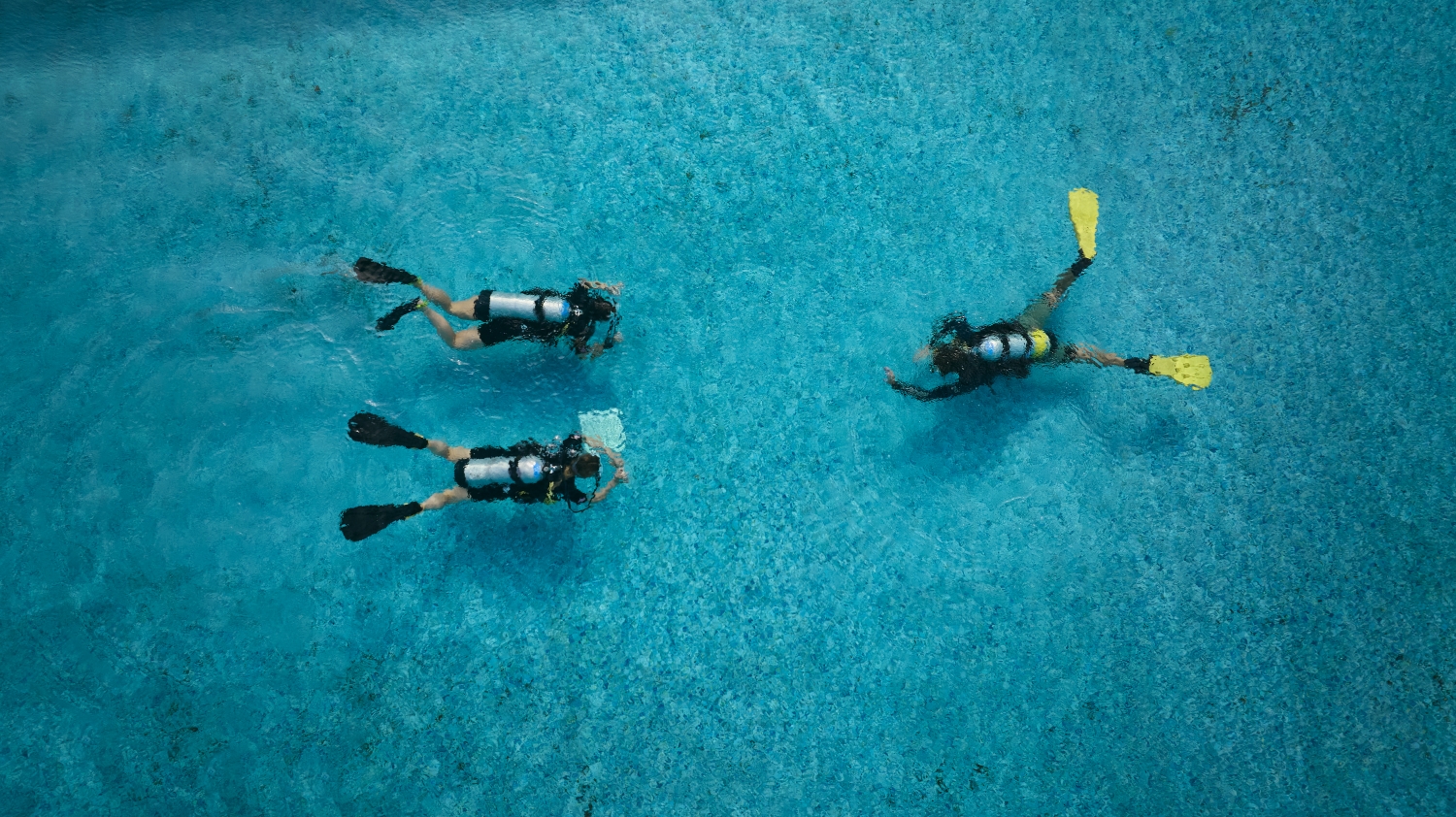
Pullman Maldives Maamutaa continues its ongoing marine conservation journey with the identification of Six Individual Indo-Pacific Leopard Sharks along the resort’s house reef. The sharks were documented through photographic observation and submitted to the MIYARU, the Maldives’ national non-profit organisation and research network focused on collaborative shark research and conservation.
The six identified sharks namely Atlas (LS081), Aurelian (LS083), Kikongo (LS090), Ambala (LS091), Ingwe (LS096), and Fowler (LS097) – can each be recognized by their distinctive patterns of dots and spots. Similar to a human fingerprint, these natural markings are unique to every shark, enabling marine researchers to identify individuals when they are encountered again.

By documenting these individual sharks, Pullman Maldives Maamutaa is contributing to a growing body of knowledge about the species and how it uses local reef habitats. Each sighting adds another piece to the wider picture of leopard shark presence and movements in the Maldives, supporting continued awareness, research and conservation.
For Pullman Maldives Maamutaa, conservation is about creating meaningful connections with the natural world. From a passing encounter with a leopard shark to learning how individual animals can be recognized beneath the surface, every discovery can offer a new perspective on the living reef.

The identification of these six leopard sharks reflects the resort’s continued approach to marine conservation through attentive observation, responsible marine experiences and collaboration with conservation partners.
As monitoring continues, Pullman Maldives Maamutaa invites guests to discover its house reef not simply as a destination beneath the surface, but as a living environment shared with an extraordinary diversity of marine life.
With every sighting, every photograph and every new record, the resort continues to build a deeper understanding of the waters surrounding Maamutaa – inspiring greater appreciation for the wildlife that calls the Maldives home.

Kayla Shortt is Pullman Maldives Maamutaa’s in-house Marine Biologist and PADI IDC Staff Instructor, who coordinated the in-water observations, photographic documentation and identification submissions that resulted in the six individual records.
Originally from South Africa, she has worked across five-star resorts in the Maldives since 2021, bringing together her experience in marine tourism and practical conservation.

Her expertise spans reef-health monitoring, turtle rehabilitation and shark behavior, with a particular focus on creating greater awareness and understanding of the marine environment.
At Pullman Maldives Maamutaa, Kayla makes marine science engaging and accessible, connecting guests with the underwater world while supporting the resort’s ongoing conservation efforts. Through her work, she contributes to a deeper understanding of the Maldives’ marine environment and the remarkable wildlife that calls it home.
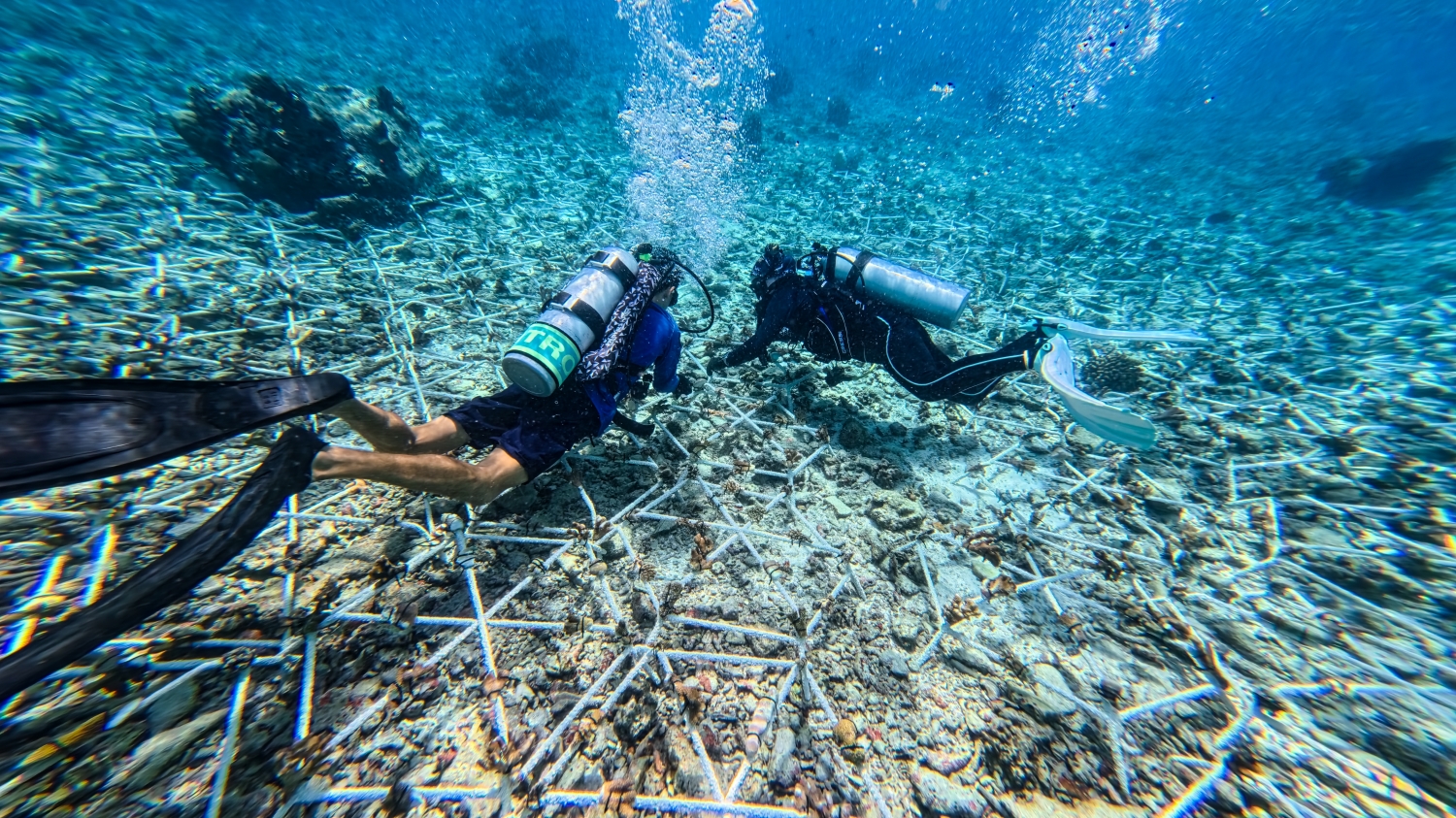
The Westin Maldives Miriandhoo Resort has marked a new chapter in its marine conservation journey with the successful completion of Coral RISE (Coral Restoration Initiatives for Sustainable Ecosystems), an initiative created in collaboration with MARS Sustainable Solutions. From September 18 to 20, 2026, the resort installed 100 Reef Stars and 1,500 coral fragments in its house reef.

Reef Stars are sand-coated, hexagonal steel structures that provide a stable foundation for coral fragments in damaged or degraded reef areas. Installed underwater and connected to form a supportive reef framework, they help coral fragments establish and grow while creating habitat for fish and other marine life.

The restoration work follows MARS Assisted Reef Restoration System (MARRS), a science-based method developed by MARS Sustainable Solutions. The approach combines trained restoration teams, locally sourced coral fragments, Reef Stars, and ongoing maintenance and monitoring. Over time, the structures are designed to integrate into the reef environment and support the recovery of a more diverse marine habitat.

“Coral RISE demonstrates how a focused first step can develop into a lasting commitment to reef restoration,” said Kate Janetski, Marine Program Lead for Maldives & Caribbean and Global Training Manager at MARS Sustainable Solutions. “The 100 Reef Stars installed at The Westin Maldives Miriandhoo Resort provide a practical foundation for coral growth, while continued monitoring and care will be essential to the project’s long-term progress. We are pleased to support the resort in bringing science-based restoration closer to its guests and associates.”
“Completing the first phase of Coral RISE is an important milestone for The Westin Maldives Miriandhoo Resort,” said Harish Gopalakrishnan, General Manager of The Westin Maldives Miriandhoo Resort. “The ocean surrounding our island is central to the Maldivian experience, and protecting it is a responsibility we take seriously. By making the restoration area accessible to guests for snorkelling, we hope to foster a deeper understanding of the reef and inspire more people to care for the natural environment.”

The initiative was introduced during World Wellness Weekend, reflecting Westin’s belief that well-being extends beyond the individual. As part of the weekend’s activities, guests joined the resort team and MARS Sustainable Solutions in building and preparing the Reef Stars before they were installed in the reef.
Located within an area accessible for snorkelling, the restoration site will allow guests to observe the Reef Stars and monitor coral development over time. Ongoing marine education will also help raise awareness of coral ecosystems and the importance of reef conservation in the Maldives.

Coral RISE also complements the resort’s broader sustainability journey, including its Green Globe certification and continued efforts to embed responsible practices into its operations and guest experience. Situated in Baa Atoll, a region known for its rich marine biodiversity, The Westin Maldives Miriandhoo Resort’s coral restoration initiative creates a visible local contribution to the health of the atoll’s reef ecosystem. The certification provides a framework for the resort’s sustainability work, while Coral RISE brings that commitment to life through direct action to support the marine environment.

For more information, visit westin-maldives.com.
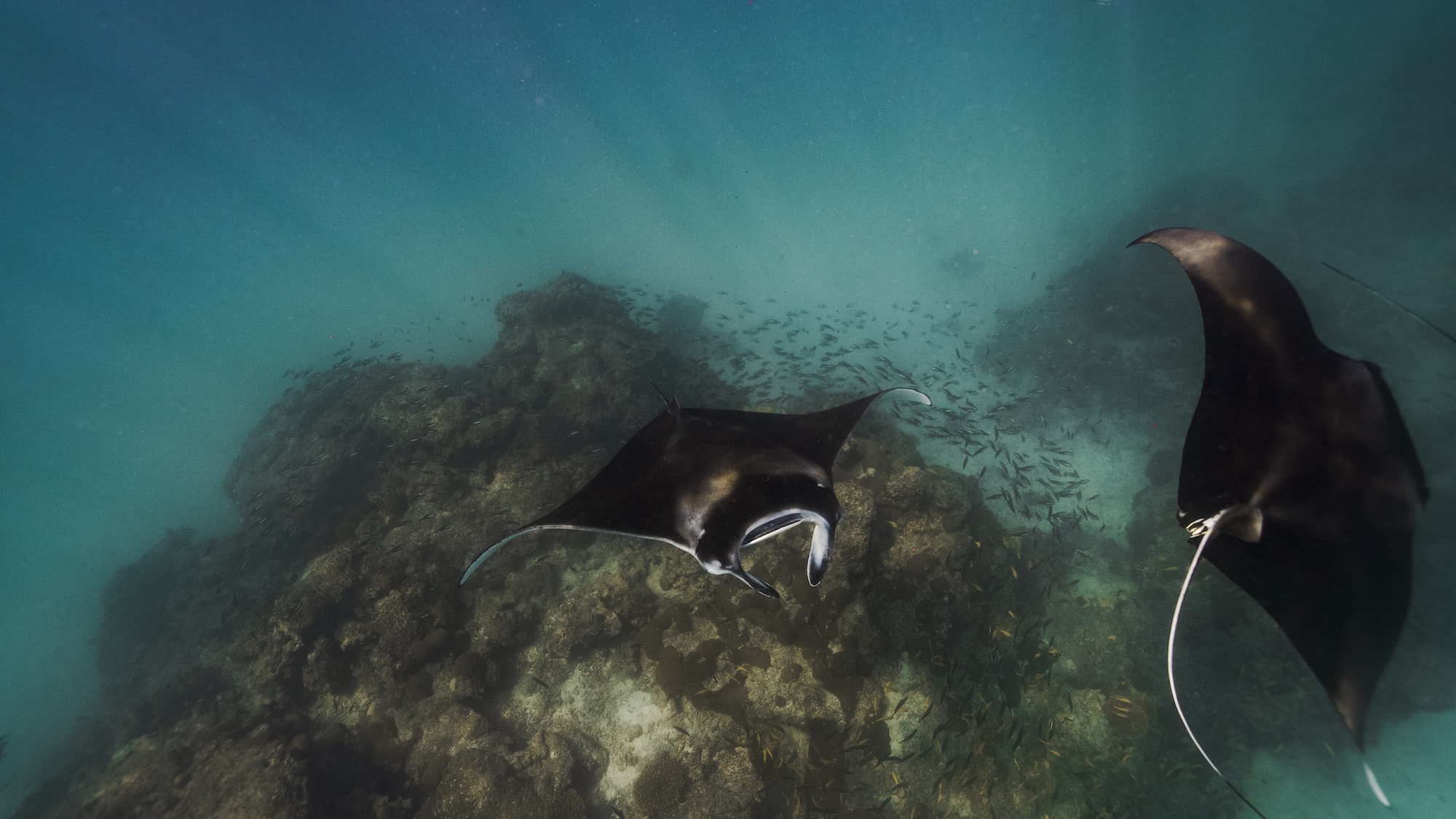
There are few encounters in the Maldives quite like watching the unmistakable silhouette of a manta ray emerge from the blue, its wings stretched wide as it glides effortlessly through the ocean before turning and disappearing once again into the distance. This World Manta Day, Ellaidhoo Maldives by Cinnamon celebrates one of the Indian Ocean’s most fascinating marine residents through an experience that takes guests beyond the island and into the waters of North Ari Atoll.
Operated by the resort’s Dive & Sail team, the manta excursion begins after breakfast with an 8.00 am departure from the resort, followed by a journey of approximately one hour and 40 minutes to two hours across the atoll, depending on sea conditions and where the mantas are gathering. Recently guests were taken towards Genburugau and Maavaru Kandu, but from there nature determines how the day unfolds, with the season, weather, currents and concentration of plankton all influencing where the mantas appear and how many might be encountered.

On favourable days, sightings can range from five to as many as 30 manta rays, and a recent excursion offered a glimpse of just how remarkable the experience can become when conditions align. With the waters particularly rich in plankton, numerous mantas had gathered in the area, allowing guests to enter the water and swim among them as they glided past, turned gracefully and circled through the blue.

Mostly oceanic manta rays are encountered during these excursions, and seeing their impressive size from beneath the surface brings an entirely different sense of scale, particularly when one passes nearby before sweeping around for another effortless turn.

For Ellaidhoo Maldives by Cinnamon, the journey also adds another dimension to an already rich underwater experience, extending beyond the resort’s renowned house reef and its abundance of marine life to explore the wider waters of North Ari Atoll and the remarkable species that call them home. Priced at USD 130 per person, the manta excursion includes lunch, while snorkelling equipment is available separately, with guests generally returning to the resort at approximately 2.30 pm.

As World Manta Day draws attention to these remarkable creatures and the marine environments they depend upon, the experience offers a chance not simply to see a manta ray, but to spend a few unforgettable moments sharing its world, because at Ellaidhoo Maldives by Cinnamon, sometimes the most memorable part of an island escape begins when the island disappears from view.

-

 Cooking1 week ago
Patina Maldives welcomes global, Maldivian talent for latest ‘Perpetual Journey’
-

 Cooking1 week ago
Kuredhivaru Resort and Spa sets season of culinary experiences and island celebrations
-

 News1 week ago
Sun Siyam marks Golden Week across Iru Veli, Vilu Reef with dining and island experiences
-

 Lifestyle1 week ago
Anantara Kihavah’s SKY Edhurus turn the Maldivian night sky into a classroom
-

 Action1 week ago
Swimming with giants: A Manta journey from Ellaidhoo Maldives by Cinnamon
-

 News1 week ago
Jumeirah Olhahali Island reveals festive programme following island-wide refresh
-

 Family1 week ago
Reethi Faru Resort celebrates Halloween with family activities and costume party
-

 News5 days ago
Le Méridien Maldives Resort & Spa celebrates World Wellness Weekend with three-day wellness programme