

Featured
Reaching zero: Soneva, Biogents lead way in sustainable pest management in Maldives


As regular guests to the Maldives might know, the islands can often be prone to large populations of mosquitoes, particularly during the monsoon season.
Mosquito-borne illness is a concern in the Maldives, although it varies by island and by time of year. The island nation has been malaria free since 1984; however, cases of dengue and chikungunya are still found on some local islands.
While many resorts use chemical fogging to manage the mosquito population, Soneva recently revealed that for more than a year they have been working with Biogents, a company on the forefront of international mosquito control research, in order to introduce a sustainable, insecticide-free mosquito management system.
The aim of this partnership between Soneva and Biogents is to bring the mosquito population on the island of Kunfunadhoo, the home of Soneva Fushi, down to zero, to show the international community that it is possible to use sustainable insecticide-free alternatives in mosquito control, and to be the first mosquito-free island in the Maldives.
“Improving the efficacy of mosquito traps has always been the core expertise of Biogents. So, we had the right tools to offer, but the approach also needs a solid understanding of mosquito ecology,” said Dr Andreas Rose, Co-Founder and Management Board Member at Biogents.
“Soneva really understands this, and thanks to the vision and expertise of all the involved partners, the project is indeed setting new standards.”

Starting July 2019, a month into the operation, a sharp decline in the number of mosquitoes trapped on the island was already observed, and today the mosquito population has been reduced by around 95-98 per cent.
Soneva’s target is to eliminate all mosquitoes on Kunfunadhoo island by the end of 2020.
Biogents has assured Soneva that eliminating mosquitoes from the island will have no impact on the local food chain and ecosystems, as Kunfunadhoo has low biodiversity and no freshwater aquatic ecosystems where mosquito larvae are a necessary part of the food chain.
“The adoption of this project by Soneva is exemplary and sets an example for the rest of the world on how sustainable and environmentally-friendly mosquito management can replace the indiscriminate use of chemical pesticides,” said medical entomologist Bart GJ Knols, who together with Soneva’s Integrated Pest Control Manager Akib Jahir leads the implementation of the project on Soneva Fushi alongside Biogents and Soneva.
The halting of chemical fogging has also resulted in the appearance of a greater diversity of flora and fauna on the island.
Before the partnership with Biogents, the mosquito population at Soneva Fushi was managed by a conventional pest control company with hot fogging and mist blowing.
However, the mosquito population built strong resistance to this treatment over time, rendering it ineffective. Fogging is also directed against adult mosquitoes only.
While mosquitoes turned resistant, the fogging reduced the number of other insects usually found on Kunfunadhoo Island, including species of butterflies, dragon flies, bumble bees, beetles and more.
Now, with the new mosquito management system, guests and hosts alike have seen an increase in the Maldives’ native insects. These natural pollinators are now back in abundance, which means there are more flowers, more fruits and Soneva Fushi’s organic gardens are thriving as a result with more produce to serve its restaurants.
With the increase in fruits and insects, there are also more birds visiting the shores of Kunfunadhoo and fire flies are once again spotted at night.
“At Soneva, we have always used nature as an inspiration for our innovation. In fact, our organisational structure is inspired by the relationship of the planets to each other. In the middle of last year at Soneva Fushi, we set a target to become the first island to be completely mosquito free,” said Sonu Shivdasani, Soneva’s CEO and Co-Founder.
“We installed more than 500 Biogents traps throughout the island. While some mimic mosquito breeding sites, others hold a sachet that mimics human sweat with the smell of lactic acid. We also add a mix of sugar water and yeast as a means to produce carbon dioxide, mimicking exhaled human breath. So, these traps smell and breathe like a human being. The mosquitoes are lured into a catch-bag where they dry out and die.”

Two types of mosquito traps, with a total of more than 500, have been deployed across the island: the BG-GAT, which is a passive trap for egg-laying tiger mosquitoes that have bitten someone and are searching for a place to lay eggs; and the BG-Mosquitaire CO2, which attracts mosquitoes in search of blood.
Carbon dioxide, produced through yeast and sugar fermentation helps attract the mosquitoes in combination with lactic acid that humans emanate from the skin.
In tandem to placing the traps, Knols and Jahir also educated Soneva Fushi’s hosts about mosquito breeding sites and how to reduce the amount of stagnant water found on the island. This included reducing the use of tarpaulins, island clean-up days to remove coconut shells and any other objects that could contain water, and daily inspections of island sectors for the presence of mosquito larvae.
Recently, Soneva gifted a number of mosquito traps to the parliament in Male, the capital of the Maldives, and is currently deploying traps at Soneva Jani in the Noonu atoll. There, in a time-frame of 48 hours, a single BG-Mosquitaire CO2 trap caught a record number of 2,972 mosquitoes.
“In the first weeks of implementing this, the traps caught up to 9,000 mosquitoes a day, on average 20 mosquitoes per trap. Since then, this number has reduced to single digits. We have two mosquito species on the island, the Aedes and the Culex. The Culex is nearly extinct and we hope that the Aedes will soon follow,” said Sonu.
“It is my hope that this will be a perfect example of how closely following and understanding the laws of nature, and innovating around it, one can find solutions that end up being more effective than solutions that are the result of bioengineering.”
In 1995, the award-winning luxury resort Soneva Fushi set the standard for all desert island barefoot luxury hideaways in the Maldives. Located in the Baa Atoll UNESCO Biosphere Reserve, Soneva Fushi pairs the castaway fantasy with intelligent luxury.
Stay in one of the 63 island villas, ranging in size from one to nine bedrooms, and eight one- and two-bedroom Water Retreats.
Each island villa comes with its own stretch of beach, most have their own pools, and are hidden among dense foliage within touching distance of a pristine coral reef. The Water Retreats all have water slides into the sea below, private pools, and Soneva’s iconic retractable roof above the master bed.
Intuitive service is provided by Mr./Ms. Friday butlers.
Highlights include the outdoor Cinema Paradiso, exploring the cosmos at the high-tech Observatory, indulging in the complimentary chocolate, ice cream and cheese rooms, five hundred wines to choose from, and 11 restaurants and bars.
Soneva’s floating villa concept, Soneva in Aqua, is a luxury two-cabin yacht that sets sail from Soneva Fushi and Soneva Jani.
Explore the treasure trove that is the children’s Den, that comes with a Lego room, dress up room, two pools, a water slide and more.
There is a multi-purpose facility that encompasses the Maldives’ only hot glass studio, the glass gallery, and boutique where guests can learn the art of glassblowing.
If the experiences are magical, the philosophy is simple: No news, no shoes. No pretensions either.

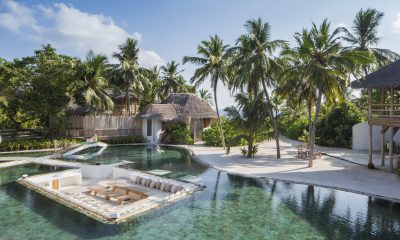

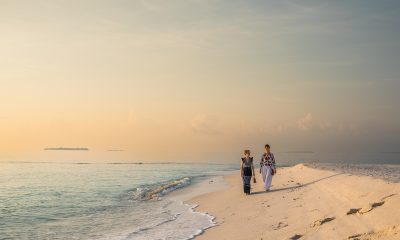


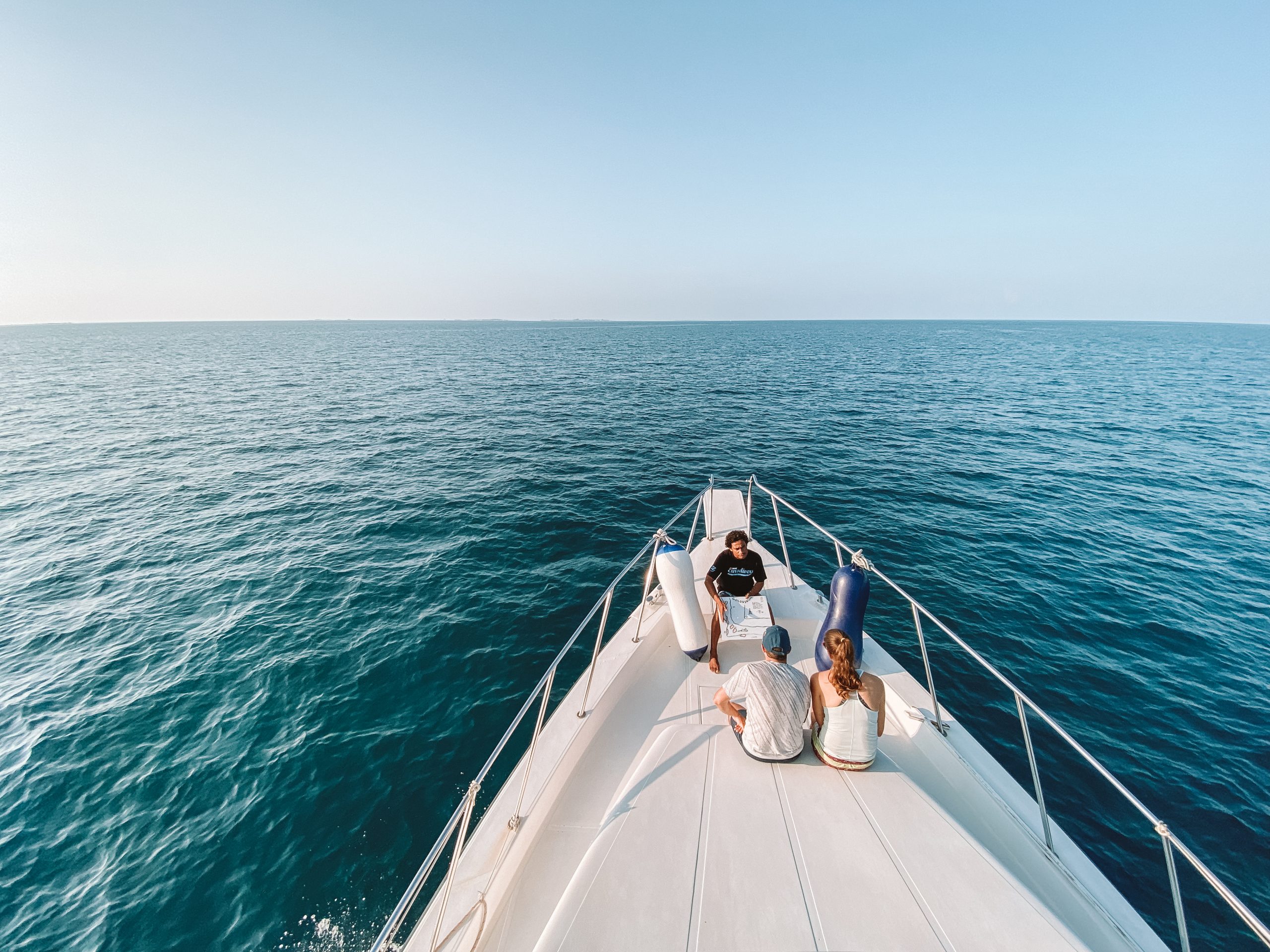
Eri Maldives is located within the waters of North Malé Atoll and is surrounded by a house reef accessible to both beginner and experienced divers. With four direct reef entry points and shore access, the resort offers opportunities for snorkelling, introductory dives and certified diving.
The house reef supports a range of marine life, including white-tip and black-tip reef sharks, nurse sharks, hawksbill turtles, mobula rays and spotted eagle rays, as well as schools of reef fish. The accessibility of the reef allows guests to explore the area over multiple days, providing opportunities to observe marine behaviour and habitats over time.
Turtle encounters
Hawksbill turtles are among the most frequently observed species on the reef. The resort’s dive team has identified 14 individual turtles, each recognised by shell patterns and physical features. These include turtles known as Rosie, Cara and Anna, which have been documented through repeated sightings.
The resort maintains records of these turtles, allowing returning guests to identify individuals over time. Guests may also contribute to this initiative by naming newly identified turtles that have not previously been recorded.
Manta ray season
From December to April, manta rays are known to visit cleaning stations at Bodu Hithi Thila, located approximately one hour by boat from the resort. During this period, ocean conditions support plankton flows that attract mantas to the area, where they can be observed feeding or visiting cleaning stations.
Night diving experiences
Night snorkelling and diving activities provide a different perspective on reef activity. Species such as reef sharks, trevallies, moray eels and nurse sharks become more active after dark, offering guests the opportunity to observe nocturnal marine behaviour.
At Eri Maldives, marine experiences form a central part of the guest offering, with the house reef providing consistent opportunities for exploration. The resort’s dive programme is designed to support repeated interaction with the marine environment, allowing guests to experience a range of underwater activity throughout their stay.
Accommodation is available in studio and beach villa categories, with full board packages offered for direct bookings, subject to availability.
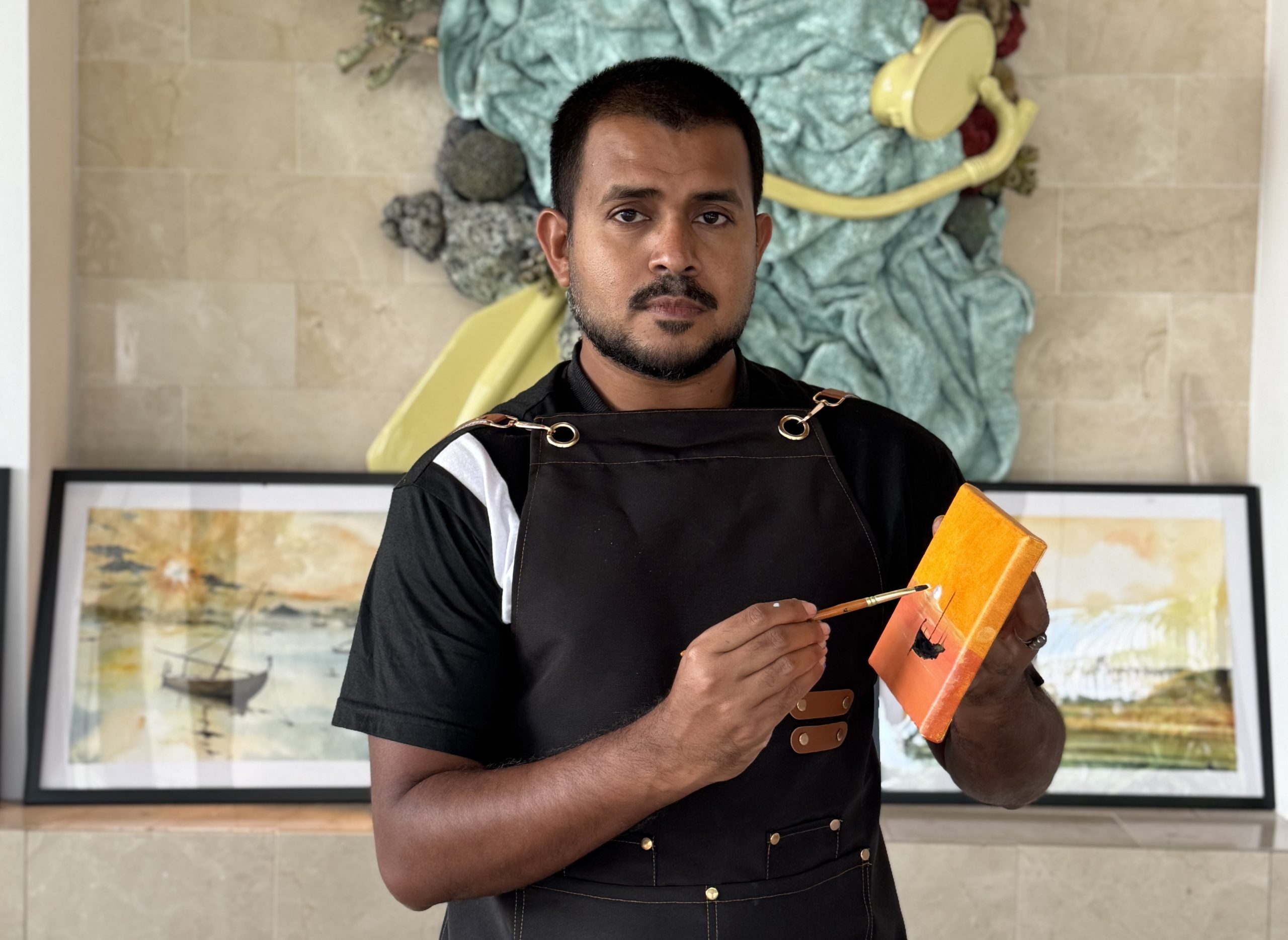
The Halcyon Private Isles Maldives, Autograph Collection has announced a collaboration with Ahmed Aleem Shakoor, who is currently in residence at the resort, introducing a creative element to the guest experience.
Aleem, a self-taught artist, is known for work that combines maritime themes, surrealism and symbolism. His practice spans watercolours, acrylics and mixed media, drawing inspiration from the Maldives’ history and ocean landscapes, often expressed through the use of light, depth and narrative.
During his residency, Aleem is working with the resort to develop a series of artistic and cultural experiences aimed at engaging guests. These include live painting sessions, informal interactions with the artist and workshops designed to encourage creative participation.
The programme forms part of the resort’s wider activities, with offerings such as mini canvas painting, coconut painting and creative art sessions available to guests. In addition, Tales Painted in Sunlight combines elements of Maldivian folklore, storytelling and visual art, providing further insight into local culture.
The collaboration reflects the resort’s approach to incorporating local artistic talent into its programming, while offering guests opportunities to engage with creative activities in a relaxed setting. The residency is designed to allow guests to explore artistic expression as part of their island experience.
As part of its seasonal programme, selected artistic activities are also included in the resort’s Easter offerings, providing additional opportunities for guests to take part in creative experiences during their stay.
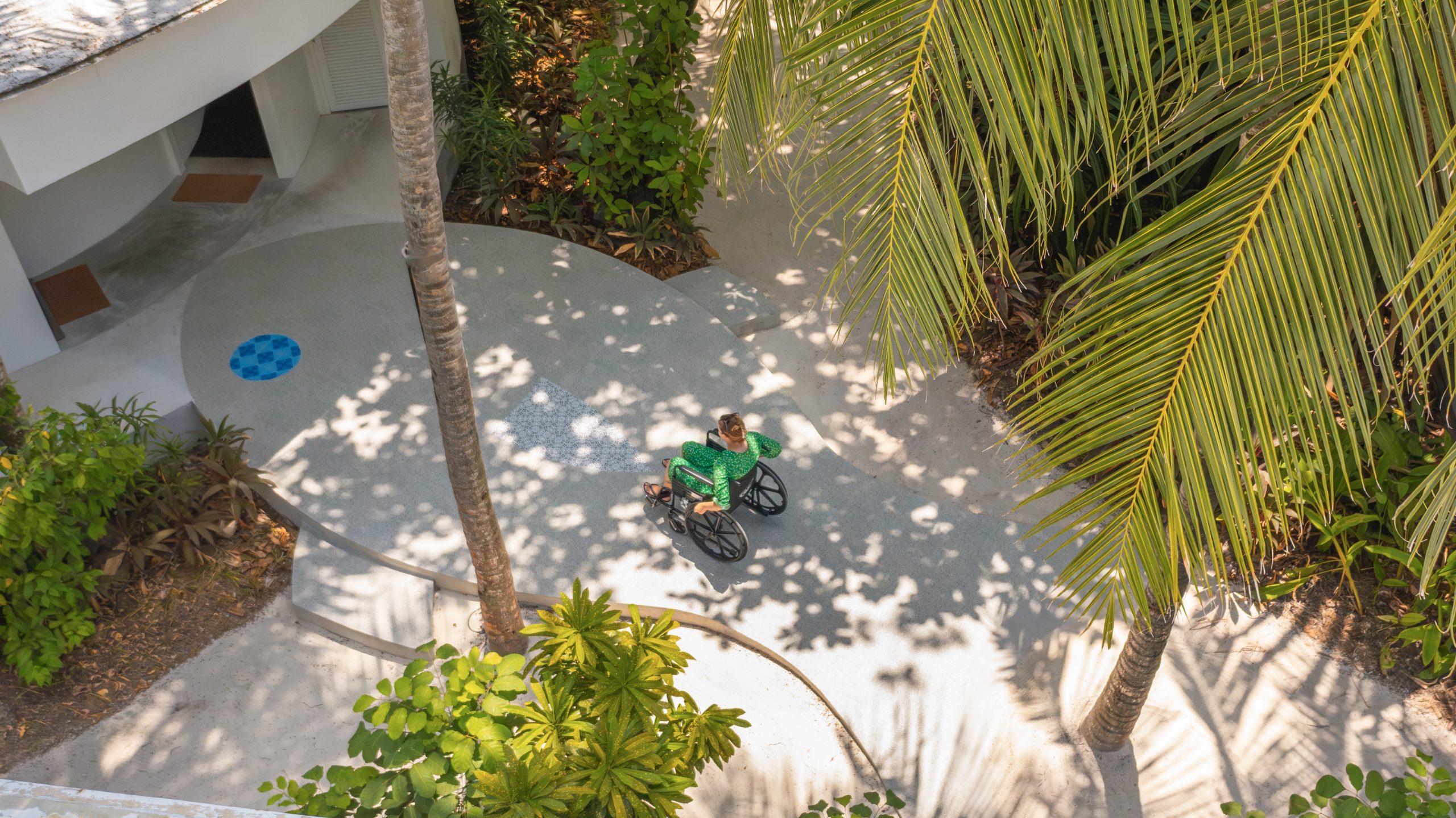
Amilla Maldives has been named a joint winner in the Most OutThere Initiative in Inclusive Travel category at the Experientialist Awards 2026, following a Highly Commended recognition in the same category in 2025.
The Experientialist Awards recognise organisations shaping travel through inclusivity, individuality and design, with the inclusive travel category highlighting initiatives that address not only accessibility, but also how journeys are experienced by guests.
At Amilla Maldives, accessibility is integrated into the overall guest experience. The resort adopts an approach that begins at the planning stage and continues throughout the stay, with a focus on understanding individual guest needs and adapting experiences accordingly.
Aligned with its In Harmony with Purpose philosophy, the resort has introduced a range of measures aimed at improving accessibility. These include villa features designed for ease of use, accessible pathways across the island and adaptive experiences such as inclusive snorkelling and wellness sessions.
As an IncluCare Verified resort, Amilla Maldives continues to develop its offering through feedback and collaboration, with the aim of enhancing inclusivity across its operations.
Commenting on the recognition, Morgan Martinello said the resort remains focused on creating travel experiences that feel natural and accessible. He noted that the continued recognition reflects the resort’s ongoing efforts to improve inclusivity.
The award from OutThere, a platform focused on diversity and inclusion in travel, marks a further step in the resort’s efforts to create accessible and inclusive guest experiences.

-
 Family1 week ago
JA Manafaru launches Easter programme with family-focused experiences
-
 Cooking1 week ago
The Standard, Maldives introduces Onda with Mediterranean-inspired menu
-
 Cooking1 week ago
The Halcyon Private Isles Maldives announces Easter residency by Chef Dimitry Eremeev
-
 Action6 days ago
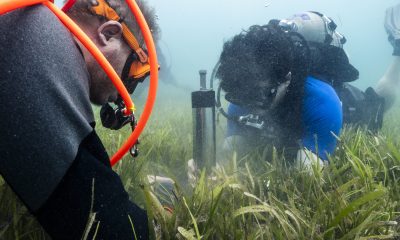
Six Senses Kanuhura participates in international COASTS Project on blue carbon ecosystems
-
 Cooking6 days ago
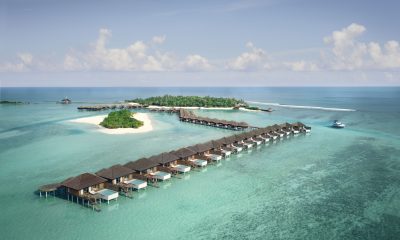
Anantara Veli Maldives continues Michelin guest chef series with female lineup
-
 News1 week ago
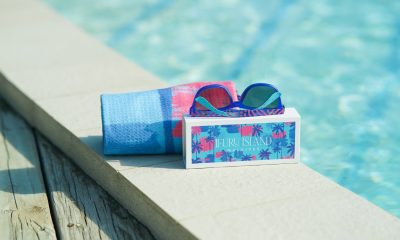
Ifuru Island Maldives partners with Toddy to launch lifestyle collection
-
 Awards1 week ago
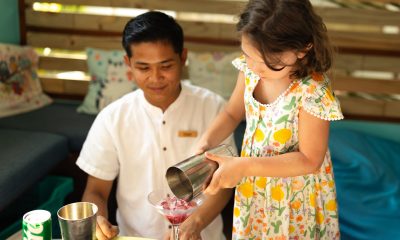
Mandara Spa at Cinnamon Hakuraa Huraa receives global wellness award
-
 Awards1 week ago
COLOURS OF OBLU marks triple win in global guest-driven awards