

Business
Maldives saw fifth biggest GDP drop over virus-related tourism loss, new study says

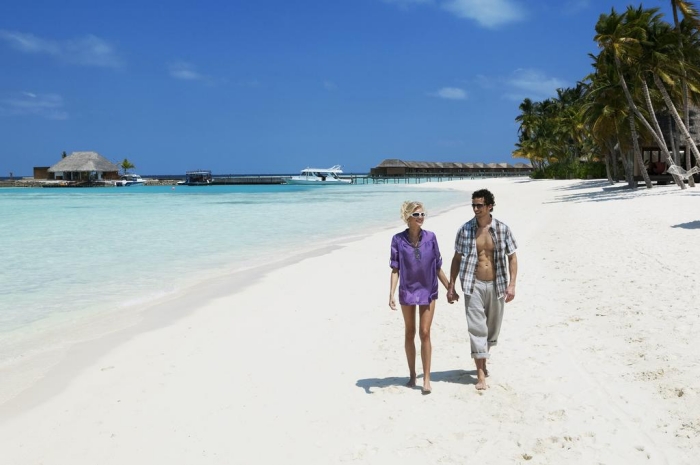
Maldives has seen the fifth highest percentage drop in GDP globally due to tourism loss from the coronavirus pandemic, according to a new study.
Travel and tourism has been one of the main industries to be gravely affected by Covid-19, leaving many countries with no choice but to close its borders to tourists for months due to the global pandemic outbreak. As a result of these travel bans, a number of airlines and tour operators have had to cancel long-awaited holidays, leaving world tourism at an all time low.
Visa Waiver processing firm Official-esta.com looked into the biggest revenue losses and highest percentage of GDP lost per country to reveal which countries have seen the greatest financial impact as a result of the loss of tourism caused by the pandemic.
In 2019, global travel and tourism contributed $8.9 trillion to the world’s GDP, yet due to the current pandemic the financial impact of Covid-19 on world tourism has resulted in a total revenue loss of $195 billion worldwide in the first four months of 2020.
According to the study, the Maldives has dropped 6.9 per cent in GDP due to tourism loss from Covid-19, ranking it fifth as the country with the biggest percentage loss in GDP caused by the global pandemic.
Caribbean worst affected in GDP terms
The Caribbean makes up half of the top 10 countries with the highest percentage of GDP loss.
Last year, more than 31 million people visited the Caribbean, and more than half of them were tourists from the US. But with Covid-19 causing travel bans all over the world, the number of tourists that once accounted for 50-90 per cent of the GDP for most of the Caribbean countries has significantly decreased.
Countries within the Caribbean make up 50 per cent of those which have suffered the highest percentage loss in GDP, with Turks and Caicos Islands, Aruba, Antigua and Barbuda, St. Lucia and Grenada all ranking in the list of the top 10 worst affected.
Countries which have lost the highest percentage of GDP due to loss of tourism:
- Turks and Caicos Islands: 9.2 per cent
- Aruba: nine per cent
- Macao: 8.8 per cent
- Antigua and Barbuda: 7.2 per cent
- Maldives: 6.9 per cent
- St. Lucia: 6.2 per cent
- Northern Mariana Islands: 5.9 per cent
- Grenada: 5.5 per cent
- Palau: 5.2 per cent
- Seychelles: 4.6 per cent
Major financial impact on Europe
Countries within Europe make up 50 per cent of those which have suffered the biggest losses in tourism revenue, with Spain, France, Germany, Italy and the UK all ranking in the list of the top 10 worst affected.
With a reported drop of 98 per cent in international tourist arrivals in June, Spain is the European country with the largest revenue loss of $9.7 billion.
Just as tourists began returning to the popular holiday destination, a rise in Covid-19 cases meant the UK imposed a quarantine warning against anyone arriving back from Spain as of the end of July. This new rule indicates that Spain’s loss in revenue will continue increasing as tourism slows once again.
France is the world’s most visited country with over 89 million tourists each year, but the impact of Covid-19 has resulted in a total revenue loss of $8.8 billion. This significant loss makes it the third country in the world with the most revenue loss caused by the global pandemic and the second in Europe.
Countries with the biggest tourism revenue loss due to Covid-19:
- United States: $30.7 billion
- Spain: $9.7 billion
- France: $8.8 billion
- Thailand: $7.8 billion
- Germany: $7.2 billion
- Italy: $6.2 billion
- United Kingdom: $5.8 billion
- Australia: $5.7 billion
- Japan: $5.4 billion
- Hong Kong: $5.02 billion
“The last few months have undoubtedly been extremely difficult for the travel and tourism industry. In the midst of the global pandemic, many popular holiday destinations have had to close their borders to tourists and the financial impact this has brought on world tourism has not only impacted all countries around the world but also airlines and travel operators,” Jayne Forrester, Director of International Development at Official ESTA, said.
“As travel bans have started to ease off from July, we only hope that we see no more significant losses to one of the largest growing sectors in the world.”
The Maldives reopened its borders on July 15.
With the border reopening, 30-day free on-arrival visa is issued to all tourists who has a confirmed booking for a stay at any registered tourist facility in the country. The entire holiday has to be booked at a single facility except for transit arrangements.
There is no mandatory quarantine or testing on arrival. Tourists have to complete a health declaration form only.
But visitors with symptoms of the Covid-19 respiratory disease caused by the novel coronavirus or those travelling with someone who has similar symptoms are tested at their own expense.
The coronavirus outbreak has hit the Maldivian economy hard, as travel restrictions and other preventive measures affect the country’s lucrative tourism industry, which contributes the bulk of the island nation’s state revenue and foreign reserves.
Before the pandemic, the government had been bullish about tourism prospects, targeting two million, high-spending holidaymakers this year after last year’s record 1.7 million.
However, only 382,760 tourists visited the Maldives before the country closed its borders on March 27. It was a 40.8 per cent decline over the 646,092 that visited the Maldives from January to March last year.
Meanwhile, the government’s best case scenario now puts total tourist arrivals for 2020 just above 800,000.
Tourism has been the bedrock of the Maldives’ economic success. The $5 billion-dollar economy grew by 6.7 per cent in 2018 with tourism generating 60 per cent of foreign income.
However, the government is at present projecting a possible 13 per cent economic contraction this year — an estimated $778 million hit.
On March 8, Maldives reported its first cases of the novel coronavirus, as two hotel employees tested positive for Covid-19 at a luxury resort in the archipelago.
Eighteen more cases — all foreigners working or staying resorts and liveaboard vessels except five Maldivians who had returned from abroad — were later identified.
A six-case cluster of locals, detected in capital Male on April 15, confirmed community transmission of the coronavirus. Several more clusters have since been identified, bringing the total number of confirmed case in the Maldives to 6,660.
Twenty-six deaths have been reported, while 4,113 have made full recoveries.
The Maldives announced a state of public health emergency on March 12, the first such declaration under a recent public health protection law.
The public health emergency declaration allowed the government to introduce a series of unprecedented restrictive and social distancing measures, including stay-at-home orders in capital Male and its suburbs, a ban on inter-island transport and public gatherings across the country, and a nationwide closing of government offices, schools, colleges and universities.
Non-essential services and public places in the capital such as gyms, cinemas and parks were also shut.
Restaurants and cafes in the capital were asked to stop dine-in service and switch to takeaway and delivery.
A nationwide shutdown of all guesthouses, city hotels and spa facilities located on inhabited islands was also ordered.
The restrictions are now being eased in phases, with the third phase measures now active.
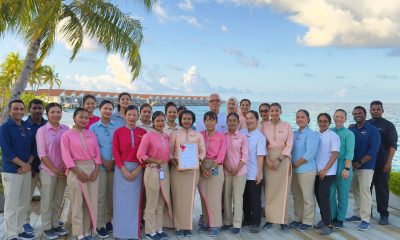
Photo: Veligandu Island Resort & Spa/ Crown & Champa Resorts



Coca-Cola Maldives is turning up the excitement with the launch of its 2026 football campaign, bringing fans across the country a season packed with prizes, shared moments and exciting ways to celebrate the game together.
As the build-up to the FIFA World Cup 2026 begins, Coca-Cola Maldives is inviting consumers to join in the fun with a campaign built around everything that makes football special: the anticipation, the matchday thrill, the watch parties, the celebrations and the memories made along the way.
From March to May, consumers in the Maldives will have the chance to take part in the Coca-Cola Maldives FIFA World Cup 2026 promotion, with weekly prizes, branded merchandise and a grand prize experience linked to one of the biggest sporting events in the world.
As part of the campaign, Coca-Cola Maldives is rolling out the UTC Promo from March 21 to May 24, giving consumers even more ways to be part of the football excitement. Special promotional packs will feature a unique code either under the cap or under the tab, depending on the product format. For 500ml, 1.25L and 2L PET bottles, codes will appear under the special Golden Caps on Coca-Cola, Sprite, Fanta Orange and Fanta Strawberry. For 330ml cans, codes will appear under the tab on Coca-Cola. Consumers can enter by sending the code via SMS to 2626 for the chance to win a range of prizes throughout the campaign period.
The promotion will run across 330ml cans as well as 500ml, 1.25L and 2L PET bottles, making it easy for consumers to join in whether they are picking up a drink for themselves, sharing with friends, or stocking up for a matchday gathering. With multiple participating brands and pack formats included in the promotion, Coca-Cola Maldives is creating more opportunities for consumers across the country to take part in the campaign and enjoy the football season together.
At the top tier, eight winners will receive an all-expenses-paid experience for two to watch a FIFA World Cup match live, creating a once-in-a-lifetime football moment. Under Tier 2, 60 winners will receive Coca-Cola branded mini-coolers, while 120 winners will take home Coca-Cola branded football-shaped personal coolers. Under Tier 3, 180 winners will receive Coke and FIFA branded footballs, adding even more play and energy to the season.
Adding a live moment to the excitement, the first set of winners will be announced on ICE TV on April 6 at 9pm, with winner announcements continuing every week throughout the promotion. This weekly reveal is set to bring an added sense of anticipation and shared excitement as the campaign unfolds across the Maldives.
The campaign is designed to bring fans closer to the game and make every football moment even more enjoyable. Whether it is watching a match with family at home, catching the action with friends at a café, or picking up a favourite Coca-Cola pack from a neighbourhood store, Coca-Cola Maldives aims to be part of the moments that make football season unforgettable.
“Football has a way of bringing people together like nothing else, and that is what inspired this campaign,” said Mario Perera, Country Head for Sri Lanka and the Maldives. “In the Maldives, the game is enjoyed in such a lively and social way, and Coca-Cola Maldives wanted to create a campaign that feels fun, relevant and easy for people to be part of. It is about celebrating the season, enjoying the experience with others, and giving fans something extra to look forward to.”
Adding to the excitement, Coca-Cola Maldives will also launch collectible country packs in the Maldives from May to July, giving fans the chance to celebrate the global game in a new way. Inspired by some of football’s most recognised nations, these limited-edition packs will bring a colourful and collectible twist to the season.
Across the Maldives, Coca-Cola Maldives will work with retail partners to bring the campaign to life through in-store visibility, promotional touchpoints and selected local activations that capture the spirit of football and community.
“The Maldives is a unique market, and Coca-Cola Maldives wanted this campaign to connect with the way people here enjoy football, together, with energy, and with a real sense of occasion. Coca-Cola Maldives is excited to bring that spirit to life in the months ahead,” added Mario Perera.
This marks the start of Coca-Cola Maldives’ 2026 journey in the market. With more fan moments, more excitement and more ways to join in still to come, Coca-Cola Maldives is looking forward to celebrating the football season with consumers across the country.
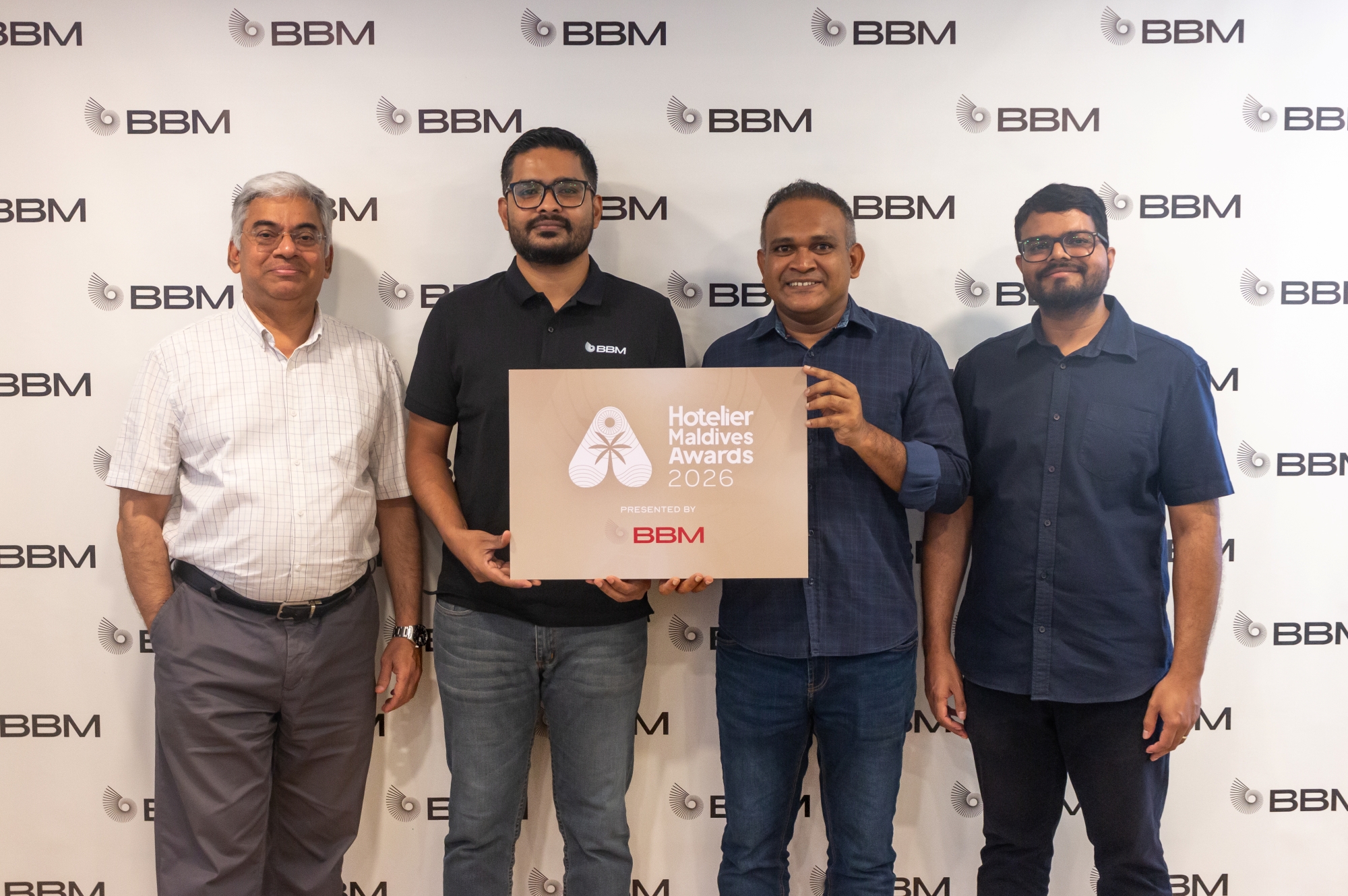
Hotelier Maldives has announced Bestbuy Maldives (BBM) as the Title Partner of Hotelier Maldives Awards 2026 under a multi-year agreement, reaffirming one of the longest-standing partnerships behind the publication’s flagship hospitality recognition platform.
The 2026 edition marks the third consecutive year that BBM has served as Title Partner of Hotelier Maldives Awards, having supported the event in the same capacity since its launch in 2024. BBM has also backed Hotelier Maldives’ second flagship event, GM Forum, every year since 2023, with 2026 set to mark its fourth year as a Silver Partner of the forum.
The continued partnership reflects a shared commitment to recognising the people behind the Maldives’ tourism industry while supporting platforms that encourage industry dialogue, leadership and professional development.
Hotelier Maldives Awards 2026 entered its public voting phase on 15 March 2026, with voting set to remain open for one month. Winners will be announced at the gala ceremony on 26 April 2026 at NIVA Kurumba Maldives.
Commenting on the partnership, Ali Naafiz, Editor of Hotelier Maldives, said: “BBM has been a valued partner of Hotelier Maldives Awards since the very beginning, and we are pleased to formalise this continued support through a multi-year agreement. Their decision to return as Title Partner for a third consecutive year reflects not only the strength of our relationship, but also a shared belief in the importance of recognising the people who drive excellence across the Maldives’ hospitality industry.
“BBM has also consistently supported GM Forum over the years, making them one of the most committed partners across our event platforms. We are proud to continue working together as we strengthen both Hotelier Maldives Awards and GM Forum as annual fixtures for the industry.”
AVS Subrahmanyam, Chief Operating Officer of BBM, said: “At BBM, we have always believed that a strong hospitality industry is built by strong people, and Hotelier Maldives Awards provides an important national platform to recognise the professionals whose work often takes place behind the scenes. We are pleased to continue as Title Partner of the awards under this multi-year agreement, while also extending our support to GM Forum for a fourth consecutive year.
“As a company that has grown alongside the Maldives’ hospitality sector, we value opportunities that celebrate talent, encourage professional pride and contribute to the long-term development of the industry. Our continued partnership with Hotelier Maldives reflects that commitment.”
Bestbuy Maldives is one of the country’s leading importers and distributors, serving the hospitality, HORECA and retail sectors with a broad portfolio of international brands. The company positions itself as a partner to the Maldivian hospitality industry, supplying products from around the world across key business verticals including resorts, foodservice and retail.
Hotelier Maldives Awards continues to recognise the contributions of resort-based hospitality professionals across the Maldives, highlighting both individual excellence and team performance. The awards programme remains the country’s only dedicated recognition platform focused on professionals working in resort operations. The current public voting round allows industry stakeholders, colleagues, guests and the wider public to take part in selecting this year’s winners.
The growing list of confirmed partners for Hotelier Maldives Awards 2026 includes Bestbuy Maldives (BBM) as Title Partner, Dhiraagu as Platinum Partner, Storm Events as Organising Partner, NIVA, Kurumba Maldives as Host Partner, Souvenir Marine as Transport Partner, ALIA as Associate Sponsor, and Lightsout Studios as Associate Partner. More partners and sponsors will be announced soon.
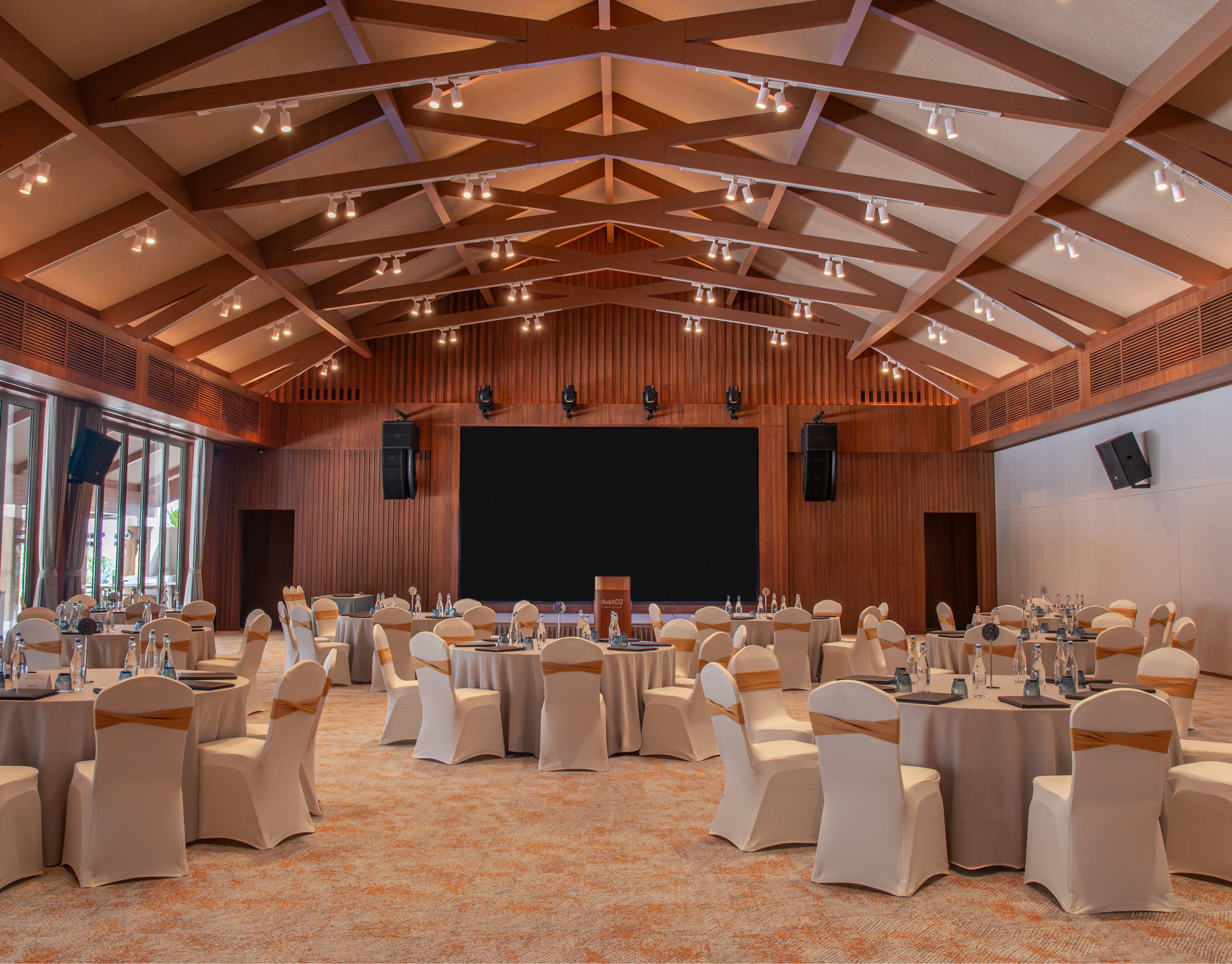
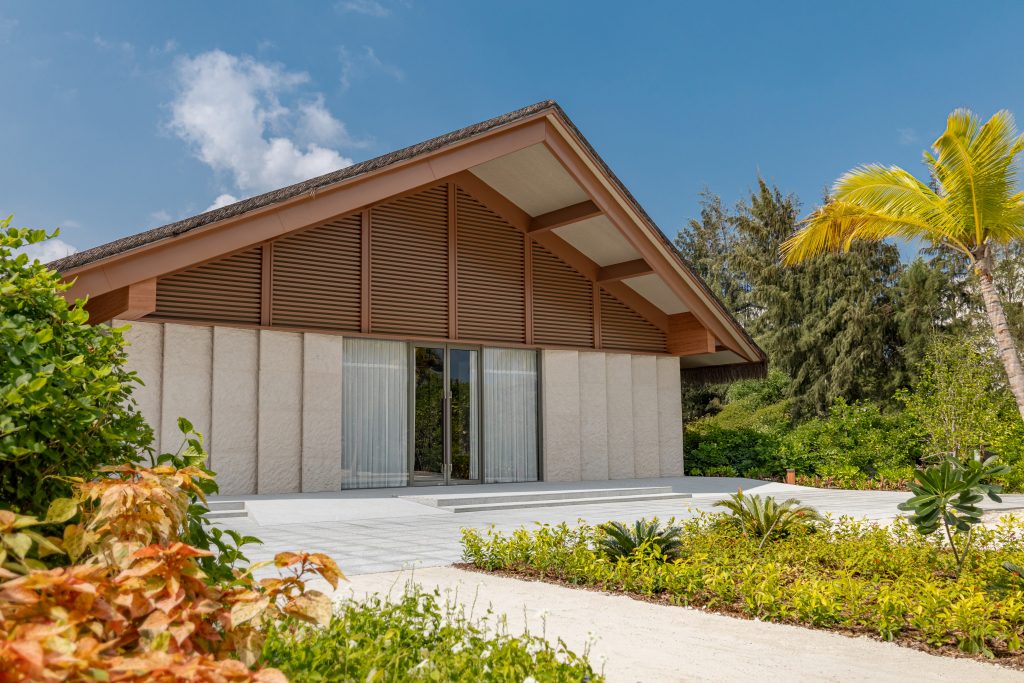
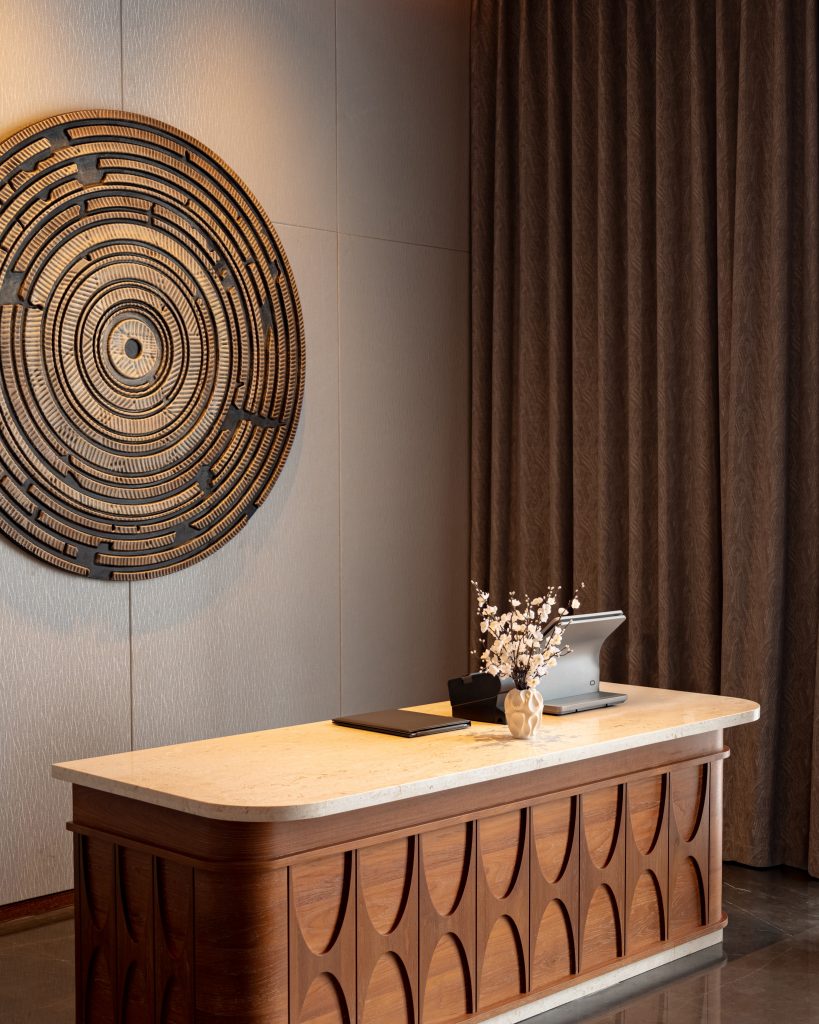
Dusit International, one of Thailand’s leading hotel and property development companies, has announced the opening of Feydhoo Hall, a landmark event venue at dusitD2 Feydhoo Maldives, redefining the possibilities for meetings, celebrations, and destination events in the Maldives.
Designed to bring scale, flexibility, and creativity to island gatherings, Feydhoo Hall represents a bold step forward in positioning the Maldives as a dynamic destination for conferences, weddings, and large-scale social occasions.
Feydhoo Hall offers a versatile event complex designed to accommodate a wide range of gatherings, from corporate meetings and conferences to weddings and social celebrations.
At its core is the 390 sqm Main Hall, capable of hosting:
- Up to 300 guests in theatre-style setup
- Up to 240 guests for dining and banquet-style events
- Up to 200 guests for cocktail-style receptions
- Up to 144 guests in cluster-round configuration
Enhancing the flexibility of the venue are additional dedicated spaces, including:
- A 110 sqm Veranda Terrace, ideal for welcome receptions, breakout sessions, and pre-event gatherings, accommodating up to 100 guests for cocktail-style events.
- A spacious 1,000 sqm Lawn Space, perfect for large-scale outdoor celebrations, destination weddings, and open-air events, accommodating up to 400 guests for cocktail receptions and up to 350 guests for dining setups.
- The 55 sqm Ekugai Meeting Room, designed for smaller meetings and executive sessions, accommodating up to 30 guests in theatre or dining setup and 24 guests in cluster-round format.
Together, these integrated spaces create a seamless indoor-outdoor event experience, allowing planners to design dynamic and personalised event journeys.
True to the dusitD2 brand’s lifestyle-driven philosophy, Feydhoo Hall introduces a fresh approach to meetings and events — where productivity meets creativity in an inspiring island setting.
The venue offers flexible meeting formats designed to suit different event needs, including:
- Half-Day Meeting Package (4 hours) — ideal for focused sessions, executive meetings, and creative workshops.
- Full-Day Meeting Package (8 hours) — designed for immersive conferences, extended workshops, and large-scale corporate gatherings.
These thoughtfully structured packages provide planners with the flexibility to create impactful and seamless experiences, whether hosting intimate strategy sessions or dynamic full-day events.
Located just seven minutes by speedboat from Velana International Airport, dusitD2 Feydhoo Maldives combines accessibility with vibrant lifestyle energy, offering event planners and guests a rare balance between convenience and tropical escape.
With the introduction of Feydhoo Hall, the resort strengthens its position as a versatile destination — not only for leisure travellers but also for international conferences, creative retreats, luxury weddings, and large-scale social celebrations seeking something refreshingly different in the Maldives.

-
 Cooking1 week ago
The Standard, Maldives introduces Onda with Mediterranean-inspired menu
-
 Action1 week ago
Six Senses Kanuhura participates in international COASTS Project on blue carbon ecosystems
-
 Cooking1 week ago
The Halcyon Private Isles Maldives announces Easter residency by Chef Dimitry Eremeev
-
 Cooking1 week ago
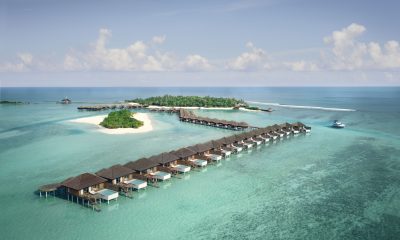
Anantara Veli Maldives continues Michelin guest chef series with female lineup
-
 Awards1 week ago
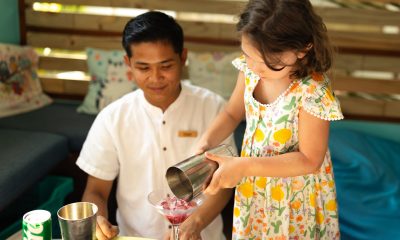
Mandara Spa at Cinnamon Hakuraa Huraa receives global wellness award
-
 Action1 week ago
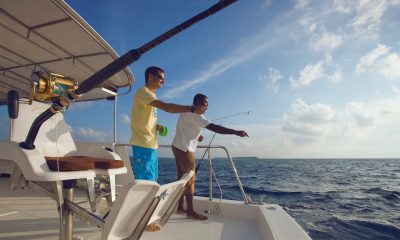
Baros Maldives introduces ‘Lines of Respect’ fishing programme
-
 News1 week ago
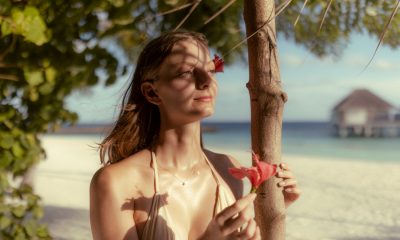
Sun Siyam Iru Veli introduces new treatments at Ocean Spa
-
 Awards1 week ago
COLOURS OF OBLU marks triple win in global guest-driven awards