

Action
Paradise Exists


By Lauren Glendenning

In May, that picture became a reality — and the lavish beauty I experienced while there trumped my wildest expectations.
My boyfriend, Ryan, and I booked flights to the Maldives, an Indian Ocean nation made up of 1,190 small coral islands, about 100 of which are resort islands.
When we arrived, we were stunned — not because it looks any different than it should or than we expected but because it’s so beautiful that we almost couldn’t believe it exists.
It’s surreal because it’s fabled and for good reason. This is a place where honeymooners go, where the rich and famous go on holiday, where couples fall in love with each other all over again.
The Maldives is made up of atolls, which are coral islands that encircle lagoons. The climate is warm, as the country is just north of the equator, and tropical. The hundreds of islands are no more than 6 feet above sea level, covering almost 56,000 square miles.
Traveling there from the United States isn’t easy — perhaps that’s why so many people looked at us puzzled when we told them we had just been there.
The Maldives? Where is that?
And the people who could likely point to it on a map would react in awe because we had gone there, as if Americans couldn’t ever possibly go to the Maldives and that our doing so had broken some unspoken law about where we’re allowed or expected to travel.

Flying from Denver to the Indian Ocean takes time, patience and maybe even a couple of sleeping aids (get a prescription from a travel doctor, or take advantage of free cocktails aboard international flights). It’s two hours to Los Angeles, where you can then board Emirates Airlines’ 16-hour nonstop to Dubai. After a layover in Dubai, which we chose to extend to four days (more on that experience in an upcoming article), then it’s just more than four hours to the Maldives capital of Male. All in all, that’s about 20 hours in the air, not including stops.
From there, depending on which island you’re heading to, you’ll need to board a seaplane and fly for anywhere from 10 minutes to more than an hour. To get to Kuramathi Island, where we stayed, the seaplane took just 15 minutes. From the seaplane, which is flown by barefoot pilots wearing shorts — an appropriate touch — you can see the beauty of the coral islands surrounded by turquoise waters so clear you can practically snorkel from the air.
The islands aren’t solely known for the beaches and water, though — there are also incredible lush landscapes, and this is especially true on Kuramathi Island.
When you arrive, the first thing you notice isn’t the pristine, white-sand beaches that are everywhere. It’s the tropical jungle that splatters an already gorgeous canvas with breathtaking trees, plants and flowers. You can get lost in this flourishing forest — the island feels like a botanical garden, one stocked with bats, hermit crabs, banyan trees and those over-water villas that I had been dreaming about for years.
Any American adventurous enough to take their beach vacation somewhere outside of our go-to destinations such as Mexico, Florida, Hawaii or Costa Rica can do it with just a little extra time and money. The reward is beyond worth it.

It’s hard to imagine staying in another type of room at Kuramathi, or any other Maldivian island, although beach and garden villas appeared lovely, as well.
I think it’s because we traveled all this way that we wanted to sleep on top of the ocean and enjoy every second of being there. At night, when the stars shine brighter than they do during the darkest nights in Vail, we could see the glimmer bounce off the sea and the sound of nothing more than a few small waves splashing beneath. There’s nothing like it.
You could sit out there for hours — and we did — listening to it. Just total peace, and if you’re lucky enough to catch it during or near a full moon, the light is just enough so that you can see where you are — in this picturesque paradise halfway around the world, where nothing, not even updating your Facebook status to brag to your friends about where you are, matters.
Kuramathi is an island with it all, too. Those looking for a pampered holiday can visit the spa — which sits on the beach so you can hear the sound of the ocean as you enjoy your spa treatments — or any one of the island’s restaurants (there are nine). You can relax on the beach while sipping on a cocktail from the resort’s extensive drink list, or you can choose ultimate privacy by sunbathing or snorkeling right at your villa.
Foodies will find this island more than adequate, too. Basic all-inclusive packages include three buffet meals per day, offering food that spans cuisine from Japan to Europe to Russia. The Sri Lankan and Maldivian food, however, was by far the most sensational.
For the more adventurous and active traveler, Kuramathi has a watersports shop where you can go windsurfing or stand-up paddleboarding. There are water kayaks available, too, and private fishing excursions.
Snorkeling trips, either with a group or private, offer trips out to nearby reefs — although the “house reef” surrounding the island is accessible by a short swim from the villas. It was the house reef where we saw some of the most colorful fish, as well as black tip reef sharks, sea turtles and stingrays.
The scuba experience is once in a lifetime, too. The Rasdhoo Atoll Divers, located on the island, offer everything from diving courses to certification to expert dives. They go out of their way to make you feel comfortable — Ryan’s first dive since getting certified at Beaver Divers was here, and the instructors were there for him every step of the way.
Regardless of what kind of traveler and vacationer you are, Kuramathi — and the Maldives in general — will blow your mind in terms of what’s possible in an island vacation.
Paradise has been found — it’s sitting right there in the Indian Ocean.
Editor’s Note: Lauren Glendenning is the Assistant Manager Editor of Vail Daily (Colorado, USA). This article was first published on Vail Daily and we thank Lauren for permission to republish.


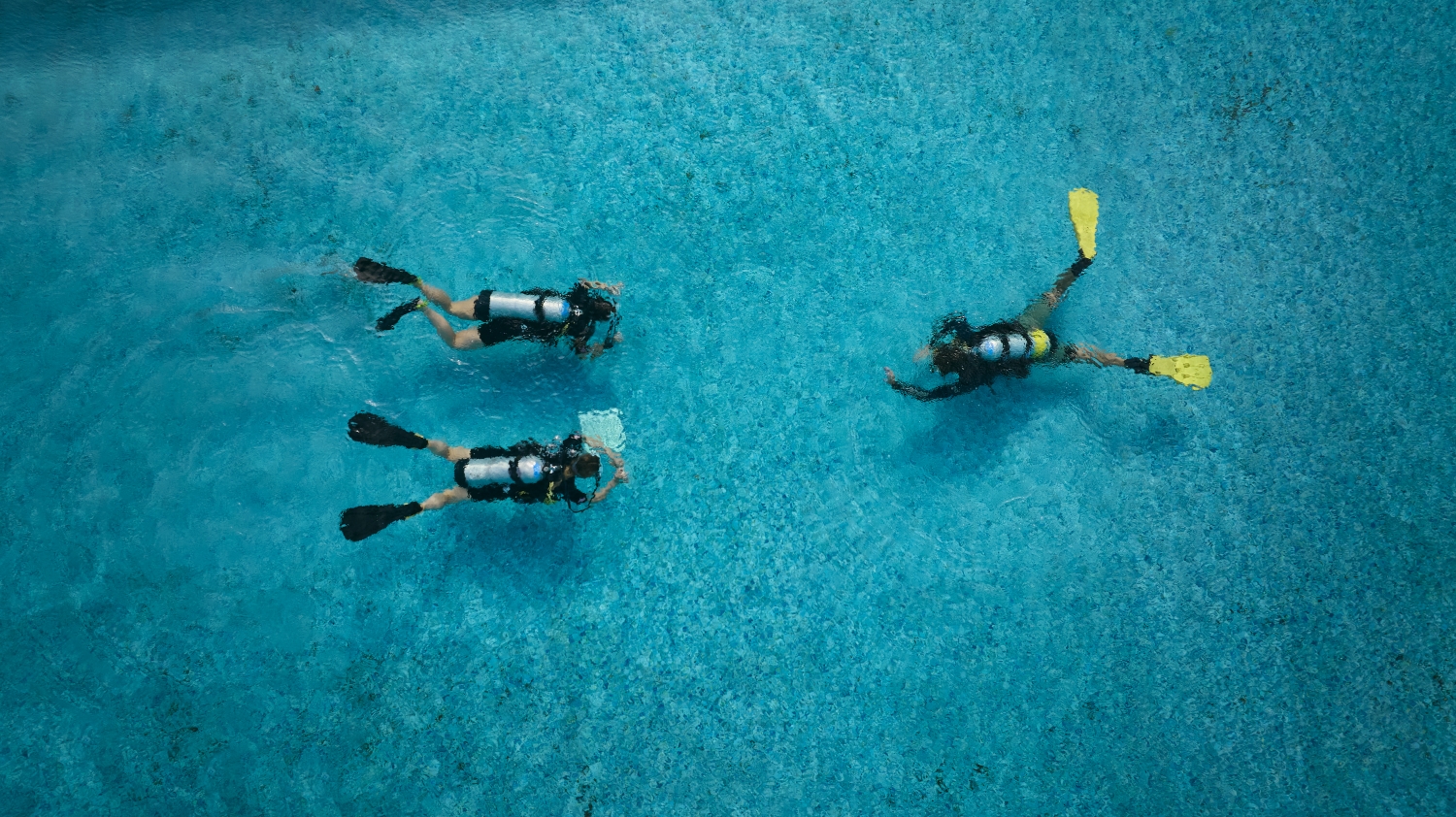
Pullman Maldives Maamutaa continues its ongoing marine conservation journey with the identification of Six Individual Indo-Pacific Leopard Sharks along the resort’s house reef. The sharks were documented through photographic observation and submitted to the MIYARU, the Maldives’ national non-profit organisation and research network focused on collaborative shark research and conservation.
The six identified sharks namely Atlas (LS081), Aurelian (LS083), Kikongo (LS090), Ambala (LS091), Ingwe (LS096), and Fowler (LS097) – can each be recognized by their distinctive patterns of dots and spots. Similar to a human fingerprint, these natural markings are unique to every shark, enabling marine researchers to identify individuals when they are encountered again.

By documenting these individual sharks, Pullman Maldives Maamutaa is contributing to a growing body of knowledge about the species and how it uses local reef habitats. Each sighting adds another piece to the wider picture of leopard shark presence and movements in the Maldives, supporting continued awareness, research and conservation.
For Pullman Maldives Maamutaa, conservation is about creating meaningful connections with the natural world. From a passing encounter with a leopard shark to learning how individual animals can be recognized beneath the surface, every discovery can offer a new perspective on the living reef.

The identification of these six leopard sharks reflects the resort’s continued approach to marine conservation through attentive observation, responsible marine experiences and collaboration with conservation partners.
As monitoring continues, Pullman Maldives Maamutaa invites guests to discover its house reef not simply as a destination beneath the surface, but as a living environment shared with an extraordinary diversity of marine life.
With every sighting, every photograph and every new record, the resort continues to build a deeper understanding of the waters surrounding Maamutaa – inspiring greater appreciation for the wildlife that calls the Maldives home.

Kayla Shortt is Pullman Maldives Maamutaa’s in-house Marine Biologist and PADI IDC Staff Instructor, who coordinated the in-water observations, photographic documentation and identification submissions that resulted in the six individual records.
Originally from South Africa, she has worked across five-star resorts in the Maldives since 2021, bringing together her experience in marine tourism and practical conservation.

Her expertise spans reef-health monitoring, turtle rehabilitation and shark behavior, with a particular focus on creating greater awareness and understanding of the marine environment.
At Pullman Maldives Maamutaa, Kayla makes marine science engaging and accessible, connecting guests with the underwater world while supporting the resort’s ongoing conservation efforts. Through her work, she contributes to a deeper understanding of the Maldives’ marine environment and the remarkable wildlife that calls it home.

This festive season, Siyam World Maldives, part of the Lifestyle Collection at Sun Siyam, is entering The Age of Legends, as ancient kingdoms, dragons, warriors, enchanted forests and Viking seas find their way to the Maldives. Inspired by the worlds of Game of Thrones, The Lord of the Rings, The Witcher andVikings, The Age of Legends creates a story entirely of its own, with experiences unfolding across the island and guests becoming part of the action.
Because at Siyam World, simply watching was never really going to be enough. Beginning December 15th, the festive programme brings together fantasy-inspired entertainment, family adventures, sport and storytelling, with former Manchester United and Serbia captain Nemanja Vidić, an original production inspired by one of the Maldives’ best-known legends, and a New Year’s Eve celebration where four worlds collide. And there are still a few things Siyam World is not revealing just yet. Consider that your first quest.
Legends on the field
From 18 December, the football pitch gets its own chapter. Former Manchester United and Serbia captain Nemanja Vidić joins the festive line-up with a football camp focused on skill, confidence, discipline and teamwork. For young players, it is a rare opportunity to train with someone who spent years competing at the very highest level of the game.

Every great battle has its decisive moment. From 25–27 December, former AC Milan and Italy striker Alessandro Matri takes to the pitch with young players for three days of skill, confidence and teamwork, bringing a goalscorer’s instinct to the festive realm.

For parents, it is also a remarkably effective way to ensure football dominates the conversation for the rest of the holiday. Possibly the flight home, too.
When a Maldivian legend takes the stage
On 21 December, the story turns closer to home. Dhonhiyala and Alifulhu, one of the Maldives’ best-known legends, will be brought to life through an original musical inspired by its timeless tale of love, courage and destiny.Passed down through generations, the story finds a new stage and a new audience at Siyam World, bringing a distinctly Maldivian legend into a festive season inspired by legendary worlds from near and far. Because long before dragons and Vikings reached these shores, the Maldives had legends of its own.
Christmas Even
On 24 December, word arrives from the North. A certain Legend is making his way across the sea, carrying gifts after what we can only assume has been a very long journey. Exactly when and how he will arrive remains a closely guarded secret. The North has many Legends. This one wears red.

Four worlds. One midnight.
New Year’s Eve brings The Age of Legends to its biggest night. Four fantasy worlds come together as ancient magic, fearless warriors, unexpected alliances and just the right amount of Siyam World chaos take over the island on the final night of 2026. Exactly what happens when those worlds collide is staying firmly under wraps. Mostly because spoilers are punishable by exile from the realm. Let’s just say Siyam World will not be entering 2027 quietly.
Little legends
For younger adventurers, The Dragon Rider Academy transforms Kidz World into a training ground for future dragon riders, with games, challenges and plenty of opportunities to prove themselves worthy of the realm. Judging by previous Siyam World adventures, they are likely to take their training extremely seriously. The dragons, thankfully, remain under control. For now.

One more legend
And there is still one name missing from the story. One final Legend is yet to be revealed to those following @siyamworld, joining an already packed festive line-up when the time is right.
Because some entrances deserve their own moment.
Now it is your turn
Guests will also have the chance to create a legend of their own through the Share Your Siyam Legend Challenge.Throughout the season, guests can capture their own legendary Siyam World moment and share it as a Reel or carousel, tagging @siyamworld and using #ShareYourSiyamLegend and #AgeOfLegends.
The entry combining the most imagination, genuine engagement and a point of view all its own could win a seven-night stay for two at Siyam World, including WOW! Inclusive, applicable taxes and return shared seaplane transfers.Create the moment. Share the story. Become a Legend. The Age of Legends begins at Siyam World Maldives on 15 December 2026.
The realm is ready. The Legends are coming. Ready to enter The Age of Legends? Discover Siyam World’s latest offers and book your festive escape at sunsiyam.com/siyam-world/offers.
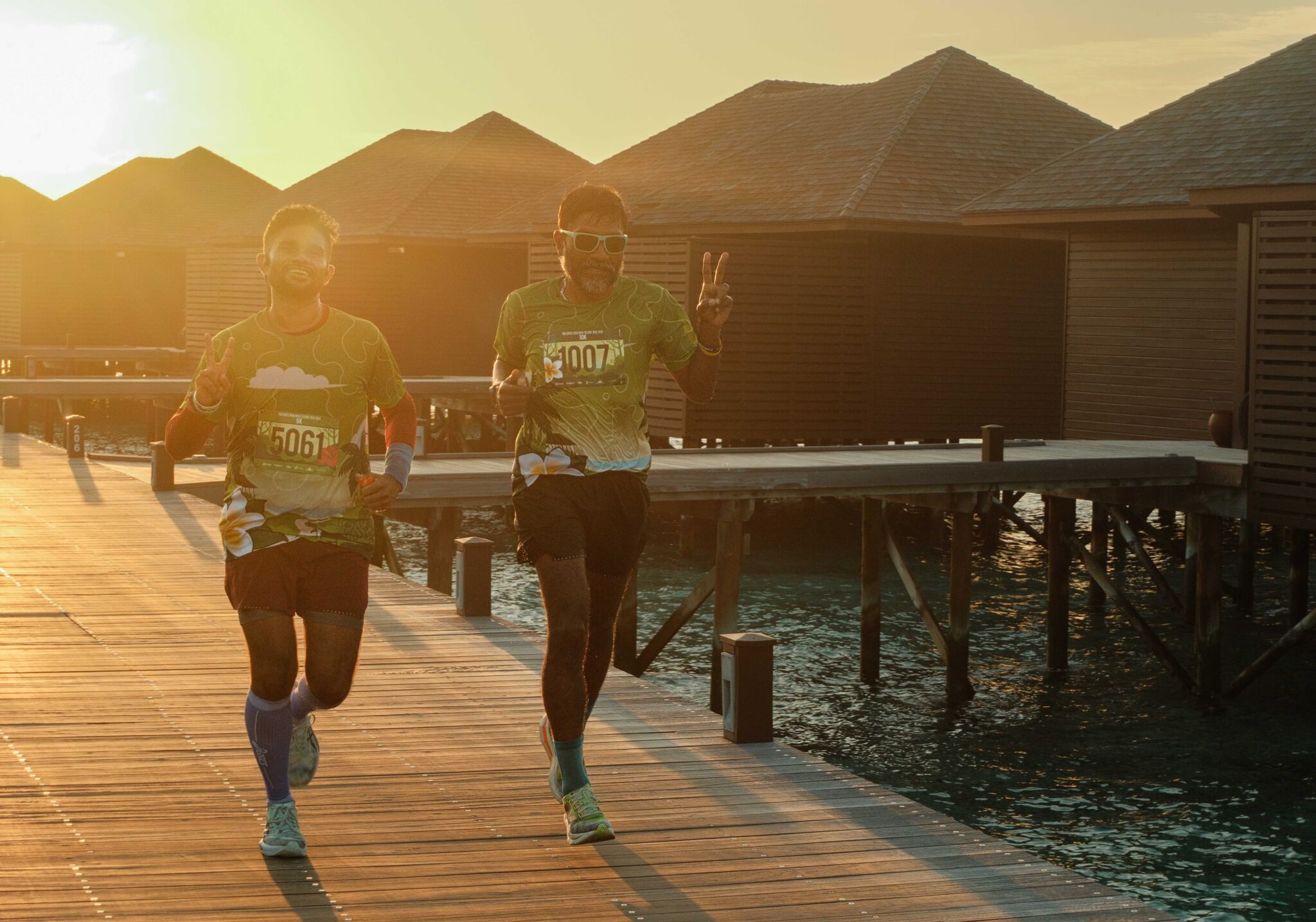
Hideaway Beach Resort & Spa successfully concluded the second edition of the Maldives Hideaway Resort Run 2026 on Friday September the 18th as part of World Wellness Weekend, bringing together running, wellness and the spectacular natural surroundings of the beautiful all-natural Island of Dhonakulhi.
The event welcomed 68 runners, with esteemed athletes Sunny Schippers leading the 10K race and Clara Abbona leading the 5K race, inspiring participants through three scenic island runs (including a relaxing shake out run) surrounded by the turquoise waters and lush tropical landscape of Hideaway.

Held in line with World Wellness Weekend, the programme extended beyond running to embrace a more holistic approach to wellbeing. Participants enjoyed a series of wellness experiences, including sound healing with Naga Healing, Yoga with in-house instructor Shubham, alongside fitness sessions led by Shaffa – Fitness Expert from TfG, and Ask a PT and Physio sessions with Yoosuf as the Personal Trainer Consultant.
The second edition celebrated movement in all its forms, combining physical activity with recovery, mindfulness, and connection with nature. From the energy of the starting line to restorative wellness experiences, the event brought guests and participants together through a shared appreciation for healthier living.

Following another successful edition, the Maldives Hideaway Resort Run continues to build its identity as a unique resort island running and wellness experience, bringing together sport, community and the beauty of the Maldives at Hideaway Beach Resort & Spa.
The initiative is endorsed by Visit Maldives and delivered in partnership with TFG as race partner, with race consultation, registration, timing, and bib services powered by TFG Races. Maldivian joins as transport partner, Coral Glass as content partner, and Sporting Vacanze as agent partner. This partnership reflects continued collaboration between tourism, aviation, media, sports, and lifestyle stakeholders in supporting wellness tourism in the Maldives.
Participants received a race timing bib powered by TfG Races, a partner goodie bag compiled of little treats by the partners, and the official Flora & Fauna Greenery Run T-shirt. Trophies were awarded to the top three male and female finishers in both the 5K and 10K categories. And the esteemed 1st place winners all received a scaled Maldivian Flight model kit by Maldivian Airways.

“Following the success of the historic inaugural edition in 2025, we are delighted to run the Maldives Hideaway Resort Run in 2026,” said Mohamed Muzaffar Ahmed, Business Development Manager of Lily Hotels. “With the continued endorsement of Visit Maldives and the support of our partners, this event reflects the growing opportunity to position the Maldives as a destination for luxury wellness, sports, and active travel. Our ambition is to develop the Maldives Hideaway Resort Run into one of the country’s and inevitably the world’s leading luxury destination running events, offering participants an experience that is truly unique to the Maldives. I am proud of the fact that we are the first luxury running event focused on the sporting tourism niche which has trophies, timing, and medals making Lily Hotels yet another pioneer in experiences in the tourism sector.”

Maldives Hideaway Resort Run – The 2nd Edition might be over, but its revelry carries on with celebrating the runners on social media. In addition to that the resort is looking to clear the remaining stock of the runner’s kit which consists of a goodie bag, t-shirt, and medal via any resort guest running at least a 5k in the official mhrr2026 route at the resort during this year. More details will be available on their social media.

As an intended annual event after celebrating sunrise in the original run in 2025 and flora and fauna in this year, the resort aims to launch its theme for Maldives Hideaway Resort Run 2027 – Visit Maldives Year Edition in February next year so stay tuned for any teasers about what they have got in store for the next edition of this spectacular destination running event with amazing views to be experienced by being there and experiencing running in a destination like no other.

-

 Cooking1 week ago
Patina Maldives welcomes global, Maldivian talent for latest ‘Perpetual Journey’
-

 Cooking1 week ago
Kuredhivaru Resort and Spa sets season of culinary experiences and island celebrations
-

 News1 week ago
Sun Siyam marks Golden Week across Iru Veli, Vilu Reef with dining and island experiences
-

 Lifestyle1 week ago
Anantara Kihavah’s SKY Edhurus turn the Maldivian night sky into a classroom
-

 Action1 week ago
Swimming with giants: A Manta journey from Ellaidhoo Maldives by Cinnamon
-

 News1 week ago
Jumeirah Olhahali Island reveals festive programme following island-wide refresh
-

 Family1 week ago
Reethi Faru Resort celebrates Halloween with family activities and costume party
-

 News5 days ago
Le Méridien Maldives Resort & Spa celebrates World Wellness Weekend with three-day wellness programme