

Featured
‘Good Fortune has its roots in Disaster’ – Lao Tzu


By Sonu Shivdasani
This crisis, like most crises that we have been through, whilst more severe, will eventually end. Can we learn from this crisis to collaborate as a world and solve global warming? This is the big looming crisis that will unfortunately not end, and which will just get worse and worse.
I have been fortunate enough to have experienced many crises during my lifetime. My choice of the word ‘fortunate’ is deliberate. The Chinese word for crisis is two characters: ‘danger’ and ‘opportunity’. According to Lao Tzu, the Chinese writer and philosopher, ‘Good fortune has its roots in disaster’. And, over the years, I have come to understand these words and have realised that these crises are opportunities to learn, grow and develop. Certainly, we have no control over the hand that we are dealt, but we have total control on how we play it.
I have realised that if we consider a crisis in a positive way, we can always find an opportunity to learn and develop and make our lives more enriching as a result.

Let me share with you, a recent personal experience. In October 2018, I was diagnosed with stage 4 Lymphoma. The doctor asked me whether I understood the gravity of the situation. I maintained a brave face and just focused on documenting what he said and thinking of further questions that I would need answers to. However, once I had left the clinic, and was comfortably seated in the taxi home, I could not hold it anymore and broke into tears.
The first three weeks after the diagnosis was a difficult time. There was a lot of uncertainty. I felt that the ground had been removed from below me. However, this ‘Cancer Crisis’ gave me the opportunity to pause on everything else. I emerged from this traumatic experience three weeks with a clear action plan, and was considerably wiser about health and wellness.
When my doctor declared that I was in remission, I realised that I had gone through a six-stage grief cycle. The psychologist George Kohlrieser depicts this so well in his book Hostage at the Table: 1. Start an attachment; 2. Create a bond; 3. The bond/attachment ends for reasons; 4. One is pained by the loss/grief; 5. One forgives the situation; 6. One starts again.
The memory of when I first learnt of my predicament is still vivid. When I reflect on that day, I wonder what I was crying about. Was it the fear of death, or was it another loss?
Now, 18 months later, I realise that I was crying about the loss of the status quo. My usual reality of how I would live, eat and generally exist, was undermined by this illness, and would never return. During those three weeks, I grieved the loss of my usual daily reality. I realised how my lifestyle and the way I lived needed to change.
I eventually accepted my new reality, and forgave this loss. I created a new bond with this new reality and this new way of living. I gave up past guilty pleasures such as a love of red meat, ice cream and sweets in general. I extended the time in the gym from 30 minutes to an hour three times a week. I was stricter about creating breaks in my life. I reduced my traveling and also started to practice intermittent fasting. I started to enjoy my new lifestyle and diet and became attached to it. In a way, I created a new bond with my new reality and thus overcame this grief.
To some extent, many of us in the midst of the current coronavirus crisis are adjusting to a new reality and going through a similar grief cycle. There is a hollow emptiness, an uncomfortable feeling. We miss our daily routine that we can no longer enjoy because of this lockdown. In a way, we are grieving the loss of the way we used to live in the past.
Climate Crisis: The crisis that will never end but only get worse
While the current global health emergency will end, unfortunately, this hopeful scenario will not be the case with global warming. It is an ongoing situation which will affect each and every one of us. And it highlights our interconnectedness.

Climate experts believe that we are near a tipping point of no return. Some believe we have already passed it. We already have 400 parts per million of CO2 in the atmosphere. Even if we reduced our carbon emissions considerably and followed the targets established in Paris in 2016, we will still hit 500 parts per million.
Even if we were to slam on the brakes and turn around, we would not be able to because nature itself would continue the global warming process as a result of feedback loops, such as methane escaping from below the Arctic and the Antarctic, less reflection from glaciers that have disappeared, warmer seas emitting CO2 rather than absorbing them and so on.
The warming planet has already killed more people today than the current global pandemic that has brought us under siege: In 2003, the European heatwave killed as many as 2,000 people a day and 35,000 Europeans died. In 2010, 55,000 people died during a Russian heatwave in which 700 people in Moscow died every day because of the heat. In 2016, during the heatwave that besieged the Middle East, temperatures in Iraq broke 100oF (37.7oC) in May, 110oF (43.3oC) in June, and 120oF (48.8oC) in July. Temperatures seldom dropped below 100oF, and only at night. We survive in a very fragile ecosystem that we are undermining. Our actions to date have already caused more death, misery and disaster than Covid-19 ever will.
This pandemic will end but the important question is whether the bond we have with the way we live and our daily reality has been sufficiently broken, and whether we can attach ourselves to a new reality and a new way of doing things; or if we will just go back to our old ways.
Editor’s Note: This op-ed was originally published on Linkedin by Sonu Shivdasani. Sonu is the founder and CEO of Soneva, which owns luxury resorts Soneva Fushi and Soneva Jani in the Maldives, and Soneva Kiri in Thailand.


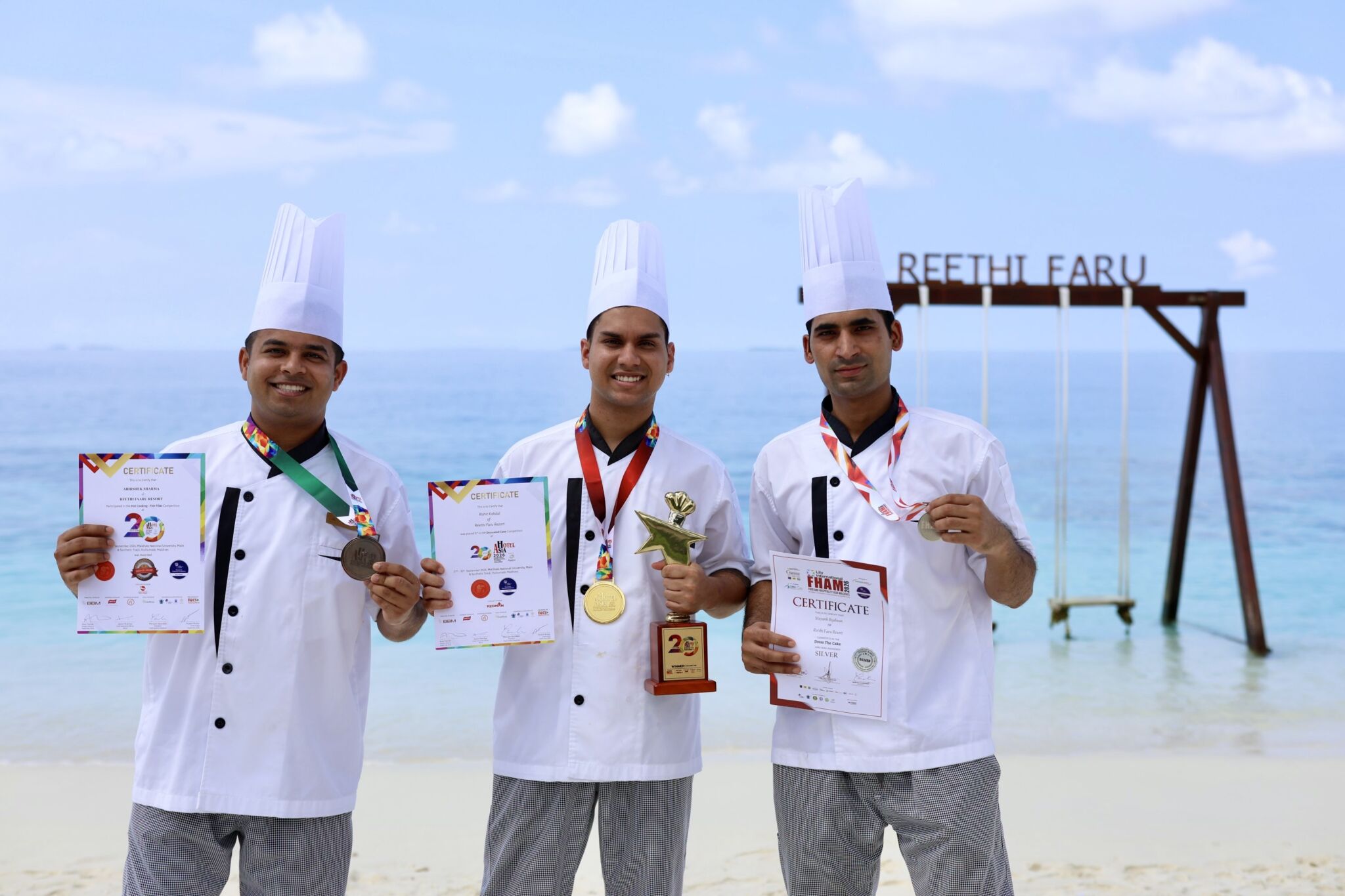
Reethi Faru Resort has announced three medal wins by members of its culinary team at the Hotel Asia Culinary Challenge and the FHAM Global Culinary Challenge.
At the Hotel Asia Culinary Challenge, Chef Rohit Kabdal received a Gold Medal in the Decorated Cake category, recognising his work in cake design, presentation and technical execution.
Chef Abhishek Sharma also represented Reethi Faru Resort at the competition, earning a Bronze Medal in the Hot Cooking Fish category.
At the FHAM Global Culinary Challenge, Chef Mayank Bijalwan secured a Silver Medal in the Dress the Cake category, adding a third medal to the resort’s recent culinary achievements.
The results highlight the range of skills within Reethi Faru Resort’s culinary team, spanning pastry, cake presentation and hot kitchen techniques.
According to the resort, participation in professional culinary competitions provides its chefs with opportunities to develop their skills, exchange knowledge and test their abilities alongside other industry professionals.
The achievements also form part of Reethi Faru Resort’s wider focus on dining and guest experience, with its culinary team involved across the resort’s restaurants and food and beverage offerings.
Reethi Faru Resort congratulated Kabdal, Bijalwan and Sharma on their respective achievements, describing the results as recognition of their commitment, technical ability and creativity.
The three medals add to the resort’s recent culinary accolades and reflect its continued emphasis on professional development within its kitchen team.
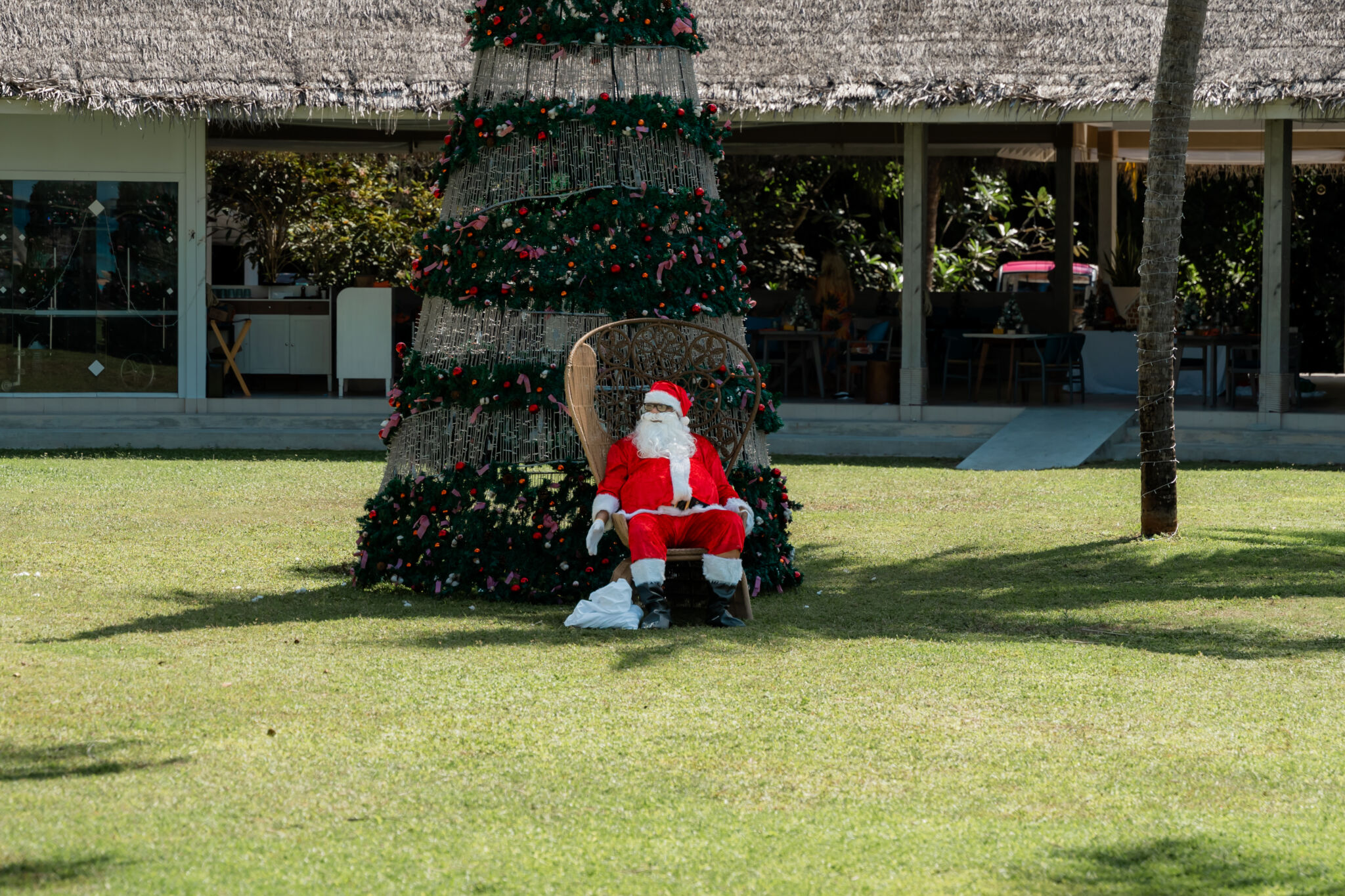
Ifuru Island Maldives will celebrate the 2026 festive season with “Echoes of the Ocean and Stars”, an immersive Christmas and New Year programme running from 21 December 2026 to 10 January 2027.
Inspired by the natural beauty of the Maldivian ocean, the night sky and the festive season, the theme will bring together marine and celestial elements across the resort’s décor, entertainment, dining, activities and guest experiences.
At the centre of the concept is the idea that the ocean carries memories, while the stars represent dreams and new beginnings. Rather than presenting the festive season as a series of standalone events, Ifuru Island plans to create a connected journey spanning Christmas, New Year and Orthodox Christmas.
The visual identity of “Echoes of the Ocean and Stars” will combine an underwater-inspired world with celestial elements. Bioluminescent-inspired colours, reef motifs and glowing details will be paired with stars, constellations and moonlit features throughout the resort.

The colour palette will include deep ocean blue and midnight navy alongside pearl white, silver, soft turquoise, pink and purple, with accents of celestial gold. Coral forms, waves, shells and reef-inspired features will be combined with stars and festive details, giving traditional Christmas elements an interpretation inspired by Ifuru Island’s natural surroundings.
The concept will extend beyond decorations to dining, entertainment, activities, uniforms, signage and festive communications.
The resort said the theme is also intended to reflect the emotions associated with the festive period. The ocean represents peace, connection and possibility, while the stars symbolise hope, dreams, guidance and new beginnings.
The festive journey will begin on 21 December and continue through 10 January, encompassing Christmas, New Year and Orthodox Christmas celebrations.
Christmas Eve on 24 December will feature festive dining and entertainment, while Christmas Day on 25 December will centre on family celebrations and relaxed island experiences.
On 31 December, Ifuru Island will mark New Year’s Eve with the main celebration of the festive period, before welcoming 2027 on New Year’s Day with activities centred around the island setting and surrounding ocean.

Celebrations will continue from 1 to 10 January during the Orthodox festive period, including Orthodox Christmas.
According to the resort, the broader concept is intended to connect the entire guest experience, with the island’s natural environment forming part of the festive setting. The ocean will provide inspiration during the day, while the night sky will shape the atmosphere after sunset.
Dining experiences, entertainment and activities will each form part of the wider “Echoes of the Ocean and Stars” narrative, giving guests different experiences throughout their stay while maintaining a consistent creative theme.
The programme is designed for guests travelling with family, friends or loved ones, with Ifuru Island aiming to combine its natural surroundings with festive celebrations and shared experiences.
The full festive programme, including entertainment, activities, culinary experiences and special events, will be announced separately.
“Echoes of the Ocean and Stars” will run at Ifuru Island Maldives from 21 December 2026 to 10 January 2027. Christmas Eve will be marked on 24 December, Christmas Day on 25 December, New Year’s Eve on 31 December, New Year’s Day on 1 January and the Orthodox festive period from 1 to 10 January 2027.
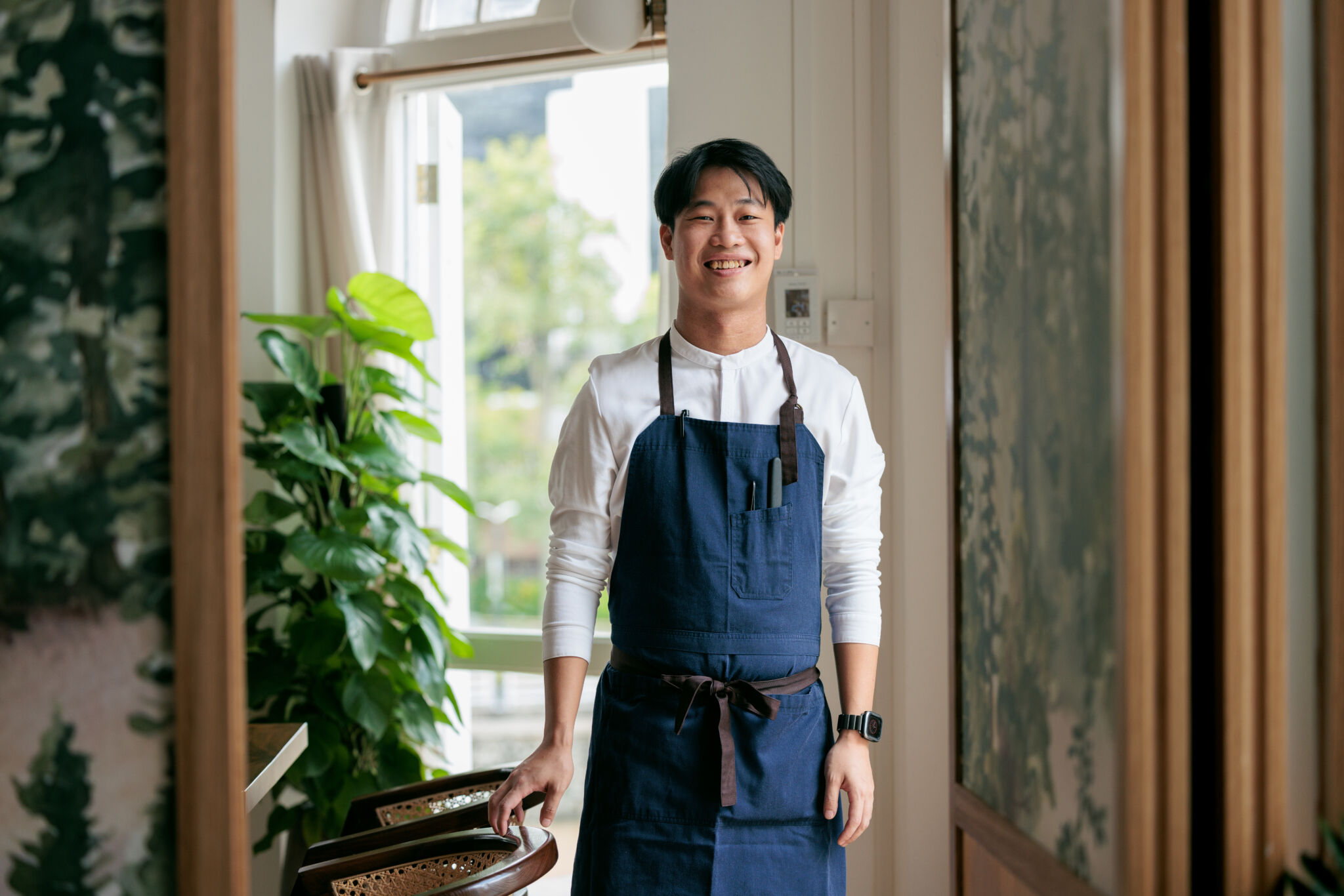
Milaidhoo Maldives will welcome Chef Laurence Tan, Head Chef of Michelin-starred JAG in Singapore, for two culinary experiences on the island in October.
Tan’s interest in cooking began at home, inspired by his parents and by preparing and sharing food with his family. After experimenting in the family kitchen, he went on to attend culinary school before joining The White Rabbit in Singapore in 2016, where he began developing his professional career.
He later worked at Tower Club before joining JAG in 2020. Working alongside Chef Jeremy Gillon, Tan developed an approach centred on precision, seasonality and the integrity of individual ingredients.
He progressed from Chef de Partie to Junior Sous Chef and later Sous Chef. When Gillon took on an international consultancy in Taiwan, Tan assumed leadership of the JAG kitchen.
He is now Head Chef of the restaurant, which retained its Michelin star in 2026, reflecting the consistency and quality of its cuisine under his direction.
During his visit to Milaidhoo, Tan will introduce guests to elements of JAG’s culinary philosophy while sharing some of the techniques and ideas that shape his cooking.
On 16 October, he will conduct an intimate cooking class, giving guests an opportunity to learn directly from him and explore his approach to ingredients, technique and flavour.
The following evening, on 17 October, Tan will host a five-course dinner limited to 16 guests.
The menu will begin with Hiramasa crudo with tomatoes and sea grapes, followed by Gambero Rosso with Jerusalem artichoke and cashew. Lobster ravioli with lobster bisque will precede Tajima Wagyu MB8 tenderloin with celeriac and black autumn truffle.
Dessert will feature a dark chocolate parfait with buckwheat ice cream and tonka bean. A preserved lemon sorbet will be served between courses, while the evening will open with a leek and potato croustade.
The collaboration reflects Milaidhoo’s culinary philosophy, which places emphasis on craftsmanship, curiosity, shared experiences and the role of dining in creating memorable moments.
The cooking class will take place on 16 October, followed by the five-course chef’s dinner on 17 October, with the latter limited to 16 guests.

-

 News1 week ago
InterContinental Maldives marks brand’s 80th anniversary with Michelin-starred culinary collaboration
-

 News1 week ago
‘The Curse of the Vigani’ takes over Oaga Art Resort this Halloween
-

 News1 week ago
Soneva’s Maldives waterslide reimagined as contemporary art in Stockholm
-

 Awards1 week ago
Finolhu earns five Luxury Childcare Association Awards nominations
-

 Awards1 week ago
Baros Maldives wins Indian Ocean’s Leading Water Villa Resort at World Travel Awards
-

 News1 week ago
Fushifaru Maldives unveils five-day celebration for ninth anniversary
-

 News1 week ago
Cora Cora Maldives welcomes guests back after planned island enhancements
-

 Awards1 week ago
Kuda Villingili Resort earns highly commended honour at Family Traveller Awards