

Action
Coral colonies of hope: Gili Lankanfushi leads in coral preservation


At Gili Lankanfushi, a special Coral lines Project has been initiated to recover coral reefs. By growing small fragments of coral on hanging ropes (lines) and then transplanting them to the house reef near One Palm Island, the resort hopes to see regeneration and aim to kick start the health of the house reef.
The Coral Lines Project started three years ago and currently holds around 7484 coral colonies. Small fragments of coral are constantly being added to the already growing population on 153 lines.
The vulnerable nature of coral populations mean that they undergo cycles of disturbance and recovery. Gili Lankanfushi’s house reef was affected by warmer waters created by the El Nino event in 2016 which bleached much of the corals. Yet, against all odds, most fragments in the coral lines nursery survived. They have also been faced with a Crown of Thorns (coral predators) outbreak this year and have still remained intact. In some cases, corals in the lines are no longer present on shallow reefs in the area.
“Now, is the perfect time to begin stage two of the coral restoration project by moving coral from the nursery to the house reef. Transplanting coral is a delicate procedure with a lot of trial and error,” a blogpost post by Gili Lankanfushi’s marine team read.

Josie beginning the process. PHOTO/ GILI LANKANFUSHI
They began slowly by creating a test site with a small number of coral colonies to ensure healthy corals would not be lost unnecessarily. A site with conditions not too dissimilar to the nursery was identified. The area had to be flat and solid, with no loose material and space for growth. It also had to be an area that is easily accessible for monitoring, but nowhere in danger of tampering or accidental damage.
The team chose a depth of eight metres in the middle of house reef drop off where they regularly snorkel. Another major concern was the Crown of Thorns Starfish; so the corals were placed in an area visited regularly by Harvey, the Ocean Paradise Dive Centre manager, who has been removing these starfish from the reef for months.
The next step, according to the team, was to cut the colonies from the lines in the nursery, and transport them in mesh bags in the water. They decided to use three different Acropora species to begin with as they are fast growing and like a lot of light and a moderate current.

Clare cutting the coral from the line. PHOTO/ GILI LANKANFUSHI
Once at the site, the area of algae was cleaned and the coral attached to ensure protection from extreme water movement. The team placed the coral an equal distance apart to allow quick growth and attached the coral using epoxy, which is a clay like cement. They were aware from previous studies that Miliput (epoxy clay) kills the part of the coral it is attached to; so small amounts of putty were placed at the base of the coral.
Once a week, for a total of six weeks, the marine team will measure growth and survivorship of the coral. They hope to replicate the test at different depths and locations to find a suitable site to start a larger restoration project. But major transplantation works will be put on hold until after the monsoon season.
“Due to the fragility of coral species, our rehabilitation plans are very flexible, and subject to a long monitoring period. We expect to adapt our approach and long term management to ensure we keep up with the changing environment of the reef,” the post read.
“Previous restoration plans have been hindered by external threats, so we are so excited to finally begin this project. We will be producing scientific data along the way which we hope will contribute to current coral reef rehabilitation knowledge.”

Attaching the colonies using epoxy. PHOTO/ GILI LANKANFUSHI
Despite the transplants working well so far, the marine team says they still have many question to answer in the future. Are the corals on the house reef still reproducing? As these corals survived the last bleaching, will they be more genetically suited to future hostile conditions?
“The answers to these questions are all just a work in progress and we will have to keep on watching and learning as we replant and monitor these corals over the next few years. As our house reef sustained a lot of mortality and the coral cover is low, we hope that this new project will help to rejuvenate the reef and raise awareness,” the team concluded their post.
Meanwhile, Gili Lankanfushi is gearing up for the opening of its long awaited Marine Biology Centre, with a new marine biologist joining the island resort. Its resident Marine Biologist and Environmental Officer Deborah Burn and her assistant Josie Chandler will be replaced by Clare Baranowski, who will start her term by opening the long awaited Marine Biology Centre on World Oceans Day, which falls on June 8.
Set on the private island of Lankanfushi in the North Male Atoll, Gili Lankanfushi Maldives is an intimate coral island in a sparkling lagoon, with jetties threading across the water out to spacious villa accommodations, where ultimate privacy can be found. This luxury resort is just a 20-minute speedboat ride from the main Velana International Airport.
At Gili Lankanfushi, an idyllic personal hideaway is one of 45 spacious, rustic overwater villas crafted from natural wood and glass. A palette of sparkling blues paints the horizon, the ocean stretching to infinity wherever on the island. The open design, with indoor and outdoor living space, allows guests the freedom to be themselves, the sound of the sea and warm breeze soothing all senses.


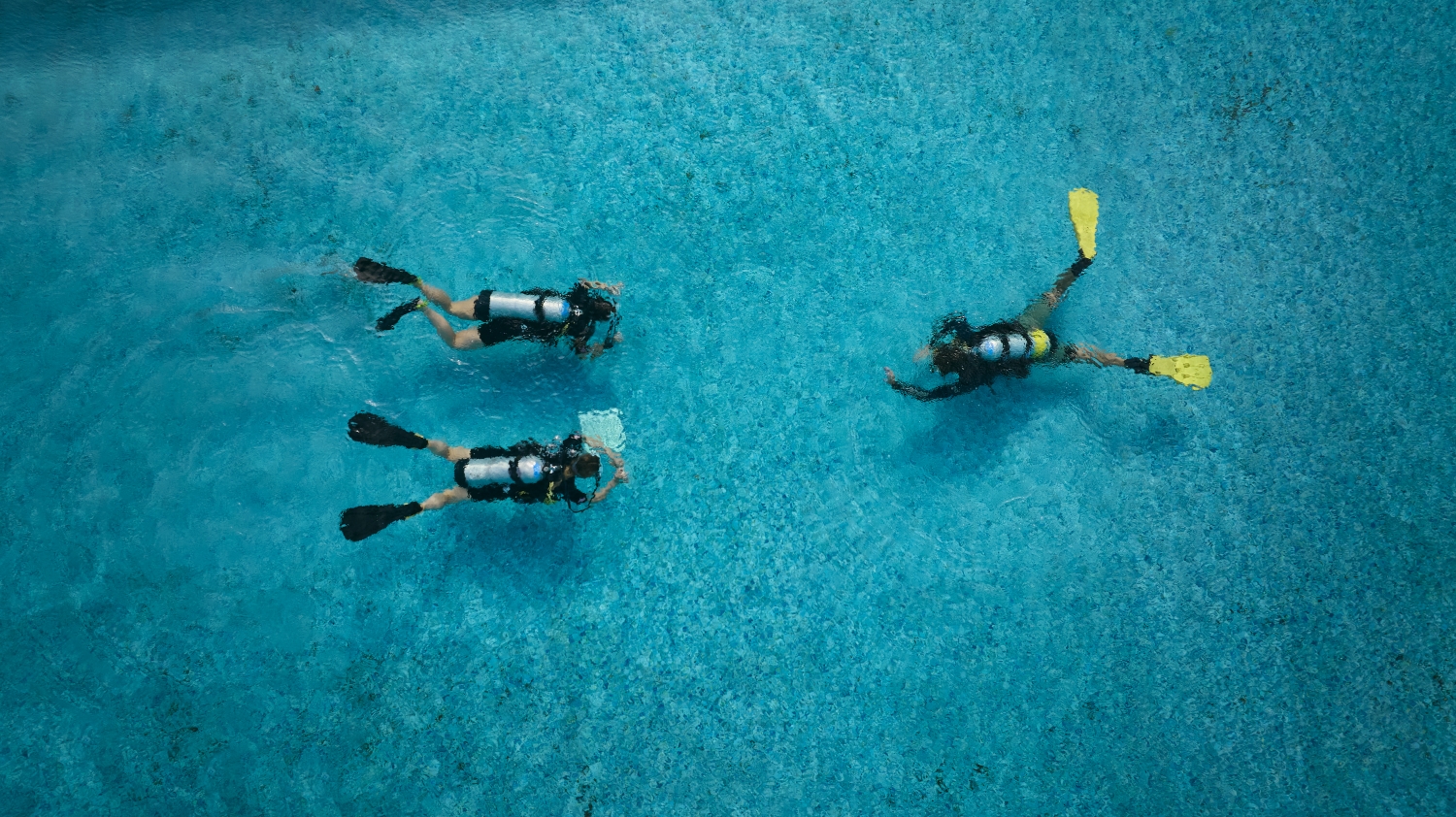
Pullman Maldives Maamutaa continues its ongoing marine conservation journey with the identification of Six Individual Indo-Pacific Leopard Sharks along the resort’s house reef. The sharks were documented through photographic observation and submitted to the MIYARU, the Maldives’ national non-profit organisation and research network focused on collaborative shark research and conservation.
The six identified sharks namely Atlas (LS081), Aurelian (LS083), Kikongo (LS090), Ambala (LS091), Ingwe (LS096), and Fowler (LS097) – can each be recognized by their distinctive patterns of dots and spots. Similar to a human fingerprint, these natural markings are unique to every shark, enabling marine researchers to identify individuals when they are encountered again.

By documenting these individual sharks, Pullman Maldives Maamutaa is contributing to a growing body of knowledge about the species and how it uses local reef habitats. Each sighting adds another piece to the wider picture of leopard shark presence and movements in the Maldives, supporting continued awareness, research and conservation.
For Pullman Maldives Maamutaa, conservation is about creating meaningful connections with the natural world. From a passing encounter with a leopard shark to learning how individual animals can be recognized beneath the surface, every discovery can offer a new perspective on the living reef.

The identification of these six leopard sharks reflects the resort’s continued approach to marine conservation through attentive observation, responsible marine experiences and collaboration with conservation partners.
As monitoring continues, Pullman Maldives Maamutaa invites guests to discover its house reef not simply as a destination beneath the surface, but as a living environment shared with an extraordinary diversity of marine life.
With every sighting, every photograph and every new record, the resort continues to build a deeper understanding of the waters surrounding Maamutaa – inspiring greater appreciation for the wildlife that calls the Maldives home.

Kayla Shortt is Pullman Maldives Maamutaa’s in-house Marine Biologist and PADI IDC Staff Instructor, who coordinated the in-water observations, photographic documentation and identification submissions that resulted in the six individual records.
Originally from South Africa, she has worked across five-star resorts in the Maldives since 2021, bringing together her experience in marine tourism and practical conservation.

Her expertise spans reef-health monitoring, turtle rehabilitation and shark behavior, with a particular focus on creating greater awareness and understanding of the marine environment.
At Pullman Maldives Maamutaa, Kayla makes marine science engaging and accessible, connecting guests with the underwater world while supporting the resort’s ongoing conservation efforts. Through her work, she contributes to a deeper understanding of the Maldives’ marine environment and the remarkable wildlife that calls it home.

This festive season, Siyam World Maldives, part of the Lifestyle Collection at Sun Siyam, is entering The Age of Legends, as ancient kingdoms, dragons, warriors, enchanted forests and Viking seas find their way to the Maldives. Inspired by the worlds of Game of Thrones, The Lord of the Rings, The Witcher andVikings, The Age of Legends creates a story entirely of its own, with experiences unfolding across the island and guests becoming part of the action.
Because at Siyam World, simply watching was never really going to be enough. Beginning December 15th, the festive programme brings together fantasy-inspired entertainment, family adventures, sport and storytelling, with former Manchester United and Serbia captain Nemanja Vidić, an original production inspired by one of the Maldives’ best-known legends, and a New Year’s Eve celebration where four worlds collide. And there are still a few things Siyam World is not revealing just yet. Consider that your first quest.
Legends on the field
From 18 December, the football pitch gets its own chapter. Former Manchester United and Serbia captain Nemanja Vidić joins the festive line-up with a football camp focused on skill, confidence, discipline and teamwork. For young players, it is a rare opportunity to train with someone who spent years competing at the very highest level of the game.

Every great battle has its decisive moment. From 25–27 December, former AC Milan and Italy striker Alessandro Matri takes to the pitch with young players for three days of skill, confidence and teamwork, bringing a goalscorer’s instinct to the festive realm.

For parents, it is also a remarkably effective way to ensure football dominates the conversation for the rest of the holiday. Possibly the flight home, too.
When a Maldivian legend takes the stage
On 21 December, the story turns closer to home. Dhonhiyala and Alifulhu, one of the Maldives’ best-known legends, will be brought to life through an original musical inspired by its timeless tale of love, courage and destiny.Passed down through generations, the story finds a new stage and a new audience at Siyam World, bringing a distinctly Maldivian legend into a festive season inspired by legendary worlds from near and far. Because long before dragons and Vikings reached these shores, the Maldives had legends of its own.
Christmas Even
On 24 December, word arrives from the North. A certain Legend is making his way across the sea, carrying gifts after what we can only assume has been a very long journey. Exactly when and how he will arrive remains a closely guarded secret. The North has many Legends. This one wears red.

Four worlds. One midnight.
New Year’s Eve brings The Age of Legends to its biggest night. Four fantasy worlds come together as ancient magic, fearless warriors, unexpected alliances and just the right amount of Siyam World chaos take over the island on the final night of 2026. Exactly what happens when those worlds collide is staying firmly under wraps. Mostly because spoilers are punishable by exile from the realm. Let’s just say Siyam World will not be entering 2027 quietly.
Little legends
For younger adventurers, The Dragon Rider Academy transforms Kidz World into a training ground for future dragon riders, with games, challenges and plenty of opportunities to prove themselves worthy of the realm. Judging by previous Siyam World adventures, they are likely to take their training extremely seriously. The dragons, thankfully, remain under control. For now.

One more legend
And there is still one name missing from the story. One final Legend is yet to be revealed to those following @siyamworld, joining an already packed festive line-up when the time is right.
Because some entrances deserve their own moment.
Now it is your turn
Guests will also have the chance to create a legend of their own through the Share Your Siyam Legend Challenge.Throughout the season, guests can capture their own legendary Siyam World moment and share it as a Reel or carousel, tagging @siyamworld and using #ShareYourSiyamLegend and #AgeOfLegends.
The entry combining the most imagination, genuine engagement and a point of view all its own could win a seven-night stay for two at Siyam World, including WOW! Inclusive, applicable taxes and return shared seaplane transfers.Create the moment. Share the story. Become a Legend. The Age of Legends begins at Siyam World Maldives on 15 December 2026.
The realm is ready. The Legends are coming. Ready to enter The Age of Legends? Discover Siyam World’s latest offers and book your festive escape at sunsiyam.com/siyam-world/offers.
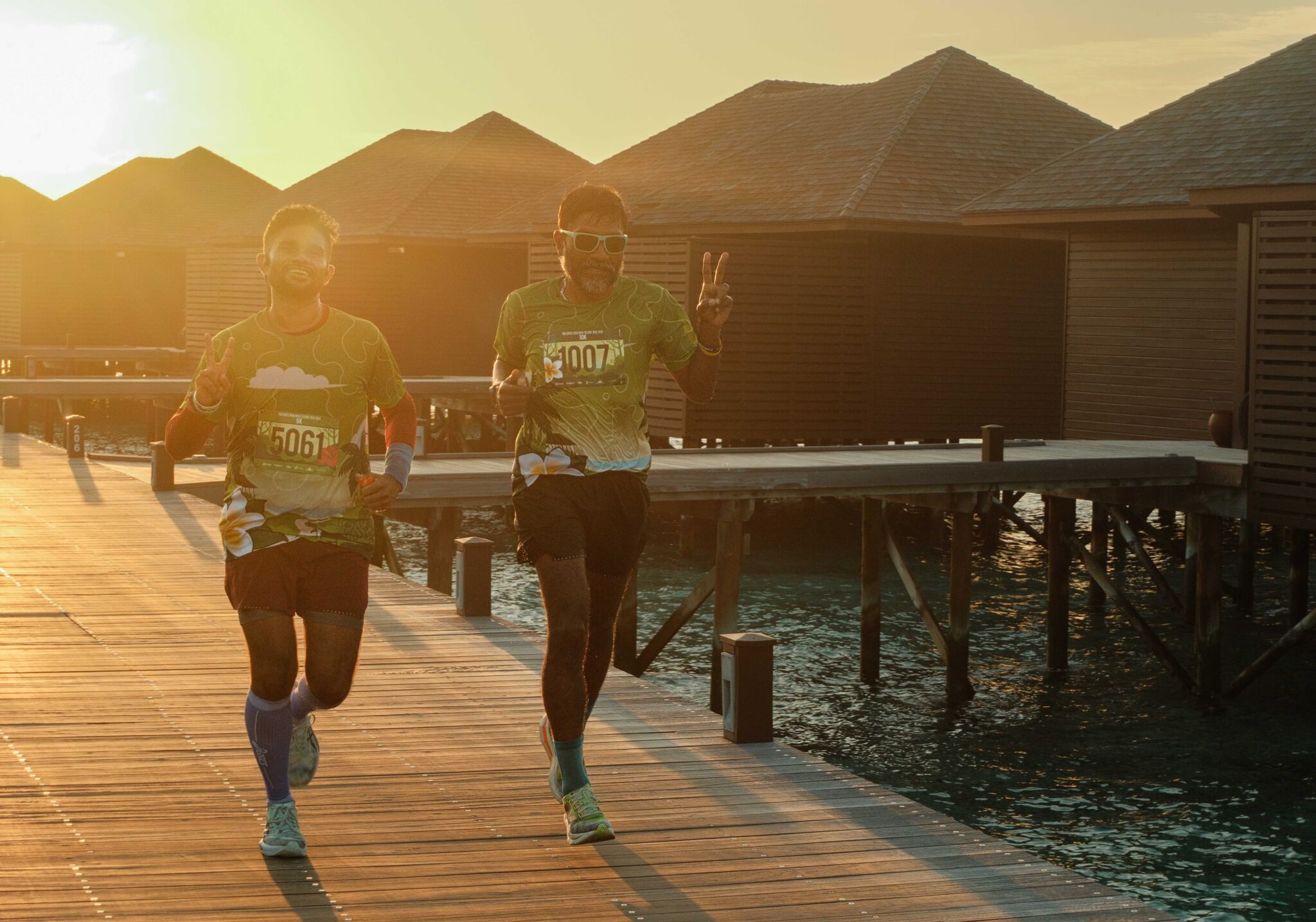
Hideaway Beach Resort & Spa successfully concluded the second edition of the Maldives Hideaway Resort Run 2026 on Friday September the 18th as part of World Wellness Weekend, bringing together running, wellness and the spectacular natural surroundings of the beautiful all-natural Island of Dhonakulhi.
The event welcomed 68 runners, with esteemed athletes Sunny Schippers leading the 10K race and Clara Abbona leading the 5K race, inspiring participants through three scenic island runs (including a relaxing shake out run) surrounded by the turquoise waters and lush tropical landscape of Hideaway.

Held in line with World Wellness Weekend, the programme extended beyond running to embrace a more holistic approach to wellbeing. Participants enjoyed a series of wellness experiences, including sound healing with Naga Healing, Yoga with in-house instructor Shubham, alongside fitness sessions led by Shaffa – Fitness Expert from TfG, and Ask a PT and Physio sessions with Yoosuf as the Personal Trainer Consultant.
The second edition celebrated movement in all its forms, combining physical activity with recovery, mindfulness, and connection with nature. From the energy of the starting line to restorative wellness experiences, the event brought guests and participants together through a shared appreciation for healthier living.

Following another successful edition, the Maldives Hideaway Resort Run continues to build its identity as a unique resort island running and wellness experience, bringing together sport, community and the beauty of the Maldives at Hideaway Beach Resort & Spa.
The initiative is endorsed by Visit Maldives and delivered in partnership with TFG as race partner, with race consultation, registration, timing, and bib services powered by TFG Races. Maldivian joins as transport partner, Coral Glass as content partner, and Sporting Vacanze as agent partner. This partnership reflects continued collaboration between tourism, aviation, media, sports, and lifestyle stakeholders in supporting wellness tourism in the Maldives.
Participants received a race timing bib powered by TfG Races, a partner goodie bag compiled of little treats by the partners, and the official Flora & Fauna Greenery Run T-shirt. Trophies were awarded to the top three male and female finishers in both the 5K and 10K categories. And the esteemed 1st place winners all received a scaled Maldivian Flight model kit by Maldivian Airways.

“Following the success of the historic inaugural edition in 2025, we are delighted to run the Maldives Hideaway Resort Run in 2026,” said Mohamed Muzaffar Ahmed, Business Development Manager of Lily Hotels. “With the continued endorsement of Visit Maldives and the support of our partners, this event reflects the growing opportunity to position the Maldives as a destination for luxury wellness, sports, and active travel. Our ambition is to develop the Maldives Hideaway Resort Run into one of the country’s and inevitably the world’s leading luxury destination running events, offering participants an experience that is truly unique to the Maldives. I am proud of the fact that we are the first luxury running event focused on the sporting tourism niche which has trophies, timing, and medals making Lily Hotels yet another pioneer in experiences in the tourism sector.”

Maldives Hideaway Resort Run – The 2nd Edition might be over, but its revelry carries on with celebrating the runners on social media. In addition to that the resort is looking to clear the remaining stock of the runner’s kit which consists of a goodie bag, t-shirt, and medal via any resort guest running at least a 5k in the official mhrr2026 route at the resort during this year. More details will be available on their social media.

As an intended annual event after celebrating sunrise in the original run in 2025 and flora and fauna in this year, the resort aims to launch its theme for Maldives Hideaway Resort Run 2027 – Visit Maldives Year Edition in February next year so stay tuned for any teasers about what they have got in store for the next edition of this spectacular destination running event with amazing views to be experienced by being there and experiencing running in a destination like no other.

-

 Cooking1 week ago
Kuredhivaru Resort and Spa sets season of culinary experiences and island celebrations
-

 News1 week ago
Sun Siyam marks Golden Week across Iru Veli, Vilu Reef with dining and island experiences
-

 News6 days ago
Le Méridien Maldives Resort & Spa celebrates World Wellness Weekend with three-day wellness programme
-

 Family1 week ago
Reethi Faru Resort celebrates Halloween with family activities and costume party
-

 Business1 week ago
BBM’s ‘Studio of Culinary Excellence’ opens at MNU to bridge classroom, industry
-

 News1 week ago
Nova Maldives invites independent travellers to reconnect during Solo Traveller Month
-

 News4 days ago
Aman names Maldives debut Amanolu, with opening planned for 2028
-

 Meditation7 days ago
Canareef Resort Maldives expands yoga and holistic wellness experiences