

News
Soneva honoured at Departures Legend Awards for eco-friendly initiatives


Soneva has been recognised for its eco-friendly initiatives.
In its 2020 Legend Awards, Departures magazine listed Soneva’s Namoona Baa initiative amongst “The Best Eco-Initiatives in Hospitality This Year”.
Namoona Baa sees the islands of Maalhos, Dharavandhoo, and Kihaadhoo in the Baa atoll pledging to end the open burning of island waste, in a radical shift towards eco-friendly waste management.
The pledge was made by the presidents of Maalhos, Dharavandhoo, and Kihaadhoo island councils, during a workshop on waste held at Soneva Fushi on January 5-8, 2019.
To end the practice of the open burning of waste, which poses a health and environmental hazard and damages tourism, each island will create an ‘eco-centro’ waste-to-wealth centre that will sort, recycle and reuse island waste.
The eco-centro model was pioneered at Soneva Fushi, which is located close to Maalhos. At the resort, food and organic waste, metals, and bottles are chipped, ground down or composted, and turned into things of economic value, such as concrete building blocks and fertiliser. Plastic waste is either recycled or used to create useful new objects.
Soneva has pledged funds from its Soneva Save our Seas programme to support the creation of the eco-centros on Maalhos, Dharavandhoo, and Kihaadhoo. During the January workshop, the island council presidents helped forge a new partnership amongst their islands, Soneva Fushi, and Common Seas, an international NGO dedicated to reducing marine plastic pollution.
The new partnership — part of the international Clean Blue Alliance which supports islands to prevent plastic waste leaking into the ocean — sets a course for Baa atoll, and eventually the Maldives, to become a global leader in halting ocean plastic pollution.
The Maalhos eco-centro waste-to-wealth centre – an innovative, waste processing complex modelled on Soneva Fushi’s Eco Centro — was inaugurated in February.
At the complex, the island’s waste is sorted into different categories such as plastic, glass, tin and wood; which is then compacted, crushed, and chipped where possible, and sent for recycling. The new eco-centro has enabled Maalhos to completely stop the open burning of rubbish and waste – making it the first inhabited island in the Maldives to do so.
Dealing with waste, particularly plastic, is a major issue for every island community in the Maldives. Plastic bottles and bags tend to litter streets, island jungle and beaches, while waste is routinely burned in toxic, open bonfires. Human health and guesthouse tourism suffer as a direct result of this practice.
Under the Namoona Baa Initiative, the Maalhos model will be expanded to neighbouring Dharavandhoo and Kihaadhoo, with eco-centro waste-to-wealth centres established on both islands later this year. With government support, it is hoped that the model can be rolled out across the Baa atoll, and eventually the whole of the Maldives.
In August 2019, Common Seas produced a preliminary report for the Maldivian government showing how the island nation could radically reduce the amount of single-use plastic it consumes, and reduce plastic pollution.
In September 2019, at his maiden address to the UN General Assembly, Maldivian President Ibrahim Mohamed Solih announced a nationwide phase-out of single-use plastics to be implemented by 2023, including phase-outs of single-use plastic bottles and bags. It is one of the most comprehensive phase-outs of single use plastics in the world.
Soneva currently runs two resorts in the Maldives, Soneva Fushi and Soneva Jani, and luxury yacht, Soneva in Aqua. The world-leading luxury resort operator also operates Soneva Kiri resort in Thailand.
In 1995, the award-winning luxury resort Soneva Fushi set the standard for all desert island barefoot luxury hideaways in the Maldives. Located in the Baa Atoll UNESCO Biosphere Reserve, Soneva Fushi pairs Robinson Crusoe fantasy with intelligent luxury.
Sixty-two private villas with their own stretch of beach are hidden amongst dense foliage within touching distance of a pristine coral reef. Eight new one- and two-bedroom Water Retreats, perched above the turquoise depths of the Indian Ocean, are scheduled to open to guests by May. Intuitive service is provided by Mr./Ms. Friday butlers.
Highlights include the open-air Cinema Paradiso, counting Saturn’s rings in the high-tech Observatory, the home-made chocolate and ice cream rooms, five hundred wines to choose from, six different restaurants and countless destination dining options.
In November 2015, Soneva launched a floating villa concept, Soneva in Aqua, a treasure trove children’s Den and a multi-purpose facility encompasses a glass gallery, boutique and studio where guests can learn the art of glass blowing.
Opened in December 2016, Soneva Jani is Soneva’s newest property and the world-leading luxury hotel group’s second resort in the Maldives.
Soneva Jani is located on the island of Medhufaru within a 5.6 kilometre lagoon in the Noonu atoll, and has uninterrupted ocean views in all directions. The lagoon is 35 minutes by seaplane from Velana International Airport and one hour by speedboat from Soneva Fushi.
Meaning ‘wisdom’ in Sanskrit, Soneva Jani currently comprises 24 overwater villas and one island villa, with additional villas to be built in phase two. Five islands encircle the lagoon, each one with soft white sands and covered in rich tropical vegetation. Four of the five islands will remain untouched, making Soneva Jani the lowest density development in the Maldives. The overwater villas are spaced across the expansive lagoon, offering privacy and extensive views over the Maldives’ turquoise waters. The island villas will be tucked into the lush greenery, providing the ultimate privacy, and all within steps of the beach.
Soneva Jani’s main guest facilities are located at The Gathering, the heart of the overwater villas. This dramatic three story structure is home to the main dining outlets, in addition to the Soneva Spa, library, retail area and wine cellar. It is located next to the Maldives’ first overwater Observatory.
Facilities on the island include the overwater Cinema Paradiso, the Eco Centro Waste-to-Wealth centre, organic gardens, tennis courts, water sports champa and Zuhair’s Beach on a desert island in the lagoon.
Departures magazine launched the Legend Awards last year.
The awards, selected by the Departures editorial team, span 24 categories, from Best Luxury Hotel Opening to Most Instagrammable Destination, covering every aspect of air, rail, and hotel travel experiences and amenities.
For the 2020 Legend Awards, editors curated the list of honourees based on experiences between May 1, 2019 to March 31, 2020, awarding honours to at least 10 properties, products or services per category.


Cooking
Gili Lankanfushi Executive Chef Hari releases plant-based cookbook celebrating sustainable cuisine
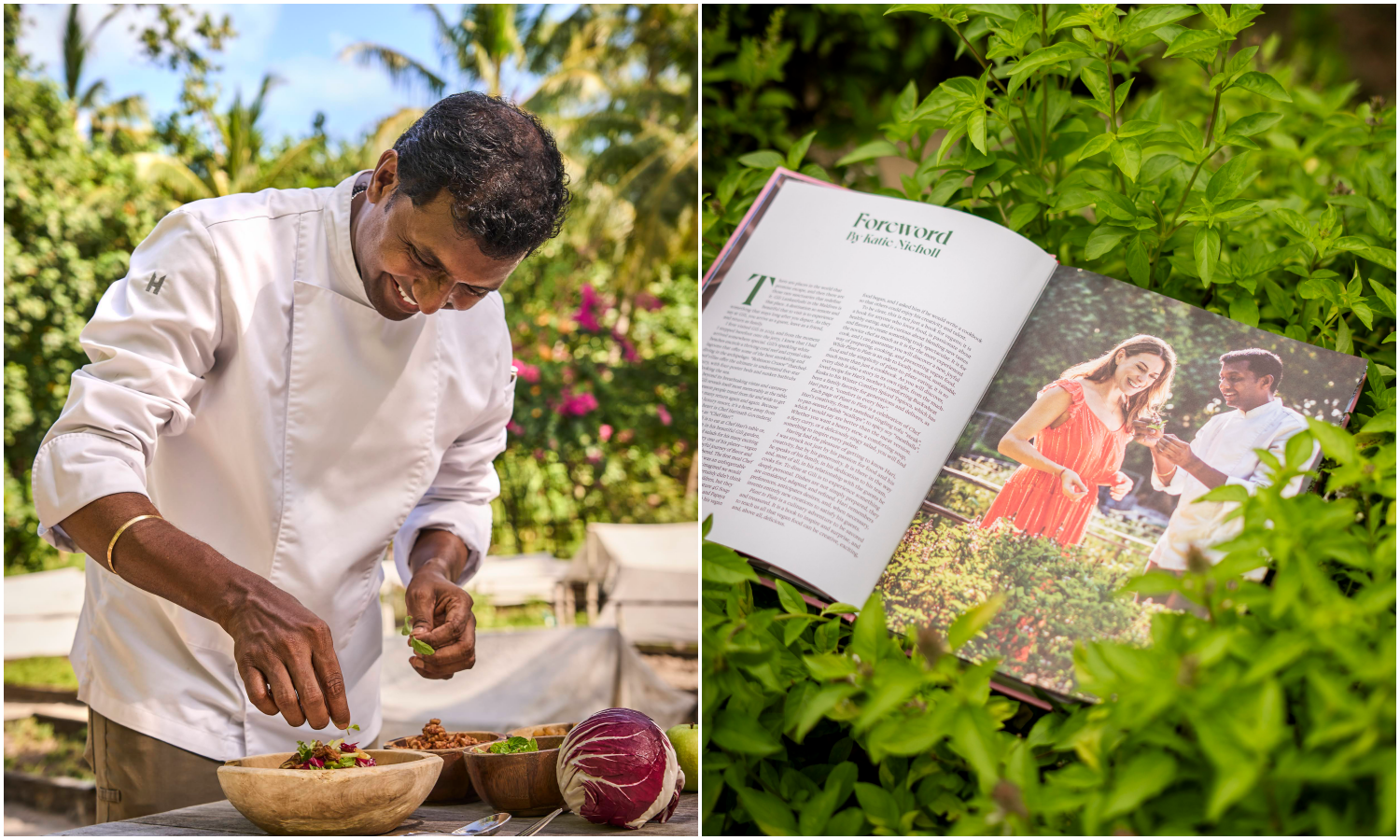
Gili Lankanfushi Maldives has announced that Plant to Plate: Vegan Recipes from Gili Lankanfushi Maldives, the debut cookbook from Executive Chef Harinath Govindaraj, has officially been published and is now available. Published by St James’s House, the beautifully curated coffee-table book marks Chef Hari’s 20th year at the award-winning resort and celebrates his vibrant approach to plant-based cuisine.
Now available to purchase online via the Gili Lankanfushi Maldives website and on the island, Plant to Plate allows guests and food lovers alike to recreate a taste of Gili at home. More than a cookbook, it is a reflection of Chef Hari’s philosophy of simple, mindful cooking, encouraging readers to embrace seasonal ingredients, fresh herbs and the joy of creating nourishing meals from nature’s bounty.


Featuring more than 60 recipes spanning breakfasts, starters, soups, salads, mains, desserts and signature drinks, the collection showcases Chef Hari’s wellness-led approach to food. Highlights include Rainbow Root Ceviche, Gili Garden Green Gazpacho, Teriyaki Tofu Steak with Coriander Sticky Rice, Pan-Seared Radish Scallops, Roasted Green Cauliflower with Zesty Couscous and Caramel Pistachio Silk Cheesecake, alongside treasured family recipes inspired by his South Indian heritage.
“Plant to Plate is about making beautiful, wholesome food accessible to everyone,” says Chef Harinath Govindaraj. “The recipes are designed to be practical, flexible and easy to recreate at home using fresh, seasonal ingredients. I want readers to feel confident in the kitchen and to understand that some of the most memorable dishes come from the simplest ingredients.”


A much-loved figure at Gili Lankanfushi Maldives, Chef Hari has spent the past two decades helping shape the resort’s culinary identity. Born in southern India, his passion for cooking began at an early age and has evolved into a distinctive style centred around sustainability, wellness and plant-based dining. Today, he oversees the island’s flourishing organic garden, growing herbs, fruits and vegetables used throughout the resort’s restaurants and menus.
Throughout the book, Chef Hari challenges traditional perceptions of vegan cuisine, transforming radishes into scallops, tofu into flavour-packed steaks and root vegetables into vibrant ceviches. His inventive recipes demonstrate how plant-based cooking can be every bit as satisfying, creative and indulgent as more conventional dishes.
Rodrigo Buanafina, General Manager of Gili Lankanfushi Maldives, comments: “Seeing Plant to Plate in print is a proud moment for everyone at Gili Lankanfushi. Chef Hari has shaped the culinary identity of the island for two decades, and this beautiful book captures his creativity, his passion for sustainability and the generosity he shows to every guest who sits at his table. Knowing that a portion of the proceeds will support the Cancer Society of Maldives makes it all the more special. It is a wonderful way for guests, old and new, to take a taste of the Gili experience home with them.”
Katie Nicholl, international broadcaster and author of the cookbook, comments: “To be clear, this is not just a book for vegans, it is a book for anyone who loves food, is passionate about healthy eating and is curious about blending new tastes and flavours and creating something truly spectacular. There is no end to Chef Hari’s creativity, he can create a tastebud tingling masala ‘steak’ from tofu, pan seared ‘scallops’ out of radishes… This is a book to inspire and surprise you and teach us all that vegan food can be creative, exciting and above all, delicious.”
Featuring stunning photography by acclaimed photographer Mel Yates, Plant to Plate combines evocative imagery of island life with easy-to-follow recipes designed for delicious and healthy everyday living. The result is a visually striking keepsake that transports readers to the shores of Gili Lankanfushi with every turn of the page.
Plant to Plate Vegan Recipes from Gili Lankanfushi Maldives is now available for $129 USD with 25% of the profits going towards Cancer Society of Maldives (CSM). Sample recipes are available on request. Order your copy here.
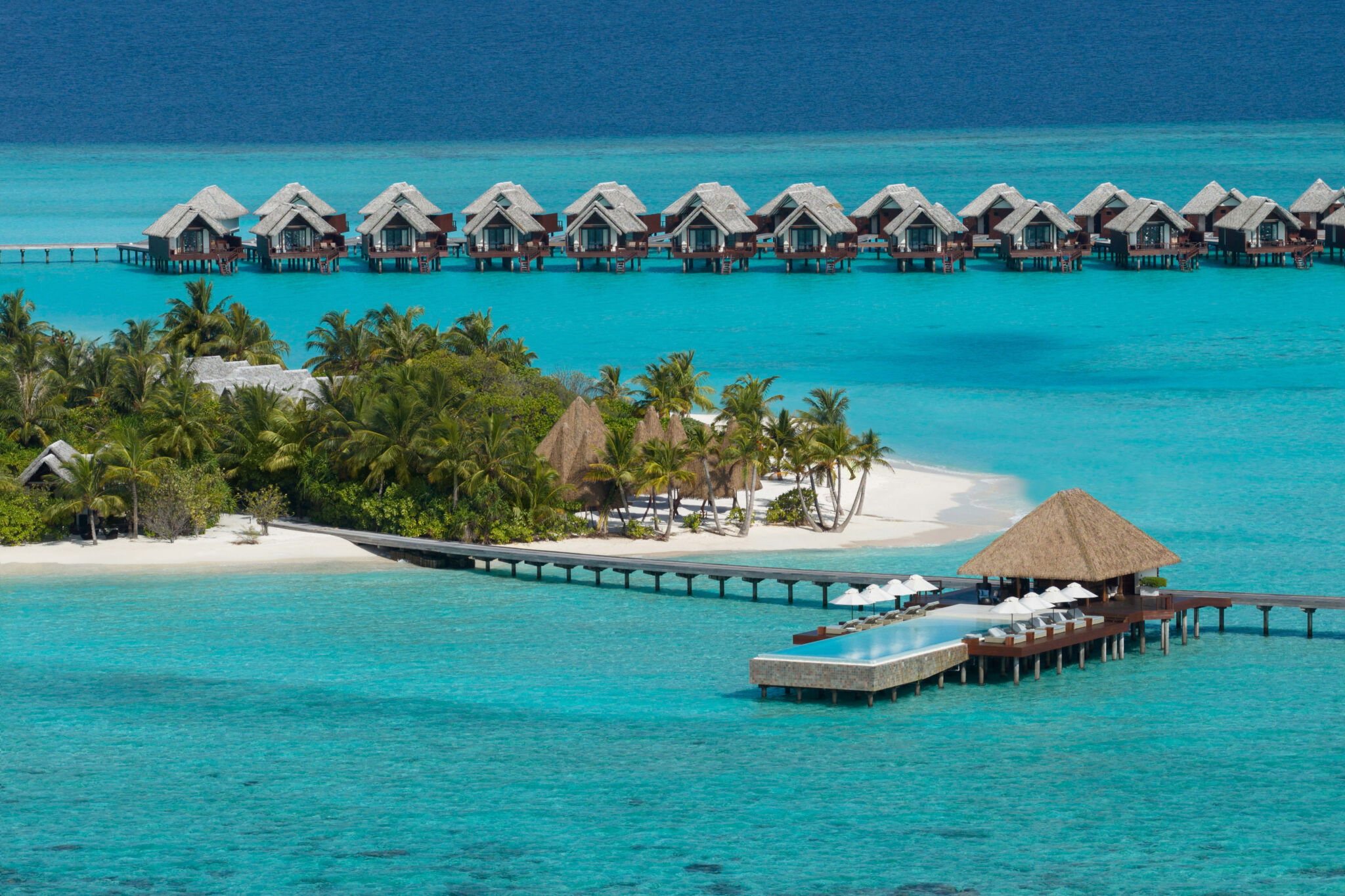
Heritance Aarah has won Gold in the Leading All-Inclusive Hotel/Resort category at the South Asian Travel Awards (SATA) 2026, recognising its Premium All-Inclusive offering in the Maldives.
Located in Raa Atoll, Heritance Aarah offers beach and overwater accommodation alongside dining, wellness, marine activities and cultural experiences. The resort’s Premium All-Inclusive concept focuses on providing guests with a range of experiences and personalised services throughout their stay.
Stasshani Jayawardena, Chairperson of Aitken Spence Hotel Holdings PLC, attributed the achievement to the resort’s team.
“This award is a tribute to our team, whose commitment to creating exceptional guest experiences brings together the very best of Heritance Aarah while celebrating the beauty and character of the Maldives,” Jayawardena said.
Susith Jayawickrama, Managing Director of Aitken Spence Hotel Holdings PLC, said the award recognised the resort’s approach to hospitality and the efforts of its employees.
“This recognition is a proud moment for everyone at Heritance Aarah. Our Premium All-Inclusive experience has always been about going beyond the expected, delivering thoughtful service, exceptional dining, and moments that profoundly connect our guests with the Maldives. This award is a reflection of the passion, commitment and consistency of our team, who continue to raise the bar every day,” Jayawickrama said.
Dining forms a central part of the resort’s offering, with seven restaurants and five bars serving international and Mediterranean cuisine, seafood and overwater dining experiences.
Among its dining venues is Ambula, which combines Sri Lankan and Maldivian culinary traditions through a specially developed menu. Ralu Lounge features one of the largest rum collections in the Maldives.
The resort has also introduced new dining concepts, including Fehi Raha, a garden-to-table experience set within its organic garden. The concept incorporates seasonal produce grown on the island into its menus.
For families, the Ufa Ghadhiya ice cream truck offers ice cream, sundaes and tropical popsicles.
Beyond dining, Heritance Aarah provides a range of recreational and wellness activities, including snorkelling, diving and ocean excursions in Raa Atoll. Guests can also access treatments at IASO Medi Spa and explore Maldivian traditions, craftsmanship and cultural heritage through the resort’s Maldivian Village.
The resort’s adults-only Ocean Suite Wing caters to couples seeking greater privacy, offering overwater accommodation, butler service, private leisure spaces and exclusive dining options. The main island accommodates couples, families and multigenerational travellers.
According to the resort, the SATA 2026 recognition reflects the contribution of its employees across culinary operations, wellness, guest services and recreational activities, as well as its continued focus on developing its Premium All-Inclusive offering.
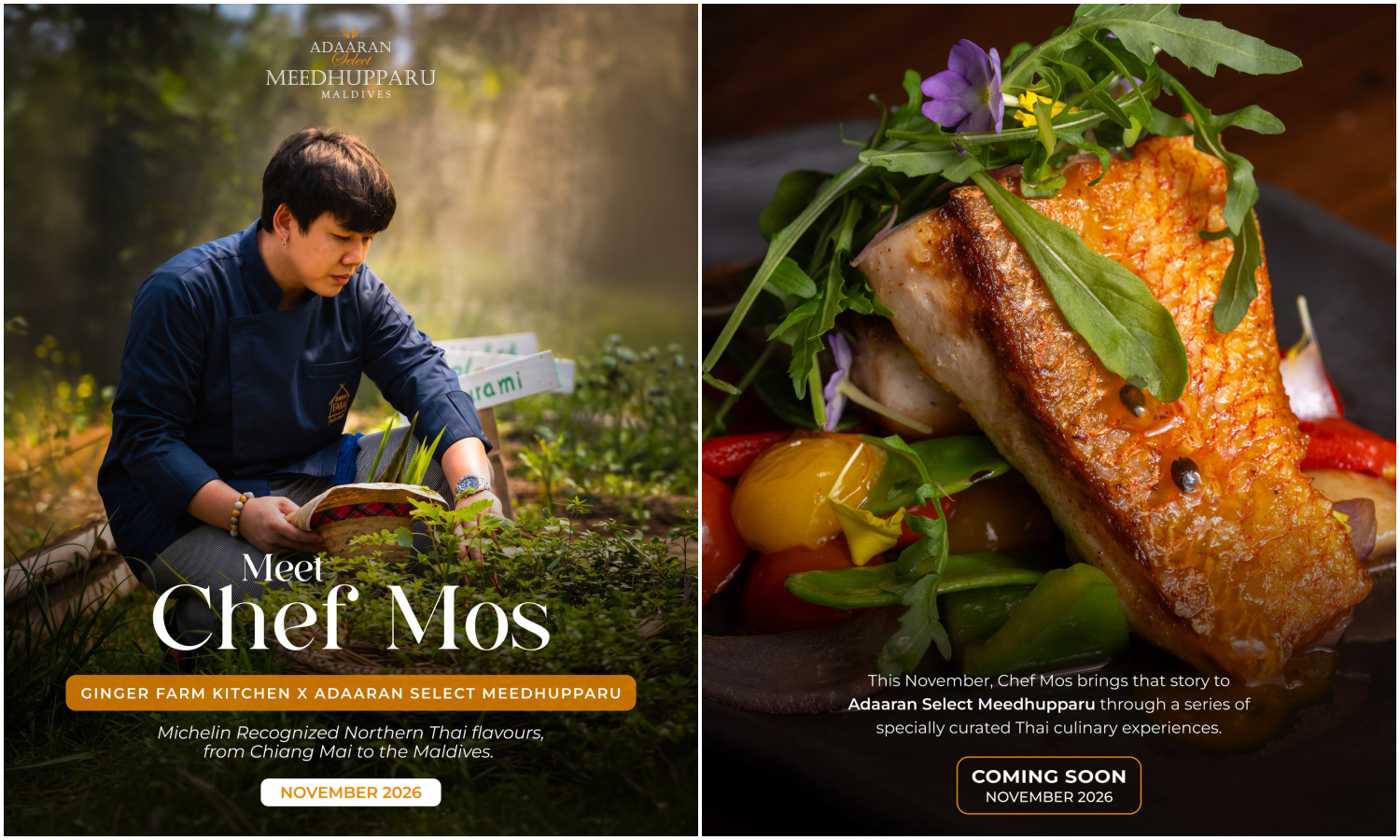
This November, Adaaran Select Meedhupparu welcomes a taste of Northern Thailand as Michelin recognized Ginger Farm Kitchen and The House by Ginger arrives in the Maldives for a special culinary collaboration inspired by the traditions, ingredients and home cooking of Chiang Mai.
Born and raised in Chiang Mai, Chef Mos brings with him a strong connection to the food of Northern Thailand and the philosophy behind Ginger Farm Kitchen, a restaurant concept that began on a working farm in Saraphi, just outside the city.
What started as a family space for children and visitors to experience rice planting, harvesting and traditional farm life gradually evolved into the brand’s distinctive Farm to City philosophy.
Today, Ginger Farm Kitchen celebrates authentic Thai home cooking, with an emphasis on Northern Thai flavours, family recipes, local produce and time-honoured cooking techniques.
Chef Mos will bring this spirit to Adaaran Select Meedhupparu through a series of specially curated culinary experiences on 8 and 9 November 2026.
On 8 November, guests can begin with an intimate, hour-long cooking demonstration. The session will showcase three Thai favourites: Tom Kha with chicken, Pad Thai with prawns or chicken, and Thai green curry with chicken, offering an opportunity to discover the ingredients and techniques behind each dish.
That evening, the experience continues at Tawa with an exclusive five-course wine pairing dinner. The menu combines Thai flavours with contemporary presentation, beginning with Ma Hor and prawn spring roll, followed by crab pani puri with coconut citrus sauce, Burmese tea leaf salad with soft-shell crab and Tom Yum lobster bisque.
For the main course, guests can choose between beef Massaman with garlic mashed potatoes, burnt leeks and Thai gremolata, or grilled sea bass with Tom Kha sauce, crab salad and jasmine rice. A lemongrass panna cotta with tropical fruits and mango and passion fruit sauce brings the evening to a close.
On 9 November, the focus shifts to a more relaxed Thai street-food and BBQ dinner on the beach. The buffet will feature favourites including chicken satay, spring rolls, Thai pineapple fried rice, seafood Tom Yum, Massaman curry, pomelo salad and Pad Ka Prao Neur. Live stations will serve freshly prepared Pad Thai with prawns and Khao Soi chicken curry noodles, followed by mango sticky rice for dessert.
The collaboration also brings recognised culinary pedigree. Ginger Farm Kitchen’s original Chiang Mai restaurant at One Nimman received Michelin Bib Gourmand recognition from 2020 to 2023.
From Chiang Mai’s farms to the shores of the Raa Atoll, Ginger Farm Kitchen x Adaaran Select Meedhupparu brings guests closer to the roots of Thai cuisine through shared dining, authentic flavours and chef-led discovery.
For more information and bookings, please visit the resort’s website.

-

 Cooking1 week ago
Belgian Chef Wout Bru to bring exclusive dining experiences to Meyyafushi, Fushifaru Maldives
-

 News1 week ago
.Here Baa Atoll completes two-island concept with opening of Nowhere Private Island
-

 Cooking1 week ago
Award-winning Pastry Chef Elena Nabiullina brings contemporary pâtisserie to The Nautilus Maldives
-

 News1 week ago
Patina Maldives announces Orthodox Christmas celebrations with Russian cuisine and live entertainment
-

 News1 week ago
Six Maldives spas operated by Mandara Spa recognised in global top 100 list
-

 Cooking1 week ago
Barceló Nasandhura Malé partners with Ministry of Crab for rooftop dining experience
-

 Action1 week ago
Adaaran Select Hudhuran Fushi brings together 40 women for surfing, wellness retreat
-

 News1 week ago
COLOURS OF OBLU reveals festive experiences for families and couples across four resorts