

Featured
Soneva to open Maldives’ first tourist-centric science centre


Soneva recently announced its plans to open a SCIE:NCE Centre in the Maldives.
SCIE:NCE is short for Soneva Centre for Island Ecosystems. The centre will be located onsite at Soneva Fushi, and will be designed in a similar manner to the Soneva Art and Glass Studio.
The objective of the new centre is to create great guest experiences and learning opportunities around the subjects of marine and terrestrial biology and astronomy, as well as Soneva’s conservation efforts.
These topics are usually of great interest to Soneva’s younger guests, and the centre will provide even more opportunities for learning while at Soneva or through an online learning platform.
SCIE:NCE is set to develop and record short educational videos, which will be shared online.
Children and teenagers will also be able to sign up for online courses which will be distributed through existing educational platforms, such as FutureLearn.

Soneva has appointed Dr Bart Knols, who was instrumental in the implementation of Soneva’s sustainable, insecticide-free mosquito management system, to oversee the set up the centre.
The centre will need $250,000 to be built, with funds coming from donations and grants, and is scheduled to be completed by the end of 2021.
SCIE:NCE will include the following facilities:
- A research laboratory for in-house scientists as well as scholars visiting from around the world.
- An outdoor semi-field structure for behavioural and ecological studies on mosquitoes.
- A coral propagation centre, which will have the capacity to produce 50,000 pieces of coral a year, which when planted, will cover at least one hectare. Soneva intends to set up coral propagation centres at both Soneva Jani and Soneva Fushi. These propagation centres will be unique and the largest scale coral propagation in the world. SCIE:NCE is currently in discussion with some of the world’s leading marine biologists and coral experts, to help advise the way forward. In the near future, Soneva will invite these scientists and experts to the Maldives to plan these activities.
- A meeting/lecture room for seminars, training courses and teaching purposes, augmented with a library and office space.
“Covid-19 has brought into question the value of what we learn at school and traditional methods of learning. The world has been exposed to, and gotten used to, remote learning. We see a lot of interest from children, to either learn remotely or on-site, about astronomy, marine biology and conservation,” Sonu Shivdasani, Soneva’s CEO and Founder, said.
“It is our hope that we will develop week-long classes that children can subscribe to when they are at our resorts, and subscribe to digitally if they are unable to physically visit Soneva. I am sure that as we go on, new ideas will come up, and we will look back in a couple of years’ time at the SCIE:NCE Centre as one of those great initiatives that clearly differentiate Soneva from any other resort.”

SCIE:NCE will be directed by Bart Knols, who is a medical entomologist with a PhD from Wageningen University (Netherlands), where he started as a first-year biology student in 1983.
After attending a lecture on the side effects of aerial spraying insecticides to control tsetse flies in Africa he was hooked. He became interested in insects and the diseases that they transmit to humans and animals, as well as the ongoing search for green alternatives to pest control.
Bart was offered a chance to work in a Maasai community on the Kenya-Tanzania border to develop low-cost, odour-baited traps to control tsetse flies. What followed 11 years of working and living in east and southern Africa was a PhD on the behavioural ecology of African malaria mosquitoes.
He went on to work for the International Centre of Insect Physiology and Ecology (ICIPE), in Nairobi to set up its malaria vector programme. Bart then moved to the shores of Lake Victoria, where he headed up the malaria programme and became the manager of ICIPE’s field station.
In 2003, he was offered a research position with the UN’s International Atomic Energy Agency (IAEA) in Vienna and Seibersdorf, to work on the development of the Sterile Insect Technique (SIT) for malaria mosquitoes. Bart has received many awards for his creative and unconventional lines of research and pioneering of new ideas.
He is a co-laureate of the Nobel Peace Prize (2005) and obtained an Ig Nobel Prize at Harvard University in 2006. He was also awarded the Eijkman medal, the highest award in the field of tropical medicine and international health in the Netherlands, in 2007.
The leading scientific journal Science wrote about Bart in 2016: “In humankind’s war against insect-borne disease, Dutch entomologist Bart Knols is one of the most creative warriors”.
He has published more than 140 scientific articles, 19 book chapters and (co-)edited four books. In recent years, Bart served as principal investigator on a 5.2 million Euro grant from the EU and subsequently as co-Principal Investigator on a $10.2 million grant from the Bill and Melinda Gates Foundation.
In 2019, Soneva partnered with Biogents, a company on the forefront of international mosquito control research, to introduce a sustainable, insecticide-free mosquito management system.
The aim of this partnership is to bring the mosquito population on Soneva Fushi’s island of Kunfunadhoo, down to zero to show the international community that it is possible to use sustainable, insecticide-free alternatives in mosquito control, and to be the first mosquito-free island in the Maldives.
Starting July 2019, a month into the operation, a sharp decline in the number of mosquitoes trapped on the island was observed, and today the mosquito population has been reduced by around 95-98 per cent.
Soneva’s target is to eliminate all mosquitoes on Kunfunadhoo island by the end of 2020.
The halting of chemical fogging has also resulted in the appearance of a greater diversity of flora and fauna on the island. Guests and hosts have noticed a resurgence in species of butterflies, dragon flies, bumble bees, beetles and small insects.
With these natural pollinators now back in abundance, there are more flowers, fruits and Soneva Fushi’s organic gardens are thriving. The increase in fruits and insects means there now are more birds visiting the shores of Kunfunadhoo and fire flies are once again spotted at night.
“I feel privileged and proud to join Soneva and its SCIE:NCE centre to lead its scientific research and conservation efforts,” Dr Knols said.
“Scientific endeavour is most meaningful if it is put to good use in society and addresses key issues reflected in the sustainable development goals. This we hope to accomplish, besides enthusing guests with what we do and developing capacity in the Maldives to address pressing environmental and conservation issues in line with the government’s Strategic Action Plan 2019-2023.”

Soneva is a pioneering family of hospitality properties, offering holistic encounters in luxurious and inspiring environments – from world class resorts to outstanding natural locations.
Soneva Fushi, Soneva Jani and Soneva in Aqua in the Maldives, and Soneva Kiri in Thailand rebuke the traditional concept of luxury and instead promise the luxury of time, purity and solitude. Every day, guests are encouraged to discover sandy feet, inspired minds and full hearts.
Combining luxury with a conscientious approach to sustainability and the environment, and proactively changing the nature of hospitality, it delivers intuitive service and meaningful experiences to the guests.


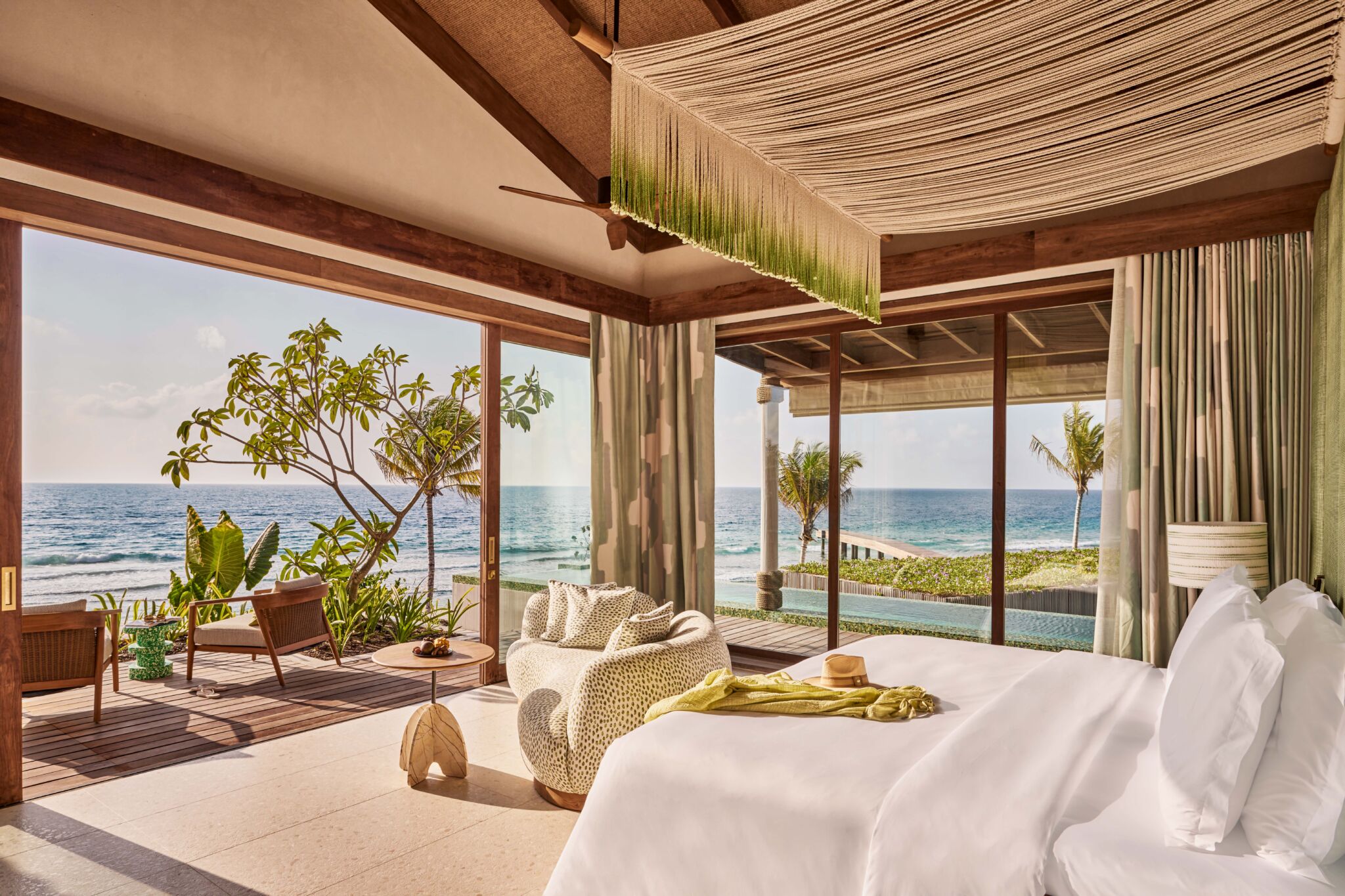
.Here Baa Atoll, a private island retreat in the Maldives, has been named the No. 6 Resort in the Indian Ocean in the Condé Nast Traveler Readers’ Choice Awards 2026.
The annual Readers’ Choice Awards recognise hotels, resorts, destinations, airlines and other travel experiences based on votes submitted by Condé Nast Traveler readers.
The recognition places .Here Baa Atoll among the highest-ranked resorts in the Indian Ocean and comes during a milestone year for the property.
Located within the UNESCO Biosphere Reserve of Baa Atoll, .Here Baa Atoll comprises nine residences spread across two natural islands, Somewhere and Nowhere.
Somewhere features seven three- and four-bedroom residences extending from the beach towards the lagoon and designed for families and groups travelling together. Each residence offers indoor and outdoor living spaces, multiple pools, private dining and personalised Roohu service. Guests are transferred directly to their residence by private speedboat, avoiding a conventional lobby and check-in process.
Condé Nast Traveler has previously highlighted the resort for its emphasis on privacy, its beach-to-lagoon residences and its discreet approach to luxury.
The resort experience also includes Nowhere Private Island, which is reserved exclusively for a single group at a time. The island features a five-bedroom Presidential Residence and a three-bedroom Lagoon Residence, providing eight bedrooms and 3,329 square metres of private living space, supported by dedicated service and individually curated experiences.
The Readers’ Choice Award follows several other recognitions received by .Here Baa Atoll during 2026. The resort was included in the Condé Nast Traveler Hot List 2026, with the publication highlighting its residences and design. It has also received international recognition for its architecture and design, alongside creative collaborators Kulör Group, Muza Lab and Topo Design Studio.
Elina Adiyan, Resident Manager of .Here Baa Atoll, said: “To be recognised by the readers of Condé Nast Traveler so early in our journey is incredibly meaningful. .Here was created around a simple idea: to give guests extraordinary space, genuine privacy and the freedom to experience the Maldives entirely on their own terms. This recognition belongs equally to our team, whose care and dedication bring that vision to life every day. We are deeply grateful to everyone who voted for us.”
The latest recognition adds to .Here Baa Atoll’s growing international profile within the luxury travel sector, with the resort positioning privacy, spacious accommodation, design and personalised service at the centre of its guest experience.
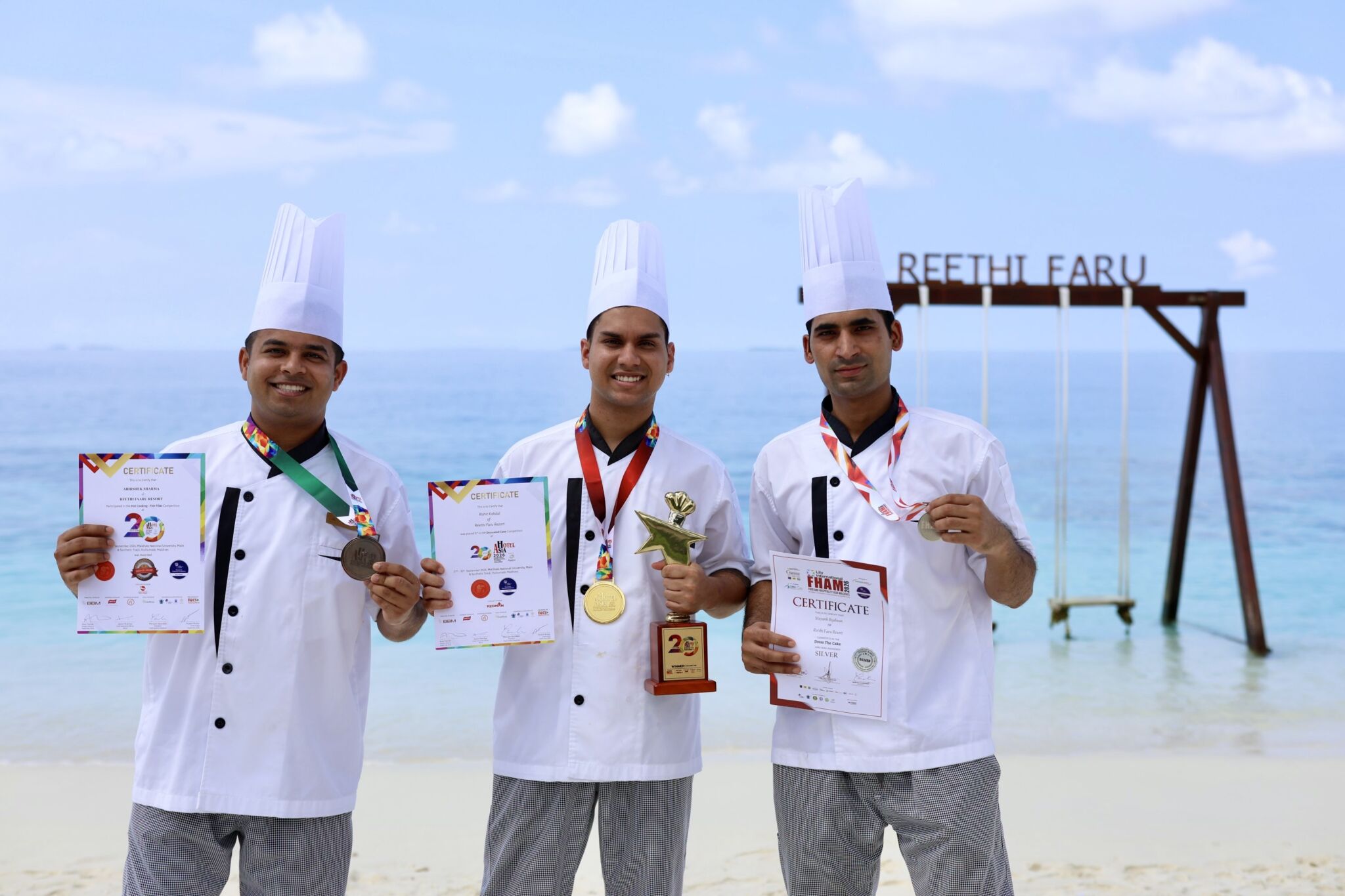
Reethi Faru Resort has announced three medal wins by members of its culinary team at the Hotel Asia Culinary Challenge and the FHAM Global Culinary Challenge.
At the Hotel Asia Culinary Challenge, Chef Rohit Kabdal received a Gold Medal in the Decorated Cake category, recognising his work in cake design, presentation and technical execution.
Chef Abhishek Sharma also represented Reethi Faru Resort at the competition, earning a Bronze Medal in the Hot Cooking Fish category.
At the FHAM Global Culinary Challenge, Chef Mayank Bijalwan secured a Silver Medal in the Dress the Cake category, adding a third medal to the resort’s recent culinary achievements.
The results highlight the range of skills within Reethi Faru Resort’s culinary team, spanning pastry, cake presentation and hot kitchen techniques.
According to the resort, participation in professional culinary competitions provides its chefs with opportunities to develop their skills, exchange knowledge and test their abilities alongside other industry professionals.
The achievements also form part of Reethi Faru Resort’s wider focus on dining and guest experience, with its culinary team involved across the resort’s restaurants and food and beverage offerings.
Reethi Faru Resort congratulated Kabdal, Bijalwan and Sharma on their respective achievements, describing the results as recognition of their commitment, technical ability and creativity.
The three medals add to the resort’s recent culinary accolades and reflect its continued emphasis on professional development within its kitchen team.
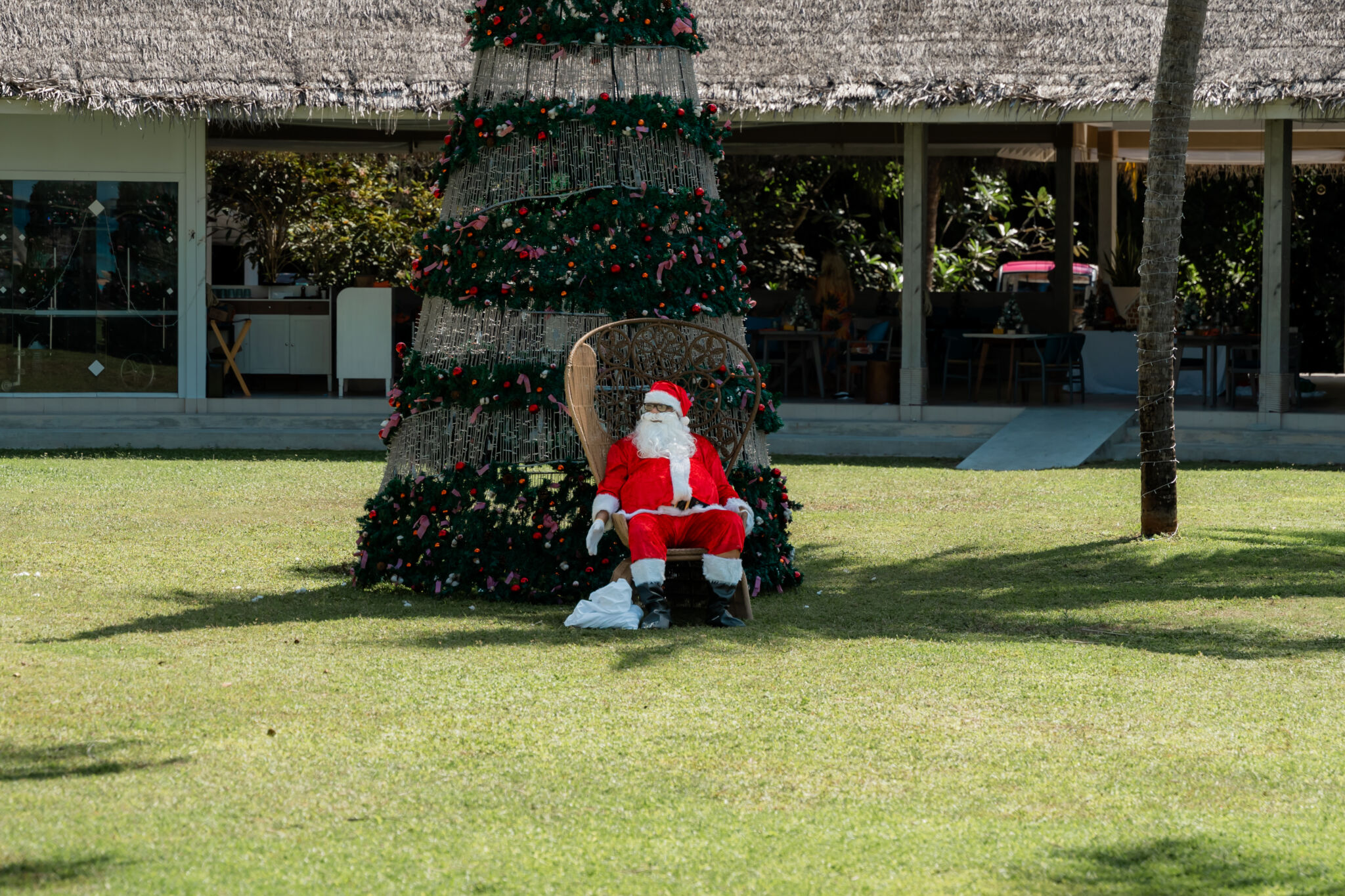
Ifuru Island Maldives will celebrate the 2026 festive season with “Echoes of the Ocean and Stars”, an immersive Christmas and New Year programme running from 21 December 2026 to 10 January 2027.
Inspired by the natural beauty of the Maldivian ocean, the night sky and the festive season, the theme will bring together marine and celestial elements across the resort’s décor, entertainment, dining, activities and guest experiences.
At the centre of the concept is the idea that the ocean carries memories, while the stars represent dreams and new beginnings. Rather than presenting the festive season as a series of standalone events, Ifuru Island plans to create a connected journey spanning Christmas, New Year and Orthodox Christmas.
The visual identity of “Echoes of the Ocean and Stars” will combine an underwater-inspired world with celestial elements. Bioluminescent-inspired colours, reef motifs and glowing details will be paired with stars, constellations and moonlit features throughout the resort.

The colour palette will include deep ocean blue and midnight navy alongside pearl white, silver, soft turquoise, pink and purple, with accents of celestial gold. Coral forms, waves, shells and reef-inspired features will be combined with stars and festive details, giving traditional Christmas elements an interpretation inspired by Ifuru Island’s natural surroundings.
The concept will extend beyond decorations to dining, entertainment, activities, uniforms, signage and festive communications.
The resort said the theme is also intended to reflect the emotions associated with the festive period. The ocean represents peace, connection and possibility, while the stars symbolise hope, dreams, guidance and new beginnings.
The festive journey will begin on 21 December and continue through 10 January, encompassing Christmas, New Year and Orthodox Christmas celebrations.
Christmas Eve on 24 December will feature festive dining and entertainment, while Christmas Day on 25 December will centre on family celebrations and relaxed island experiences.
On 31 December, Ifuru Island will mark New Year’s Eve with the main celebration of the festive period, before welcoming 2027 on New Year’s Day with activities centred around the island setting and surrounding ocean.

Celebrations will continue from 1 to 10 January during the Orthodox festive period, including Orthodox Christmas.
According to the resort, the broader concept is intended to connect the entire guest experience, with the island’s natural environment forming part of the festive setting. The ocean will provide inspiration during the day, while the night sky will shape the atmosphere after sunset.
Dining experiences, entertainment and activities will each form part of the wider “Echoes of the Ocean and Stars” narrative, giving guests different experiences throughout their stay while maintaining a consistent creative theme.
The programme is designed for guests travelling with family, friends or loved ones, with Ifuru Island aiming to combine its natural surroundings with festive celebrations and shared experiences.
The full festive programme, including entertainment, activities, culinary experiences and special events, will be announced separately.
“Echoes of the Ocean and Stars” will run at Ifuru Island Maldives from 21 December 2026 to 10 January 2027. Christmas Eve will be marked on 24 December, Christmas Day on 25 December, New Year’s Eve on 31 December, New Year’s Day on 1 January and the Orthodox festive period from 1 to 10 January 2027.

-

 Lifestyle1 week ago
Alexandre Benjamin Navet to transform The Ritz-Carlton Maldives in four-month art residency
-

 News1 week ago
Kandooma Maldives launches new brand with experience-led all-inclusive concept
-

 News1 week ago
Dusit brings ‘Ocean Carnival’ and ‘Reef & Rhythm’ festive celebrations to Maldives
-

 Family1 week ago
Niva Kuramathi brings Halloween magic with week of family fun
-

 Cooking1 week ago
MICHELIN-starred Cantonese master Ku Chi Fai makes Maldives debut at Park Hyatt Hadahaa
-

 News6 days ago
50 visits, hundreds of dives: Bandos Maldives honours loyal guests with coral garden
-

 Cooking1 week ago
Hideaway Beach Resort announces six-course dining experience with Chef Kanji Kobayashi
-

 News1 week ago
Coco Bodu Hithi invites guests to make memories with ‘Island Glow’ festive season