

Business
Southeast Asia budget airline boom turns sour for planemakers, lessors


SYDNEY/SINGAPORE (Reuters) – Southeast Asian low-cost carriers, a key growth engine for planemakers and leasing companies for a decade before the pandemic, are faltering financially as demand plunges, raising questions over whether they can replace and double their fleets.
Auditors for Malaysia’s AirAsia Group Bhd (AIRA.KL) and Vietnam’s VietJet Aviation JSC VJC.HM are concerned about cashflows and funding, while Indonesia’s Lion Air has put the brakes on a planned flotation.
Even before the pandemic, bankers and leasing bosses were worried about whether aircraft ordered during a decade-long buying frenzy by Southeast Asian carriers would end up being delivered.
The carriers, which have offshoots in multiple countries, have 938 planes on order and lease most of their existing fleets of 476 planes, according to Aviation Week data.
To be sure, budget airlines with large domestic operations are well-placed for a post-pandemic recovery, despite having less financial support than state-owned rivals.
Their lower cost structure helps reduce the rate at which they burn cash and gives them the flexibility to benefit first from any recovery, analysts say.
But with borders shut and economic growth stunted, a return to the low-cost international travel needed for them to afford all of the planes they have on order looks increasingly doubtful – a worrying sign for the companies that make and lease aircraft.
“One area that I’m concerned about generally is just those low-cost carriers who ordered too many aircraft,” Robert Martin, chief executive of Singapore-based lessor BOC Aviation (2588.HK) told Reuters.
“I think there will still be work to be done on those during the third quarter,” he said, referring to negotiations over current lease contracts.
Boom times
Until now, a fast-expanding middle class with disposable income and greater liberalisation have made the region lucrative for planemakers and their suppliers.
At the Singapore Airshow in February – before the pandemic spread broadly outside China – Boeing (BA.N) predicted Southeast Asian airlines would need 4,500 airplanes over the next 20 years, with Vietnam topping the traffic growth charts.
With that came predictions of jobs for 182,000 new commercial pilots, cabin crew or technicians.
Now employees are being laid off and furloughed and dozens of aircraft are undelivered, except for airlines still using financing arranged before the crisis, with manufacturers and leasing companies absorbing losses.
Consultancy IBA estimates there will be an oversupply of up to 2,500 planes globally over the next 20 months.
Lessors are offering payment deferrals to customers with grounded planes, but a possible cash crunch looms when the payment holiday ends, said Singapore-based aviation analyst Brendan Sobie.
“Even with a domestic recovery, you don’t have international,” Sobie said. “They are carrying too large of a fleet and can’t fully utilise the fleet because you can’t operate it back of clock on international flights at night.”
That threatens the delivery pipeline, though VietJet last month told shareholders it plans to add 12 Airbus (AIR.PA) jets to its fleet this year.
Before the crisis, VietJet had ordered planes from both Airbus and Boeing, in part to launch subsidiaries in multiple countries. But so far, it has only set up one offshoot, in Thailand, where it competes against subsidiaries of AirAsia and Lion.
AirAsia, which has said it is looking for additional debt and equity financing, expects to reach around 70-75% of normal capacity by the end of the year.
But the group has told Airbus it does not expect to take any new planes in 2020, prompting Airbus to put at least six undelivered aircraft up for sale.
“Airbus is working closely with all its customers at this most challenging time,” a planemaker spokesman said.
AirAsia declined to comment.
In Indonesia, Lion Air had already threatened to cancel its order for Boeing 737 MAX jets after a 2018 crash.
Bankers say the group has sharply cut spending due to the crisis. Lion Air declined to comment on its order plans.
Boeing said that although passenger traffic might take a few years to recover, it was confident in long-term demand in Southeast Asia.
Reporting and photo: Reuters


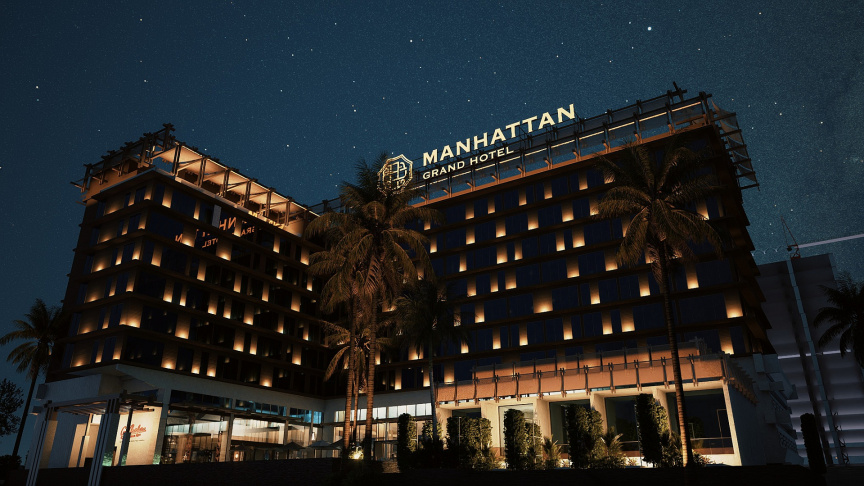
Manhattan Grand Hotel, a 162-room five-star property in Hulhumalé, was officially inaugurated on Saturday, 7 November 2026, marking the completion of a long-delayed hospitality development originally initiated by State Trading Organisation (STO) more than two decades ago.
The hotel was inaugurated by Minister of Finance and Public Enterprises Hassan Zareer during a ceremony held in Hulhumalé Phase 1. The opening marks a new chapter for the former STO City Hotel project, which remained unfinished for years despite substantial investment and repeated efforts to complete or sell the property.

Located approximately 10 minutes from Velana International Airport, Manhattan Grand Hotel has been developed to accommodate business travellers, transit passengers, leisure visitors and long-stay guests, while providing facilities for meetings, conferences, exhibitions and social events.
The property features 162 rooms and suites across eight accommodation categories, including city-view and sea-view rooms, deluxe accommodation and junior suites. Its facilities include four food and beverage outlets, an outdoor swimming pool, a spa and wellness centre, and a fitness centre.
A central feature of the hotel is its meetings, incentives, conferences and exhibitions (MICE) infrastructure. The property offers three major event halls, measuring approximately 700, 400 and 390 square metres, alongside dedicated meeting rooms and conference facilities. The venues have been developed to accommodate corporate conferences, exhibitions, annual general meetings, weddings, banquets and other large-scale gatherings.
The hotel’s architectural concept draws inspiration from Hukuru Miskiy, the historic Friday Mosque in Malé, incorporating elements of traditional Maldivian craftsmanship into its contemporary design. Marketed under the concept ‘Live the Heritage’, the property aims to combine local cultural influences with modern urban hospitality.
Manhattan Grand Hotel is operated by World of Business Pvt Ltd, with foreign investment from UAE-based Deep Seafood Company. The redevelopment was formalised through an agreement with Housing Development Corporation (HDC) in August 2025, under an arrangement involving 50 per cent foreign investment.
The property’s development history dates back to 2006, when STO approved plans to establish a city hotel in Hulhumalé as part of efforts to generate foreign currency revenue. Construction of the originally proposed 250-room five-star hotel began in 2011, following plans involving the US-based Carlson Hotel Group.
However, the development encountered repeated delays, leaving the building unfinished for more than a decade. STO subsequently explored several options to dispose of or complete the property before arrangements were made with HDC to facilitate its redevelopment.
The revised development also incorporates approximately three and a half floors designated for government-related facilities, including a media village, youth centre, heritage college and medical college.
Ahead of its formal inauguration, Manhattan Grand Hotel had already begun hosting hospitality industry events. The property hosted Food & Hospitality Asia Maldives (FHAM) 2026 from 7 to 9 September, bringing together hospitality suppliers, industry professionals and international exhibitors.
The hotel’s official opening adds a substantial accommodation and events facility to the Greater Malé region, supporting the growing demand for city-based hospitality services, corporate gatherings and accommodation close to the country’s main international airport.
The completion of the former STO City Hotel project also brings an end to one of Hulhumalé’s longest-running unfinished hospitality developments, converting the property into a functioning hotel and events destination.
The best way to secure the future is to create it.
Creating that future through specific, purposeful initiatives is what drives people of purpose—and, in turn, moves us all closer to the future we desire.
The Maldives is a compelling case study of a tourism-driven economy. Look around and ask why an event is being staged, what someone is working on, or where a new initiative is leading, and the answer will often point to the hospitality sector. Securing the future, therefore, is inextricably linked to strengthening and advancing that sector.

Here, “strengthening” means making the sector’s contribution more sustainable; ensuring that a greater share of its growth benefits the community; continuing to offer a compelling value proposition to the discerning global traveller; and ensuring that visitor experiences continue to generate an unparalleled reputation and valuable referrals.
To achieve these outcomes in the future, it is essential that current and future generations of the local community engage actively with the industry. Making hospitality appealing and aspirational, enhancing the quality of delivery and service, and building a pipeline of skills and talent into the sector are areas in which initiatives, inspiration, infrastructure and investment should be concentrated.

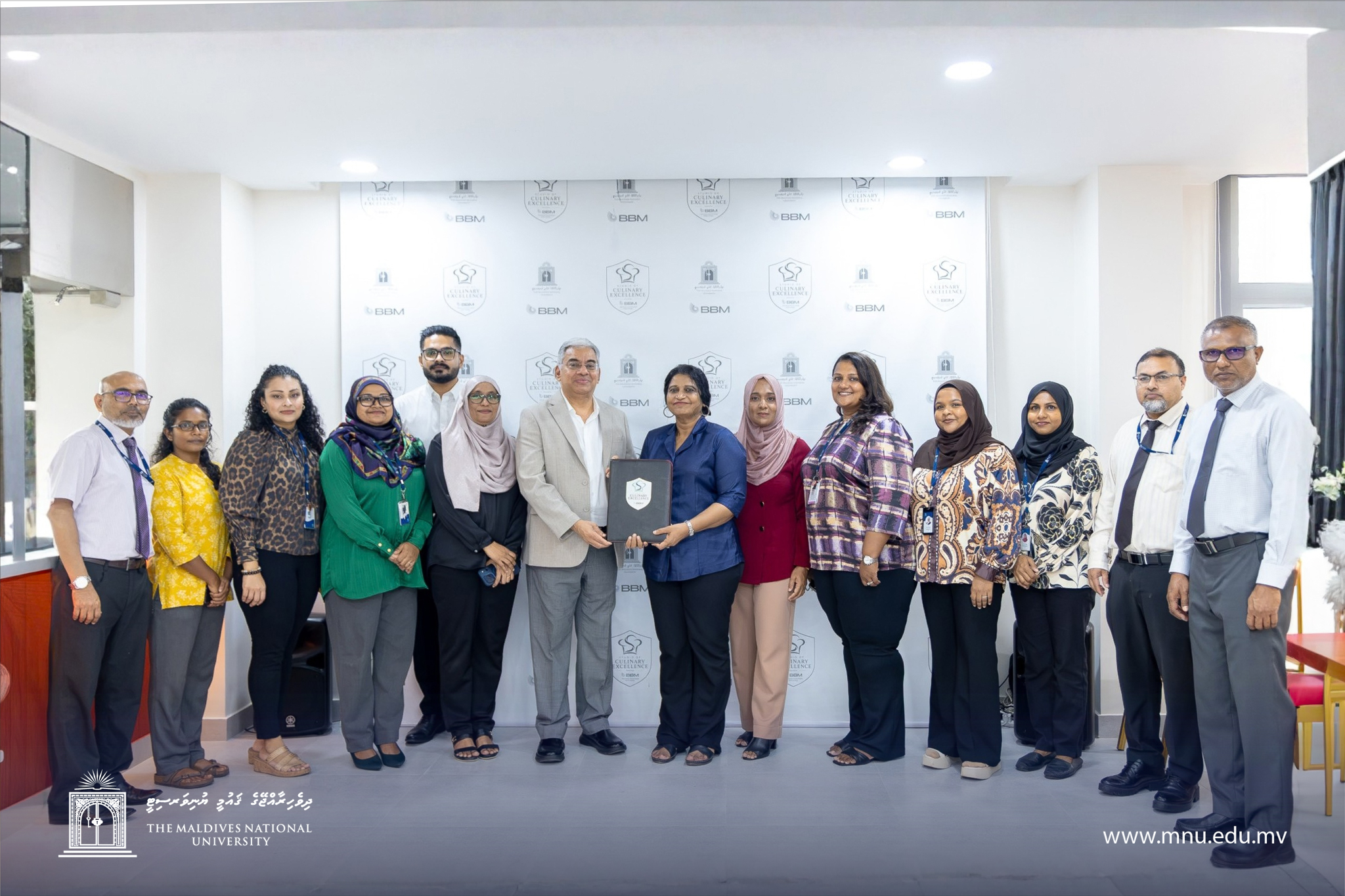
It is firmly in this context that Mr Ismail Hilmy, Chairman and Managing Director of BBM, initiated the establishment of a modern, exceptionally well-equipped and thoughtfully designed model kitchen, aptly named the Studio of Culinary Excellence. By donating the Studio to MNU, under whose auspices it will serve the Maldivian culinary community, Mr Hilmy is responding directly to the need for deeper community engagement. At the heart of BBM’s framework for industry-outreach initiatives— “Because tomorrows start today”—is Mr Hilmy’s ethos of fostering engagement and vibrancy in the industry.
“For our students, the gap between the classroom and a working resort kitchen has always been the hardest one to close,” said Dr Shehenaaz Adam, Vice Chancellor of the Maldives National University. “The Studio of Culinary Excellence closes that gap. Students can now train on the same equipment and to the same standards they will encounter on their first day in the industry. We are grateful to BBM for a partnership that goes well beyond a donation, and we look forward to the Studio becoming a place where the university and the industry learn from one another.”

The Studio therefore creates an opportunity to develop a pipeline of skills and talent in service of the industry.
“Embedding purpose in our work has been an ongoing endeavour at BBM. It keeps us connected to our stakeholders and builds insight, understanding and trust. Being a meaningful partner to academia as we move into the future gives us a great sense of fulfilment and guides our initiatives under the banner, ‘Because tomorrows start today,’” said AVS Subrahmanyam, Chief Operating Officer of BBM.
But what is the value of physical infrastructure without the corresponding spark of aspiration and ambition?

As Ali Afrah Hassan, Executive Representative at Chairman’s Office – BBM, aptly observed: “The Studio offers students and members of the community hands-on experience with world-class equipment, together with knowledge-sharing masterclasses. Who knows—in the not-too-distant future, a Michelin-starred Maldivian chef may fondly credit some of their inspiration to time spent at the Studio!”
Now that is the mind and heart in sync—working towards a future that is aspirational, ambitious and entirely attainable.
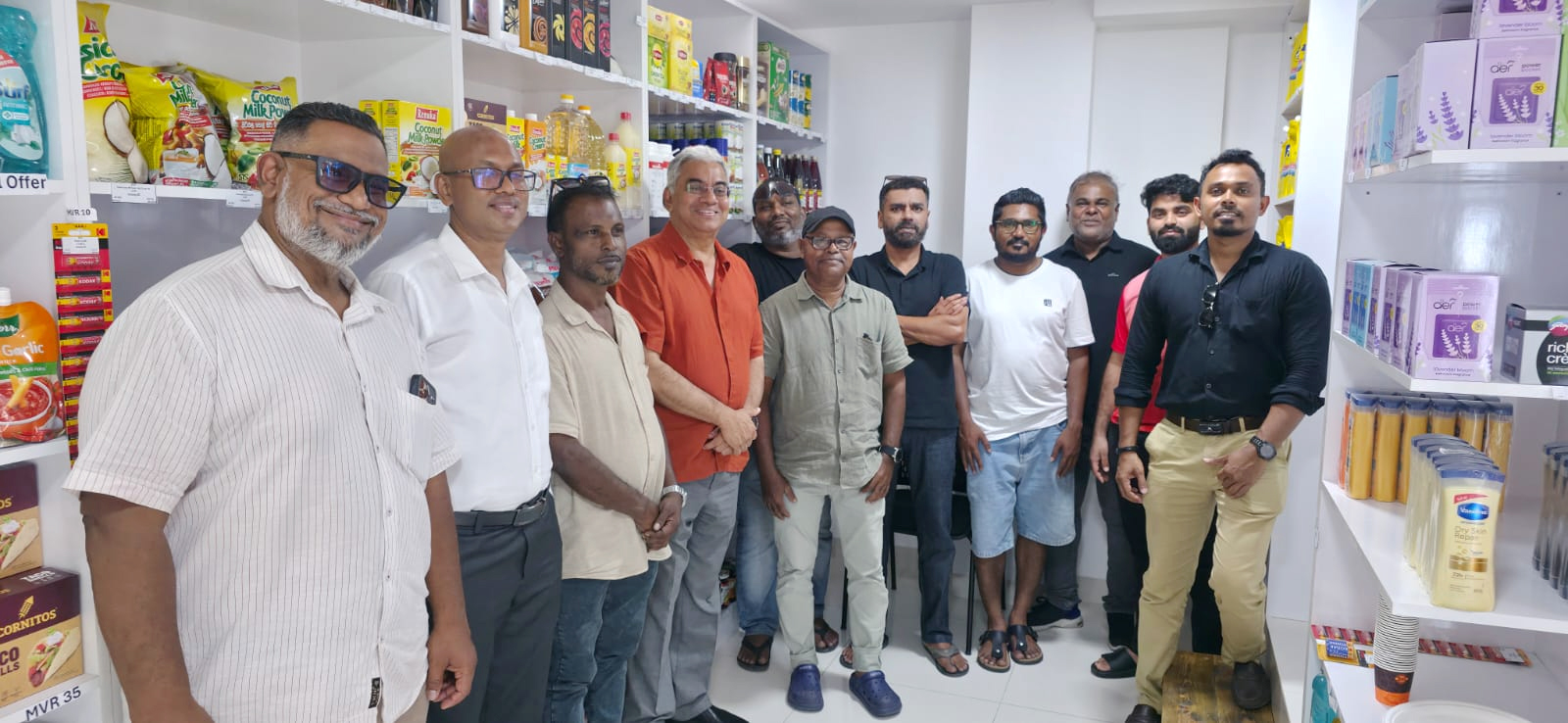
Bestbuy Maldives (BBM) has presented a brand-new Honda Airblade motorbike to the winner of a lucky draw held to mark the opening of its newest wholesale outlet in Hulhumalé Phase 2.
The outlet, located at Lot 20286 on Nirolhu Magu, opened on 16 February 2026 as part of BBM’s expansion of its wholesale operations.
To celebrate the opening and thank customers for their continued support, BBM introduced a special lucky draw exclusively for customers who made purchases from the new outlet on its opening day.

Customers who purchased products during the opening were eligible to enter the draw, with a Honda Airblade motorbike offered as the grand prize.
The lucky draw was conducted on 13 August 2026, with Ibrahim Shifaz of Vagthun Vaguthah outlet selected as the winner.
Shifaz was recently presented with the ceremonial key to the Honda Airblade by AVS Subrahmanyam, Chief Operating Officer of Bestbuy Maldives.

The promotion formed part of BBM’s activities surrounding the opening of its Hulhumalé Phase 2 outlet, which provides customers with access to the company’s range of wholesale products from the growing residential and commercial area.
Bestbuy Maldives is a supplier and distributor serving businesses across the Maldives, including customers in the hospitality, food service and retail sectors.

-

 Food1 week ago
Atmosphere Core to bring Italian Chef Pasquale Palamaro to three Maldives resorts
-

 News1 week ago
Centara Maldives to bring Thai Loy Krathong traditions to four island resorts
-

 Fashion1 week ago
Finolhu Maldives to welcome artist Araceli Adams for ceramics masterclasses
-

 News7 days ago
Marriott Bonvoy announces ‘Endless Summer’ promotion for Maldives stays in 2027
-

 News1 week ago
Centara Mirage Lagoon Maldives marks second anniversary with family experiences
-
 Love1 week ago
Eri Maldives announces ‘Eat, Play, Love’ Valentine’s celebrations
-

 News6 days ago
Madifushi Private Island to celebrate festive season with ‘GLAMOURAYS’
-

 Drink6 days ago
The Standard, Huruvalhi Maldives brings Italian wines and fine dining together