

Culture
Palace for the prince: Muleeage’s century-long journey through history


It was ‘honeymoon season’ in Suez. Sultan Haji Imadudeen was reigning on a throne of love in Egypt. But back home, those were darker times, as Maldives continued to borrow from Bohra merchants of Mumbai. After all, the wedding expenses of the monarch had to be paid by the state.
Imadudeen has appointed his younger brother, Dhoshee Manippulhu of Maandhooge, as the regent to take care of the state’s affairs, but it was Prince Ibrahim Dhoshimeynakilegefaan of Athireege who ruled. Prince Ibrahim’s son, Abdul Majeed Didi of Athireege, took charge of stabilising the nation.
Backed by the British masters and business elites in Male’, Abdul Majeed Didi began hatching a secret plan. Finally, by the early hours of March 10, 1910, onlookers could understand that something was happening in Muleege. Beeru Mohamed Fulhu, who was at the Friday Mosque, saw the door being opened and Mohamed Shamsudeen being escorted out by his brother-in-law Abdul Majeed Didi and Sayyid Kilegefaanu, also known as Khatheeb Seedhi. The two men accompanied Shamshudeen to Boduganduvaru, the royal palace, and placed him on the throne as Sultan Shamsudeen Iskandhar, Al-Salitc. As Shamsudeen was the brother-in-law of both men, the aim behind the plan could mean more than just stabilising the nation; there might have been personal motives and interests.
After appointing Shamsudeen the sultan, Khatheeb Seedhi told him that no one was ever going to challenge his reign. He said that Shamshudeen was not going to leave the throne unless he wished to do so.
Khatheeb Sidi’s saying became true, as Shamsudeen remained in power for the next 31 years, six months and 28 days. That was until he left behind all the privileges of a king for the sake of his beloved son Hassan Izzuddeen, for whom he built Henveyru Ganduvaru or Muleeage from where he started his journey to become the sultan at one midnight. As the famous public speaker and poet Ibrahim Shihab later said, the sultan abdicated for the only son he ever had.
Muleeage, the presidential palace which is now 105 years old, was originally built for Shamsudeen’s son and the then Crown Prince Hassan Izzudeen. The palace was originally named as Henveyru Ganduvaru. It was a symbol of the king’s love for his son.
The origin of this address goes back to the era of the heroic Sultan Hassan Izzudeen, also known as Dhonbandaarain. This plot of land was first used to build a thatch hut when Muhammad Manik of Mulee shifted his family to the capital city. The house was later inherited by Dhonbandaarain and then by Ibrahim Noorahdeen and then by his son Shamsudeen. Hassan Izzudeen was born to Shamsudeen and Sithi Didi, daughter of Bodu Sidi of Kalhuhurage.
When Izzudeen was studying in Ceylon, Shamsudeen decided to build the house before his son returned home. Shamsudeen decided to build it as a palace for the crown prince.
Fully funded by state coffers, the project was commissioned in 1914. Ahmed Dhoshimeyna Kiligefaanu of Athireege was assigned as the project manager. Architects and builders were brought from Ceylon. Architecture and the design was that of the Victorian era with a touch of colonial architectural design. Furniture too was imported from Ceylon. Few transoms were designed by Easa Mohamed Fulhu from the island of Kela in Haa Alif Atoll.
The palace was opened on December 7, 1919, with a special Mauloodh, a cultural prayer.
Izzudeen came back from Ceylon after his education to live in the palace as “Henveyru Ganduvaru Manippulhu”. He lived with privileges that don’t match with that of any other prince. As he was a highly-skilled musician, the palace became a theatre for music. Izzudeen sang with his beautiful voice whilst also playing harmonium. Boys of his dance group, widely known as “Nashaa Party” danced to his music, dressed as ladies. Boduberu too was part of the fun at the palace. It was full on partying till midnight on most days. It is said that the novel, Dhonthuhkalaage Gellunu Furaavaru (lost teenage of Dhonthuhkala), written by Muhammad Ismail Didi of Meerubahuruge, was based on an incident that happened at the palace.
The elite of Athireege took all that as inappropriate for a crown prince. Their disapproval grew and Izzudeen was considered as someone who is ineligible for the throne. The first written constitution in the history of Maldives was passed as a result. It was written in that constitution that the sultanate will only go to a grandson of Dhonbandarain, effectively removing Izzudeen from the royal inheritance path.
But the constitution was later received by the people as a burden, as new laws were introduced to a population that was not aware of such rules. It made their life miserable.
“We can’t bear this anymore,” they said, as they gathered at the Gulhakulhey Fasgandu, an open area just next to the headquarters of the army, and tore apart the document. They even attempted to bring out some ministers to be dealt with by the mob.
The country then saw increased hostile actions against the government from Izzudeen who tried to take over.
Prime Minister Hassan Fareed issued orders to arrest Izzudeen’s allies. Izzudeen went to Bodubandeyrige, then headquarters of security forces, in person to try save his allies. Shamsudeen left the throne to follow.
The prime minister, who was paving way for the change in government, used this as an opportunity to overthrow Shamsudeen. The latter was banished to Fuvahmulah, in the far south, together with his son Izzudeen.
Izzudeen died on the island after a short ailment, whilst Shamsudeen was brought back to Male’ as his health deteriorated. He died shortly thereafter. Henveyru Ganduvaru was deserted after that.
All the palaces except that of the sultan were later downgraded and Henveyru Ganduvaru became Muleeage, taking the name of the first house built at the address.
Muleeage was used for several purposes for the next 80 years before becoming the presidential palace in 1953. From 1942 to 1947, it was used to house the ministries of home affairs and defence, and the office of the head of intelligence. It also served as the headquarters of the first newspaper in the country, Sarukaaruge Khabaru.
With the first republic that came into being in 1953, Muleeage became the presidential palace, serving as the official residence of Mohamed Ameen Didi, the first president.
As the monarchy was reinstated after overthrowing Ameen and abolishing the republic in a coup, Muleeage became the office of the prime minister. Ibrahim Famuladeyrikiligefaan and Ibrahim Nasir were prime ministers who used the office. At one point during their administrations, Muleeage also housed the ministry of defence.
Presidential palace and several ministries at some point, Muleeage has been in use ever since.
Apart from this, several high profile guests of the state stayed there during their visits. Late Queen Elizabeth and her late husband, The Duke of Edinburgh Prince Philips were amongst those.
Although Ibrahim Nasir, as the first president of the second republic, declared Muleeage as the presidential palace again in 1970, he didn’t use it as such. His successor, Maumoon Abdul Gayoom, was the first president to formally use it as his official residence. He stayed there from 1988 to 1994, before moving to Theemuge, a newly built presidential palace which later became the Supreme Court.
The first Supreme Court, which was the result of the present day constitution, was temporarily housed in Muleeage in 2008. Then came President Mohamed Nasheed who chose to make it the presidential palace yet again. It was also used as the offices of a national inquiry commission, which was setup to investigate the events surrounding Nasheed’s early departure in 2012, before becoming the presidential palace again.
In the century that has passed since Muleeage was built in its current design, it has witnessed numerous historical events in the country. It witnessed the declaration of the first republic and the reinstating of the monarchy. It hosted heads of states as well as ministers from different parts of the world. Indian Prime Minister Rajiv Gandi was one amongst them to be remembered.
Been a place for all that, the status of Muleeage is much more important in our history; it was the childhood home of Hassan Izzudeen, Dhonbandaarain, the heroic sultan who freed Maldives from the short-lived rule of the Malabari invaders, also known as “Holhin”. This was the place from where he came out for his battle with the flag of freedom flying over his head.


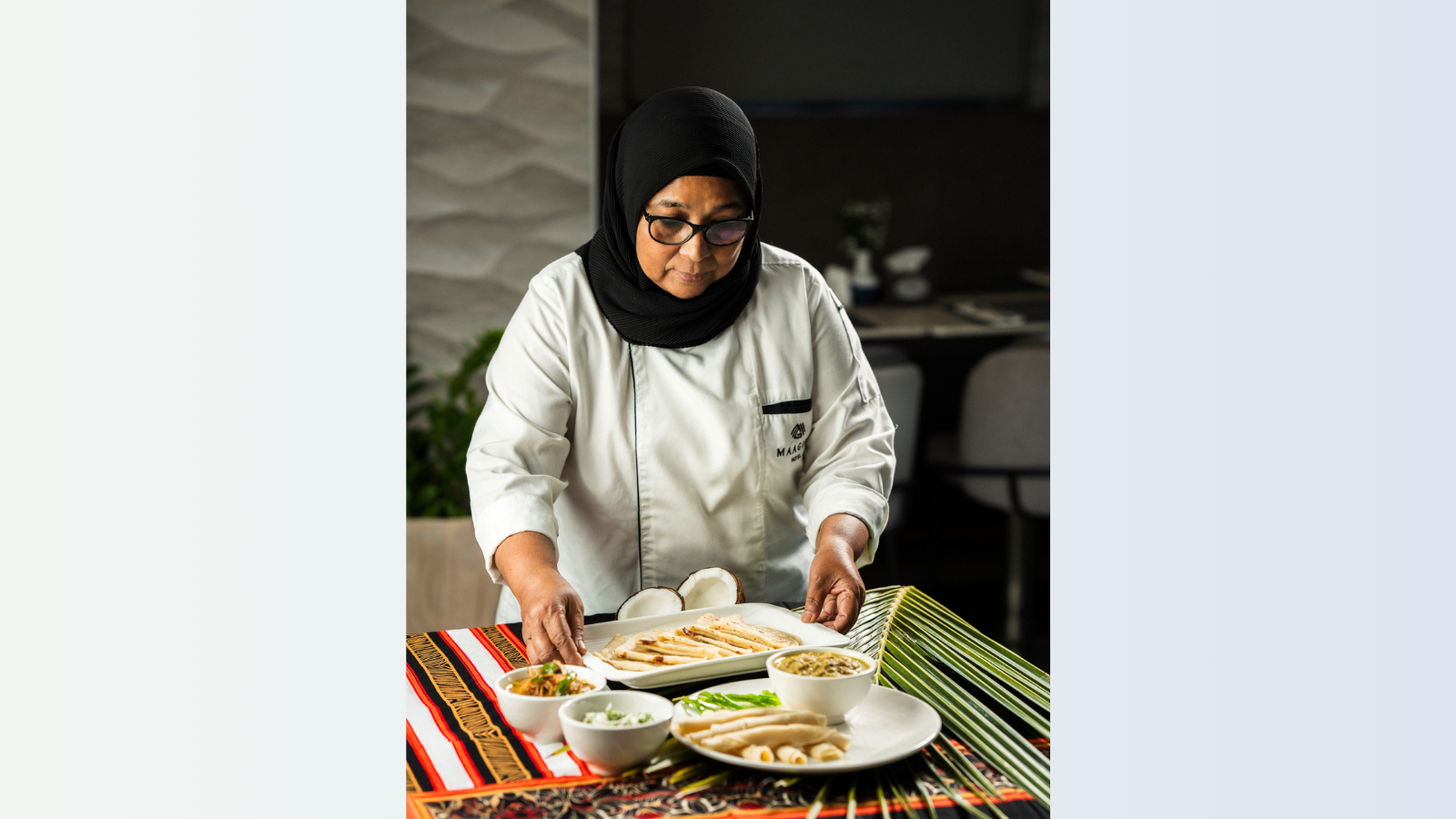
Maagiri Hotel is set to celebrate the Independence Day of the Maldives with a series of special dining experiences, inviting guests, families, and the local community to come together and commemorate this significant national occasion.
To mark the celebrations, the hotel will host an Independence Day Special Breakfast Buffet from 24 to 26 July 2026. Guests can enjoy a generous selection of local and international breakfast favourites in a warm and welcoming setting, making it the perfect way to begin the holiday celebrations with family and friends.
The festivities will continue on 26 July 2026 with a Special Maldivian Dinner Buffet at Faru Restaurant. The dinner will feature a variety of authentic Maldivian dishes, carefully prepared by the hotel’s culinary team to showcase the rich flavours and traditions of the Maldives. From local delicacies to beloved national favourites, the buffet offers a memorable dining experience that celebrates the country’s culinary heritage.
Adding a sweet touch to the celebrations, Maagiri Hotel also features a selection of locally crafted artisan ice cream flavours with the support of Iceto, highlighting the creativity of local artisans and celebrating Maldivian craftsmanship through unique, handcrafted treats at the Rooftop Restaurant.
As part of the hotel’s commitment to celebrating national occasions, the Independence Day promotions are designed to bring people together through exceptional food, warm hospitality, and a shared appreciation for Maldivian culture and traditions.
Maagiri Hotel warmly welcomes guests to join the Independence Day celebrations and enjoy a memorable dining experience while honouring the spirit of the nation’s independence.
For reservations and bookings, please call 3318484 / 7228484 or text (Viber) 7228484.
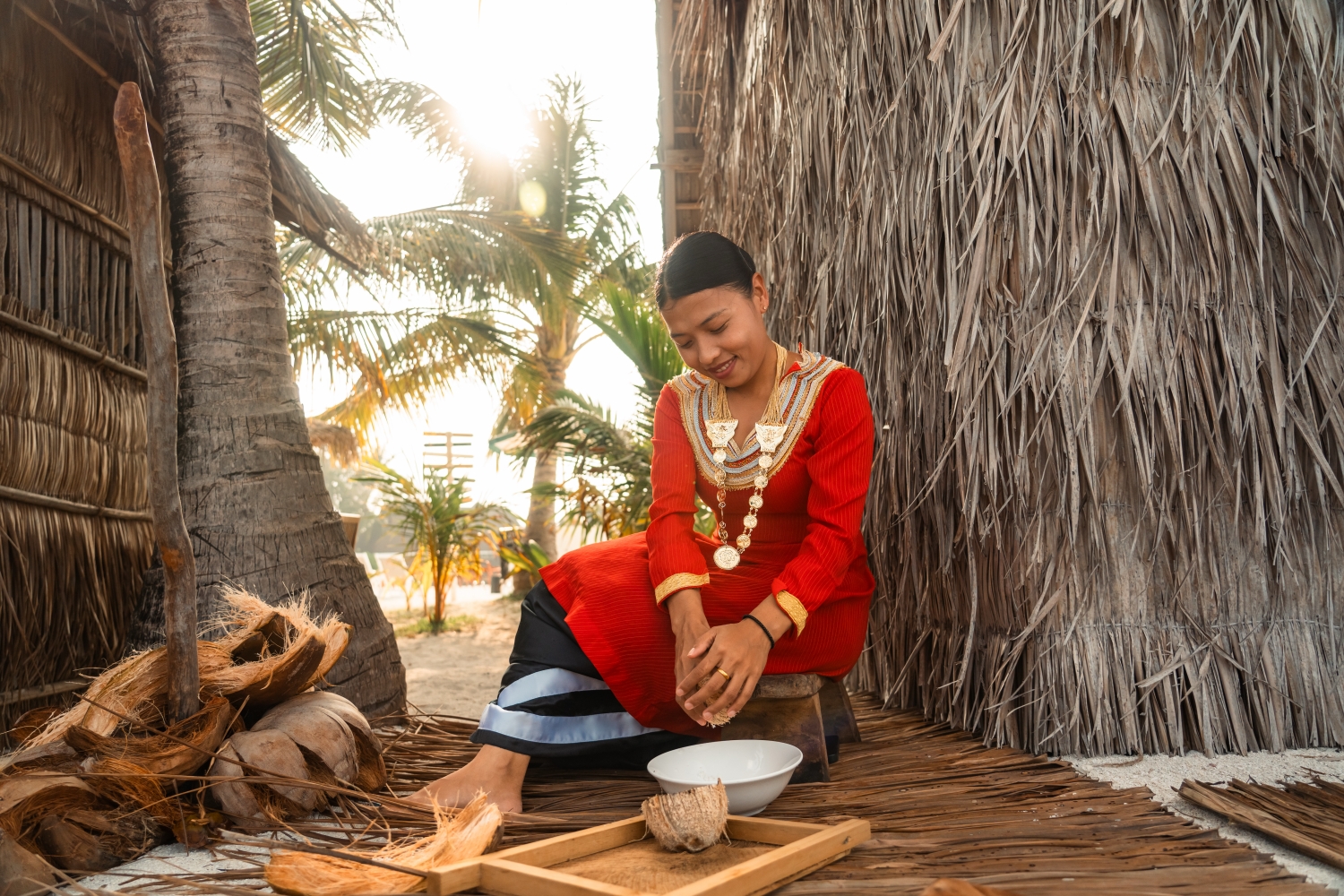
How Sun Siyam Vilu Reef Is Keeping Maldivian Culture Alive: The smell reaches you before anything else: warm coconut oil, faintly sweet, drifting from a low-roofed beach house. Inside, a woman works patiently with her hands, pressing, turning and drawing the oil slowly from the flesh, just as it has been done for generations on these islands. Standing on a tiny coral island in the South Nilandhe Atoll, time seems to lose its importance.

This is Athireege, the cultural heart of Sun Siyam Vilu Reef, part of the Privé Collection within Sun Siyam. It is not a museum, nor a demonstration staged for the camera. It is a living sanctuary where the crafts, rituals and flavours of traditional Maldivian life are practised by hand, by voice and by fire. Here, an immersive cultural journey invites guests to discover the traditions, flavours and stories that continue to shape island life, offering a deeper connection to the Maldives beyond its postcard-perfect beaches.

Once a week, guests are invited to experience Maldivian Roots Day, a journey that reveals the customs, skills and traditions that have shaped island life for generations. Visitors leave with more than memories of turquoise waters they leave with a deeper understanding of the place they have called home, even if only for a few days.

The experience begins with a hands-on coconut oil making class, uncovering traditional crafting techniques first-hand at Athireege. Authenticity is the soul of this space, where traditional island living is brought to life using real, handcrafted tools. Guests can run their fingers over the very techniques that Maldivians have used to sustain island life for centuries whether witnessing the intricate art of palm weaving known as Fangi Vinun, trying their hand at coir rope making, known in Dhivehi as Roanu Veshun or playing traditional mancala style games like Ohvalhu Gondi Kulhun.

As the afternoon softens into evening, pandan-infused tea is served alongside sweet and savoury local delicacies. As daylight fades, stories take their place. History of Maldives, real experiences with island tales and memories of life before tourism are shared aloud, reviving a tradition that once passed history from one generation to the next.
The centre of this cultural journey is the Malaafaih, a magnificent, traditional Maldivian banquet. Translating roughly to “abundance,” the Malaafaih was historically prepared for grand celebrations, weddings, and community gatherings. This carefully curated feast invites guests to gather, share, and experience authentic local flavours in a deeply communal setting, honouring the true spirit of island hospitality.

At Sun Siyam Vilu Reef, the Malaafaih is celebrated both at sunrise, as a traditional breakfast, and beneath the stars as an evening feast. The menu changes with the season and the day’s catch, but its spirit remains the same, dishes are shared, conversations unfold naturally, and strangers often leave the table feeling like friends. Whether beginning the day with a traditional breakfast or gathering beneath the stars for an evening feast, guests can completely immerse themselves in this rare culinary ritual, tailored exclusively to their stay.

At a time when travellers increasingly seek meaningful connections with the places they visit, Athireege offers something becoming increasingly rare: traditions that are still lived rather than performed. Long after the final stories have been told and the feast has ended, it is often these moments not simply the beaches or the villas that guests remember most. At Sun Siyam Vilu Reef, space has always been made for the culture that made these islands worth travelling to in the first place.
To explore or to book your stay, visit Sun Siyam Vilu Reef. For exclusive offers, join Siyam Rewards and book direct at sunsiyam.com.
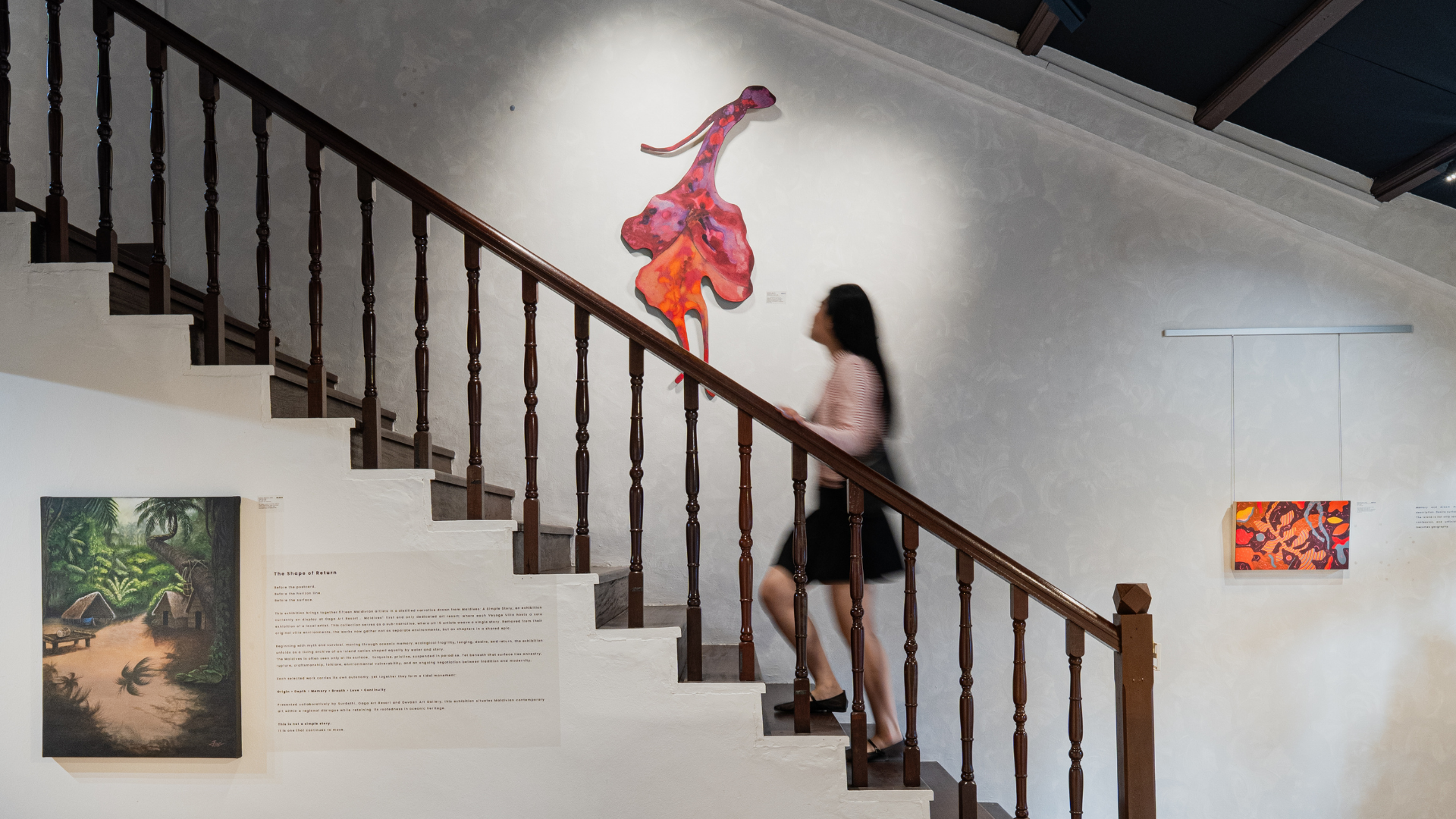
Oaga Art Resort has successfully concluded The Shape of Return, a contemporary Maldivian art exhibition presented in collaboration with Oevaali Art Gallery, Singapore. Running from 21 June to 5 July 2026, the exhibition brought together the works of 15 Maldivian artists, introducing international audiences to stories of identity, memory, belonging and cultural heritage through contemporary visual art.
The collaboration between Oaga Art Resort and Oevaali Art Gallery reflects a shared commitment to creating meaningful platforms for Maldivian artists beyond the country’s shores. Housed within Oevaali Art Gallery’s intimate space dedicated to Maldivian fine art, The Shape of Return transformed the gallery into a window into the Maldives, inviting visitors to experience narratives that extend far beyond the destination’s familiar image of turquoise waters and white sand beaches.

Originally commissioned as part of Maldives; A Simple Story, the artworks were first created as individual installations within Oaga Art Resort’s Veyoge Gallery Villas, where each space was designed as a living narrative inspired by Maldivian culture and everyday life. Their presentation in Singapore brought these dispersed works together for the first time, forming a collective archive of contemporary Maldivian artistic expression within an international gallery setting.
The exhibition formed part of Oaga Art Resort’s broader engagement at ILTM Asia Pacific Singapore, where the resort representatives connected with luxury travel advisors and industry partners from across the region. Extending beyond the trade environment, Oaga hosted private viewings at Oevaali Art Gallery, offering selected partners a deeper cultural context to the resort’s creative philosophy and hospitality narrative. These sessions created a more immersive layer of engagement, bridging conversations initiated at ILTM with the artistic foundations of the resort experience.

Alongside the exhibition, visitors also experienced a miniature installation inspired by Oaga’s Veyoge Gallery Villas, offering visitors a scaled glimpse into the environments where the artworks originate. Guests were also invited to participate in a Veyoge giveaway, extending the exhibition beyond the gallery space while introducing audiences to the artistic experiences that await at Oaga Art Resort.
Bringing together artists from diverse creative disciplines, The Shape of Return showcased painting, mixed media, illustration and visual storytelling that explored the connections between people, place and memory while celebrating the evolving narratives of contemporary Maldivian creators.

“We have always envisioned Oaga as more than just a beach resort – it is an art platform; a destination where people can connect with the Maldives through creative and whimsical storytelling. It has been a joy to bring a glimpse of this to a global stage through the work of 15 local artists, and deeply moving to witness the connections formed through this exhibition. This is a milestone not just for Oaga, but for Maldivian contemporary art.” said Nawaila Nashid, Director of Brand Experience of Oaga Art Resort.
Featured Maldivian artists include Alwan Ibrahim, Hawwa Lahfa, Hidhana Latheef, Zifla Ibrahim, Zuha Bari, Hassan Niyaz, Aishath Shuaila, Mariyam Halym, Baburu Akuru x Jille, Dhyna Shaheem, Emaz Shakoor, Aminath Fathina, Afzal Shaafiu (Afu), Mohamed Hisan and Aima Musthafa.

Concluding on 5 July 2026, The Shape of Return marks another milestone in Oaga Art Resort’s continued mission to create meaningful opportunities for Maldivian artists while fostering international appreciation for the country’s contemporary creative voices through art, storytelling and cultural exchange.

-

 Featured1 week ago
Baros Maldives sets festive calendar of dining, culture and marine experiences
-

 Action1 week ago
18-yacht Azimut fleet to serve Waldorf Astoria, Rosewood resorts in Maldives
-

 Drink1 week ago
Finolhu welcomes New Zealand’s Sato Wines for two exclusive dining experiences
-

 Cooking7 days ago
BBM’s Studio of Culinary Excellence to debut Masterclass programme with Chef Romain Dupeyre
-

 Meditation1 week ago
The St. Regis Maldives Vommuli Resort to mark World Wellness Weekend with three-day celebration
-

 Action6 days ago
Soneva reveals star-studded calendar of residencies through end of 2026
-

 Action1 week ago
Ocean Group Maldives marks PADI AWARE Week with nine-resort dive campaign
-

 Drink7 days ago
THE OZEN COLLECTION to host sixth Bodegas Viñátigo wine master class