

Action
Authentic Traditional Souvenirs of Maldives


 Since the beginning of tourism in Maldives during the 1970’s the local crafts have gained a vast popularity among tourists. The various crafts and handiwork of Maldivian craftsmen have always intrigued travelers from all over the world. However over time the magnificent works of art has fallen victim to rising tides of cheap imitations and unauthentic replicates. While this may be due to the high production costs from traditional methods, when applied to large scale production, unauthentic products cannot even come close to the real ones in both beauty and uniqueness. Souvenir shops in the city and in islands usually trade both cheap imports and original local handicraft. For travelers it is vital to know that what they are paying for is authentic works of art.
Lacquer works

Also known as “Liye Laajehun”, Maldivian lacquer works are and always has been a magnificent art which has produced creative designs that have survived through the Maldivian history. Since ancient times, the techniques have been applied to create vases, jewelry boxes, and kitchen utensils of fabulous beauty, for the royals of Maldives.
It is a highly decorative art carried out by skilled artists in which lathes are used to paint layers of colored lac over shaped wood. Usually the artist starts with a bright color and ends with a dark color such as black. The artist then uses a sharp tipped object to carve designs exposing the bottom layers. A finishing polish is applied and the work is ready for use.
Dhoni crafts
 Dhonis or sail boats are a major invention of Maldivians as they were the first modes of transportation among Maldivians. They are designed to withstand the vigor of the oceans and to provide swift motion. Crafting of miniature models of these ancient works of art is known as Dhoni crafting.
Such models of varying sizes and quality are available in Maldives. Maldivian artists use timber which is carved into models that represent the ancient vessels. The parts are polished and varnished before they are constructed into models.
Wood carvings
 Due to the remoteness and abundance of plants in Maldives, ancient natives used wood from the trees to create objects to optimize their work and fulfill their needs. Objects such as kitchen utensils and containers were carved from wood. The carvings are sometimes polished and can represent magnificent designs.
Wood carving has evolved to create works of art such as miniature models that represent the early Maldivians and their culture. These wood carvings are sometimes painted and sometimes subjected to lacquer work. Carvings of images and text into wood was also carried out by early Maldivians. Traditional Maldivian mosques have large wooden planks with text carved into them.
Mat weavings
 Mats or “Kunaa” were vital to the early natives. They were mostly used for seating and sleeping among other uses. Mats have also been delivered as royal gifts by the Maldivian Sultans. The artistic designs created during the weaving are still comparable to modern textures. However the technique used is very simple and mostly it is just the creativity of the weaver that produces astonishing designs.
Screw-pine leaves are collected and dried in the sun. Natural dyes are then used to dye them into three basic colors, black, brown and yellow. A simple loom and a knife are used to slit screw-pine leaves to produce the varying patterns on the mat.
Coconut shell products
 Coconut is one of the most abundant fruits in Maldives. It is one of those fruits that can be used during all stages of its maturation. In fact the coconut palm, one of the most abundant palm trees in Maldives, is the Maldivian national tree and has been used for multiple purposes throughout history.
The trunks are used for timber while the husks are used to make coir ropes.The leaves are used for weaving mats and creating thatching for roofs. The eakles are used to create brooms. The shell is cleaned, dried, and polished, before it is used to create ornaments or other works of art. “Raa Bandhi” is a container created from two coconut shells joined to increase capacity. It is used to collect and store toddy from coconut palms.
Coir ropes
 Coir Ropes are an important part of Maldivian civilization, as they have multiple purposes. They were extremely important to early Maldivians during the building of huts and construction of sailing vessels and hammocks. Ancient Maldivians chose the coconut husks as it is a strong material as well as an easily available resource.
The coconut husks are soaked for about two or three weeks by burying them in the beach. They are then pounded and beaten into fibers which are washed and sun dried. They are then hand rolled and woven into ropes of different sizes. The coir ropes or “Roanu” are now mainly used in ornamental purposes.


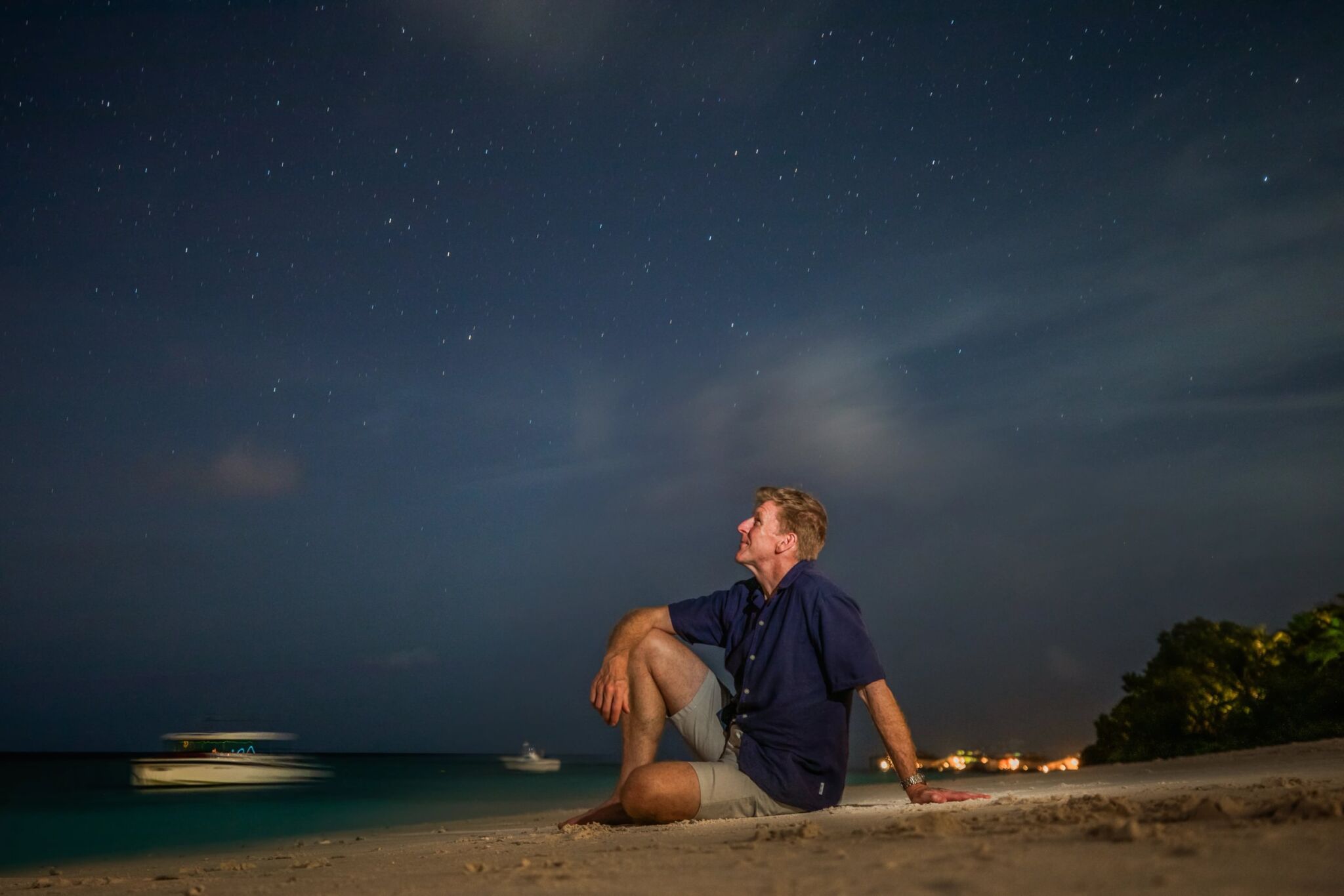
Soneva has unveiled the latest Soneva Stars calendar, seeing out the year with a line-up spanning space, sport, gastronomy, craftsmanship and wellbeing. Across Soneva Fushi, Soneva Jani and Soneva Secret, guests are invited to train, learn and interact with remarkable personalities who have spent their careers at the top of their fields.
Among the year’s headline residences is Tim Peake, the first British ESA astronaut to visit the International Space Station. Peake will host talks, interactive sessions and stargazing experiences at Soneva Fushi from 19 to 29 December, sharing insights from his extraordinary career in space exploration beneath some of the clearest night skies on Earth.
The sporting calendar will welcome a series of internationally recognised athletes. A Premier League record goalscorer and former Manchester United striker, Andy Cole will lead football sessions from 25 October to 1 November, while former world No. 8 Marcos Baghdatis (25 October to 5 November) and current ATP star Karen Khachanov (12 to 22 November) will host tennis clinics and coaching experiences, giving guests a rare chance to train with players who have competed at the sport’s highest level. In September, Olympic medallist and world champion decathlete Leo Neugebauer will lead a session at Soneva Fushi’s outdoor gym as part of his residency.


In the world of wellbeing, Sarah Chapman, the facialist whose client list reads like a who’s who of the beauty world, will bring her treatments to Soneva Secret from 27 October to 5 November, offering guests the kind of skin expertise usually reserved for a waiting list.

The culinary programme features acclaimed chefs including Chantelle Nicholson (22 October to 6 November), known for her ingredient-led cooking and commitment to sustainable gastronomy, and champions of elevated Scandinavian dining, Niclas Jönsson (22 October to 6 November) and Fiskebar’s Jamie Lee (14 to 26 December), who will present special experiences throughout the season.

The Soneva Stars calendar runs even deeper. Astronomers Dr James Gilbert and Dr Lars Lindberg Christensen amplify the resorts’ celestial programme, while glass artists Adam Holtzinger and Susan Špiranović lead a residency at Soneva Fushi’s glass studio. Enhancing the wellbeing offering, guests can work with osteopath Hortensia Corredoira, East Asian healing specialist Alexander Scrimgeour, performance coach JP Liendi, Bodyism’s Nathalie Schyllert and wellbeing expert Richie Norton, alongside football freestyler Marcel Gurk, across residencies running through to the end of the year.

“The most memorable moments unfold through the power of human connection,” said Neil Gallagher, Chief Executive Officer of Soneva. “With Soneva Stars, our guests train with Andy Cole, sit with Tim Peake to find out what it’s truly like up there and get a fresh taste of the ocean’s bounty with Jamie Lee. These experiences spark conversations and memories that stay with them long after they leave.”
No two Soneva Stars seasons are ever the same. Each residency is an expression of Just What Matters: meaningful connections, new perspectives and moments of genuine wonder and discovery.
Guests can explore the full Soneva Stars calendar to book remarkable experiences.
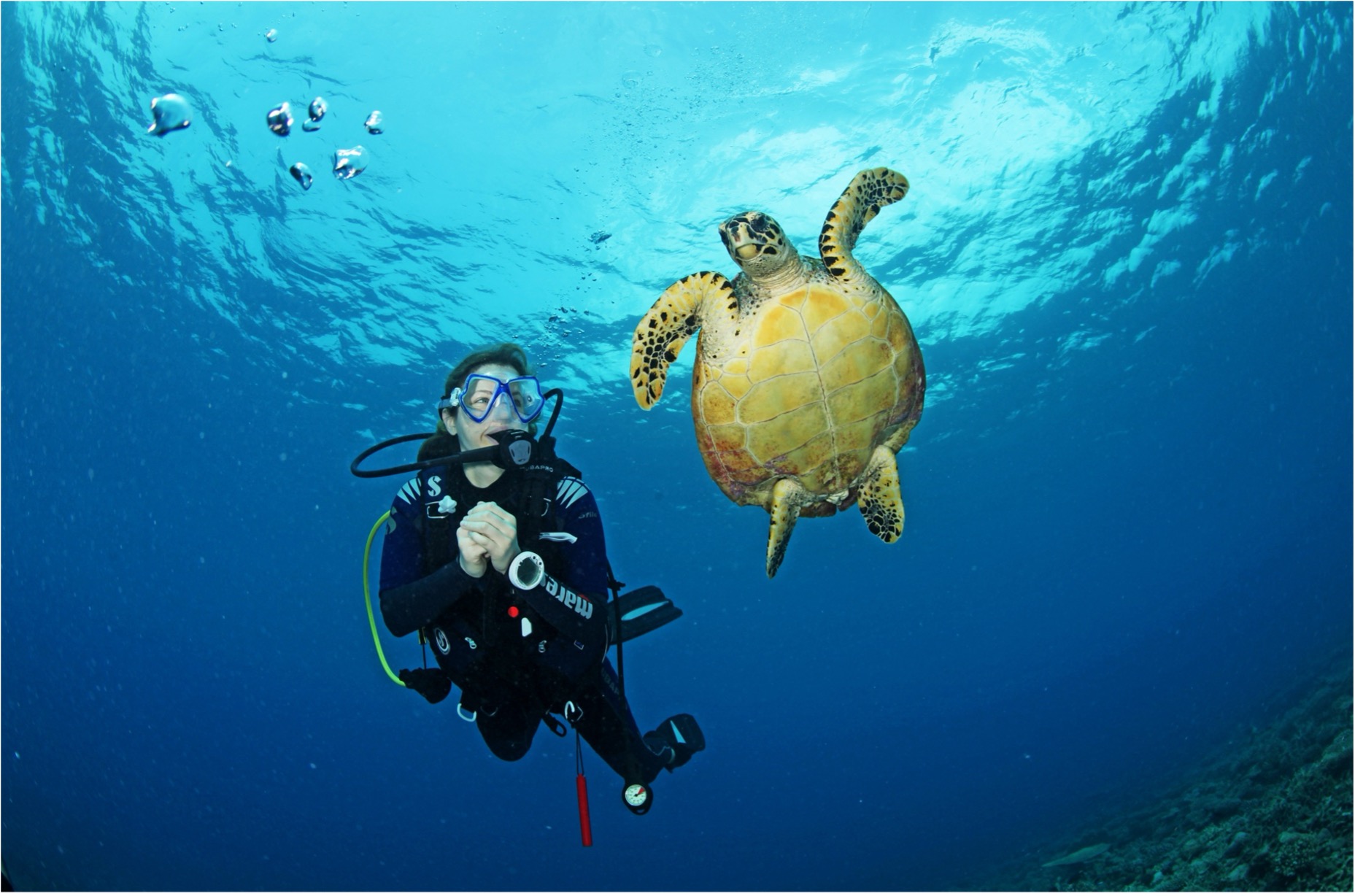
Ocean Group Maldives has launched a week of ocean-focused diving activities across nine leading resorts in the Maldives in support of PADI AWARE Week 2026, taking place from 12–20 September.
The initiative brings together Ocean Group’s dive teams, resort partners and guests in a collective effort to celebrate the ocean while encouraging meaningful action to protect the Maldives’ extraordinary marine environment.
PADI AWARE Week is a global initiative that mobilises the diving community to take action for ocean conservation. Throughout the week, Ocean Group Maldives will invite divers to combine their passion for exploring the underwater world with hands-on conservation activities.
The campaign will take place across Ocean Group dive centres at Waldorf Astoria Maldives Ithaafushi, Dusit Thani Maldives, InterContinental Maldives Maamunagau Resort, Veligandu Maldives Resort Island, Hard Rock Hotel Maldives, SAii Lagoon Maldives, SO/ Maldives, Conrad Maldives Rangali Island and Radisson Blu Resort Maldives.
Dive for Fun. Dive for a Purpose.
As part of the campaign, guests who purchase two fun dives will receive a complimentary third dive dedicated to an ocean clean-up, giving divers an opportunity to enjoy the Maldives’ spectacular underwater environment while contributing directly to its protection.
Under the message “3 Dives. 1 Ocean. A Real Difference.”, the initiative encourages guests to see conservation not as something separate from the diving experience, but as part of being a responsible member of the global dive community.
“The ocean is at the heart of everything we do at Ocean Group Maldives, so PADI AWARE Week is an important opportunity for us to turn awareness into action,” said Yasmin Zahid, Director of Marketing & Strategic Partnerships at Ocean Group Maldives. “By activating the campaign simultaneously across nine resorts, we hope to demonstrate how individual actions, when multiplied across our dive community, can create a much greater collective impact.”
Dive teams at participating resorts will also use the week to engage guests in conversations around responsible diving, marine debris and the importance of protecting the fragile ecosystems that make the Maldives one of the world’s most celebrated diving destinations.
Local Action. Global Impact.
The nine-resort activation reflects Ocean Group Maldives’ broader commitment to making marine conservation an integral part of the guest experience across its diving and marine operations.
By connecting international visitors with practical conservation activities during their stay, Ocean Group aims to inspire guests to become more conscious ocean advocates—not only while diving in the Maldives, but wherever their future travels take them.
PADI AWARE Week runs from 12–20 September 2026 at participating Ocean Group Maldives dive centres.
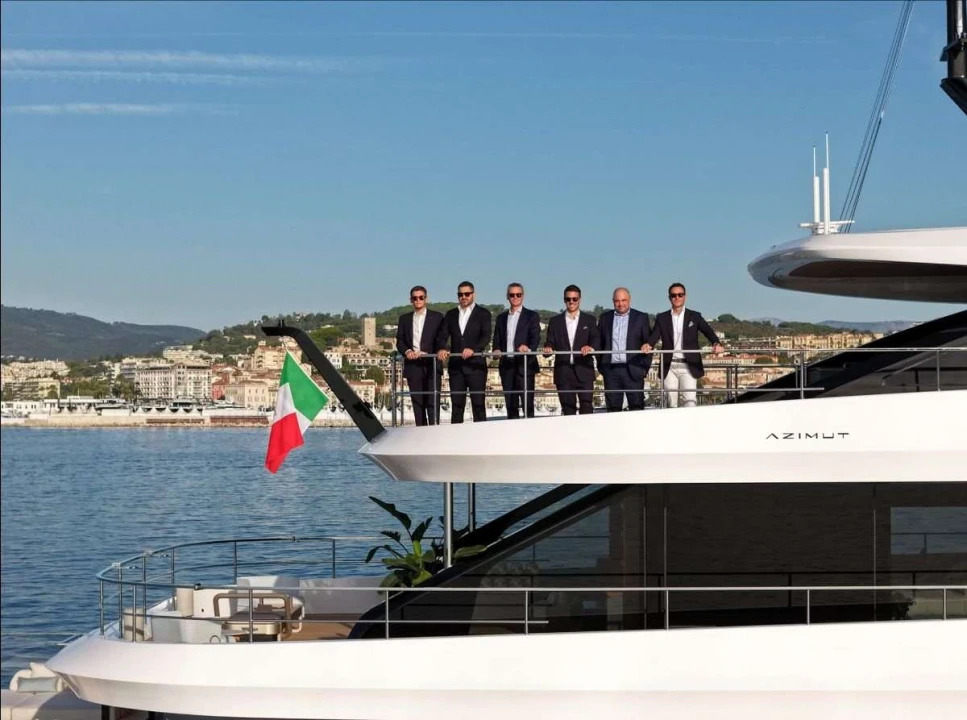
Global destinations developer Assets Group and world-leading nautical brand Azimut Yachts bring together their expertise to integrate bespoke resort stays with the freedom of cruising at sea. Starting in 2026, a dedicated fleet of 18 Azimut yachts and a specialised Azimut Service Centre in Malé will bring this vision to life.
The agreement was formally sealed on Sunday, September 13, aboard Azimut’s new flagship, the Grande 44M, against the stunning backdrop of the Cannes Yachting Festival.
The partnership is rooted in a strong alignment of ethos and ambition: Assets Group, a subsidiary of Power International Holding and a global developer creating destinations defined by experiential depth and environmental harmony, finds a natural counterpart in Azimut Yachts, a brand that has defined the contemporary yachting lifestyle by combining Italian design, innovation and a deep connection with the sea.
Their shared commitment to experience-led design, personalised service and responsible stewardship creates a natural platform for collaboration. Its first landmark expression will take shape in the Maldives beginning in 2026, with a dedicated fleet of 18 Azimut yachts designed to serve Waldorf Astoria Maldives Ithaafushi and Rosewood Ranfaru Maldives, extending the guest experience beyond the shore and making the journey itself part of the destination.
To support the fleet and ensure a consistently high standard of service, a new Azimut Service Centre in Malé will complement the partnership. Supported by the brand’s Italian team and Azimut Yachts Maldives powered by Elite Yachts—Azimut’s longstanding partner in the Middle East and now the Maldives—the Centre will provide dedicated local support and help ensure seamless operations across the islands.
“This partnership represents a major strategic milestone for Azimut across two key dimensions. First, regarding our business model, which expands into new distribution channels. Second, with respect to our brand positioning: by partnering with leaders in ultra-luxury hospitality, we elevate the ecosystem of yacht-related experiences for a discerning audience, in a highly compelling hub,” states Marco Valle, CEO of Azimut|Benetti Group.
“At Assets Group, we are shaping destinations around the full guest journey, creating experiences that extend far beyond the stay itself. Our investment in 18 Azimut yachts brings that vision onto the water, combining world-class craftsmanship, personalised service and seamless mobility. In doing so, Assets Group will become the operator of the largest private luxury yacht fleet in the Indian Ocean—setting a new benchmark for integrated luxury hospitality and reflecting the ambition with which we are building the future of destination experiences in the Maldives,” states Khaled Zi Alnon, Group Chief Executive Officer of Assets Group.
“The Maldives represent a high-potential market where we already enjoy a solid footprint. Here, we are set to further consolidate our leadership position, also thanks to the opening of a local service centre. It is precisely Azimut’s ability to combine market expansion with an uncompromised standard of service excellence that enables us to scale with long-term stability, while ensuring partner satisfaction at the highest level,” emphasises Enrico Chiaussa, Chief Commercial Officer EMEA APAC of Azimut Yachts.
The fleet and the exceptional natural settings at the heart of this collaboration embody a philosophy in which the luxury of the stay and the freedom of the voyage become one. Azimut’s Magellano Series—with 15 yachts set to join the fleet in the Maldives—pioneered the nautical crossover, capturing the spirit of exploration and the freedom to journey beyond the expected.
This nautical spirit is anchored in Assets Group’s approach to purposeful hospitality. The Waldorf Astoria Maldives Ithaafushi—a private sanctuary spanning three islands—and Rosewood Ranfaru Maldives—stretched across a striking chain of private islands around a pristine lagoon—reflect a strategy in which exceptional destinations, highly personalised hospitality and respect for the natural environment come together to create enduring experiences.
The collaboration reflects a broader evolution in contemporary luxury—toward a form of exclusivity defined not simply by place, but by access, freedom, personalisation and a deeper connection with nature. Together, Azimut Yachts and Assets Group are bringing this vision to life for a new generation of global travellers seeking meaningful experiences that extend far beyond the stay.

-

 Meditation1 week ago
COMO Resorts Maldives brings marine experts, artists and wellness specialists to its islands
-

 Awards1 week ago
Sun Siyam Vilu Reef secures Best House Reef title at TTM Awards
-

 News1 week ago
Huvafen Fushi expands wellness offering with Aromatherapy Associates treatments
-

 Action1 week ago
Kandima Maldives lines up sports residencies and family festivities for October
-

 Entertainment1 week ago
Silent DJ brings music and movement to Madifushi Private Island
-

 Action1 week ago
Nova Maldives to host PADI AWARE Week this September
-

 News1 week ago
Culinary encounters and island experiences shape festivities at The Nautilus Maldives
-

 Fitness7 days ago
The Westin Maldives Miriandhoo Resort celebrates World Wellness Weekend with movement, mindfulness and nutrition