

Featured
Maldives central bank posts strong growth forecast for ‘resilient’ tourism industry


Maldives central bank has posted a strong growth forecast for the country’s tourism industry as it hailed the resilience of the industry observed last year.
In its annual report for 2016 released Tuesday, Maldives Monetary Authority (MMA) said the strong growth observed in the tourism sector during the latter part of last year is expected to continue this year. The strong growth is attributed mainly to the increased number of tourists from the European market, which reflects better growth prospects for the region, it added.
Mirroring the positive outlook for the sector, MMA projected bed nights growth to be at five percent in 2017.
“These projections may be even higher if the remarkable performance seen in the tourism sector at the turn of the year continues,” the report read.
Recovery in second half of 2016
Maldives marked 2016 as ‘Visit Maldives Year’ in an effort to reach a target of 1.5 million tourists entering the country during the year. Several tourism promotion activities were carried out in Asia and Europe, and many competitions and events were also held within the Maldives to boost tourist arrivals. While the campaign was successful in attracting 1.3 million tourists — four percent more than the previous year — it fell short of reaching the 1.5 million target.
According to MMA, the trend in tourist arrivals to the Maldives during 2016 showed that arrivals picked up strongly in the second half of the year. This increase was underpinned by improving economic conditions in European countries, coupled with a rise in flight movements by international carriers over the period, the authority said adding that the strong growth in arrivals from the European markets more than offset the decline in arrivals from the Chinese market.

MMA noted that other key indicators such as bed nights growth also followed a similar trend, gaining momentum towards the latter part of the year and recording an overall growth of three percent for the year. Reflecting this, the average duration of stay, which has been on a downward trend, fell only slightly to 5.6 days in 2016 from 5.7 days in 2015, contributing to a six percent growth in estimated tourism receipts, it said.
The tourism sector witnessed a major expansion in terms of the number of resorts and bed capacity in 2016, the authority stressed. With the opening of 11 new resorts, the total number of resorts in the country increased to 126 at the end of the year, while the number of registered guesthouses, hotels and safari vessels reached 382, 16 and 144, respectively. With regard to bed capacity, the average operational bed capacity of the industry7 stood at 29,457 beds.
Tourist demographics: Europe regains market share
As for the market share of tourists, Europe accounted for 45 percent of total tourist arrivals, while Asia accounted for 46 percent. Reflecting the improving economic conditions in the European markets, market share for Europe increased; this was a reversal of the downward trend of previous years. However, the market share of Asia — the market leader since 2014 — dipped from the 49 percent in 2015 to 46 percent in 2016.
Arrivals from the European market grew significantly at seven percent during 2016 after recording a marginal growth rate of one percent in 2015. This was mainly supported by growth in arrivals from the UK, despite a marked depreciation in the pound sterling. On the other hand, Germany, the second largest market from the region registered a marginal growth owing to political tensions in their country. Other key markets such as Italy registered a remarkable positive growth, whereas growth in tourists from France dropped significantly during the year. Arrivals from Spain also registered a sizeable growth compared with previous years. In addition, arrivals from smaller source markets in Eastern, Central and East Mediterranean Europe also improved.
“This can be attributed to an increase in flight movements to these regions during the year,” the report read.

MMA noted that arrivals from Russia — the fourth largest European market — also showed a strong positive growth after recording two consecutive years of negative growth. This reflected the easing of the recent economic recession that was prevalent in the country, it said.
Total arrivals from the Asia and Pacific region registered a marginal decline in 2016 after posting a positive growth during the previous year. Growth was largely hampered by the 10 percent decline in Chinese arrivals.
However, other key markets from the Asian region — such as India, Sri Lanka and Malaysia — showed pronounced growth on the back of increased flight movements. Some operators introduced flights to new destinations in 2016, including new flights to New Delhi and Colombo, contributing to more arrivals from both India and Sri Lanka.
MMA attributed the increase in arrivals from Malaysia to the growth in flight movements of a regional low-cost carrier from South East Asia during the year.
Arrivals from the Middle East also posted a strong growth rate, owing to an increase in arrivals from Saudi Arabia. This may be due to a new the commencement of Saudi Arabia’s flagship carrier Saudia between Riyadh and the Maldives, according to MMA.
Arrivals from the Americas, which have doubled in the past five years, also increased due to considerable growth in arrivals from the US.
Similar trends in 2017?
Despite the strong growth forecast by the central bank, Maldives has experienced another slowdown in tourist arrivals in the first quarter of the year. January saw a significant increase in arrivals, but growth has slowed down since then with a 2.1 percent drop in arrivals in March.
Europe, the largest regional source market which has been recovering for the past couple of months after a year of falling growth, also posted a drop of three percent in March with important European markets such as the United Kingdom declining by nine percent.
Middle East, one of the most important emerging source markets, also observed a decline of 8.3 percent in March with arrivals from Saudi Arabia dropping by 31 percent.
Leading global market research and analysis firm STR has also said that the Maldives tourism industry observed a moderate performance in the first quarter of the year.
A report analysing Asia Pacific hotel industry performance shows that occupancy fell by one percent to 69 percent in the Maldives during the first quarter. Average Daily Rate (ADR), however, increased by 2.3 percent to MVR13,044.63 (USD846.5) and Revenue Per Available Room (RevPAR) was up 1.3 percent to reach MVR9,000.17 (USD584).
RevPAR growth was moderate in the Maldives throughout the quarter despite a 10.3 percent increase in January, which was due to a 32 percent rise in arrivals from China during the Spring Festival Golden Week holiday. RevPAR growth for the quarter, however, became muted with declines in both February (-3.8 percent) and March (-4.2 percent).

Over the past three years, dozens of uninhabited islands have been leased to local and foreign resort developers. Several international brands have entered into the market, increasing the number of resorts to 120. That number is set to increase as the government has announced the opening of some 20 new resorts by the end of this year.
Along with the new resort openings come the challenge of increasing demand from budget travellers who choose guesthouses over luxury resorts that the Maldives is known for. The guesthouse sector has rapidly expanded with over 300 guesthouses in operation today.
Government has come under fire from private organisations representing industry stakeholders such as the Maldives Association of Travel Agents and Tour Operators (MATATO) over the lack of effort and budget to promote the Maldives as a destination.
The government has recently announced new steps to maintain a structured growth in tourism, including a slowdown in leasing islands for resort development and increased marketing efforts in key markets such as China and the Middle East in order to reach an ambitious target of a record 1.5 million tourist arrivals this year.
Photo courtesy: Amilla Fushi


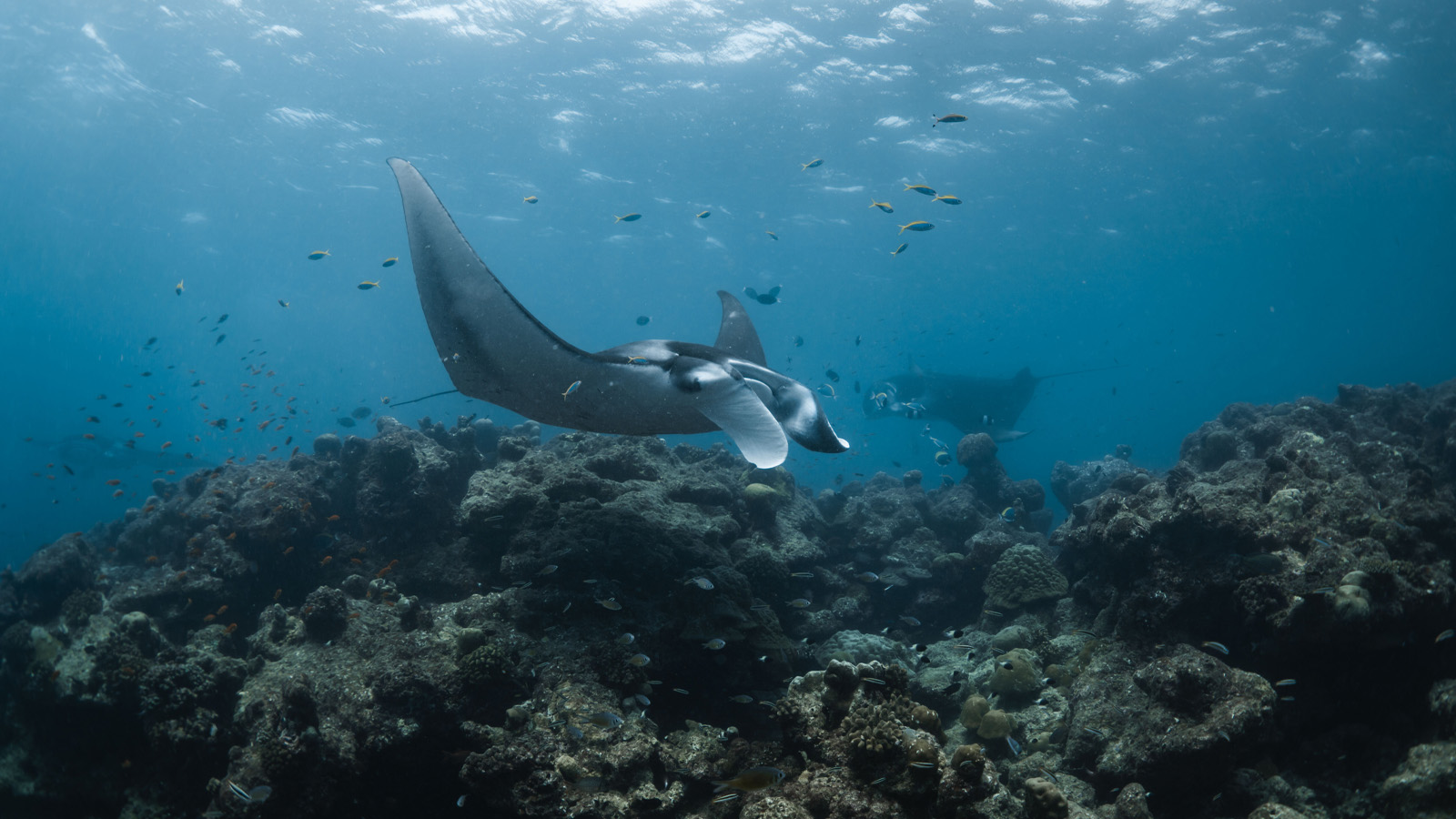
Four Seasons Resort Maldives at Landaa Giraavaru marked 20 years of supporting manta ray conservation in the Maldives with a week-long programme of activities held from 11 to 17 September 2026.
Since 2006, the resort has provided operational support, research facilities and educational opportunities for the Maldives Manta Conservation Programme (MMCP) and Manta Trust. Working alongside Maldivian authorities, local communities, researchers, educators and conservation partners, the organisations have undertaken research and conservation initiatives aimed at protecting manta rays and their marine habitats.
The anniversary programme, titled 20 Years of Manta Magic, brought together researchers, conservation partners, community representatives and resort guests for field experiences, scientific presentations and marine conservation activities. The celebrations concluded on 17 September, World Manta Day, which carried the theme Collaboration in 2026.
The anniversary also highlighted the continuing threats facing manta and devil rays worldwide. All 10 species are threatened with extinction, primarily due to targeted fishing and accidental bycatch. Other threats include entanglement in fishing equipment, habitat degradation and poorly managed wildlife tourism.
The Maldives introduced national protection for all ray species in 2014. In 2025, the international community voted to transfer all 10 species of manta and devil rays to Appendix I of the Convention on International Trade in Endangered Species of Wild Fauna and Flora (CITES), providing the highest level of protection against international commercial trade.
Two decades of manta conservation
The conservation partnership dates back to 2005, when Dr Guy Stevens established the Maldivian Manta Ray Project, the country’s first full-time research initiative dedicated to manta rays.
When Four Seasons Landaa Giraavaru opened in 2006, Stevens joined the resort as its resident marine biologist, establishing the island as a base for field research.
The project subsequently developed into the Maldives Manta Conservation Programme, now a registered Maldivian charity and one of the world’s largest and longest-running manta research programmes.
In 2011, Stevens co-founded the Manta Trust, an international conservation organisation that currently supports more than 30 affiliated projects worldwide.
A central component of the research involves identifying individual manta rays through the unique patterns of spots on their undersides. By comparing photographs collected over time, researchers can track individual animals, study their movements and monitor population trends.
Through this method, MMCP has identified more than 6,000 individual reef manta rays from over 80,000 sightings, alongside more than 1,000 oceanic manta rays. The findings establish the Maldives as home to the world’s largest documented population of reef manta rays.
Commenting on the anniversary, Dr Guy Stevens, Chief Executive of the Manta Trust, said: “What began 20 years ago as a single research project at Four Seasons Landaa Giraavaru has grown into one of the world’s leading manta conservation programs. It has transformed our understanding of these species and helped secure meaningful protections nationally and globally. This milestone is a testament to collaboration and a reminder that, by uniting science, stewardship and collective action, we can help manta rays and the ecosystems they depend on continue to thrive.”
Research supporting marine conservation policies
Over the past two decades, research conducted by MMCP and Manta Trust, supported by Four Seasons Landaa Giraavaru, has contributed to several conservation policies and marine protection initiatives in the Maldives and internationally.
The research supported the designation of Hanifaru Bay and Anga Faru as Marine Protected Areas in 2009, alongside the development of responsible tourism management practices for areas frequented by feeding manta rays.
Scientific findings also contributed to Baa Atoll’s designation as a UNESCO Biosphere Reserve in 2011, with subsequent research supporting the recognition of Fuvahmulah and Addu.
The programme provided scientific evidence supporting the Maldives’ decision to protect all ray species nationally in 2014.
Researchers involved in the programme have led or co-authored more than 10 peer-reviewed scientific publications informing conservation policy, species protection and marine habitat management.
The organisations have also submitted 43 proposals for Important Shark and Ray Areas across the Western Indian Ocean, of which 26 received approval, providing further information for regional conservation planning.
Their research has contributed to international conservation assessments and initiatives involving the Convention on Migratory Species, CITES and the International Union for Conservation of Nature (IUCN) Red List.
Beyond scientific research, the partnership has promoted responsible manta tourism through research-based guidelines and a global Code of Conduct.
Community engagement has also formed part of the programme, with initiatives including Ocean School, Ocean Women and the RahVeshi Programme encouraging Maldivian participation in marine conservation and environmental education.
Armando Kraenzlin, Regional Vice President and General Manager of Four Seasons Resort Maldives at Landaa Giraavaru, said: “Conservation is not a seasonal initiative. It requires continuity, patience and the humility to follow the science. For 20 years, Landaa’s role has been to give this work a stable home, practical support and a bridge to guests, colleagues and communities. We are proud of what this partnership has enabled and clear-eyed about how much work still lies ahead.”
Bringing conservation research to resort guests
Four Seasons Landaa Giraavaru has incorporated marine education and conservation activities into its guest experiences, providing opportunities for visitors to learn about manta rays and the research undertaken to protect them.
The resort’s Marine Discovery Centre is supported by a team of 14 full-time marine biologists who conduct educational activities and introduce guests to marine conservation.
Among the experiences available is the full-day Trainee Manta Biologist programme, which allows participants to gain an understanding of manta ray research and conservation practices.
During the manta season, which typically extends from May to December, guests enrolled in the resort’s Manta-On-Call programme can receive notifications when manta rays are located.
Subject to suitable weather conditions, participants can join Marine Discovery Centre specialists on speedboat excursions for guided snorkelling experiences conducted according to responsible wildlife interaction practices.
The resort also offers educational experiences for guests who prefer to remain on land. Its Hologram Room, described as the first of its kind in the Maldives, provides a virtual underwater experience featuring life-size representations of marine animals.
In addition, Four Seasons and Manta Trust have developed Manta Story, a free interactive application based on the Maldives’ manta ray population. The application introduces users to manta feeding, cleaning, courtship and reproduction behaviours.
Continued focus on research and education
Following the 20th anniversary celebrations, Four Seasons Landaa Giraavaru and its conservation partners intend to continue their work in long-term manta ray population monitoring, responsible marine tourism and community-led environmental education.
The resort will continue to provide operational support and facilities for researchers while facilitating educational experiences that connect guests with marine conservation activities.
The partnership aims to build on two decades of scientific research and collaboration to support the long-term protection of manta rays and their habitats in the Maldives.
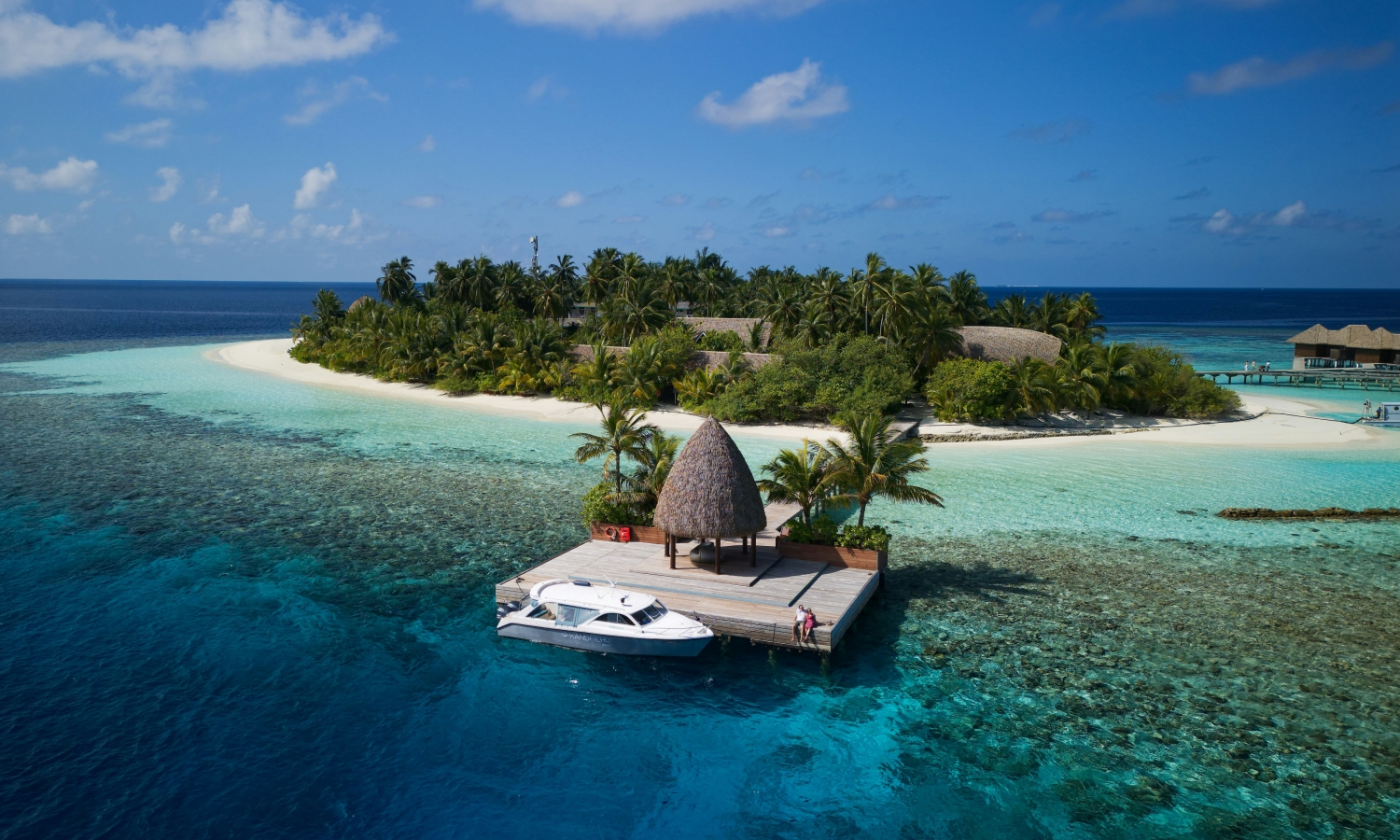
Kandolhu Maldives, a private-island resort in North Ari Atoll, has unveiled a refreshed brand identity, updated website and renovated interiors as part of a relaunch aimed at strengthening its positioning in the luxury hospitality market.
Measuring approximately 200 metres by 100 metres, Kandolhu is among the smaller resort islands in the Maldives. The resort’s refreshed identity places greater emphasis on its natural surroundings, intimate atmosphere and personalised guest experience.
The new website and visual identity highlight the island’s natural environment and individual character, while the updated interiors build on its existing architectural design. Kandolhu’s accommodation features minimalist architecture, open spaces, high ceilings and natural wooden finishes, with the recent enhancements maintaining these elements while introducing updates to the interiors.
The relaunch also marks Kandolhu’s inclusion in the Versa Collection, a portfolio of resorts operated under Versa Hospitality. The collection brings together established island resorts in the Maldives, each with its own identity and guest experience. Kandolhu’s addition to the portfolio is intended to strengthen its market presence while preserving the property’s individual character.
Despite its relatively small size, Kandolhu offers six dining venues, including its signature Sea Grill restaurant, which specialises in freshly caught fish. The resort also features four other à la carte restaurants offering Mediterranean, Japanese, Mexican-Peruvian, international and Maldivian-inspired cuisine, alongside the beachfront Vilu Bar.
Marine experiences remain a central part of the resort’s offering. Guests can access Kandolhu’s house reef directly from the shore through designated snorkelling channels, while the surrounding Ari Atoll provides access to more than 30 dive sites and protected marine areas.
Marine life found in the surrounding waters includes turtles, reef sharks, eagle rays and manta rays, making snorkelling and diving among the resort’s main attractions.
Through its refreshed branding, upgraded interiors and inclusion in the Versa Collection, Kandolhu aims to strengthen its position in the Maldives’ luxury resort market while maintaining its focus on privacy, personalised hospitality, dining and marine experiences.
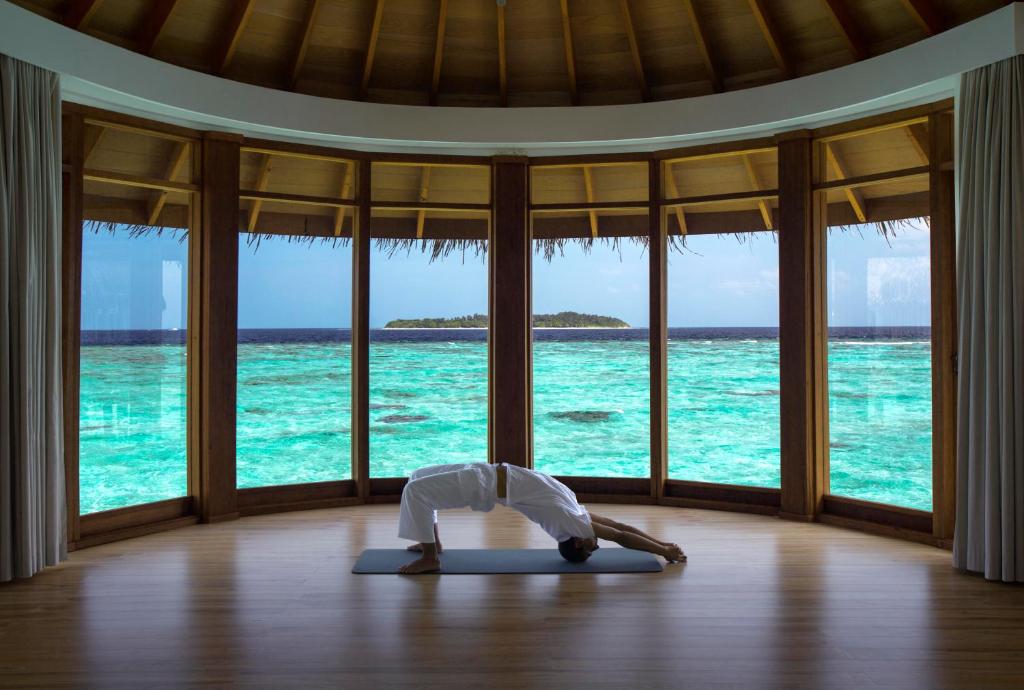
Milaidhoo Maldives has introduced a three-day wellness programme, Reset Journey, designed to help guests begin 2027 with a focus on relaxation, mindfulness and personal wellbeing.
Located in Baa Atoll, within the UNESCO Biosphere Reserve, the resort offers a setting surrounded by the Indian Ocean and tropical vegetation, providing guests with opportunities to unwind and take part in wellness experiences.
The Reset Journey combines spa treatments, meditation, mindful movement and personalised wellness consultations. The programme is structured around three stages, each focusing on different aspects of relaxation and wellbeing.
The first stage, Reset & Release, begins with a personal wellness consultation, followed by a sound bath and vibrational healing session and an Ocean Grounding Ritual. These activities are designed to encourage relaxation and help guests disconnect from their daily routines.
The second stage, Detox & Move, focuses on physical wellbeing through a combination of treatments and movement-based activities. The programme includes a welcome wellness ritual, detox steam session, purifying massage and a mindful movement and yoga session.
The final stage, Restore & Reconnect, brings together a revitalising facial, breathwork meditation and a personal wellness consultation. Guests will also receive guidance on stretching and breathing exercises that they can incorporate into their daily routines after leaving the resort.
Commenting on the programme, Jessica Lim, Spa Manager at Milaidhoo Maldives, said: “Sometimes, we all need to take a step back and give ourselves a little time to recharge. With the Reset Journey, we wanted to create something that goes beyond traditional spa treatments. Each experience has been chosen to help guests slow down, reconnect with themselves and find a sense of balance. We hope that they leave Milaidhoo not only feeling refreshed but also taking home a few simple practices that they can continue to enjoy in their everyday lives.”
The three-day Reset Journey is priced at USD 495 net per person and includes a bespoke farewell gift.
The programme forms part of Milaidhoo Maldives’ wellness offerings, combining spa therapies with personalised experiences intended to promote relaxation and encourage guests to adopt simple wellbeing practices beyond their stay.
Through the Reset Journey, the resort aims to provide guests with an opportunity to begin the new year by focusing on their physical and mental wellbeing in a relaxed island environment.

-

 Fashion1 week ago
Finolhu Maldives to welcome artist Araceli Adams for ceramics masterclasses
-

 News1 week ago
Marriott Bonvoy announces ‘Endless Summer’ promotion for Maldives stays in 2027
-

 News1 week ago
Madifushi Private Island to celebrate festive season with ‘GLAMOURAYS’
-

 News1 week ago
Centara Mirage Lagoon Maldives marks second anniversary with family experiences
-

 News1 week ago
RAAYA by Atmosphere introduces new ELE|NA Ayur wellness experiences
-

 Drink1 week ago
The Standard, Huruvalhi Maldives brings Italian wines and fine dining together
-

 News7 days ago
SO/ Maldives celebrates Green Globe certification and MICHELIN Guide recognition
-

 News7 days ago
JOALI BEING expands global reach through Internova SELECT partnership