

Business
Luxury food industry turns sour amid global coronavirus lockdowns


SINGAPORE/TOKYO/PARIS (Reuters) – Global demand for premium foods like wagyu beef, bluefin tuna and caviar has plunged with thousands of restaurants shuttered and many economies sliding into recession amid the coronavirus pandemic.
As strict lockdown measures to contain the outbreak ravage global economic activity, the luxury food industry could be among the worst hit since it heavily relies on restaurants and top hotels for demand for deluxe items from caviar to champagne.
While some gourmet food producers are tapping consumers directly to stay afloat, others have been forced to cut output as some products have lost nearly half their value since the start of the year.
Jean-Marie Barillere, co-chairman of champagne producers’ lobby CIVC in France, said he hoped people would celebrate the easing of lockdown with a bottle of champagne, but expected a difficult end to the year.
“This is really a period that looks like a war time,” he said.
Bookings data compiled by OpenTable, an online restaurant reservation service, showed a near 80% year-on-year decline in seated diners at restaurants in the United States, United Kingdom, Germany, Canada, Australia, Ireland and Mexico this year.
People are also less likely to consume luxury foods when stuck at home in the middle of a health crisis and worried about their financial situation, or under clinical social distancing measures as eateries reopen.
“People will not want to taste a Chateau Petrus wine, a lobster or caviar under a bell jar,” said Michel Berthommier, managing director of Caviar Perlita in southwestern France.
“If you force people to eat in these conditions they will prefer going to fast foods.”
Deep discounts
Premium foods was “one of the worst hit sectors worldwide”, said Ole Houe, director of advisory services at agriculture brokerage IKON Commodities in Sydney. He said he did not expect a prompt recovery given many countries were in recession.
Falling demand has already taken a toll on the prices of luxury items.
In Tokyo, the price of top quality wagyu beef cuts has fallen about 30% from a year earlier, bluefin tuna – considered the best in Japan – has dropped more than 40% over that period, while prices of the famed ‘Earl’s melons’ from Shizuoka have slumped 30%.
Russia’s top sturgeon breeding company – Russian Caviar House – meanwhile was offering a 30% discount for Beluga hybrid caviar.
“Spring and summer are always low seasons for the caviar market, but if we compare this period with previous years, the sales in Russia are down 50%,” said the firm’s owner Alexander Novikov.
In France, caviar prices languished near historic lows, champagne sales tumbled, while foie gras producers have had to cut output to prop up prices.
Cifog, a foie gras producers’ group, said restaurants account for 40% of total foie gras sales.
“Mid-March it felt like the sky had fallen on us,” said Florian Boucherie, who produces 2 tonnes of foie gras per year in France.
Oyster and razor clam fishermen from Cape Cod and other top fishing grounds have also had to curb catches as lockdowns upended global eating habits.
Going down
To plug the yawning gap left by eateries, many high-end food producers are attempting to reach consumers directly via e-commerce platforms.
Others are steering more produce onto supermarket shelves.
“We are accelerating our supply of products into some of the world’s largest supermarkets, gourmet butchers and direct to consumers online,” said Hugh Killen, chief executive of Australia’s largest listed beef producer, Australian Agricultural Company (AAC.AX).
But some vendors say selling to supermarkets is far less profitable than selling to high-end restaurants.
In Japan, top sushi chefs pay 400,000 yen ($3,737.97) for 10kg of the best cuts of tuna compared to the 25,000 yen paid by supermarkets for 10kg of lower value cuts, said Yukitaka Yamaguchi, owner of Yamayuki tuna brokerage at Toyosu Market in Tokyo.
He said “the best part of (the) tuna” was usually sold first to high-end sushi restaurants but when these closed the “harakami had nowhere to go.” They eventually started offering high-quality tuna to fish retailers and supermarkets.
For now, Yamaguchi has had to park plans to retire as he has accumulated debt during the pandemic.
“I had planned to retire when I turn 60, but that’s no longer possible,” he said.
Reporting and photo: Reuters


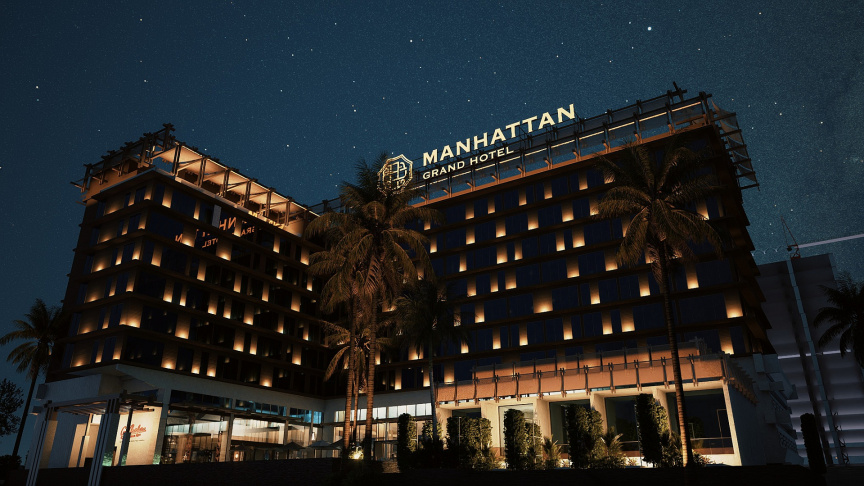
Manhattan Grand Hotel, a 162-room five-star property in Hulhumalé, was officially inaugurated on Saturday, 7 November 2026, marking the completion of a long-delayed hospitality development originally initiated by State Trading Organisation (STO) more than two decades ago.
The hotel was inaugurated by Minister of Finance and Public Enterprises Hassan Zareer during a ceremony held in Hulhumalé Phase 1. The opening marks a new chapter for the former STO City Hotel project, which remained unfinished for years despite substantial investment and repeated efforts to complete or sell the property.

Located approximately 10 minutes from Velana International Airport, Manhattan Grand Hotel has been developed to accommodate business travellers, transit passengers, leisure visitors and long-stay guests, while providing facilities for meetings, conferences, exhibitions and social events.
The property features 162 rooms and suites across eight accommodation categories, including city-view and sea-view rooms, deluxe accommodation and junior suites. Its facilities include four food and beverage outlets, an outdoor swimming pool, a spa and wellness centre, and a fitness centre.
A central feature of the hotel is its meetings, incentives, conferences and exhibitions (MICE) infrastructure. The property offers three major event halls, measuring approximately 700, 400 and 390 square metres, alongside dedicated meeting rooms and conference facilities. The venues have been developed to accommodate corporate conferences, exhibitions, annual general meetings, weddings, banquets and other large-scale gatherings.
The hotel’s architectural concept draws inspiration from Hukuru Miskiy, the historic Friday Mosque in Malé, incorporating elements of traditional Maldivian craftsmanship into its contemporary design. Marketed under the concept ‘Live the Heritage’, the property aims to combine local cultural influences with modern urban hospitality.
Manhattan Grand Hotel is operated by World of Business Pvt Ltd, with foreign investment from UAE-based Deep Seafood Company. The redevelopment was formalised through an agreement with Housing Development Corporation (HDC) in August 2025, under an arrangement involving 50 per cent foreign investment.
The property’s development history dates back to 2006, when STO approved plans to establish a city hotel in Hulhumalé as part of efforts to generate foreign currency revenue. Construction of the originally proposed 250-room five-star hotel began in 2011, following plans involving the US-based Carlson Hotel Group.
However, the development encountered repeated delays, leaving the building unfinished for more than a decade. STO subsequently explored several options to dispose of or complete the property before arrangements were made with HDC to facilitate its redevelopment.
The revised development also incorporates approximately three and a half floors designated for government-related facilities, including a media village, youth centre, heritage college and medical college.
Ahead of its formal inauguration, Manhattan Grand Hotel had already begun hosting hospitality industry events. The property hosted Food & Hospitality Asia Maldives (FHAM) 2026 from 7 to 9 September, bringing together hospitality suppliers, industry professionals and international exhibitors.
The hotel’s official opening adds a substantial accommodation and events facility to the Greater Malé region, supporting the growing demand for city-based hospitality services, corporate gatherings and accommodation close to the country’s main international airport.
The completion of the former STO City Hotel project also brings an end to one of Hulhumalé’s longest-running unfinished hospitality developments, converting the property into a functioning hotel and events destination.
The best way to secure the future is to create it.
Creating that future through specific, purposeful initiatives is what drives people of purpose—and, in turn, moves us all closer to the future we desire.
The Maldives is a compelling case study of a tourism-driven economy. Look around and ask why an event is being staged, what someone is working on, or where a new initiative is leading, and the answer will often point to the hospitality sector. Securing the future, therefore, is inextricably linked to strengthening and advancing that sector.

Here, “strengthening” means making the sector’s contribution more sustainable; ensuring that a greater share of its growth benefits the community; continuing to offer a compelling value proposition to the discerning global traveller; and ensuring that visitor experiences continue to generate an unparalleled reputation and valuable referrals.
To achieve these outcomes in the future, it is essential that current and future generations of the local community engage actively with the industry. Making hospitality appealing and aspirational, enhancing the quality of delivery and service, and building a pipeline of skills and talent into the sector are areas in which initiatives, inspiration, infrastructure and investment should be concentrated.

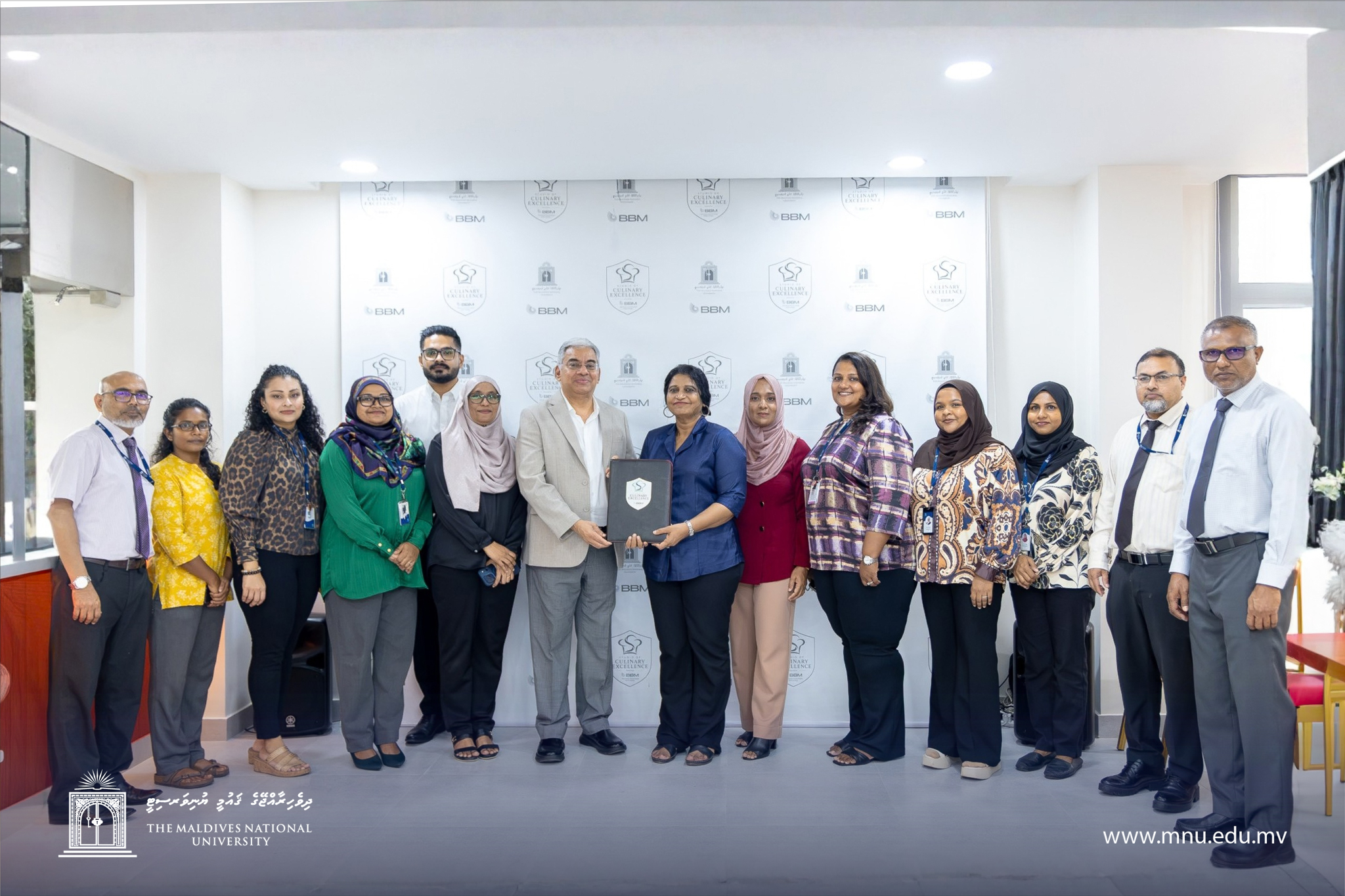
It is firmly in this context that Mr Ismail Hilmy, Chairman and Managing Director of BBM, initiated the establishment of a modern, exceptionally well-equipped and thoughtfully designed model kitchen, aptly named the Studio of Culinary Excellence. By donating the Studio to MNU, under whose auspices it will serve the Maldivian culinary community, Mr Hilmy is responding directly to the need for deeper community engagement. At the heart of BBM’s framework for industry-outreach initiatives— “Because tomorrows start today”—is Mr Hilmy’s ethos of fostering engagement and vibrancy in the industry.
“For our students, the gap between the classroom and a working resort kitchen has always been the hardest one to close,” said Dr Shehenaaz Adam, Vice Chancellor of the Maldives National University. “The Studio of Culinary Excellence closes that gap. Students can now train on the same equipment and to the same standards they will encounter on their first day in the industry. We are grateful to BBM for a partnership that goes well beyond a donation, and we look forward to the Studio becoming a place where the university and the industry learn from one another.”

The Studio therefore creates an opportunity to develop a pipeline of skills and talent in service of the industry.
“Embedding purpose in our work has been an ongoing endeavour at BBM. It keeps us connected to our stakeholders and builds insight, understanding and trust. Being a meaningful partner to academia as we move into the future gives us a great sense of fulfilment and guides our initiatives under the banner, ‘Because tomorrows start today,’” said AVS Subrahmanyam, Chief Operating Officer of BBM.
But what is the value of physical infrastructure without the corresponding spark of aspiration and ambition?

As Ali Afrah Hassan, Executive Representative at Chairman’s Office – BBM, aptly observed: “The Studio offers students and members of the community hands-on experience with world-class equipment, together with knowledge-sharing masterclasses. Who knows—in the not-too-distant future, a Michelin-starred Maldivian chef may fondly credit some of their inspiration to time spent at the Studio!”
Now that is the mind and heart in sync—working towards a future that is aspirational, ambitious and entirely attainable.
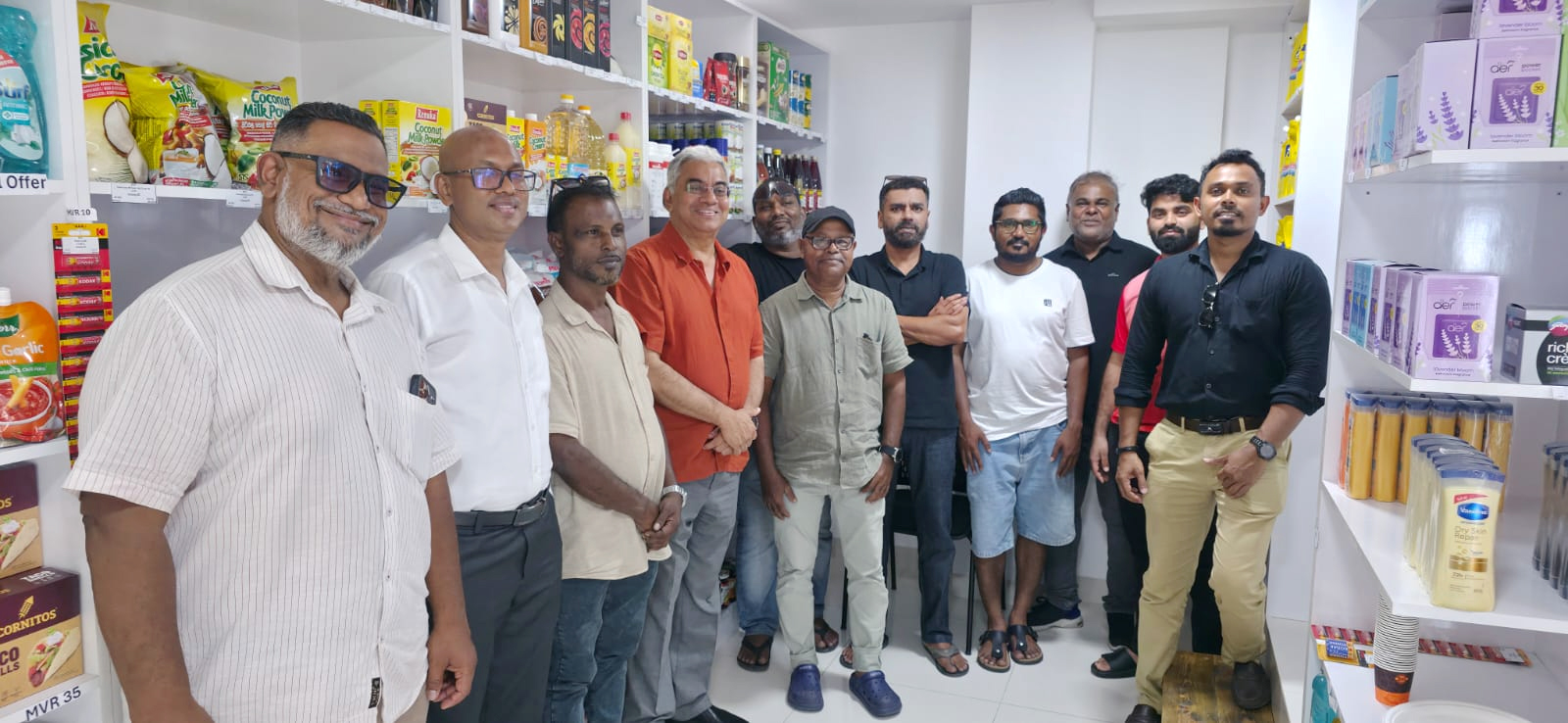
Bestbuy Maldives (BBM) has presented a brand-new Honda Airblade motorbike to the winner of a lucky draw held to mark the opening of its newest wholesale outlet in Hulhumalé Phase 2.
The outlet, located at Lot 20286 on Nirolhu Magu, opened on 16 February 2026 as part of BBM’s expansion of its wholesale operations.
To celebrate the opening and thank customers for their continued support, BBM introduced a special lucky draw exclusively for customers who made purchases from the new outlet on its opening day.

Customers who purchased products during the opening were eligible to enter the draw, with a Honda Airblade motorbike offered as the grand prize.
The lucky draw was conducted on 13 August 2026, with Ibrahim Shifaz of Vagthun Vaguthah outlet selected as the winner.
Shifaz was recently presented with the ceremonial key to the Honda Airblade by AVS Subrahmanyam, Chief Operating Officer of Bestbuy Maldives.

The promotion formed part of BBM’s activities surrounding the opening of its Hulhumalé Phase 2 outlet, which provides customers with access to the company’s range of wholesale products from the growing residential and commercial area.
Bestbuy Maldives is a supplier and distributor serving businesses across the Maldives, including customers in the hospitality, food service and retail sectors.

-

 News1 week ago
Bandos Maldives lines up festive dining, family activities and entertainment for Christmas, New Year
-

 Awards1 week ago
Coco Bodu Hithi recognised for sustainability at Condé Nast Johansens Awards 2027
-

 Business6 days ago
Manhattan Grand Hotel inaugurated in Hulhumalé with 162 rooms and major event facilities
-

 News1 week ago
Niva Kuramathi Maldives celebrates International Men’s Day with spa and fitness experiences
-

 News1 week ago
SO/ Maldives celebrates three years with new island experiences and villa offerings
-

 Drink1 week ago
French winemaker Pascal Jolivet to lead wine-pairing dinner at Milaidhoo Maldives
-

 Drink6 days ago
Baros Maldives welcomes Italian winemaker Maria Stella for exclusive wine dinner
-

 Action1 week ago
ananea Madivaru Maldives to host international padel player Cornelia Lister