

Local
Maldives lifts lockdown on second largest city


A lockdown ordered in the second most populous island-city in Maldives has been lifted after the first coronavirus case in the city turned out to be a false positive.
Shortly after a 35-year-old man tested positive for the Covid-19 respiratory disease caused by the novel coronavirus Saturday morning, mayor Abdulla Sodiq issued city-wide stay-at-home orders in Addu for a fortnight.
However, two subsequent samples produced negative results later in the day, prompting the national Health Protection Agency (HPA) to declare the man’s preliminary diagnosis as a false positive.
HPA said Sunday that the stay-at-home orders in the southernmost atoll of Addu have been lifted.
Meanwhile, 45 new coronavirus cases were reported from the Maldives Sunday.
The confirmed local transmission clusters in the country now include 460 Bangladeshis, 279 Maldivians, 63 Indians, 10 Nepalis, five Sri Lankans and three Pakistanis.
Authorities managed to mitigate the spread of the virus and the Covid-19 respiratory disease it causes amongst the Maldives’ citizens and residents early on by closing the Indian Ocean tourist paradise’s borders, earning praise from the World Health Organisation.
But the disease is now spreading rapidly, especially within the large migrant worker community in capital Male. Authorities have ramped up relocating workers from the cramped up dormitories in one of the world’s most densely populated cities to temporary accommodation units.
An estimated 63,000 foreign nationals work in the Maldives illegally out of a migrant worker population close to 145,000.
Foreign workers in the Maldives, predominantly Bangladeshi and Indian men, are subjected to practices indicative of forced labour, including fraudulent recruitment, confiscation of identity and travel documents, withholding or non-payment of wages, and debt bondage.
As most migrant workers live in extremely poor conditions, a widespread outbreak amongst them could lead to large virus clusters, overwhelming the country’s already under staffed and strained healthcare system and making it harder for authorities to contain the spread of the virus.
On March 8, Maldives reported its first cases of the novel coronavirus, as two hotel employees tested positive for Covid-19 at a luxury resort in the archipelago.
Eighteen more cases — all foreigners working or staying resorts and liveaboard vessels except five Maldivians who had returned from abroad — were later identified.
A six-case cluster of locals, detected in capital Male on April 15, confirmed community transmission of the coronavirus. Several more clusters have since been identified, bringing the total number of confirmed case in the Maldives to 835.
Three deaths have been reported and 28 have made full recoveries. Five remain in intensive care.
The Maldives announced a state of public health emergency on March 12, the first such declaration under a recent public health protection law.
The public health emergency declaration has allowed the government to introduce a series of unprecedented restrictive and social distancing measures, including stay-at-home orders in capital Male and its suburbs, a ban on inter-island transport and public gatherings across the country, and a nationwide closing of government offices, schools, colleges and universities.
Non-essential services and public places in the capital such as gyms, cinemas and parks have also been shut.
Restaurants and cafes in the capital have been asked to stop dine-in service and switch to takeaway and delivery.
A nationwide shutdown of all guesthouses, city hotels and spa facilities located on inhabited islands is also in effect.
The coronavirus outbreak has hit the Maldivian economy hard, as travel restrictions and other preventive measures affect the country’s lucrative tourism industry, which contributes the bulk of the island nation’s state revenue and foreign reserves.
Before the pandemic, the government had been bullish about tourism prospects, targeting two million, high-spending holidaymakers this year after last year’s record 1.7 million.
However, tourist arrivals saw a year-over-year decline of 22.8 per cent in the first 10 days of March. Officials say the number of tourist arrivals to the Maldives could drop by half in 2020.
All international airlines have suspended scheduled operations to the Maldives, as the island nation enforced a blanket suspension of on-arrival visa in late March in a bid to combat the spread of the novel coronavirus.
Even before the visa suspension, the Maldives had closed its borders to arrivals from some of the worst-hit countries, including mainland China, Italy, Bangladesh, Iran, Spain, the United Kingdom, Malaysia and Sri Lanka. Visitors from three regions of Germany (Bavaria, North Rhine-Westphalia and Baden-Württemberg), two regions of France (Île-de-France and Grand Est) and two regions of South Korea were also banned from entering the country.
All direct flights to and from China, Italy, South Korea and Iran were also cancelled.
Cruise ships and foreign yachts were also banned from docking at any of the country’s ports.
With arrival numbers falling and the visa suspension in effect, several resorts across the Maldives had been closed.
Tourism has been the bedrock of the Maldives’ economic success. The $5 billion-dollar economy grew by 6.7 per cent in 2018 with tourism generating 60 per cent of foreign income.
However, the government is at present projecting a possible 13 per cent economic contraction this year — an estimated $778 million hit.


The best way to secure the future is to create it.
Creating that future through specific, purposeful initiatives is what drives people of purpose—and, in turn, moves us all closer to the future we desire.
The Maldives is a compelling case study of a tourism-driven economy. Look around and ask why an event is being staged, what someone is working on, or where a new initiative is leading, and the answer will often point to the hospitality sector. Securing the future, therefore, is inextricably linked to strengthening and advancing that sector.

Here, “strengthening” means making the sector’s contribution more sustainable; ensuring that a greater share of its growth benefits the community; continuing to offer a compelling value proposition to the discerning global traveller; and ensuring that visitor experiences continue to generate an unparalleled reputation and valuable referrals.
To achieve these outcomes in the future, it is essential that current and future generations of the local community engage actively with the industry. Making hospitality appealing and aspirational, enhancing the quality of delivery and service, and building a pipeline of skills and talent into the sector are areas in which initiatives, inspiration, infrastructure and investment should be concentrated.

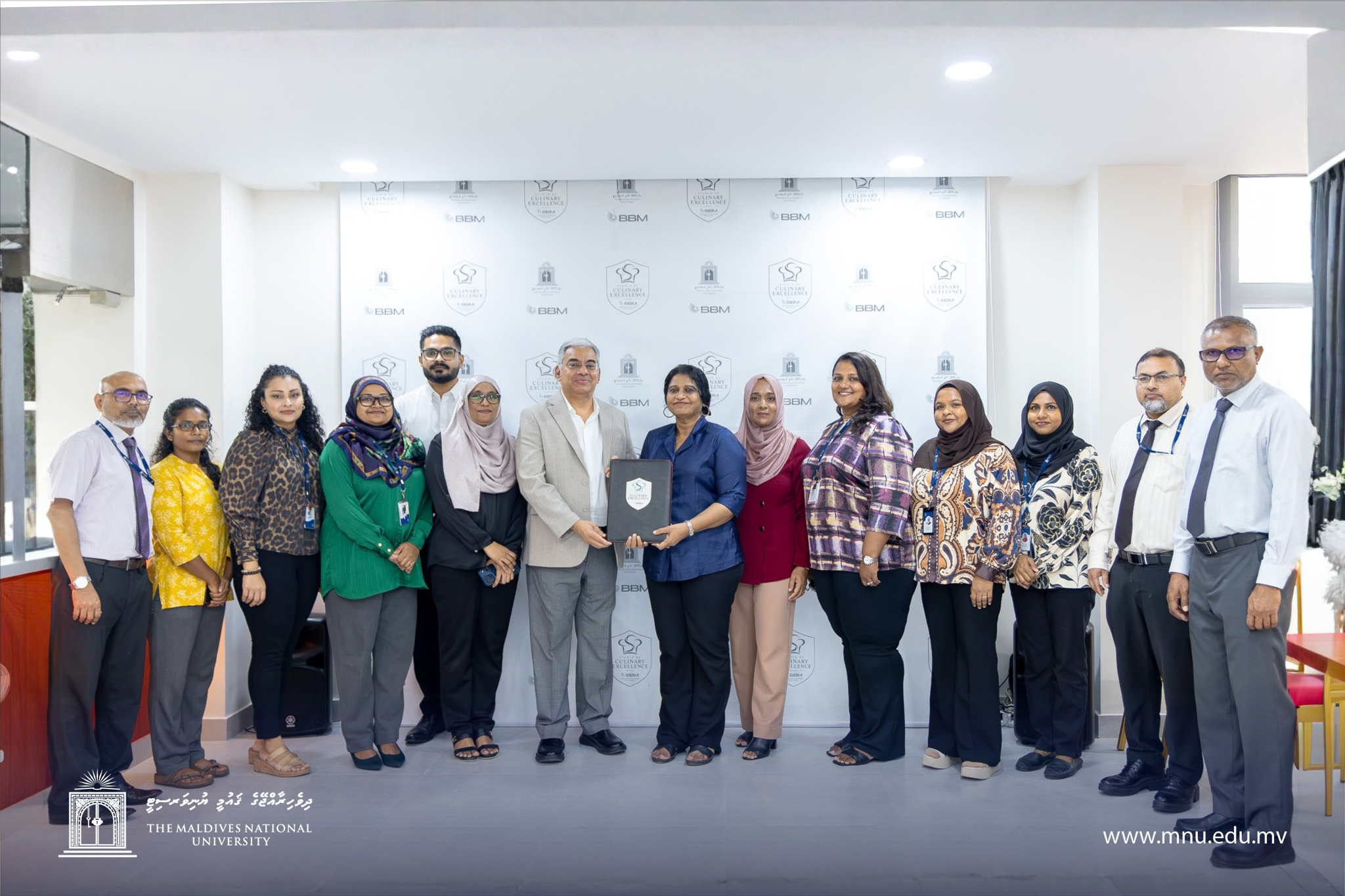
It is firmly in this context that Mr Ismail Hilmy, Chairman and Managing Director of BBM, initiated the establishment of a modern, exceptionally well-equipped and thoughtfully designed model kitchen, aptly named the Studio of Culinary Excellence. By donating the Studio to MNU, under whose auspices it will serve the Maldivian culinary community, Mr Hilmy is responding directly to the need for deeper community engagement. At the heart of BBM’s framework for industry-outreach initiatives— “Because tomorrows start today”—is Mr Hilmy’s ethos of fostering engagement and vibrancy in the industry.
“For our students, the gap between the classroom and a working resort kitchen has always been the hardest one to close,” said Dr Shehenaaz Adam, Vice Chancellor of the Maldives National University. “The Studio of Culinary Excellence closes that gap. Students can now train on the same equipment and to the same standards they will encounter on their first day in the industry. We are grateful to BBM for a partnership that goes well beyond a donation, and we look forward to the Studio becoming a place where the university and the industry learn from one another.”

The Studio therefore creates an opportunity to develop a pipeline of skills and talent in service of the industry.
“Embedding purpose in our work has been an ongoing endeavour at BBM. It keeps us connected to our stakeholders and builds insight, understanding and trust. Being a meaningful partner to academia as we move into the future gives us a great sense of fulfilment and guides our initiatives under the banner, ‘Because tomorrows start today,’” said AVS Subrahmanyam, Chief Operating Officer of BBM.
But what is the value of physical infrastructure without the corresponding spark of aspiration and ambition?

As Ali Afrah Hassan, Executive Representative at Chairman’s Office – BBM, aptly observed: “The Studio offers students and members of the community hands-on experience with world-class equipment, together with knowledge-sharing masterclasses. Who knows—in the not-too-distant future, a Michelin-starred Maldivian chef may fondly credit some of their inspiration to time spent at the Studio!”
Now that is the mind and heart in sync—working towards a future that is aspirational, ambitious and entirely attainable.
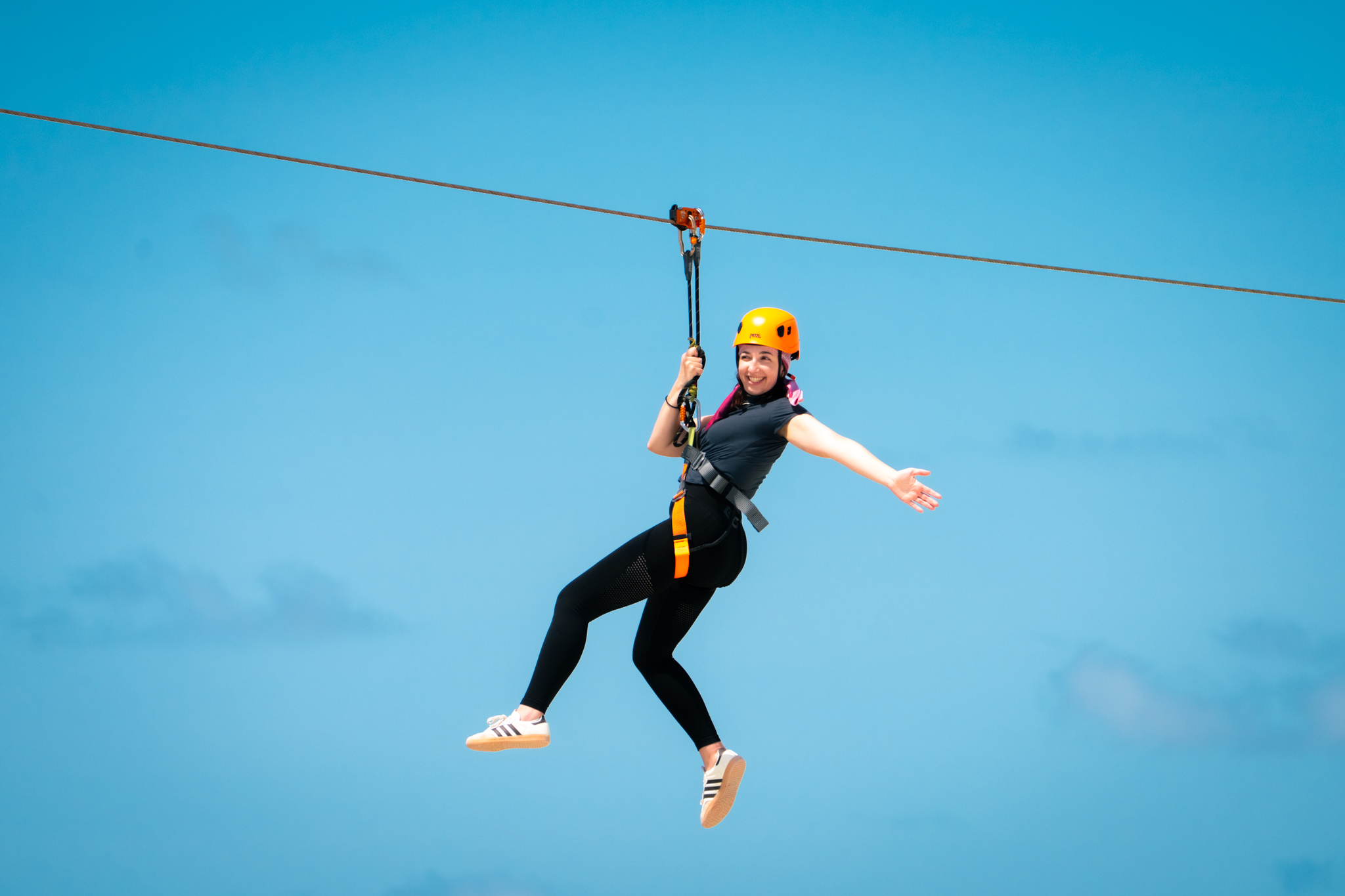
Zipline Maldives, the first island-to-island zipline in the Maldives, has received the Global Excellence Award for “World’s Most Beautiful Zipline – Maldives” at the Global Brand Awards 2026.
The recognition was presented as part of Season 2 of the Global Brand Awards, Sri Lanka Chapter. The certificate of achievement was presented to Ibrahim Asim of Vahmaafushi Picnic Island, recognising the project’s contribution and performance.

Located in South Malé Atoll, Zipline Maldives connects Maafushi with neighbouring Vahmaafushi, taking riders across 428 metres of open ocean between the two islands. The attraction, which opened earlier this year, introduced an island-to-island zipline experience to the Maldives and has added a new adventure tourism offering to the country’s local island sector.
The ride takes approximately 45 to 60 seconds and operates on two parallel lines, allowing two people to travel side by side. According to Zipline Maldives, more than 2,000 riders from over 50 countries have used the attraction since its launch.
The experience begins in Maafushi and crosses the lagoon to Vahmaafushi. A standard booking includes the 428-metre zipline ride, safety briefing and equipment, a return speedboat transfer, a welcome drink and access to Vahmaafushi Island. The attraction is open to riders aged six and above, subject to a weight range of 40 to 110 kilograms and operating conditions.

Vahmaafushi was developed as an experience-focused island close to Maafushi, combining the zipline with beach visits, dining, private celebrations and other island activities. Located around two minutes from Maafushi by boat, the island forms part of efforts to expand the range of experiences available to visitors staying in one of the Maldives’ largest local tourism destinations.
The zipline was introduced commercially in May 2026, with its operators positioning the over-ocean crossing as a new attraction for tourists and residents. Its location near Maafushi also allows visitors staying in the wider South Malé Atoll area to incorporate the activity into day excursions.
The Global Excellence Award marks an international recognition for the attraction within months of its opening, as local tourism operators continue to introduce experience-based activities alongside the Maldives’ established accommodation and marine tourism offerings.
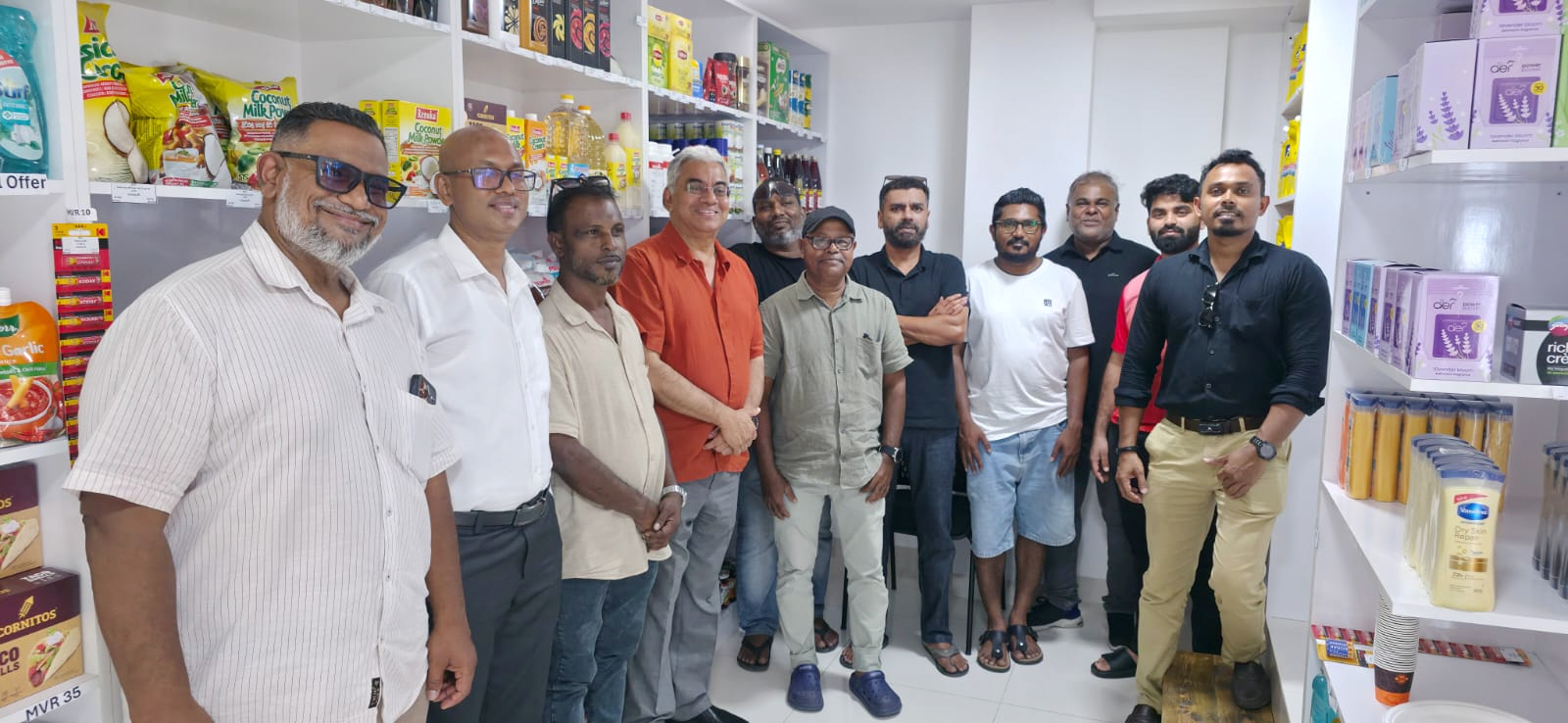
Bestbuy Maldives (BBM) has presented a brand-new Honda Airblade motorbike to the winner of a lucky draw held to mark the opening of its newest wholesale outlet in Hulhumalé Phase 2.
The outlet, located at Lot 20286 on Nirolhu Magu, opened on 16 February 2026 as part of BBM’s expansion of its wholesale operations.
To celebrate the opening and thank customers for their continued support, BBM introduced a special lucky draw exclusively for customers who made purchases from the new outlet on its opening day.

Customers who purchased products during the opening were eligible to enter the draw, with a Honda Airblade motorbike offered as the grand prize.
The lucky draw was conducted on 13 August 2026, with Ibrahim Shifaz of Vagthun Vaguthah outlet selected as the winner.
Shifaz was recently presented with the ceremonial key to the Honda Airblade by AVS Subrahmanyam, Chief Operating Officer of Bestbuy Maldives.

The promotion formed part of BBM’s activities surrounding the opening of its Hulhumalé Phase 2 outlet, which provides customers with access to the company’s range of wholesale products from the growing residential and commercial area.
Bestbuy Maldives is a supplier and distributor serving businesses across the Maldives, including customers in the hospitality, food service and retail sectors.

-

 Featured6 days ago
Baros Maldives sets festive calendar of dining, culture and marine experiences
-

 News1 week ago
GullivAir announces direct Maldives–Bulgaria service for winter 2026/27
-

 Action1 week ago
18-yacht Azimut fleet to serve Waldorf Astoria, Rosewood resorts in Maldives
-

 Drink1 week ago
Finolhu welcomes New Zealand’s Sato Wines for two exclusive dining experiences
-

 Cooking6 days ago
BBM’s Studio of Culinary Excellence to debut Masterclass programme with Chef Romain Dupeyre
-

 Meditation6 days ago
The St. Regis Maldives Vommuli Resort to mark World Wellness Weekend with three-day celebration
-

 Action7 days ago
Ocean Group Maldives marks PADI AWARE Week with nine-resort dive campaign
-

 Drink6 days ago
THE OZEN COLLECTION to host sixth Bodegas Viñátigo wine master class