

Featured
Maldives protects parrotfish


Parrotfish have been added to the “prohibited species” list in the Maldives, making it illegal to catch the colourful, charismatic fish.
The last time a coral reef fish, the napoleon wrasse, was protected in the Maldives was in 1995.
Under the new Maldives General Fisheries Regulation, it is now illegal to catch, kill or keep all species of parrotfish. As of March 1, 2021, it will no longer be allowed to trade, or display parrotfish or items made from any of its parts in shops and public places.
The new protection comes two months after the #FishForTomorrow campaign, run by the Maldives Resilient Reefs Project of Blue Marine Foundation.
The social media campaign, highlighting the importance of parrotfish to the health of Maldivian coral reefs, was backed by a number of local organisations, celebrities, fisheries scientists and members of the fishing community.
“Abundant and diverse populations of parrotfish are critical to allow our reefs to recover from threats that compromise their health such as coral bleaching,” Shaha Hashim, Maldives Project Manager at Blue Marine Foundation, said.
“Our reefs have weakened over time and these threats are predicted to increase in frequency and intensity over time. Ensuring our reefs are healthy will allow us to protect ourselves and our islands from rising sea levels.”
Parrotfish are colourful and voracious herbivores that spend up to 90 per cent of their day eating algae off coral reefs with their beak-like teeth. This grazing action creates space for coral larvae to settle and promotes coral growth while also preventing coral reefs from becoming overgrown with algae.
They are also responsible for producing up to 80 per cent of the sand on outer reefs that replenishes Maldivian beaches and lagoons.
“Research has shown that reefs with low numbers of parrotfish recover much slower than reefs with abundant parrotfish,” Professor Callum Roberts, a Professor of Marine Science at Exeter University in the UK who has studied coral reefs for more than 25 years, said.
“I commend the Maldives government for this progressive step to protect their coral reefs and boost their ability to bounce back from damage.”
Traditionally, parrotfish were rarely targeted for consumption in the Maldives. However, over the past decade they have started to appear in large numbers in fish markets and shops in Male.
“I have been a reef fisherman for the past 20 years and I have seen an increase in the number of fishers targeting parrotfish. A lot of young people are now catching parrotfish in large numbers on recreational fishing trips,” Yoosuf Abdul Rahman, a local fisher from the island of Dhiffushi in Kaafu atoll, said:
Fishermen have reported declines in the catch of parrotfish, prompting them to support protective measures.
“I have been fishing for a long time and have seen the decrease in the number of parrotfish being caught. I haven’t been able to catch a single parrotfish in three weeks. There is a definite need for protection as a decline has been observed throughout North Male Atoll,” Zuhair, a reef fisherman from the island of Huraa in Kaafu atoll, said.
There are encouraging reports from workers at Male fish market which suggest that some fishers have stopped fishing parrotfish since the ban.
“During Covif-19, I think the number of recreational fishers targeting parrotfish doubled in Male atoll. However, over the past two weeks since the ban, there has been a decrease in the number of parrotfish being brought here,” Ali Hassan, a fisherman who sells his catch to the Male fish market, said.
Blue Marine Foundation hopes that the review of fisheries management plans by the Maldivian government could result in further conservation “wins” in the near future.


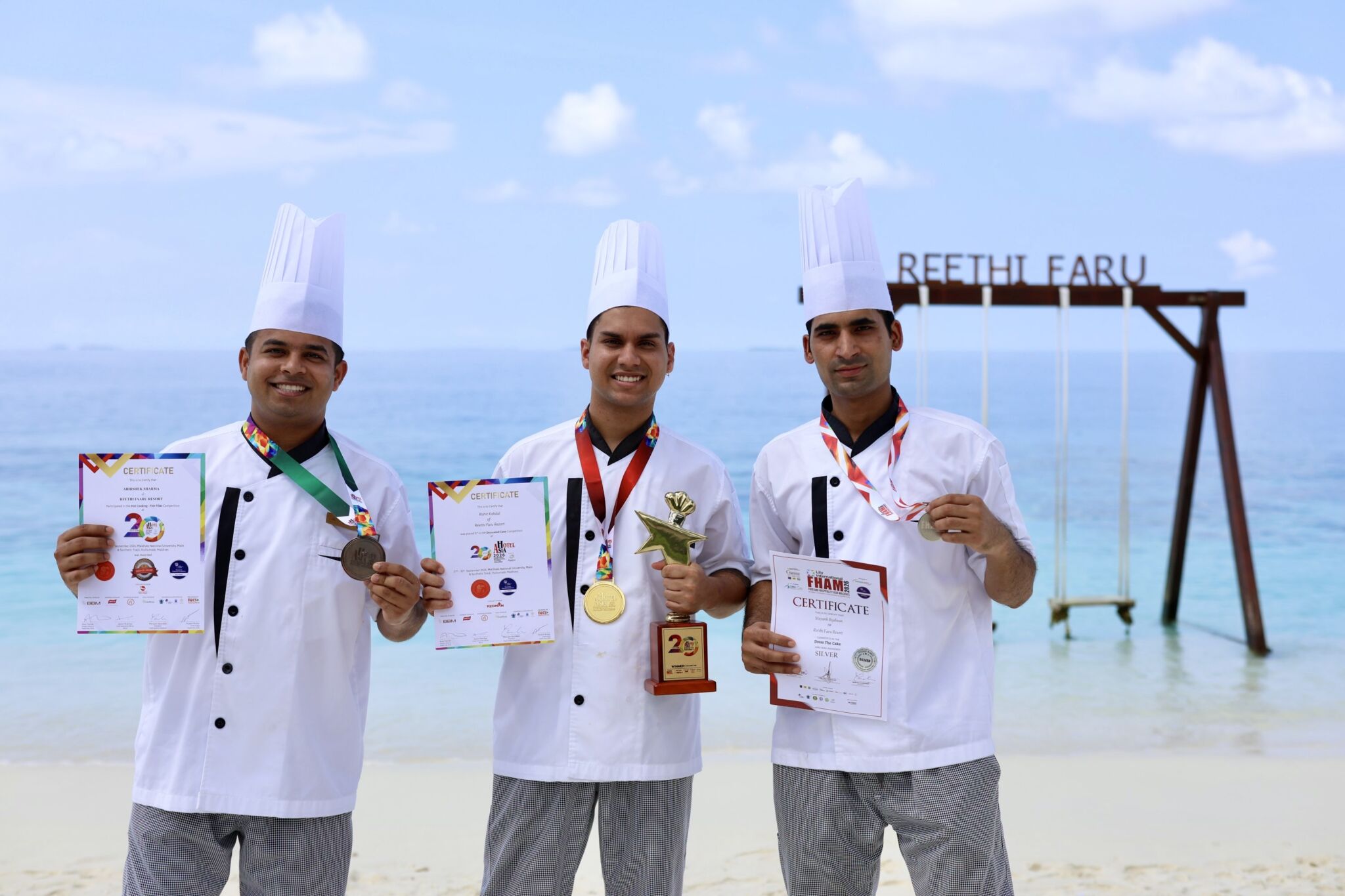
Reethi Faru Resort has announced three medal wins by members of its culinary team at the Hotel Asia Culinary Challenge and the FHAM Global Culinary Challenge.
At the Hotel Asia Culinary Challenge, Chef Rohit Kabdal received a Gold Medal in the Decorated Cake category, recognising his work in cake design, presentation and technical execution.
Chef Abhishek Sharma also represented Reethi Faru Resort at the competition, earning a Bronze Medal in the Hot Cooking Fish category.
At the FHAM Global Culinary Challenge, Chef Mayank Bijalwan secured a Silver Medal in the Dress the Cake category, adding a third medal to the resort’s recent culinary achievements.
The results highlight the range of skills within Reethi Faru Resort’s culinary team, spanning pastry, cake presentation and hot kitchen techniques.
According to the resort, participation in professional culinary competitions provides its chefs with opportunities to develop their skills, exchange knowledge and test their abilities alongside other industry professionals.
The achievements also form part of Reethi Faru Resort’s wider focus on dining and guest experience, with its culinary team involved across the resort’s restaurants and food and beverage offerings.
Reethi Faru Resort congratulated Kabdal, Bijalwan and Sharma on their respective achievements, describing the results as recognition of their commitment, technical ability and creativity.
The three medals add to the resort’s recent culinary accolades and reflect its continued emphasis on professional development within its kitchen team.
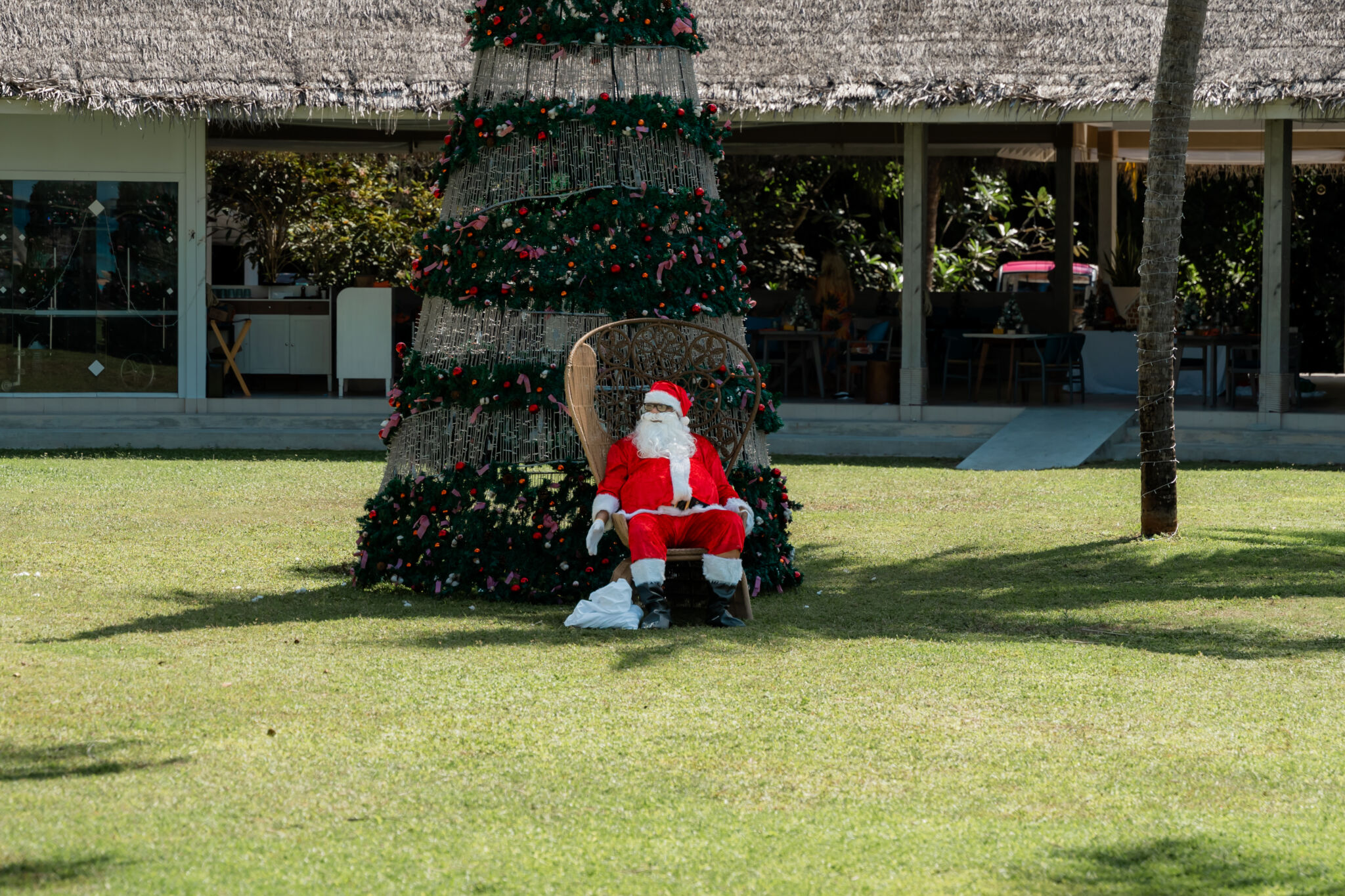
Ifuru Island Maldives will celebrate the 2026 festive season with “Echoes of the Ocean and Stars”, an immersive Christmas and New Year programme running from 21 December 2026 to 10 January 2027.
Inspired by the natural beauty of the Maldivian ocean, the night sky and the festive season, the theme will bring together marine and celestial elements across the resort’s décor, entertainment, dining, activities and guest experiences.
At the centre of the concept is the idea that the ocean carries memories, while the stars represent dreams and new beginnings. Rather than presenting the festive season as a series of standalone events, Ifuru Island plans to create a connected journey spanning Christmas, New Year and Orthodox Christmas.
The visual identity of “Echoes of the Ocean and Stars” will combine an underwater-inspired world with celestial elements. Bioluminescent-inspired colours, reef motifs and glowing details will be paired with stars, constellations and moonlit features throughout the resort.

The colour palette will include deep ocean blue and midnight navy alongside pearl white, silver, soft turquoise, pink and purple, with accents of celestial gold. Coral forms, waves, shells and reef-inspired features will be combined with stars and festive details, giving traditional Christmas elements an interpretation inspired by Ifuru Island’s natural surroundings.
The concept will extend beyond decorations to dining, entertainment, activities, uniforms, signage and festive communications.
The resort said the theme is also intended to reflect the emotions associated with the festive period. The ocean represents peace, connection and possibility, while the stars symbolise hope, dreams, guidance and new beginnings.
The festive journey will begin on 21 December and continue through 10 January, encompassing Christmas, New Year and Orthodox Christmas celebrations.
Christmas Eve on 24 December will feature festive dining and entertainment, while Christmas Day on 25 December will centre on family celebrations and relaxed island experiences.
On 31 December, Ifuru Island will mark New Year’s Eve with the main celebration of the festive period, before welcoming 2027 on New Year’s Day with activities centred around the island setting and surrounding ocean.

Celebrations will continue from 1 to 10 January during the Orthodox festive period, including Orthodox Christmas.
According to the resort, the broader concept is intended to connect the entire guest experience, with the island’s natural environment forming part of the festive setting. The ocean will provide inspiration during the day, while the night sky will shape the atmosphere after sunset.
Dining experiences, entertainment and activities will each form part of the wider “Echoes of the Ocean and Stars” narrative, giving guests different experiences throughout their stay while maintaining a consistent creative theme.
The programme is designed for guests travelling with family, friends or loved ones, with Ifuru Island aiming to combine its natural surroundings with festive celebrations and shared experiences.
The full festive programme, including entertainment, activities, culinary experiences and special events, will be announced separately.
“Echoes of the Ocean and Stars” will run at Ifuru Island Maldives from 21 December 2026 to 10 January 2027. Christmas Eve will be marked on 24 December, Christmas Day on 25 December, New Year’s Eve on 31 December, New Year’s Day on 1 January and the Orthodox festive period from 1 to 10 January 2027.
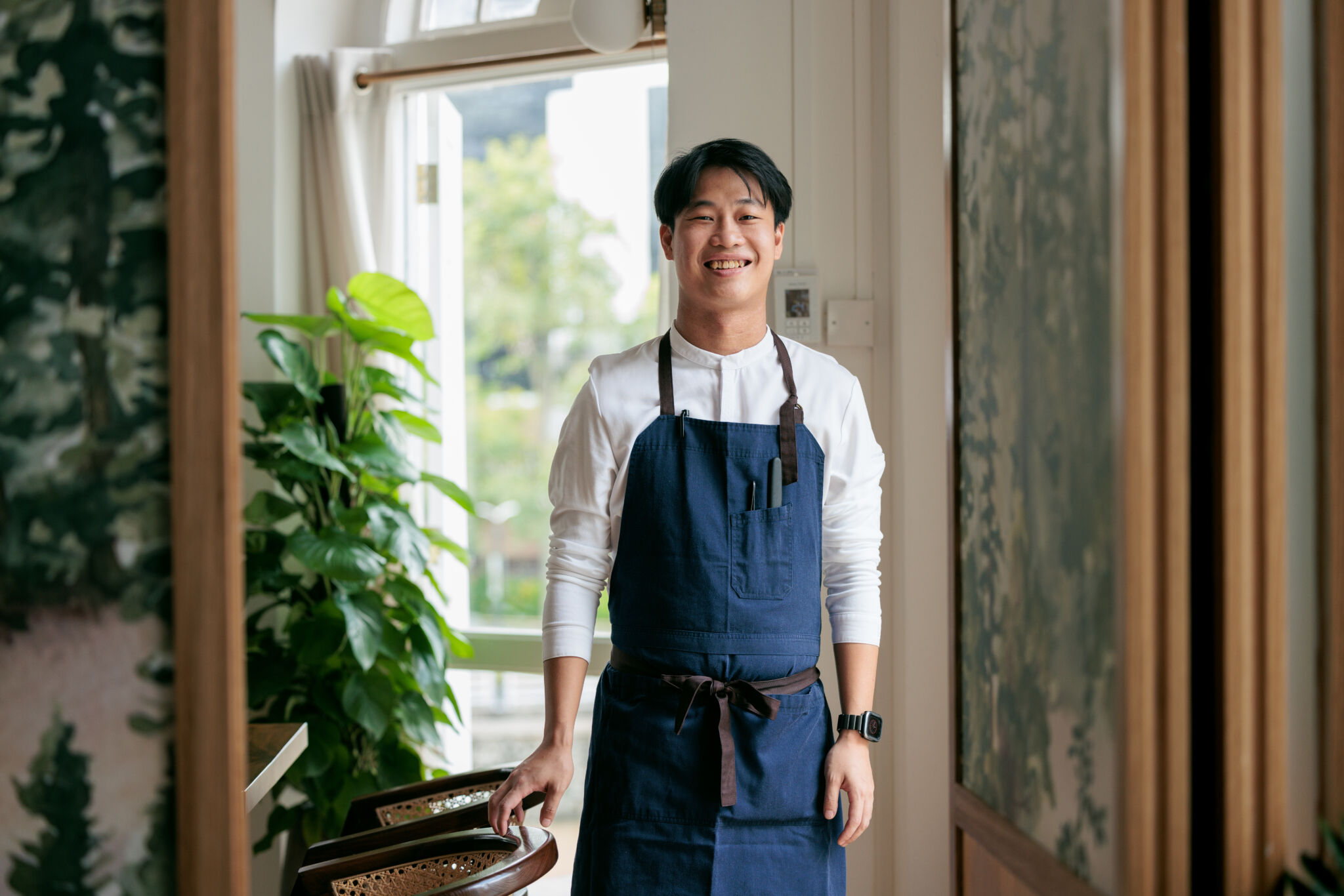
Milaidhoo Maldives will welcome Chef Laurence Tan, Head Chef of Michelin-starred JAG in Singapore, for two culinary experiences on the island in October.
Tan’s interest in cooking began at home, inspired by his parents and by preparing and sharing food with his family. After experimenting in the family kitchen, he went on to attend culinary school before joining The White Rabbit in Singapore in 2016, where he began developing his professional career.
He later worked at Tower Club before joining JAG in 2020. Working alongside Chef Jeremy Gillon, Tan developed an approach centred on precision, seasonality and the integrity of individual ingredients.
He progressed from Chef de Partie to Junior Sous Chef and later Sous Chef. When Gillon took on an international consultancy in Taiwan, Tan assumed leadership of the JAG kitchen.
He is now Head Chef of the restaurant, which retained its Michelin star in 2026, reflecting the consistency and quality of its cuisine under his direction.
During his visit to Milaidhoo, Tan will introduce guests to elements of JAG’s culinary philosophy while sharing some of the techniques and ideas that shape his cooking.
On 16 October, he will conduct an intimate cooking class, giving guests an opportunity to learn directly from him and explore his approach to ingredients, technique and flavour.
The following evening, on 17 October, Tan will host a five-course dinner limited to 16 guests.
The menu will begin with Hiramasa crudo with tomatoes and sea grapes, followed by Gambero Rosso with Jerusalem artichoke and cashew. Lobster ravioli with lobster bisque will precede Tajima Wagyu MB8 tenderloin with celeriac and black autumn truffle.
Dessert will feature a dark chocolate parfait with buckwheat ice cream and tonka bean. A preserved lemon sorbet will be served between courses, while the evening will open with a leek and potato croustade.
The collaboration reflects Milaidhoo’s culinary philosophy, which places emphasis on craftsmanship, curiosity, shared experiences and the role of dining in creating memorable moments.
The cooking class will take place on 16 October, followed by the five-course chef’s dinner on 17 October, with the latter limited to 16 guests.

-

 News1 week ago
The St. Regis Maldives Vommuli Resort unveils ‘Chapter X’ for 10th anniversary
-

 News1 week ago
‘The Curse of the Vigani’ takes over Oaga Art Resort this Halloween
-

 News1 week ago
InterContinental Maldives marks brand’s 80th anniversary with Michelin-starred culinary collaboration
-

 Awards1 week ago
Finolhu earns five Luxury Childcare Association Awards nominations
-

 News6 days ago
Soneva’s Maldives waterslide reimagined as contemporary art in Stockholm
-

 News1 week ago
Fushifaru Maldives unveils five-day celebration for ninth anniversary
-

 Awards1 week ago
Baros Maldives wins Indian Ocean’s Leading Water Villa Resort at World Travel Awards
-

 News6 days ago
Cora Cora Maldives welcomes guests back after planned island enhancements