

Insider Reviews
Discovering The Machchafushi Universe through sight, sound, scent, touch and flavour

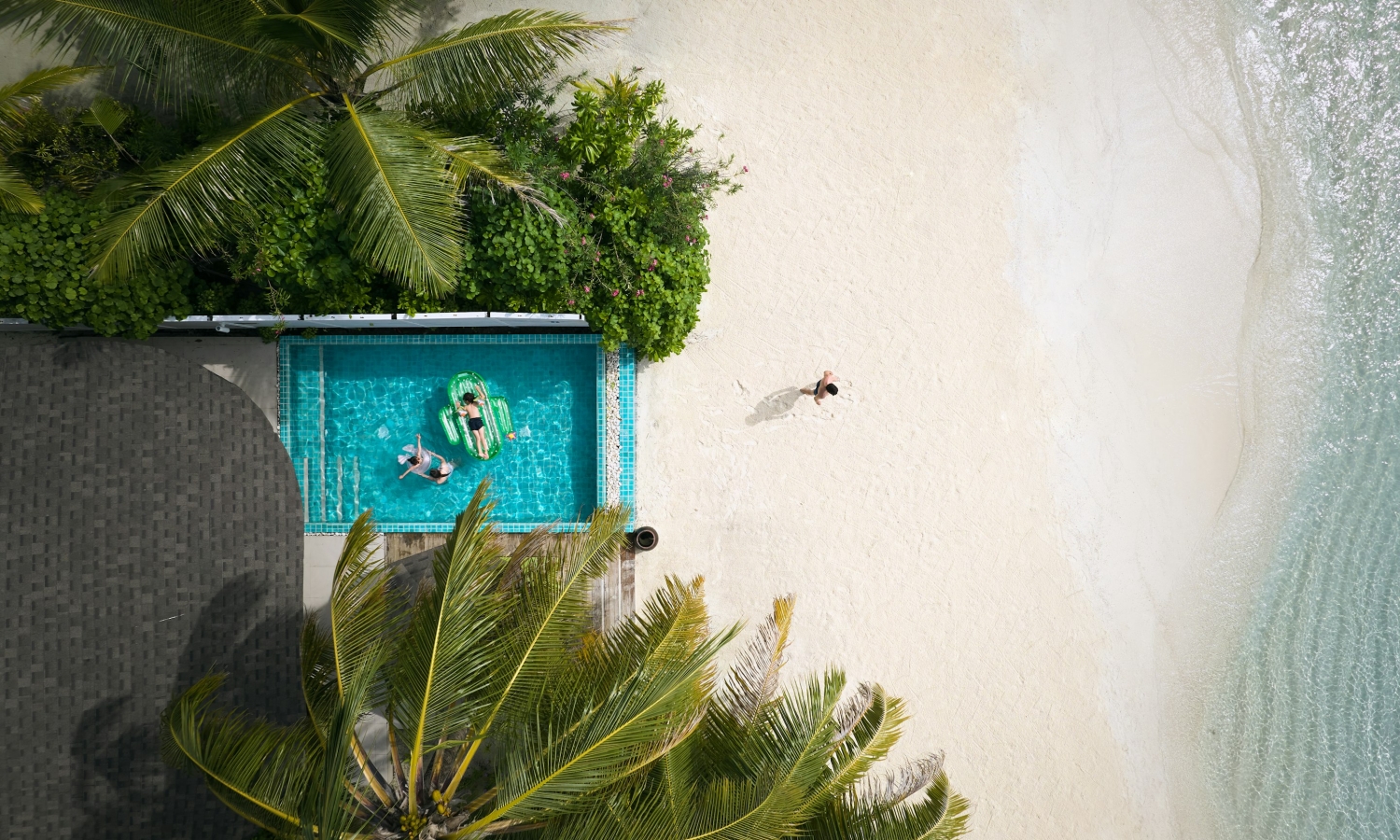
At Machchafushi Island Resort & Spa Maldives, The Centara Collection, the island is not simply the setting for the guest experience. It is the experience itself. Set within the South Ari Marine Protected Area (SAMPA), Machchafushi, meaning ‘Fish Island’ in Dhivehi, is defined by its relationship with the surrounding ocean, the life that inhabits it and the traditions that have shaped its identity.

Once a secluded, uninhabited island, Machchafushi has evolved while retaining its connection to the natural environment and cultural character of the Maldives. Today, its award-winning house reef, five times the size of the island, creates an underwater world inhabited by more than 1,000 species of reef fish and more than 200 varieties of coral. Beyond the reef, the waters of South Ari Atoll offer year-round opportunities to encounter whale sharks, manta rays and other marine life, while the 52 metre Kudhi Maa shipwreck has become a thriving underwater habitat of its own.

This sense of place forms the foundation of The Machchafushi Universe, a sensory expression of the island that invites guests to experience Machchafushi through sight, sound, fragrance, touch and flavour. Here, the senses are not experienced in isolation. The colour and movement of the reef are accompanied by the rhythm of the ocean, the feel of warm water against the skin and the salt carried by the breeze. Later, the flavours of the sea and the wider island find their way to the table. Together, these impressions create a deeper connection with the destination.

“Machchafushi has always had a character of its own. It comes from the environment around us, from the marine life and the reef, from the Banyan Tree and the traditions connected to it, and from the people who bring our experiences to life. The Machchafushi Universe gives us an opportunity to bring these elements together and allow guests to experience the island in a more meaningful way, through all of their senses,” said Francesco Pompilio, Cluster General Manager, Machchafushi Island Resort & Spa Maldives and Centara Ras Fushi Resort & Spa Maldives.

The experience begins with what can be seen. Beneath the surface, coral gardens come alive with reef fish, turtles, stingrays and reef sharks, while the Kudhi Maa shipwreck rests between 52 metres beneath the surface, its structure now covered in coral and inhabited by glassfish, trevally, snapper, lionfish, batfish and groupers. Around the atoll, encounters with whale sharks and manta rays offer a different perspective on the scale and diversity of the marine environment.

Above the water, the island reveals another landscape. The more than 200-year-old Banyan Tree, known as the Ummeedhu Tree in Dhivehi, meaning ‘Wish Fulfilment’, stands at the heart of the island, its roots reaching deep into the earth and its branches extending towards the sky. The changing light across the lagoon, the movement of birds through the vegetation and the shifting colours of the ocean create a visual landscape that changes naturally throughout the day.

Sound gives the island its rhythm. Along the shoreline, waves move across the reef, birds call from the vegetation, and the breeze moves through the palms. Beneath the surface, the soundscape becomes quieter, shaped by the movement of water, the rhythm of breathing and the subtle sounds of a living reef. A snorkel across the house reef or a dive to the Kudhi Maa becomes as much an auditory experience as a visual one, bringing guests into a world where the sounds of the island recede and the ocean takes over.

The human rhythm of Machchafushi adds another layer. The preparation of a Thai dish at Suan Bua, the movement of a traditional wellness treatment and the unhurried pace of service create their own sounds across the island. Together, they form an understated soundtrack to a place shaped as much by moments of stillness as by discovery.

Fragrance carries the character of the island on the breeze. Salt air and sea spray accompany the shoreline, while coconut, coastal vegetation and the earth beneath the island offer subtler notes further inland. The scent of freshly prepared ingredients emerges from the kitchens, while at SPA Cenvaree, natural aromas meet the traditions of Thai wellness through essential oils, botanical ingredients and traditional Thai treatments.

Touch offers perhaps the most immediate connection with Machchafushi. Bare feet meet warm sand, cool water moves across the skin and the gentle resistance of the sea changes with every stroke. Entering the water for a snorkel or dive creates a physical connection with the underwater world, from the sensation of descending through the water column to the changing currents around the reef. Kayaking and paddleboarding offer another way to experience the lagoon, allowing the surface of the water to become part of the journey.

On land, touch takes on a quieter character. Traditional Thai massage and wellness treatments at SPA Cenvaree centre on movement, pressure and balance, while beneath the Banyan Tree, the Sacred Thread Ceremony offers a more personal connection through a simple cultural ritual. In different ways, each experience brings guests closer to the island.
Flavour completes the sensory journey, reflecting the diverse influences that form part of Machchafushi’s identity. At Suan Bua, traditional Thai cuisine is presented through authentic flavours and techniques, while Mare Azzurro Italian Coastal Cuisine draws on the simplicity and character of Italian coastal cooking. The Reef presents an indulgent all day dining experience, with a variety of world cuisines served buffet style, from local Maldivian specialities to international favourites.

At Aqua and Coral Bars, classic cocktails meet island inspired signatures, adding another expression of the destination to the glass. Beyond the restaurants and bars, dining experiences bring cuisine into the island landscape, allowing the setting itself to become part of the occasion. From the waters surrounding Fish Island to the flavours served upon it, the connection between Machchafushi and the sea finds its way naturally to the table.
A first snorkel may reveal a turtle moving across the reef or a reef shark passing through the shallows. Further exploration brings coral formations, schools of tropical fish and the quiet presence of the Kudhi Maa. For experienced divers, sites such as Kudarah Thila, Broken Rock, Dhigurah Beyru and Maamigili Corner offer opportunities to encounter a wider range of marine life and underwater environments. Night snorkelling introduces yet another dimension, revealing a reef transformed after dark.

For those venturing further into the atoll, whale shark encounters offer a profound sense of scale. South Ari is renowned for year round whale shark sightings, allowing guests to experience these gentle giants in their natural environment. Manta rays, turtles, sharks and schools of tropical fish add to a marine landscape that is constantly moving and evolving.
Together, these experiences form a more complete expression of Machchafushi. The island is not defined by a single attraction, restaurant or wellness ritual, but by the relationship between its natural environment, cultural heritage, marine life and the people who bring the destination to life.
Machchafushi is, ultimately, an island that reveals itself gradually. Not through a single moment, but through the accumulation of sensory impressions that stay long after the experience itself has passed.


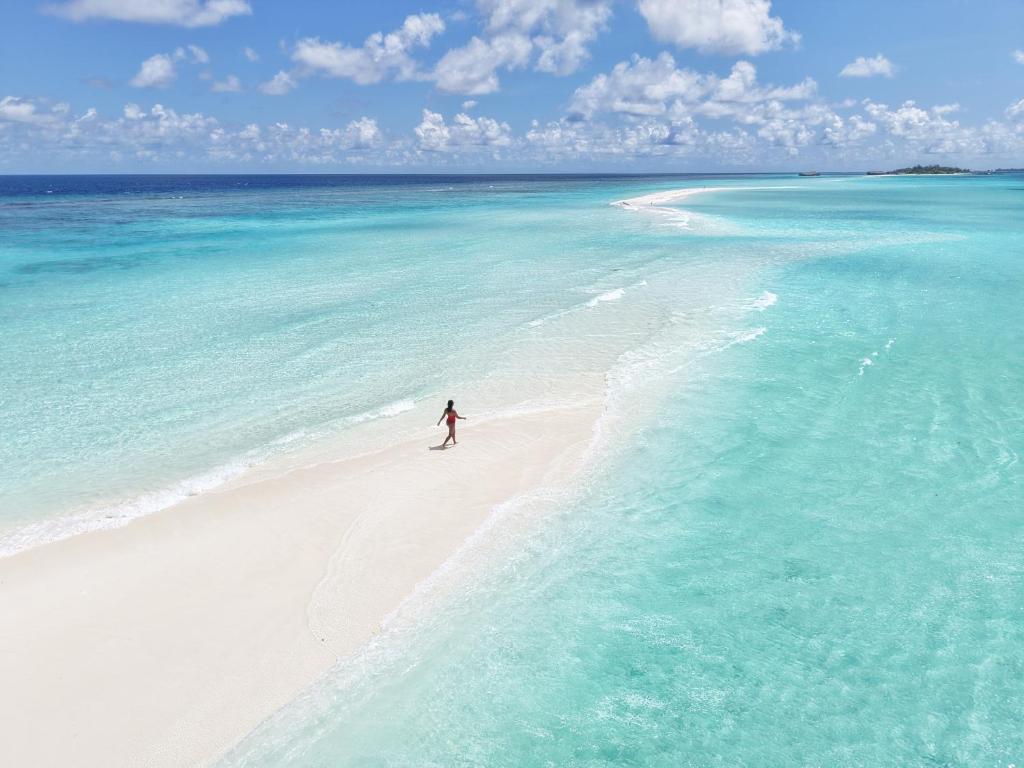
Dhigurah in Alifu Dhaalu Atoll has been ranked among the world’s 10 most valuable holiday beaches, with its stretch of sand assigned an estimated value of MVR 2.9 billion (€162.7 million) in a study by luxury villa holiday specialist CV Villas.
The island placed eighth in the global ranking, ahead of Seven Mile Beach in the Cayman Islands and Copacabana in Rio de Janeiro, Brazil.
The study calculated the hypothetical cost of owning some of the world’s best-known beaches by valuing the sand as coastal land. The figures do not represent sale prices or suggest that the beaches are available for private purchase.
Dhigurah was the only Maldivian beach included in the global top 15. Known for its long sandbank and proximity to whale shark habitats in South Ari Atoll, the inhabited island has become a destination for guesthouse tourism, diving and marine excursions.
Florida’s Siesta Beach topped the global ranking with an estimated value of €1.08 billion, followed by Pampelonne Beach in France at €843 million and Praia da Falésia in Portugal at €573.2 million.
Grace Bay in the Turks and Caicos Islands was ranked fourth at €376.4 million, while Bondi Beach in Sydney completed the top five with an estimated value of €365 million.
Hannah Marshall, luxury travel destination expert and marketing manager at CV Villas, said the research highlighted the role of location in determining coastal land values.
“Everyone has a beach that means something to them, so there’s something fun about seeing what those stretches of sand might be ‘worth’ if you valued them like the land behind them,” Marshall said.
“What comes through is how much location drives the figure: a beach in St-Tropez or on Siesta Key carries a value that a quieter shore — even just as beautiful — simply won’t.”
While Siesta Beach had the highest total estimated value, The Baths on Virgin Gorda in the British Virgin Islands recorded the highest value per square metre, at €8,846. Princess Diana Beach in Barbuda was the most affordable beach assessed, at approximately €199 per square metre.

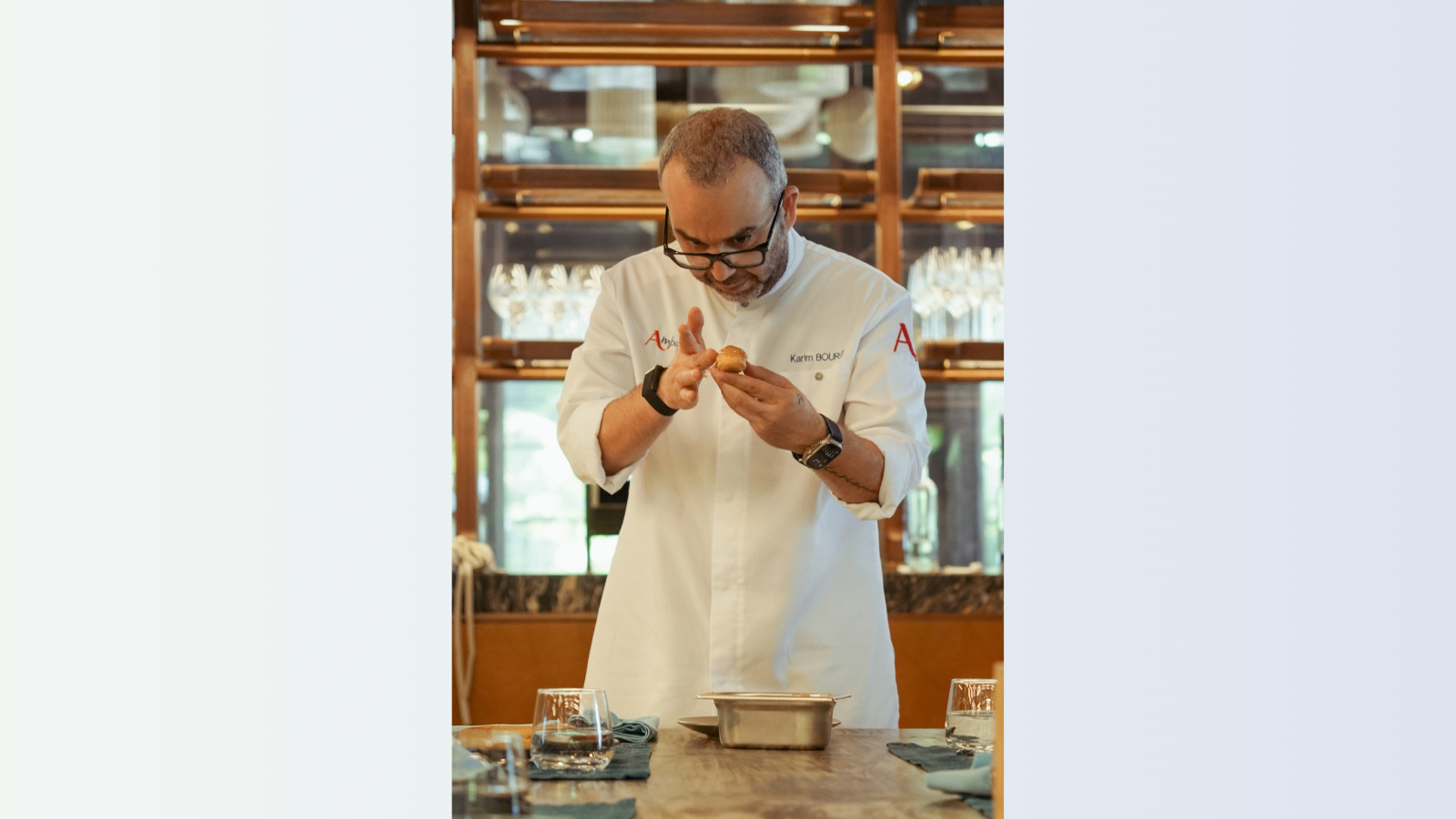
At JOALI Maldives, creativity is not confined to galleries, dining rooms or the architecture of its villas. It appears across the island in different forms: in art installations placed among palms, in design-led spaces that frame the lagoon, in culinary experiences that treat food as a medium of expression, and, during the Eid al-Adha break, in the controlled movement of a piping bag as Pâtissier Karim Bourgi demonstrated how to fill an éclair.
Maldives Insider visited JOALI Maldives during the Eid break, at a time when the resort was hosting Bourgi for an exclusive pastry residency. The programme brought one of the region’s recognised pastry talents to Muravandhoo Island in Raa Atoll, offering guests a closer look at the work behind modern French pastry. Bourgi is the founder of KAYU Bakehouse and recipient of the MENA’s 50 Best Pastry Chef Award 2023, and his residency at JOALI Maldives was designed as more than a guest-chef appearance. It was an invitation into technique, memory, discipline and flavour.

The centrepiece was the Pastry Atelier on 29 May at Vandhoo. Held from 12pm to 1pm, the session was intimate in format and technical in focus. Bourgi guided guests through the artistry of creating a modern French pastry, using the éclair as the point of entry into a wider conversation about structure, texture and control.
The éclair is familiar enough to appear simple. It is also unforgiving. The shell must be light but stable. The filling must have the right consistency. The pastry must be filled evenly without being overworked. In Bourgi’s hands, the process became a study in precision. He showed that filling an éclair is not a final mechanical step, but part of the architecture of the pastry itself.

The demonstration centred on how to fill the éclair properly. Bourgi explained through practice how the angle of the piping bag, the pressure applied, and the timing of each movement determine the result. Too little pressure leaves gaps. Too much can distort the shell. The goal is even distribution, balance and restraint.
For guests, it was a rare opportunity to observe a pastry technique broken down into its essential parts. In a resort environment, dining is often experienced as a finished moment: a plated dessert, a table by the water, a flavour remembered after the meal ends. The atelier reversed that sequence. It brought guests into the making, allowing them to see how a polished dessert depends on repetition, judgment and touch.

This is where the session became especially interesting. It was not theatrical in the obvious sense. There was no need for excess. The theatre came from concentration: the movement of Bourgi’s hands, the pause before applying pressure, the awareness of when the pastry had been filled correctly. The lesson was clear. In pastry, creativity is inseparable from control.
The residency opened on 27 May with the debut of an exclusive dessert at a sundowner reception at Mura Beach. Created for JOALI Maldives, the dessert was inspired by the Maldives and reimagined in the form of an iconic location at the resort. It drew on local ingredients including coconut and mango, layered with citrus notes and hints of vanilla. The programme concluded on 30 May with a High Tea and Dessert Tasting at Mura Bar, pairing a curated tea selection with Bourgi’s signature KAYU pastries and the dessert created for the resort.
Together, the three experiences formed a compact but complete residency: a debut, a masterclass and a tasting. Each offered a different way to encounter Bourgi’s work. The sundowner introduced the creative concept. The atelier revealed the technique. The high tea placed his pastries within a slower tasting format, giving guests time to engage with flavour and form.

The residency also fitted naturally into JOALI Maldives’ wider identity. The resort, located on Muravandhoo Island in Raa Atoll, has built its positioning around the “Joy of Creative Living”. Since opening, JOALI Maldives has stood apart in the Maldivian luxury segment through its art-immersive approach, integrating art, design, gastronomy and island life into the guest journey. Its villas and residences are part of a design narrative, while the island itself functions as a space where guests encounter creative works in open-air settings.
This is not incidental to the guest experience. JOALI Maldives has consistently treated creativity as a pillar of hospitality. The resort has hosted and developed collaborations with artists, designers, culinary figures and creative practitioners, allowing guests to experience the island through different disciplines. Its previous initiatives include the Imagi-Nature Art Festival, held in collaboration with art consultant Tatiana Gecmen-Waldek, as well as a creative collaboration with Studio Pen, the South African design studio known for its playful visual language. The resort has also welcomed culinary artist Marie Yuki Méon for an art-immersive dining experience, extending the idea of creativity into gastronomy.

Seen in that context, Bourgi’s residency was not an isolated Eid activity. It was part of a broader JOALI pattern: bringing creative individuals into the resort environment and allowing their craft to interact with the island. In this case, the medium was pastry.
For the Maldives’ resort industry, such programming reflects a wider shift in luxury hospitality. High-end guests are no longer only seeking accommodation, privacy and dining. They are seeking access — to people, processes, ideas and stories. A visiting chef residency, when executed well, becomes a form of cultural and technical exchange. It gives the guest something to participate in and something to take away beyond the plate.
At the Pastry Atelier, that takeaway was tangible. Guests did not merely taste an éclair; they understood it differently. The session showed why pastry kitchens rely on accuracy, but also why accuracy alone is not enough. The pastry chef must understand the behaviour of each component. The shell, filling and finish must work together. A small change in handling can affect the final texture and presentation.
For hospitality professionals observing the session, it also offered a reminder of the value of culinary storytelling. A dessert can be served beautifully and still remain distant from the guest. But when the guest sees how it is made — when the technique is explained, demonstrated and shared — the dessert gains context. It becomes connected to the person who made it, the place in which it was served and the memory of the experience.
This is particularly relevant in the Maldives, where resorts compete not only through their physical assets, but through the depth of their programming. Culinary residencies, art events, wellness retreats and design-led collaborations are now part of how properties define themselves. The strongest examples are those that feel aligned with the resort’s identity rather than added for effect.
Bourgi’s residency at JOALI Maldives achieved that alignment. The pastry atelier was refined but approachable, technical but engaging. It respected the craft while making it visible to guests. It also reflected JOALI Maldives’ broader commitment to experiences shaped by creativity, whether through art, design or cuisine.

As the session ended, the éclair remained the central lesson. It was a simple form through which Bourgi demonstrated a complex discipline. Filling it properly required care, timing and restraint. In that moment, pastry became a language of precision.
The experience stood out not because it was elaborate, but because it revealed what is often hidden. Behind a polished dessert is a sequence of decisions. Behind a guest experience is planning, craft and collaboration. At JOALI Maldives during Eid, Karim Bourgi brought those elements together, turning a pastry demonstration into a study of hospitality through technique.

The Maldives, often celebrated for its sun-kissed beaches and turquoise waters, also offers a rich tapestry of history and culture waiting to be explored. Among the islands of Haa Alif Atoll lies Utheemu Island, home to Utheemu Ganduvaru, a historical treasure that invites travellers to delve into the storied past of the archipelago.
Utheemu Ganduvaru, the ancestral home of Muhammad Thakurufaanu, stands as a poignant reminder of the Maldives’ fight for independence. Thakurufaanu, revered as a national hero, led a successful campaign against Portuguese occupation in the 16th century. His childhood home, Utheemu Ganduvaru, offers a rare glimpse into the life and times of this legendary figure.
In 1558, the Portuguese invaded the Maldives, killing the Sultan in battle and establishing their rule. Muhammad Thakurufaanu and his brothers, Ali and Hassan, left for Minicoy to prepare a campaign to liberate their country. The boat they built, Kalhuohfummi, was crucial to their efforts. Thakurufaanu and his brothers fought the Portuguese for eight years, landing on different islands under cover of night to evade capture, and departing before daybreak. Eventually, they landed in Malé and defeated the Portuguese leadership in the capital. Freed from Portuguese rule, the people chose Muhammad Thakurufaanu as their Sultan.
Sultan Muhammad Thakurufaanu ruled the Maldives for 12 years until his death in 1585. He is remembered as a considerate and just ruler, concerned for the well-being of even the poorest citizens. He is also credited with establishing the country’s first formal military unit.

Back at Utheemu Island, visitors are immediately struck by the island’s tranquil beauty and its lush, green landscape. The journey to Utheemu Ganduvaru is a step back in time, where the echoes of history are palpable. The residence itself, a traditional wooden palace, is meticulously preserved, showcasing the architectural ingenuity and cultural richness of the period.
As you enter Utheemu Ganduvaru, the simplicity and elegance of the structure are apparent. Built from timber, the palace is a fine example of traditional Maldivian craftsmanship. The intricate woodwork, with its detailed carvings and polished surfaces, speaks volumes about the artisanship that flourished during Thakurufaanu’s time.

The main hall, with its open layout and cool, shaded interiors, offers a sense of serenity and reflection. It was within these walls that Thakurufaanu spent his formative years, and each room tells a story of his early life and the influences that shaped his destiny. The residence includes living quarters and storage spaces, all arranged in a manner that reflects the daily life of a prominent Maldivian family in the 16th century.
One of the most compelling aspects of Utheemu Ganduvaru is its connection to the larger narrative of Maldivian resistance against foreign rule. Guides at the site often recount tales of Thakurufaanu’s daring exploits and strategic brilliance. His knowledge of the archipelago’s intricate waterways and his leadership in naval battles are celebrated as key factors in the successful expulsion of the Portuguese in 1573.


Beyond its historical significance, Utheemu Ganduvaru offers visitors a deeper understanding of Maldivian culture and heritage. The site is a testament to the resilience and unity of the Maldivian people, embodying values that continue to inspire. For travellers, a visit to Utheemu Ganduvaru is an opportunity to connect with the soul of the Maldives, experiencing the essence of its history and the spirit of its people.
While on Utheemu Island, visitors can explore other points of interest, such as the island’s beaches and vibrant local community. Engaging with the locals offers additional insights into Maldivian traditions and hospitality, enriching the overall experience.
For those seeking a journey through time, Utheemu Ganduvaru in Haa Alif Atoll is a destination that should not be missed. It is a place where the past comes alive, where the legacy of a hero continues to resonate, and where the true essence of the Maldives can be discovered. As you walk through the halls of Utheemu Ganduvaru, you are not just a visitor; you are a part of a historical journey that defines the Maldivian identity.
So, when planning your next visit to the Maldives, venture beyond the beaches and dive into the rich history of these islands. Let Utheemu Ganduvaru be the highlight of your cultural exploration, offering a meaningful and memorable connection to the heart of Maldivian heritage.
Cover photo: Andreas Faessler

-

 Meditation1 week ago
COMO Resorts Maldives brings marine experts, artists and wellness specialists to its islands
-

 Awards1 week ago
Sun Siyam Vilu Reef secures Best House Reef title at TTM Awards
-

 News1 week ago
Huvafen Fushi expands wellness offering with Aromatherapy Associates treatments
-

 Action1 week ago
Kandima Maldives lines up sports residencies and family festivities for October
-

 Entertainment1 week ago
Silent DJ brings music and movement to Madifushi Private Island
-

 Action1 week ago
Nova Maldives to host PADI AWARE Week this September
-

 News1 week ago
Culinary encounters and island experiences shape festivities at The Nautilus Maldives
-

 Fitness7 days ago
The Westin Maldives Miriandhoo Resort celebrates World Wellness Weekend with movement, mindfulness and nutrition