

Things To Do
Cruising for epicures at Baros Maldives


Maldives.net.mv – There’s a great opportunity to add exciting culinary cruising experiences to that holiday of a lifetime at Baros Maldives.
The award-winning resort’s programme of special cruises by dhoni or motor yacht has recently been enhanced with the addition of breakfast, lunch and sunset cocktail on-board cruising options.
Serenity, the resort’s luxury Princess 54 motor yacht, is now available for private charter by couples on a daily basis for a “Lunch for Epicures” cruise and also for a “Champagne and Canapés” cruise as the sun sets.

The Serenity Epicurean Lunch Cruise features a menu of several delicious courses served by the onboard butler, while during the 90-minute Sunset Cruise for two, champagne and canapés are served on deck creating a romantic interlude as the sun slips below the horizon.
Another innovation for cruising is the new Nooma Breakfast Sailing. Nooma is a traditional woodenhulled sail dhoni (with auxiliary inboard motor) with a sun deck in the bow and an air-conditioned cabin with lounge, bedroom and bathroom. A breakfast fit for connoisseurs is served to couples by the onboard butler in the exclusive privacy of the dhoni as she sails in the tranquil waters off Baros Maldives.

These three new cruises complement the existing options of lunch, sunset sailing and secret reef diving by Nooma as well as the day-long and sunset Dolphin Watching cruises by Serenity.
Baros Maldives is a privately-owned Maldivian resort just 25 minutes by luxury speedboat from the Maldives International Airport with 75 secluded villas, both overwater and by the beach, and three gourmet class restaurants, two bars, and a thriving house reef perfect for snorkellers and divers.


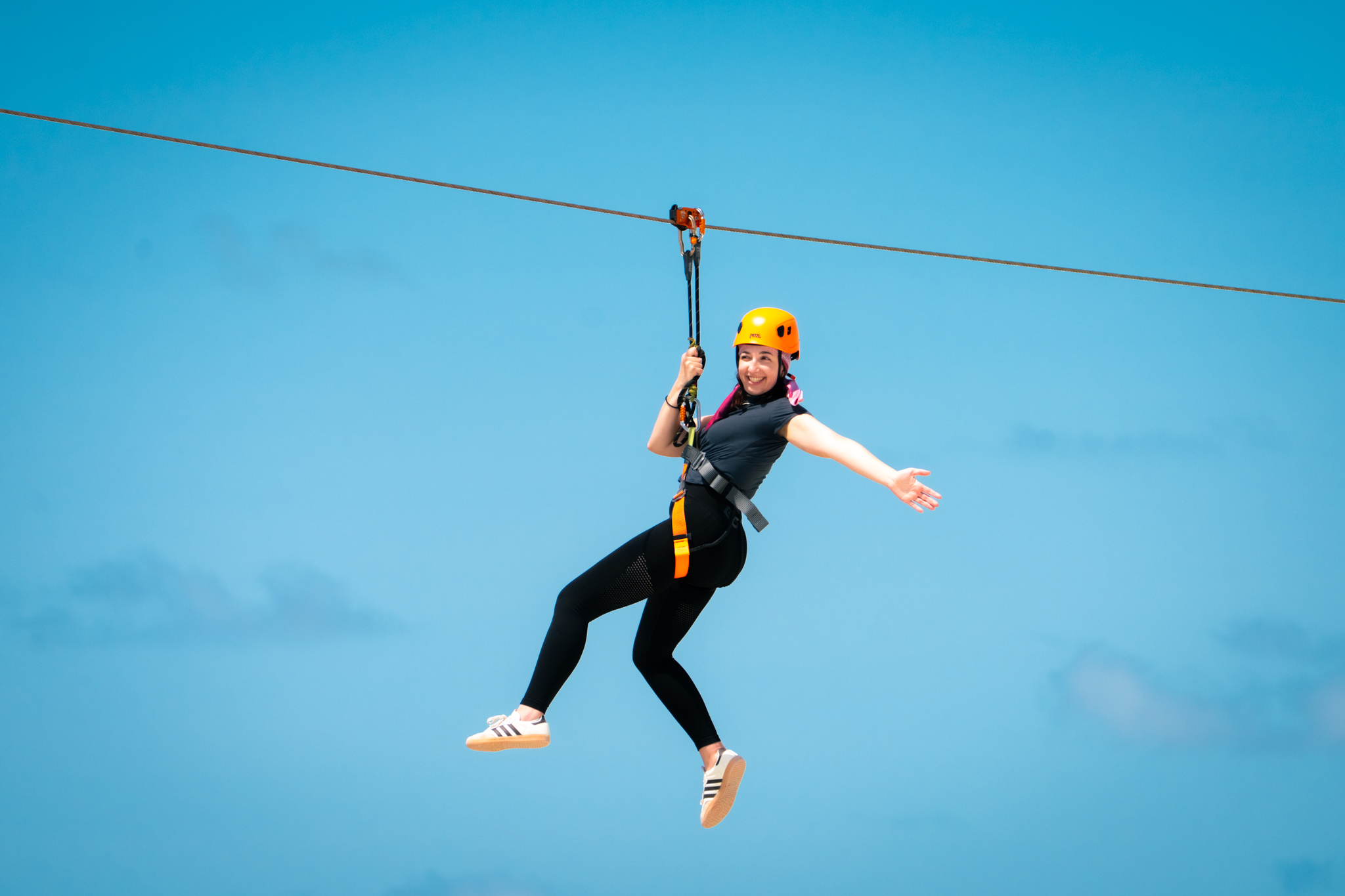
Zipline Maldives, the first island-to-island zipline in the Maldives, has received the Global Excellence Award for “World’s Most Beautiful Zipline – Maldives” at the Global Brand Awards 2026.
The recognition was presented as part of Season 2 of the Global Brand Awards, Sri Lanka Chapter. The certificate of achievement was presented to Ibrahim Asim of Vahmaafushi Picnic Island, recognising the project’s contribution and performance.

Located in South Malé Atoll, Zipline Maldives connects Maafushi with neighbouring Vahmaafushi, taking riders across 428 metres of open ocean between the two islands. The attraction, which opened earlier this year, introduced an island-to-island zipline experience to the Maldives and has added a new adventure tourism offering to the country’s local island sector.
The ride takes approximately 45 to 60 seconds and operates on two parallel lines, allowing two people to travel side by side. According to Zipline Maldives, more than 2,000 riders from over 50 countries have used the attraction since its launch.
The experience begins in Maafushi and crosses the lagoon to Vahmaafushi. A standard booking includes the 428-metre zipline ride, safety briefing and equipment, a return speedboat transfer, a welcome drink and access to Vahmaafushi Island. The attraction is open to riders aged six and above, subject to a weight range of 40 to 110 kilograms and operating conditions.

Vahmaafushi was developed as an experience-focused island close to Maafushi, combining the zipline with beach visits, dining, private celebrations and other island activities. Located around two minutes from Maafushi by boat, the island forms part of efforts to expand the range of experiences available to visitors staying in one of the Maldives’ largest local tourism destinations.
The zipline was introduced commercially in May 2026, with its operators positioning the over-ocean crossing as a new attraction for tourists and residents. Its location near Maafushi also allows visitors staying in the wider South Malé Atoll area to incorporate the activity into day excursions.
The Global Excellence Award marks an international recognition for the attraction within months of its opening, as local tourism operators continue to introduce experience-based activities alongside the Maldives’ established accommodation and marine tourism offerings.
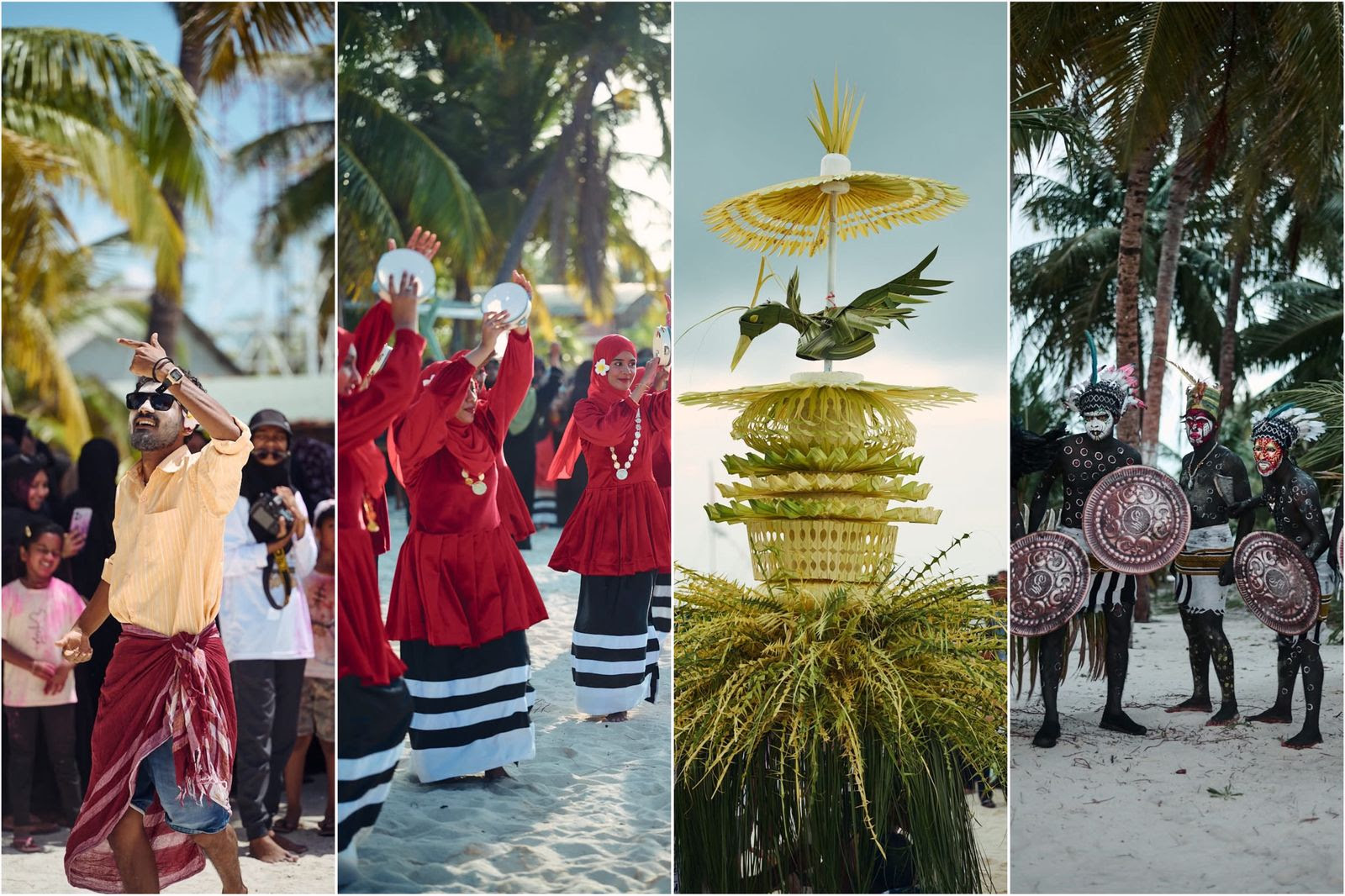
The spirit, colour, and traditions of a Maldivian island Eid will take centre stage this festive season as Visit Maldives Corporation (VMC) prepares to deliver immersive daily coverage of the Eid celebrations from Raa Atoll Meedhoo, bringing one of the country’s most vibrant cultural festivities to audiences around the world.
Beginning on 26 May, Visit Maldives will provide daily coverage from the island across its social media platforms and digital channels, continuing through 30 May. The initiative will showcase the atmosphere, traditions, and community celebrations that define Eid in the Maldives, offering audiences a deeper connection to the cultural identity of the islands beyond their well-known luxury experiences.
Throughout the five-day coverage, Visit Maldives teams will provide daily updates, feature segments, and behind-the-scenes storytelling from the island, capturing traditions that continue to shape community life across the Maldives. The campaign aims to position Maldivian culture and heritage as a central part of the destination experience while highlighting the unique character of local island communities.
Among the key traditions featured is Vedhuma Dhiyun, a longstanding custom where groups of islanders formally seek permission from community elders and leaders to begin Eid festivities. The practice reflects the strong communal values and cultural continuity preserved within island life.
The celebrations will also spotlight Bodu Mas, one of the most recognised Eid traditions in the Maldives. Meaning “big fish” in Dhivehi, the celebration centres around a giant fish structure crafted from woven coconut palm leaves and ceremonially carried through the island in a lively communal gathering rooted in the Maldives’ seafaring heritage.
Another major highlight is Maali Neshun, a traditional performance where participants dress as mythical figures and spirits using handcrafted costumes made from coconut leaves and local materials. Accompanied by the rhythmic sounds of boduberu drums, the performances transform the island into a visually striking cultural celebration.
The campaign will additionally feature Koadi Kendun, a traditional community event centred around a decorated wooden structure crafted from coconut palm materials. The celebration combines performance, competition, and artistic expression, reflecting both longstanding traditions and evolving forms of island creativity.
Speaking about the initiative, Ibrahim Shiuree, CEO and Managing Director of Visit Maldives Corporation, noted that showcasing living traditions and community celebrations remains an important part of strengthening destination storytelling.
“The Maldives is shaped not only by its natural beauty, but also by the traditions, people, and communities that continue to preserve our cultural identity. Through this campaign, we want global audiences to experience the warmth, creativity, and spirit of a Maldivian island Eid in an authentic and meaningful way,” he said.
He also acknowledged the support and collaboration of the people of Raa Meedhoo, particularly the communities of Hulhangu Avah and Irumathi Avah, along with the Raa Meedhoo Island Council, for their role in supporting and facilitating the initiative and helping bring the island’s Eid celebrations to wider international audiences.
Following the daily coverage period, Visit Maldives will continue the initiative through long-form storytelling content scheduled for release from next month onwards on its YouTube platform, offering in-depth features, interviews, and cultural narratives from Raa Meedhoo and its celebrations.
Through this campaign, Visit Maldives continues to expand destination storytelling by highlighting the Maldives as a place shaped not only by its natural beauty, but also by its living traditions, island communities, and cultural heritage.

It was ‘honeymoon season’ in Suez. Sultan Haji Imadudeen was reigning on a throne of love in Egypt. But back home, those were darker times, as Maldives continued to borrow from Bohra merchants of Mumbai. After all, the wedding expenses of the monarch had to be paid by the state.
Imadudeen has appointed his younger brother, Dhoshee Manippulhu of Maandhooge, as the regent to take care of the state’s affairs, but it was Prince Ibrahim Dhoshimeynakilegefaan of Athireege who ruled. Prince Ibrahim’s son, Abdul Majeed Didi of Athireege, took charge of stabilising the nation.
Backed by the British masters and business elites in Male’, Abdul Majeed Didi began hatching a secret plan. Finally, by the early hours of March 10, 1910, onlookers could understand that something was happening in Muleege. Beeru Mohamed Fulhu, who was at the Friday Mosque, saw the door being opened and Mohamed Shamsudeen being escorted out by his brother-in-law Abdul Majeed Didi and Sayyid Kilegefaanu, also known as Khatheeb Seedhi. The two men accompanied Shamshudeen to Boduganduvaru, the royal palace, and placed him on the throne as Sultan Shamsudeen Iskandhar, Al-Salitc. As Shamsudeen was the brother-in-law of both men, the aim behind the plan could mean more than just stabilising the nation; there might have been personal motives and interests.
After appointing Shamsudeen the sultan, Khatheeb Seedhi told him that no one was ever going to challenge his reign. He said that Shamshudeen was not going to leave the throne unless he wished to do so.
Khatheeb Sidi’s saying became true, as Shamsudeen remained in power for the next 31 years, six months and 28 days. That was until he left behind all the privileges of a king for the sake of his beloved son Hassan Izzuddeen, for whom he built Henveyru Ganduvaru or Muleeage from where he started his journey to become the sultan at one midnight. As the famous public speaker and poet Ibrahim Shihab later said, the sultan abdicated for the only son he ever had.
Muleeage, the presidential palace which is now 105 years old, was originally built for Shamsudeen’s son and the then Crown Prince Hassan Izzudeen. The palace was originally named as Henveyru Ganduvaru. It was a symbol of the king’s love for his son.
The origin of this address goes back to the era of the heroic Sultan Hassan Izzudeen, also known as Dhonbandaarain. This plot of land was first used to build a thatch hut when Muhammad Manik of Mulee shifted his family to the capital city. The house was later inherited by Dhonbandaarain and then by Ibrahim Noorahdeen and then by his son Shamsudeen. Hassan Izzudeen was born to Shamsudeen and Sithi Didi, daughter of Bodu Sidi of Kalhuhurage.
When Izzudeen was studying in Ceylon, Shamsudeen decided to build the house before his son returned home. Shamsudeen decided to build it as a palace for the crown prince.
Fully funded by state coffers, the project was commissioned in 1914. Ahmed Dhoshimeyna Kiligefaanu of Athireege was assigned as the project manager. Architects and builders were brought from Ceylon. Architecture and the design was that of the Victorian era with a touch of colonial architectural design. Furniture too was imported from Ceylon. Few transoms were designed by Easa Mohamed Fulhu from the island of Kela in Haa Alif Atoll.
The palace was opened on December 7, 1919, with a special Mauloodh, a cultural prayer.
Izzudeen came back from Ceylon after his education to live in the palace as “Henveyru Ganduvaru Manippulhu”. He lived with privileges that don’t match with that of any other prince. As he was a highly-skilled musician, the palace became a theatre for music. Izzudeen sang with his beautiful voice whilst also playing harmonium. Boys of his dance group, widely known as “Nashaa Party” danced to his music, dressed as ladies. Boduberu too was part of the fun at the palace. It was full on partying till midnight on most days. It is said that the novel, Dhonthuhkalaage Gellunu Furaavaru (lost teenage of Dhonthuhkala), written by Muhammad Ismail Didi of Meerubahuruge, was based on an incident that happened at the palace.
The elite of Athireege took all that as inappropriate for a crown prince. Their disapproval grew and Izzudeen was considered as someone who is ineligible for the throne. The first written constitution in the history of Maldives was passed as a result. It was written in that constitution that the sultanate will only go to a grandson of Dhonbandarain, effectively removing Izzudeen from the royal inheritance path.
But the constitution was later received by the people as a burden, as new laws were introduced to a population that was not aware of such rules. It made their life miserable.
“We can’t bear this anymore,” they said, as they gathered at the Gulhakulhey Fasgandu, an open area just next to the headquarters of the army, and tore apart the document. They even attempted to bring out some ministers to be dealt with by the mob.
The country then saw increased hostile actions against the government from Izzudeen who tried to take over.
Prime Minister Hassan Fareed issued orders to arrest Izzudeen’s allies. Izzudeen went to Bodubandeyrige, then headquarters of security forces, in person to try save his allies. Shamsudeen left the throne to follow.
The prime minister, who was paving way for the change in government, used this as an opportunity to overthrow Shamsudeen. The latter was banished to Fuvahmulah, in the far south, together with his son Izzudeen.
Izzudeen died on the island after a short ailment, whilst Shamsudeen was brought back to Male’ as his health deteriorated. He died shortly thereafter. Henveyru Ganduvaru was deserted after that.
All the palaces except that of the sultan were later downgraded and Henveyru Ganduvaru became Muleeage, taking the name of the first house built at the address.
Muleeage was used for several purposes for the next 80 years before becoming the presidential palace in 1953. From 1942 to 1947, it was used to house the ministries of home affairs and defence, and the office of the head of intelligence. It also served as the headquarters of the first newspaper in the country, Sarukaaruge Khabaru.
With the first republic that came into being in 1953, Muleeage became the presidential palace, serving as the official residence of Mohamed Ameen Didi, the first president.
As the monarchy was reinstated after overthrowing Ameen and abolishing the republic in a coup, Muleeage became the office of the prime minister. Ibrahim Famuladeyrikiligefaan and Ibrahim Nasir were prime ministers who used the office. At one point during their administrations, Muleeage also housed the ministry of defence.
Presidential palace and several ministries at some point, Muleeage has been in use ever since.
Apart from this, several high profile guests of the state stayed there during their visits. Late Queen Elizabeth and her late husband, The Duke of Edinburgh Prince Philips were amongst those.
Although Ibrahim Nasir, as the first president of the second republic, declared Muleeage as the presidential palace again in 1970, he didn’t use it as such. His successor, Maumoon Abdul Gayoom, was the first president to formally use it as his official residence. He stayed there from 1988 to 1994, before moving to Theemuge, a newly built presidential palace which later became the Supreme Court.
The first Supreme Court, which was the result of the present day constitution, was temporarily housed in Muleeage in 2008. Then came President Mohamed Nasheed who chose to make it the presidential palace yet again. It was also used as the offices of a national inquiry commission, which was setup to investigate the events surrounding Nasheed’s early departure in 2012, before becoming the presidential palace again.
In the century that has passed since Muleeage was built in its current design, it has witnessed numerous historical events in the country. It witnessed the declaration of the first republic and the reinstating of the monarchy. It hosted heads of states as well as ministers from different parts of the world. Indian Prime Minister Rajiv Gandi was one amongst them to be remembered.
Been a place for all that, the status of Muleeage is much more important in our history; it was the childhood home of Hassan Izzudeen, Dhonbandaarain, the heroic sultan who freed Maldives from the short-lived rule of the Malabari invaders, also known as “Holhin”. This was the place from where he came out for his battle with the flag of freedom flying over his head.

-

 Awards7 days ago
Cinnamon Maldives resorts celebrate triple win at SATA 2026
-

 Awards1 week ago
Atmosphere Core wins Leading Resort/Hotel Brand and Hospitality Development Company titles at SATA 2026
-

 Action1 week ago
Four Seasons Resorts Maldives honoured for 25 years of marine conservation efforts at HICAP 2026
-

 Featured1 week ago
Reethi Faru Resort reveals festive line-up of dining, entertainment and island experiences
-

 Fashion7 days ago
KAYALI showcases Maldives as luxury brand destination with first global trip
-

 Cooking1 week ago
Milaidhoo Maldives welcomes Chef JKP for culinary workshop, wine-pairing dinner
-

 Awards1 week ago
ELE|NA recognised for excellence in wellness hospitality at SATA 2026
-

 News1 week ago
The Standard, Huruvalhi Maldives to introduce refreshed villas, dining and wellness facilities